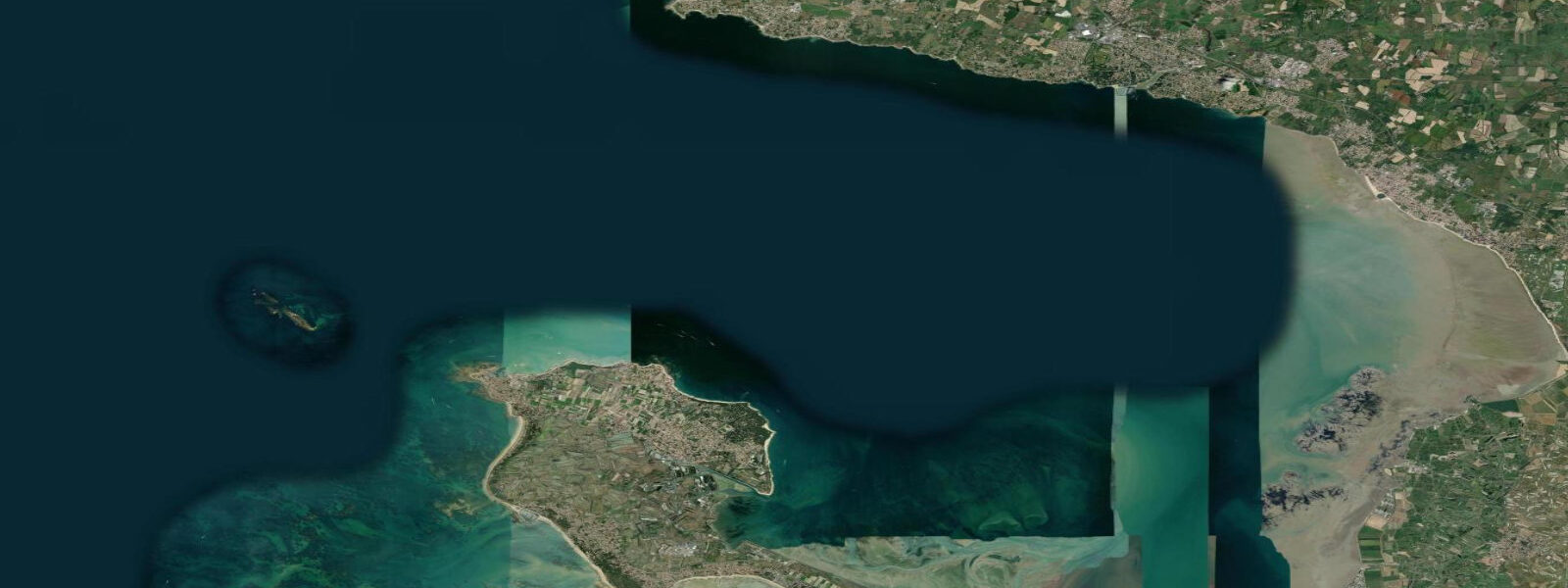
Noirmoutier-en-l'Île tide times
Noirmoutier-en-l'Île tide forecast — heights relative to MSL.
Today's tide times for Noirmoutier-en-l'Île
Tide times at Noirmoutier-en-l'Île on Tuesday, 4 August 2026: first low tide at 02:00, first high tide at 08:18, second low tide at 14:32, second high tide at 20:37. Sunrise 06:50, sunset 21:38.
Tide chart for Noirmoutier-en-l'Île
24-hour cosine-interpolated curve around the present moment. Heights relative to MSL. Predictions: Predictions: Open-Meteo Marine (MeteoFrance SMOC, 0.08° grid).
Sun, moon and conditions on Tue 04 Aug
Snapshot at build time — refreshes daily. Sea state from Open-Meteo Marine.
Highs and lows next 7 days
Every predicted high and low for the next week, with the daily tidal coefficient (0–120; higher = bigger swing, > 95 means stronger currents).
Other spots nearby
The three closest curated TideTurtle locations to Noirmoutier-en-l'Île, measured by great-circle distance.
Today's solunar windows
Solunar tradition: major periods are the ≈3h windows around moon transit and opposition; minor are ≈2h around moonrise and moonset. Pair with the local tide stage and wind for the best read.
Cycle dates near Noirmoutier-en-l'Île
Last spring tide on Tue 04 Aug (range 3.4m). Next spring tide on Mon 10 Aug (range 3.5m). Next neap on Sat 08 Aug.
Spring tides cluster around new and full moons (biggest swings). Neap tides land on quarter moons (smallest swings). See the spring tide and neap tide glossary entries for the why.
About tides at Noirmoutier-en-l'Île
A short guide to the coastline at Noirmoutier-en-l'Île — geography, sea state, and what the tide is actually doing under your feet.
Noirmoutier is a tidal island — almost. A permanent bridge connects it to the Vendée mainland, but every day the Atlantic tide puts on a demonstration of just how conditional that connection historically was. The Passage du Gois, a 4.5 km causeway further south, disappears twice daily beneath the sea. The Gois is not a metaphor or a tourist attraction: it is a working road that requires a tide table to use safely.
The crossing window at the Passage du Gois is approximately two hours on either side of low water — a total of about four hours per tidal cycle when the causeway is passable. Outside that window, the road lies under water deep enough to swamp a car within minutes. The tide returns fast here: the Atlantic flood on a 4–5 m spring tide can cover the causeway at a rate perceptible in real time. Several cars are recovered from the Gois every year. High refuge posts — échappées — are spaced along the causeway for pedestrians caught out, but they are the last resort, not the plan.
SHOM (Service Hydrographique et Océanographique de la Marine) publish the official Passage du Gois crossing schedule. That is the authoritative source for Gois timing — not this page, not a tide app, not a Google result. The schedule is specific to the Gois and accounts for the local tidal phasing.
The island itself covers about 50 km², primarily flat, with salt marshes (marais salants) producing Fleur de Sel — the prized hand-harvested sea salt that has been collected here since the medieval period. The salt pans are tidal in origin: seawater flooding controlled channels, then concentrated by evaporation. The harvest season runs June to September.
The mean tidal range at Noirmoutier is approximately 4.0–4.5 m (slightly less than Saint-Nazaire due to the island's position on the outer Vendée coast). Spring tides extend the range to around 5.0 m. The island has several beaches — Bois de la Chaise, Les Dames — that transform with the tide, exposing wide sand and rock platforms at low water.
Tide predictions are generated from Open-Meteo Marine data (accuracy ±45 minutes, ±0.2–0.3 m). For the Passage du Gois, use only the official SHOM crossing schedule.
Tide questions about Noirmoutier-en-l'Île
Quick answers to the most common questions about tide times, range, and water access at Noirmoutier-en-l'Île.
When can I cross the Passage du Gois safely?
The Passage du Gois is passable for approximately two hours on either side of low water — roughly four hours per tidal cycle. The exact times shift each day because low water is approximately 50 minutes later every 24 hours, and the range varies across the spring/neap cycle. For the authoritative crossing schedule, go directly to the official SHOM publication or the Vendée département's Gois information service. Never cross outside the published window: the tide returns quickly and the causeway floods faster than most people expect.
What happens if I get caught on the Gois at high tide?
The causeway floods completely on a spring high tide — the water depth over the road can exceed 1.5 m at the lowest point of the Gois. Refuges (échappées) are positioned at intervals along the causeway: tall platforms accessible by ladder where stranded pedestrians can wait above the water. Vehicles cannot be saved once the flood reaches wheel height. Emergency services respond, but recovery is not guaranteed before the vehicle is submerged. The practical answer: use the official SHOM crossing schedule and leave a safety margin.
What is Fleur de Sel and when is it harvested?
Fleur de Sel de Noirmoutier is a hand-harvested sea salt — the thin crystalline crust that forms on the surface of salt pans in dry, sunny, lightly windy conditions. Paludiers (salt workers) skim it from the evaporation basins using a wooden rake called a lousse. The harvest season runs June to September, depending on weather. Noirmoutier's salt pans (marais salants) occupy the island's eastern marshes; the flooded basins fill from the sea via sluice gates, and the tidal cycle regulates the water exchange.
What is the tidal range at Noirmoutier?
Mean tidal range at Noirmoutier is approximately 4.0–4.5 m, slightly lower than the 4.5 m at Saint-Nazaire because the island sits on the outer Vendée coast rather than inside an estuarine funnel. Spring tides push the range to around 5.0 m. Neap tides drop to approximately 2.0–2.5 m — on small neaps, the Gois crossing window expands and the tidal exposure of beaches is less extreme. The tidal type is semidiurnal: two high waters and two low waters per day.
Where do I find official tide data and navigation charts for Noirmoutier?
Tide predictions on this page come from Open-Meteo Marine models (±45 min, ±0.2–0.3 m). For the Passage du Gois crossing schedule specifically, use the official SHOM Gois publication — it is the only authoritative source. For boating around the island, the Fromentine channel, and Baie de Bourgneuf, use current-edition Navicarte charts and SHOM tide tables referenced to the Noirmoutier or Saint-Nazaire gauge. Do not navigate these shallow, current-prone waters on app predictions alone.
8-day tide table — Noirmoutier-en-l'Île
Heights relative to MSL. Predictions: Open-Meteo Marine (MeteoFrance SMOC, 0.08° grid) — heights relative to MSL (not chart datum / LAT). Model-derived.
| Day | Type | Time | Height |
|---|---|---|---|
| Tue 04 Aug | Low | 02:00 | -2.1m |
| High | 08:18 | 1.2m | |
| Low | 14:32 | -2.0m | |
| High | 20:37 | 1.3m | |
| Wed 05 Aug | Low | 02:58 | -2.0m |
| High | 09:05 | 1.0m | |
| Low | 15:18 | -1.9m | |
| Thu 06 Aug | High | 10:03 | 0.7m |
| Low | 16:13 | -1.7m | |
| High | 22:32 | 0.7m | |
| Fri 07 Aug | Low | 04:49 | -1.7m |
| High | 11:14 | 0.6m | |
| Sat 08 Aug | Low | 06:09 | -1.5m |
| High | 12:40 | 0.7m | |
| Sun 09 Aug | Low | 07:33 | -1.6m |
| High | 14:09 | 0.9m | |
| Low | 20:16 | -1.9m | |
| Mon 10 Aug | High | 02:54 | 0.9m |
| Low | 08:43 | -1.9m | |
| High | 15:20 | 1.2m | |
| Low | 21:18 | -2.3m | |
| Tue 11 Aug | High | 01:00 | -0.1m |