Saadiyat Beach tide times
Saadiyat Beach tide forecast — heights relative to MSL.
Today's tide times for Saadiyat Beach
Tide times at Saadiyat Beach on Tuesday, 4 August 2026: first high tide at 04:00, first low tide at 10:01, second high tide at 16:34, second low tide at 22:53. Sunrise 05:51, sunset 19:05.
Tide chart for Saadiyat Beach
24-hour cosine-interpolated curve around the present moment. Heights relative to MSL. Predictions: Predictions: Open-Meteo Marine (MeteoFrance SMOC, 0.08° grid).
Sun, moon and conditions on Tue 04 Aug
Snapshot at build time — refreshes daily. Sea state from Open-Meteo Marine.
Highs and lows next 7 days
Every predicted high and low for the next week, with the daily tidal coefficient (0–120; higher = bigger swing, > 95 means stronger currents).
Other spots nearby
The three closest curated TideTurtle locations to Saadiyat Beach, measured by great-circle distance.
Today's solunar windows
Solunar tradition: major periods are the ≈3h windows around moon transit and opposition; minor are ≈2h around moonrise and moonset. Pair with the local tide stage and wind for the best read.
Cycle dates near Saadiyat Beach
Last spring tide on Tue 04 Aug (range 1.5m). Next spring tide on Mon 10 Aug (range 1.8m). Next neap on Sat 08 Aug.
Spring tides cluster around new and full moons (biggest swings). Neap tides land on quarter moons (smallest swings). See the spring tide and neap tide glossary entries for the why.
About tides at Saadiyat Beach
A short guide to the coastline at Saadiyat Beach — geography, sea state, and what the tide is actually doing under your feet.
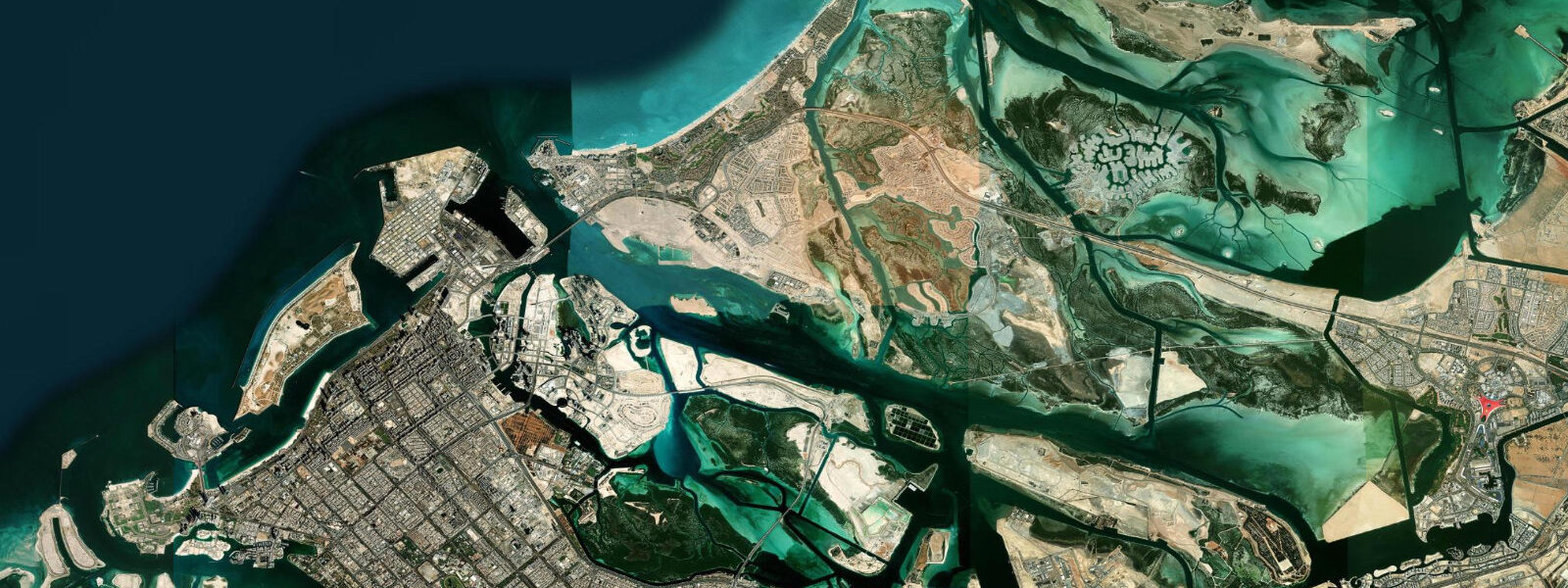
Saadiyat Island is a cultural development island 500 m from the Abu Dhabi mainland, reached by a bridge from the city. The northern coast of Saadiyat faces open Gulf water — cleaner, less sheltered, and with slightly better wave action than the Corniche beach on the main island to the southwest. The Saadiyat beach is widely considered to have the best water quality in the Abu Dhabi urban area; it is less affected by port and marina discharge than the Corniche and benefits from the more exposed Gulf circulation that brings cleaner water from the north.
The tidal regime is mixed semidiurnal, spring range approximately 1.5–2.0 m above Chart Datum — consistent with Abu Dhabi Port. The Saadiyat beachfront faces NNW into the open Gulf; at high water the beach face gives direct access to swimming depth. At low water the beach extends 30–60 m further out and the outer section is shallow over a gently sloping sand floor. The tidal current along the Saadiyat north coast runs 0.3–0.8 knots at springs, driven by the tidal exchange between the inner Abu Dhabi channels and the open Gulf.
Saadiyat Island is best known for its cultural institutions: the Louvre Abu Dhabi opened on the island in 2017, and the Zayed National Museum and the Guggenheim Abu Dhabi are in planning stages. The beach itself — branded as Saadiyat Public Beach on the western section and Saadiyat Beach Club (paid) on the eastern section — is a consistent sea turtle nesting site. Hawksbill sea turtles (Eretmochelys imbricata) nest on the Saadiyat beach from May through September; nesting activity is managed by the Environment Agency Abu Dhabi (EAD). The nesting season coincides with the summer heat, and turtle activity happens at night; the nesting beaches are marked and restricted after dark during the season.
Sea temperature on the Saadiyat open Gulf coast follows the same extreme cycle as the rest of Abu Dhabi: 14–18°C in January–February, 32–35°C in July–August. The water clarity here is higher than the Corniche; visibility is typically 3–5 m on a calm day in the October–April period, improving to 5–8 m after sustained clean NW winds clear the inner Gulf water. The seagrass beds immediately offshore (accessible by snorkel at high water from 0.5–2.0 m depth) support dugong (Dugong dugon) grazing; sightings are occasional but possible in the morning. NCM UAE publishes official tide tables. Predictions here: Open-Meteo Marine, ±45 min / ±0.2–0.3 m.
The Louvre Abu Dhabi museum on Saadiyat Island's cultural district, a 10-minute drive from the beach, is an architectural landmark in its own right — Jean Nouvel's dome of geometric cutwork panels creates a 'rain of light' effect inside. The museum's permanent collection spans world cultures chronologically; it is the most visited museum in the UAE and a recommended cultural pairing with a beach day on Saadiyat. The beach club, the public beach, and the museum are on different sides of the island; a car or taxi is needed to move between them.
Saadiyat Island's cultural district development — Louvre Abu Dhabi (2017), Future Zayed National Museum and Guggenheim Abu Dhabi (planned) — represents the largest concentration of internationally-branded cultural institutions outside their home countries in a single development. The island was essentially uninhabited farmland before the early 2000s; the speed and scale of development make it one of the most dramatic examples of Gulf state urban transformation in recent decades. The beach itself, despite the surrounding development density, remains relatively uncrowded on weekdays compared to the Corniche; the 40-minute drive from central Abu Dhabi filters casual visitors. The contrast between the cultural district construction activity on the island's interior and the undisturbed beach and seagrass habitat on the northern shore is one of the more unusual juxtapositions in contemporary Gulf coastal development.
Tide questions about Saadiyat Beach
Quick answers to the most common questions about tide times, range, and water access at Saadiyat Beach.
Is Saadiyat Beach good for snorkelling?
Saadiyat has the best water clarity of the main Abu Dhabi urban beaches. In the October–April season, visibility reaches 3–8 m and the seagrass beds offshore are accessible by snorkel at high water from 0.5–2.0 m depth. Snorkelling is most productive at high tide when the depth over the outer seagrass is sufficient; at low water the outer flat can be very shallow. The seagrass habitat supports sea turtles, rays, and occasionally dugong. Saadiyat is not a coral dive destination — it is a shallow seagrass and sandy bottom environment, not a reef. At low water the outer seagrass beds at Saadiyat shallower to 0.3–0.5 m; snorkelling is possible but prone to contact with the seagrass if technique is poor. Enter at high water for the best depth.
Are there sea turtles on Saadiyat Beach?
Yes. Hawksbill sea turtles (Eretmochelys imbricata) nest on Saadiyat Beach from May through September. The Environment Agency Abu Dhabi (EAD) manages the nesting programme; marked nesting areas on the beach are restricted after dark during the season to avoid disturbing nesting females and hatchlings. Visitors are asked not to use lights or cameras on the beach after dark during nesting season. EAD organises guided nesting observation walks; contact the Saadiyat Beach Club or EAD directly to join a guided session. EAD-guided turtle observation sessions typically run at 20:00–22:00 during the nesting season; confirm dates and booking with the Saadiyat Beach Club or EAD directly.
Where do the tide predictions on this page come from?
Open-Meteo Marine, a free gridded global ocean model. Accuracy is typically ±45 minutes on timing and ±0.2–0.3 m on height. The National Centre of Meteorology (NCM) UAE publishes official tide tables for Abu Dhabi; Saadiyat Island is sufficiently close to Abu Dhabi Port that the port tide prediction is applicable with minimal adjustment. For navigation in the Abu Dhabi island channels, use NCM data. This page is not for navigation. NCM UAE (ncm.ae) publishes tidal predictions and wave forecasts for UAE coastal waters.
How does the tide affect the water clarity at Saadiyat Beach?
Water clarity at Saadiyat is generally better at high water on an outgoing flood than at low water after the ebb has stirred the shallow inner shelf. The tidal exchange between the inner Abu Dhabi channels and the open Gulf moves water over the seagrass flat; on the flood tide, cleaner outer Gulf water pushes over the beach. After sustained NW winds (common October–March), the open Gulf circulation clears the inner water and clarity improves to 5–8 m. Summer turbidity increases as the shallow Gulf heats and circulation slows. The NW winds that clear inner Gulf water and improve Saadiyat visibility are most frequent from November through February.
What is the difference between Saadiyat Public Beach and Saadiyat Beach Club?
Saadiyat Public Beach (free, on the western section of the Saadiyat north coast) is open access with basic changing facilities. Saadiyat Beach Club (paid admission) operates the eastern section with sun loungers, a restaurant, lifeguards, and managed beach facilities. Both are on the same stretch of coast with the same tidal conditions. The public beach section is also managed by the same environmental rules regarding turtle nesting. Both sections are open year-round; opening hours and admission prices are set by the operator and subject to change. Dugong (Dugong dugon) sightings in the Saadiyat seagrass beds are rare but confirmed; early morning low-speed observation from a kayak or paddleboard is the most likely encounter scenario.
8-day tide table — Saadiyat Beach
Heights relative to MSL. Predictions: Open-Meteo Marine (MeteoFrance SMOC, 0.08° grid) — heights relative to MSL (not chart datum / LAT). Model-derived.
| Day | Type | Time | Height |
|---|---|---|---|
| Tue 04 Aug | High | 04:00 | 0.9m |
| Low | 10:01 | -0.5m | |
| High | 16:34 | 1.0m | |
| Low | 22:53 | -0.1m | |
| Wed 05 Aug | High | 04:17 | 0.7m |
| Low | 10:25 | -0.3m | |
| High | 17:03 | 1.1m | |
| Low | 23:35 | -0.2m | |
| Thu 06 Aug | High | 05:03 | 0.5m |
| Low | 10:39 | -0.2m | |
| High | 17:38 | 1.1m | |
| Fri 07 Aug | Low | 00:52 | -0.2m |
| High | 06:21 | 0.2m | |
| Low | 10:55 | -0.0m | |
| High | 18:34 | 1.1m | |
| Sat 08 Aug | Low | 02:37 | -0.3m |
| High | 09:00 | 0.2m | |
| Low | 11:00 | 0.2m | |
| High | 19:35 | 1.1m | |
| Sun 09 Aug | Low | 04:15 | -0.4m |
| High | 20:50 | 1.2m | |
| Mon 10 Aug | Low | 05:20 | -0.6m |
| High | 22:10 | 1.2m | |
| Tue 11 Aug | Low | 03:00 | -0.0m |