Paje tide times
Paje tide forecast — heights relative to MSL.
Today's tide times for Paje
Tide times at Paje on Tuesday, 4 August 2026: first low tide at 03:00am, first high tide at 06:49am, second low tide at 12:58pm, second high tide at 07:00pm. Sunrise 06:32am, sunset 06:23pm.
Tide chart for Paje
24-hour cosine-interpolated curve around the present moment. Heights relative to MSL. Predictions: Predictions: Open-Meteo Marine (MeteoFrance SMOC, 0.08° grid).
Sun, moon and conditions on Tue 04 Aug
Snapshot at build time — refreshes daily. Sea state from Open-Meteo Marine.
Highs and lows next 7 days
Every predicted high and low for the next week, with the daily tidal coefficient (0–120; higher = bigger swing, > 95 means stronger currents).
Other spots nearby
The three closest curated TideTurtle locations to Paje, measured by great-circle distance.
Today's solunar windows
Solunar tradition: major periods are the ≈3h windows around moon transit and opposition; minor are ≈2h around moonrise and moonset. Pair with the local tide stage and wind for the best read.
Cycle dates near Paje
Last spring tide on Tue 04 Aug (range 2.6m). Next spring tide on Mon 10 Aug (range 2.4m). Next neap on Sat 08 Aug.
Spring tides cluster around new and full moons (biggest swings). Neap tides land on quarter moons (smallest swings). See the spring tide and neap tide glossary entries for the why.
About tides at Paje
A short guide to the coastline at Paje — geography, sea state, and what the tide is actually doing under your feet.
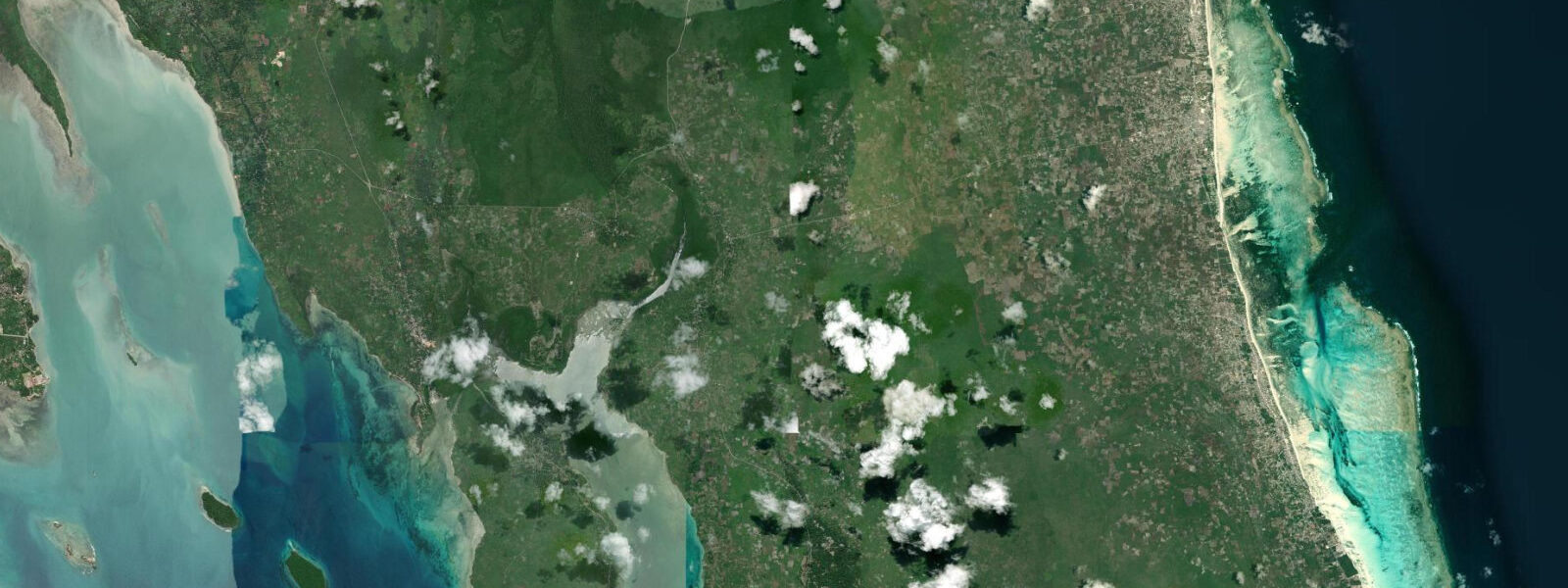
Paje is on the southeast coast of Zanzibar, facing the open Indian Ocean rather than the sheltered Zanzibar Channel. This single distinction shapes everything about the beach: the exposure to the southeast kaskazi and kusi trade winds, the scale of the tidal flat, the depth and character of the water, and the activity that has made Paje one of the most recognised kitesurfing destinations on the African continent.
The tidal flat at Paje is genuinely large. At spring low water the flat extends 800 metres or more from the beach edge — a shimmering plane of warm water ranging from ankle to knee depth, over a bottom of white coral sand and scattered seagrass. This flat is the defining physical feature of the beach. At high water, the flat is covered to 1.5 to 2 metres and the conditions shift: the water is deeper, the inner sandbars are submerged, and the outer reef is accessible by boat or for strong swimmers. The spring range at Paje is in line with the rest of Zanzibar's eastern coast — 3.0 to 3.5 metres — with the same semidiurnal rhythm and diurnal inequality producing two unequal highs and two unequal lows each day. The timing at Paje lags the western coast by 15 to 30 minutes at springs due to the routing of the tidal wave around the island.
The kite schools at Paje teach almost exclusively in the low-water window. At spring low tide, the flat has 800 metres of ankle-to-knee-deep water stretching from the beach — a perfect kite-teaching surface. Students can walk back to the beach if they crash, the water is warm (26 to 29 degrees Celsius year-round), and there are no obstacles except the reef edge at the outer end of the flat, which is visible as a line of breaking water. The low-water flat lesson runs from roughly 2 hours before low water to low water itself — the window when the flat is at its most fully exposed. At high water, conditions shift to the deeper lagoon and the outer reef for more advanced riders; the wave sessions on the eastern face of the outer reef are accessible only at high water when the reef is submerged enough to pass safely.
The SE trade winds — the kusi from May to October, the NE kaskazi from December to February — provide Paje with consistent kite wind. The kusi is the stronger and more reliable season: wind arrives at the beach from the SE in the morning, typically building through the day from 10 to 25 knots by early afternoon, and easing after sunset. The kaskazi blows from the NE and is generally lighter and less consistent. The interaction between the wind direction and the tidal flat creates different kite conditions through the day even with constant wind: as the tide floods and the flat depth increases, riders shift from the shallow-flat beginner area toward the outer reef, and the wave conditions on the reef improve as water covers the coral adequately.
For beach walkers and families, the low-water flat offers a different experience: a vast shallow warm expanse safe to walk in sandals or bare feet on the sandy sections, with tide pools forming at the reef edge that hold sea cucumbers, starfish, and small reef fish during the exposure period. The seagrass sections of the flat support green turtle grazing — young turtles (chelonia mydas) are occasionally seen on the flat in the early morning low-water period. The walk from the beach edge to the reef edge at spring low water is approximately 800 metres across firm sand and occasional seagrass patches; allow 20 to 30 minutes each way and time the return well before the flood tide closes the crossing.
Anglers work the channel between the beach and the outer reef on the incoming flood tide, targeting bonefish and small GT (giant trevally) that follow the rising water across the flat. This is a flat-water fly-fishing environment and the water clarity over the white sand bottom is typically excellent — you can see fish moving at 20 to 30 metres in calm conditions. The bonefish season at Paje is year-round but the flat is most productive when the flood tide coincides with the early morning low-light window, typically from 06:00 to 09:00.
Tide predictions for Paje come from Open-Meteo Marine, a gridded global ocean model. Accuracy is typically plus or minus 45 minutes on timing and 0.2 to 0.3 metres on height. The Zanzibar Meteorological Agency (ZMA) is the authoritative source for Zanzibar tidal data. These predictions are not for navigation.
Tide questions about Paje
Quick answers to the most common questions about tide times, range, and water access at Paje.
When is the best time to kitesurf at Paje?
Paje has two distinct kite conditions tied to the tidal state. At low water — when the tidal flat exposes for 800 metres at spring tides — the flat provides ideal beginner conditions: ankle-to-knee-deep warm water over a sandy bottom, no obstacles except the distant reef edge. This window runs from roughly 2 hours before to 1 hour after low water. At high water, the flat is covered and conditions shift to the deeper lagoon and the outer reef, which suits intermediate and advanced riders working the wave section. For wind, the kusi (SE trade) season from May to October is the most reliable, with 10 to 25 knots through the afternoon. Check the low water time on this page and plan the flat-water session for the 2-hour window before low water.
How far does the tidal flat extend at Paje at low water?
At spring low water, the tidal flat at Paje extends approximately 800 metres from the beach edge to the outer reef. Depth across the flat ranges from ankle to knee for most of this distance, with deeper channels at 400 to 600 metres from shore where the seagrass is denser. At neap low water, the flat exposes less — roughly 400 to 500 metres — because the tidal range is smaller (approximately 1.5 metres versus 3.0 to 3.5 metres at springs). The outer reef edge at the full spring low is marked by a line of breaking surf; do not approach closer than 50 metres as the coral is sharp and the wave action over the reef edge is unpredictable. Time the walk back well before the flood tide reaches knee depth on the outer flat.
Is Paje beach suitable for families with children?
At low water, the Paje tidal flat is one of the safest paddling environments for children on Zanzibar: warm water (26 to 29 degrees Celsius), clear visibility over a sandy bottom, ankle-to-knee depth for hundreds of metres, and no boat traffic on the flat. The main hazard is the tidal current running along the flat as the tide turns — children can be swept along the beach in 0.5 to 1 knot of current without noticing. Keep younger children within 100 metres of the beach edge and watch the tide table: the flat floods from low water to high water in approximately 3 hours at springs, rising roughly 1 metre per hour. A child wading at knee depth 400 metres from the beach can be in chest-deep water 45 minutes later if the family doesn't track the flood.
Are there bonefish at Paje, and when is the best tide to fish for them?
Bonefish (albula vulpes) are present on the Paje flat year-round and are the primary target for fly fishers visiting the east Zanzibar coast. They move onto the flat with the incoming flood tide, following the rising water across the sand and seagrass as the warmth and the current carry baitfish over the bottom. The most productive window is the first 2 hours of flood — from low water to mid-flood — when the fish are actively moving in clear, shallow water over white sand. Water visibility is typically 20 to 30 metres in calm conditions, making sight-fishing viable. Early morning flood tides (low water between 05:00 and 08:00) are rated most productive by local guides. Giant trevally also follow the bonefish onto the flat; a 9-weight setup is the minimum for trevally encounters.
Where do the tide predictions for Paje come from?
Open-Meteo Marine, a gridded global ocean model. The model estimates tidal height from a geographic grid rather than from local gauge harmonic analysis. Accuracy is typically plus or minus 45 minutes on timing and 0.2 to 0.3 metres on height. At Paje, the timing uncertainty matters for planning tidal flat sessions: a 45-minute error in the predicted low water time shifts the flat-water kite window and the bonefish window by the same margin. The Zanzibar Meteorological Agency (ZMA) publishes authoritative tide tables for Zanzibar waters. Eastern Zanzibar also has a slight timing offset from the western coast (15 to 30 minutes at springs) that the Open-Meteo grid captures approximately but not precisely. These predictions are not for navigation or commercial vessel operations.
8-day tide table — Paje
Heights relative to MSL. Predictions: Open-Meteo Marine (MeteoFrance SMOC, 0.08° grid) — heights relative to MSL (not chart datum / LAT). Model-derived.
| Day | Type | Time | Height |
|---|---|---|---|
| Tue 04 Aug | Low | 03:00 | 0.0m |
| High | 06:49 | 1.9m | |
| Low | 12:58 | -0.7m | |
| High | 19:00 | 1.6m | |
| Wed 05 Aug | Low | 01:08 | -0.8m |
| High | 07:27 | 1.8m | |
| Low | 13:41 | -0.6m | |
| High | 19:39 | 1.4m | |
| Thu 06 Aug | Low | 01:44 | -0.6m |
| High | 08:14 | 1.6m | |
| Fri 07 Aug | Low | 02:33 | -0.4m |
| High | 09:19 | 1.4m | |
| Low | 16:02 | -0.1m | |
| High | 21:53 | 0.8m | |
| Sat 08 Aug | Low | 03:53 | -0.2m |
| High | 10:58 | 1.3m | |
| Low | 18:00 | -0.1m | |
| Sun 09 Aug | High | 00:02 | 0.7m |
| Low | 05:47 | -0.1m | |
| High | 12:45 | 1.5m | |
| Low | 19:37 | -0.4m | |
| Mon 10 Aug | High | 01:40 | 0.9m |
| Low | 07:21 | -0.3m | |
| High | 13:57 | 1.8m | |
| Low | 20:35 | -0.7m | |
| Tue 11 Aug | High | 02:00 | 1.2m |