Ronneby tide times
Ronneby tide forecast — heights relative to MSL.
Tide chart for Ronneby
24-hour cosine-interpolated curve around the present moment. Heights relative to MSL. Predictions: Predictions: Open-Meteo Marine (MeteoFrance SMOC, 0.08° grid).
Sun, moon and conditions on Tue 04 Aug
Snapshot at build time — refreshes daily. Sea state from Open-Meteo Marine.
Highs and lows next 7 days
Every predicted high and low for the next week, with the daily tidal coefficient (0–120; higher = bigger swing, > 95 means stronger currents).
Other spots nearby
The three closest curated TideTurtle locations to Ronneby, measured by great-circle distance.
Today's solunar windows
Solunar tradition: major periods are the ≈3h windows around moon transit and opposition; minor are ≈2h around moonrise and moonset. Pair with the local tide stage and wind for the best read.
About tides at Ronneby
A short guide to the coastline at Ronneby — geography, sea state, and what the tide is actually doing under your feet.
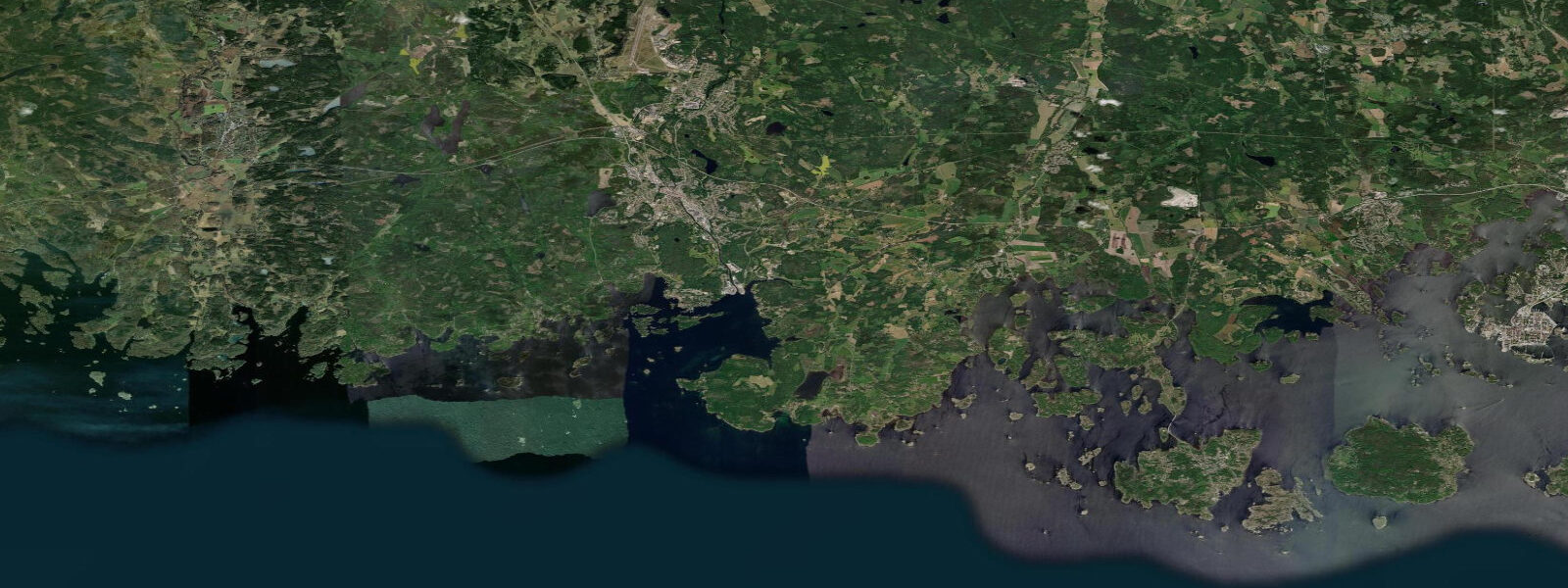
Ronneby is a small town of 12,000 in central Blekinge, at the mouth of the Bräkneån river where it cuts through a granite gorge before reaching the Baltic. The town has a dual historical identity: inland spa resort (the Ronneby Brunn mineral spring and spa park, established in the 18th century) and coastal fishing and maritime trade port. The coastal zone is reached via the Ronnebyfjärden inlet, a sheltered arm of the sea running 8 km northwest from the open Baltic to the river mouth.
The tidal regime at Ronneby is effectively non-tidal — mean tidal range approximately 10 cm, identical to the rest of the Baltic Blekinge coast. Water level is governed by wind-driven Baltic setup and atmospheric pressure, not the astronomical tide. The Ronnebyfjärden inlet amplifies wind-driven setup from southerly gales: as water is pushed into the enclosed inlet head, the rise can be 0.2–0.3 m above the open coast average.
The Bräkneån river gorge above the town is one of Blekinge's most scenic landscape features. Sea trout run the Bräkneån from August through October, moving from the Baltic into the river on autumn rains and high water. The tidal freshwater-saltwater boundary in the Bräkneån estuary is fixed very close to the river mouth due to the minimal Baltic tidal range — there is no significant tidal push of saltwater upstream. Sea trout therefore move quickly through the minimal estuary zone into freshwater rather than lingering in a shifting tidal transition.
For boat operators, the Ronnebyfjärden provides 8 km of sheltered inner water leading to the Ronneby guest harbour at the river mouth. The harbour is non-tidal in any practical sense. The main considerations are chart accuracy for the inner inlet shoals and wind-driven setup: during sustained southerly gales, the inlet head can experience 0.2–0.3 m of wind setup on top of any regional Baltic surge.
Fishing from Ronneby targets sea trout in the Bräkneån and in the coastal zone outside the Ronnebyfjärden. Coastal sea trout fishing in Baltic Blekinge is primarily a summer and autumn night-fishing activity from beaches and rocky points — sea trout feed in the shallow littoral zone at night in the calm Baltic conditions. Tidal state is not relevant; the fish respond to temperature, prey movement, and light conditions, not the astronomical tide.
For kayakers, the Ronnebyfjärden and its connecting waterways northeast toward Bräkne-Hoby are excellent sheltered paddling routes with essentially no tidal current. The outer Baltic coast south of the inlet entrance is exposed to a longer southwest fetch and requires open-water paddling experience.
All tide predictions for Ronneby come from the Open-Meteo Marine gridded model. Timing accuracy is ±45 minutes; height accuracy is ±0.3 m above Chart Datum.
Tide questions about Ronneby
Quick answers to the most common questions about tide times, range, and water access at Ronneby.
Does tide affect sea trout fishing in the Bräkneån river at Ronneby?
The Bräkneån estuary at Ronneby experiences minimal tidal range — approximately 10 cm — insufficient to significantly move the freshwater-saltwater boundary upstream. Sea trout entering from the Baltic in autumn move quickly through the minimal tidal estuary zone into freshwater, rather than lingering in a shifting tidal transition. The relevant triggers for sea trout movement into the river are autumn rainfall raising river flow, dropping water temperatures, and lunar phase (fish move more actively around new and full moon). Coastal sea trout fishing outside the Ronnebyfjärden is primarily night-fishing from beaches; tidal state is irrelevant.
What is the tidal range at Ronneby and how does wind affect water levels more?
Ronneby has a mean tidal range of approximately 10 cm in the open Baltic. Inside the Ronnebyfjärden inlet, sustained southerly gales can produce wind-driven setup of 0.2–0.3 m above the open-coast level — two to three times the tidal range. The Swedish Meteorological and Hydrological Institute (SMHI) publishes coastal water-level forecasts for the Baltic that include both tidal and meteorological forcing — these are a more useful planning tool than the astronomical tide table alone.
Is the Ronnebyfjärden suitable for kayaking?
The Ronnebyfjärden is an 8 km sheltered inlet with essentially no tidal current — ideal for kayaking at any experience level. The inner fjärd waterways northeast toward Bräkne-Hoby extend the paddling range. Granite shorelines offer firm landing spots throughout. Winds are the main variable: moderate Baltic southerlies can produce chop in the wider sections of the inlet, but the inner channels are sheltered in most wind directions. The outer Baltic coast south of the inlet entrance requires open-water paddling experience and a weather window.
What are the main tourist attractions in Ronneby beyond the coast?
The Ronneby Brunn spa park is the town's historic centrepiece — an 18th-century health resort with mineral spring pavilions, the 19th-century Brunnshotell, and walking paths along the Bräkneån river gorge. The Naturreservat above the town protects the gorge section where exposed bedrock and old-growth forest create dramatic inland scenery. The combination of spa park, river gorge, and coastal fjärd makes Ronneby a useful base for both inland and coastal activities in Blekinge.
When is the best season to visit Ronneby's coast?
June through August is the primary season: sea swimming in the Baltic (water temperature 17–21 °C in July), kayaking in the Ronnebyfjärden, and boat trips in the outer archipelago. September is excellent for sea trout fishing along the outer coast and in the Bräkneån lower river. Winter occasionally freezes the inner Ronnebyfjärden — ice of 5–15 cm on cold, still years — which closes boat access but opens ice fishing. The Baltic does not freeze every winter; check current conditions. Water levels are lowest in late winter when persistent northeasterlies draw water from the Baltic coast.
5-day tide table — Ronneby
Heights relative to MSL. Predictions: Open-Meteo Marine (MeteoFrance SMOC, 0.08° grid) — heights relative to MSL (not chart datum / LAT). Model-derived.
| Day | Type | Time | Height |
|---|---|---|---|
| Tue 04 Aug | — | ||
| Wed 05 Aug | High | 06:00 | -0.0m |
| Thu 06 Aug | — | ||
| Fri 07 Aug | Low | 05:00 | -0.2m |
| Sat 08 Aug | High | 20:00 | -0.1m |