Las Palmas de Gran Canaria tide times
Las Palmas de Gran Canaria tide forecast — heights relative to MSL.
Today's tide times for Las Palmas de Gran Canaria
Tide times at Las Palmas de Gran Canaria on Monday, 3 August 2026: first low tide at 02:00, first high tide at 05:24, second low tide at 11:24, second high tide at 17:38, third low tide at 23:58. Sunrise 08:24, sunset 21:51.
Tide chart for Las Palmas de Gran Canaria
24-hour cosine-interpolated curve around the present moment. Heights relative to MSL. Predictions: Predictions: Open-Meteo Marine (MeteoFrance SMOC, 0.08° grid).
Sun, moon and conditions on Mon 03 Aug
Snapshot at build time — refreshes daily. Sea state from Open-Meteo Marine.
Highs and lows next 7 days
Every predicted high and low for the next week, with the daily tidal coefficient (0–120; higher = bigger swing, > 95 means stronger currents).
Other spots nearby
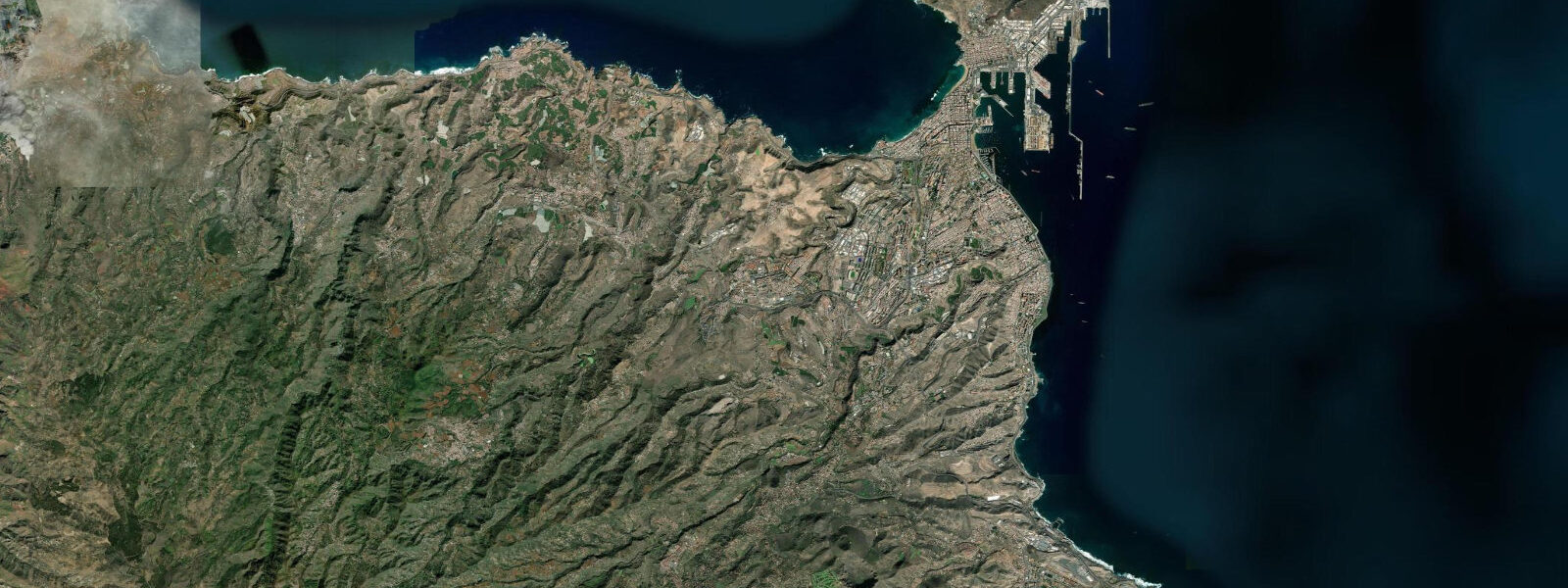
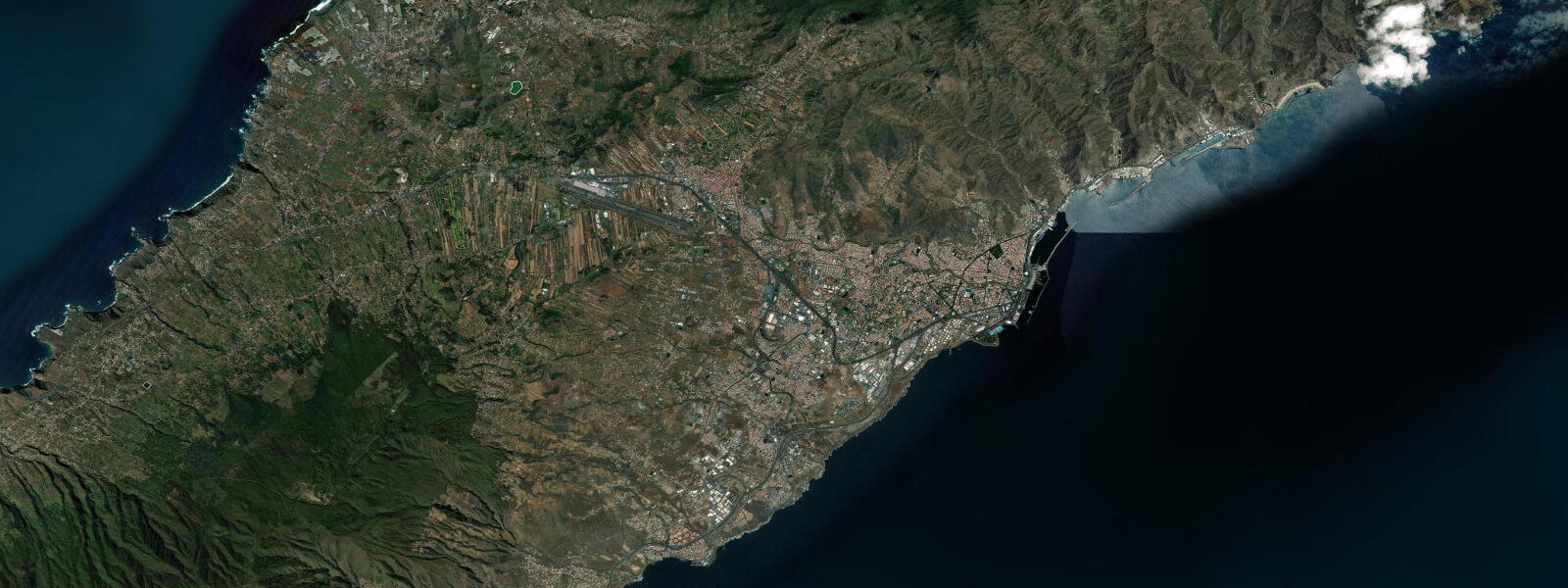
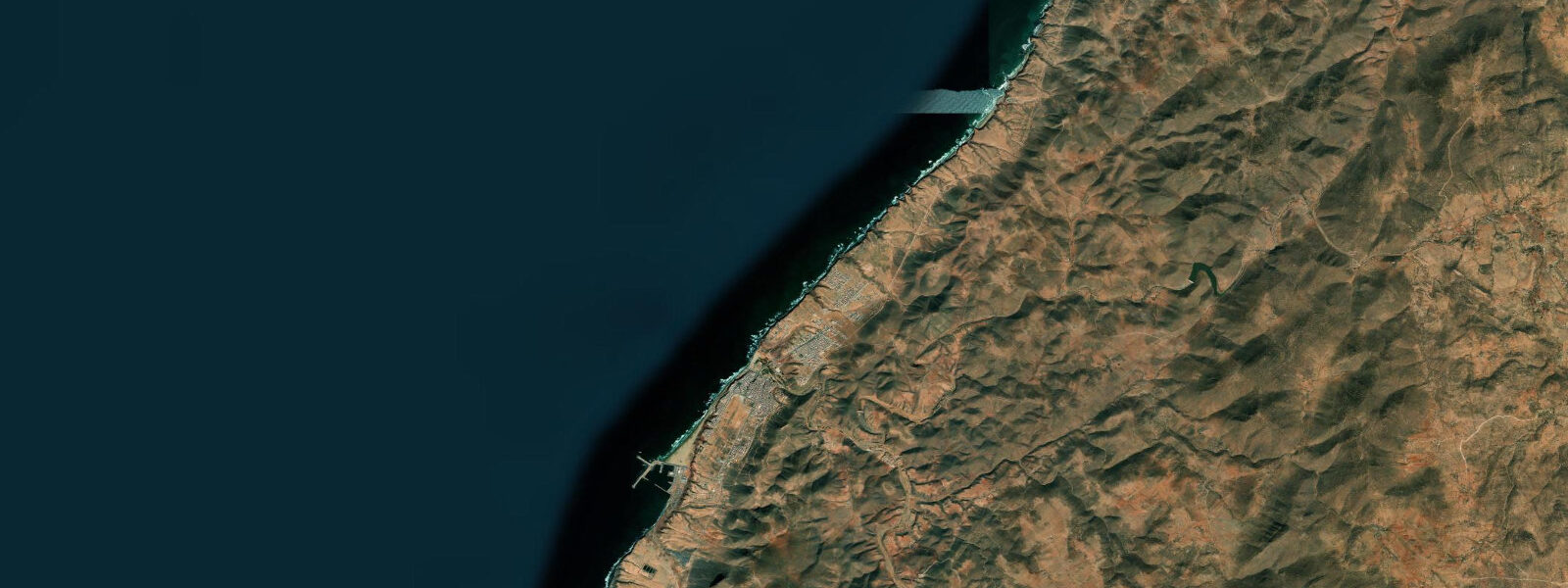
The three closest curated TideTurtle locations to Las Palmas de Gran Canaria, measured by great-circle distance.
Today's solunar windows
Solunar tradition: major periods are the ≈3h windows around moon transit and opposition; minor are ≈2h around moonrise and moonset. Pair with the local tide stage and wind for the best read.
Cycle dates near Las Palmas de Gran Canaria
Last spring tide on Mon 03 Aug (range 1.8m). Next spring tide on Sun 09 Aug (range 1.4m). Next neap on Fri 07 Aug.
Spring tides cluster around new and full moons (biggest swings). Neap tides land on quarter moons (smallest swings). See the spring tide and neap tide glossary entries for the why.
About tides at Las Palmas de Gran Canaria
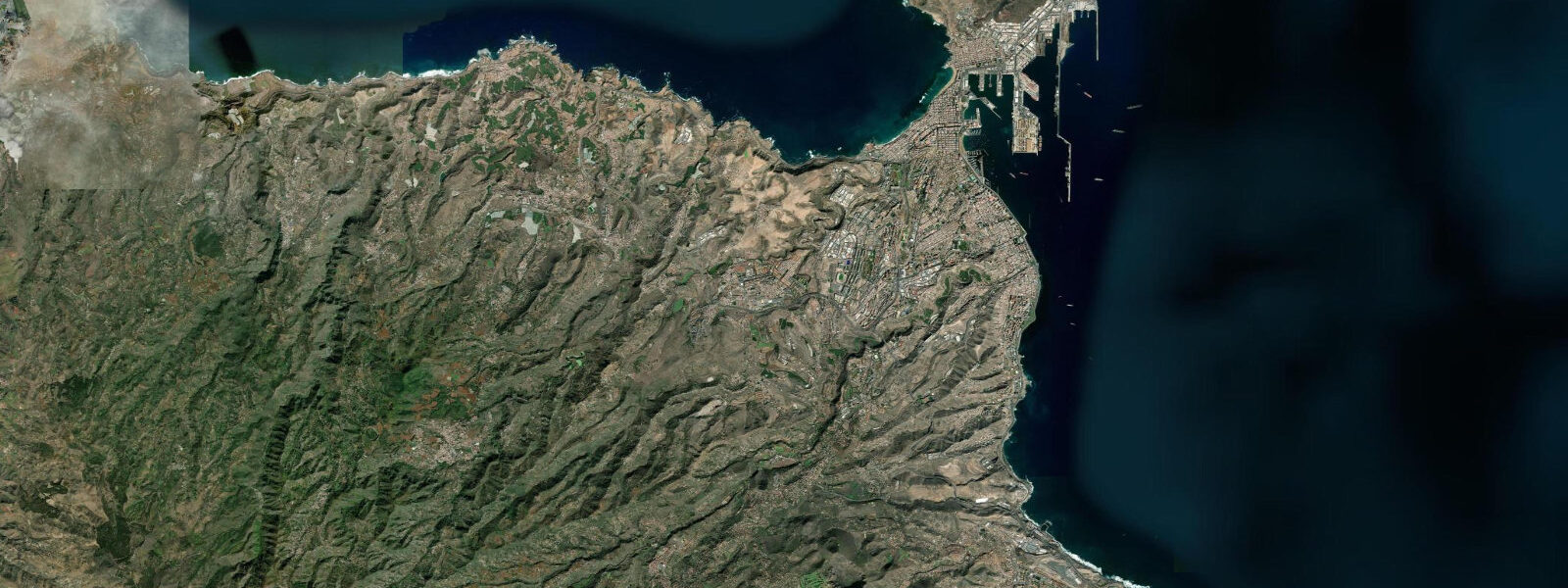
A short guide to the coastline at Las Palmas de Gran Canaria — geography, sea state, and what the tide is actually doing under your feet.
Las Palmas sits on the northeastern corner of Gran Canaria, where the Atlantic trade wind blows for roughly 300 days a year and the sea temperature holds between 19 and 24 degrees Celsius regardless of season. The city is the largest in the Canary Islands and runs on two parallel identities: a working port that handles container traffic, cruise ships, and the fishing fleet that still ranges as far as the Saharan banks, and the Playa de Las Canteras — a 3.4-kilometre urban beach behind a natural reef that makes swimming conditions benign even when the open Atlantic outside is rough.
Tidal range at Las Palmas is modest by Atlantic standards — 1.2 to 1.8 metres at springs, reflecting the Canaries' offshore position in mid-Atlantic. The reef formation called La Barra creates a natural swimming lagoon inside the surf zone at Las Canteras; at low tide the reef emerges and breaks up the swell, creating a calm inner area even on active trade-wind days. High tide covers the reef more completely and allows longer swimming lines. Tide timing matters for surfing outside the reef: the peak on the Playa de Alcaravaneras side breaks better at mid-tide.
The trade wind (alisio) is the defining weather feature. It blows from the northeast at 15–25 knots most afternoons from spring through autumn, making Las Palmas permanently attractive for kitesurfing and windsurfing on the exposed eastern beaches. El Médano on the south coast of Gran Canaria is the technical kiteboarding venue, but the city beach itself runs kite and windsurf rentals. The Poema del Mar aquarium (opened 2017) and the adjacent Viera y Clavijo botanical gardens offer terrestrial interest.
Surfers base at Las Palmas for access to several break types within easy driving distance. El Confital, a right-hand reef at the northern end of Las Canteras beach that fires on northwest swell, is the prestige local wave — sometimes compared to Snapper Rocks in consistency on its best days. La Laja, to the south of the port, produces long left-handers. The Canaries' latitude means consistent swell arrives from North Atlantic storm tracks October through April.
Christopher Columbus made his last Atlantic provisioning stop in Las Palmas in 1492, in a house that still exists in the Vegueta district (now a museum). The old city runs from Vegueta through the Triana shopping district; the cathedral construction started in 1500 and was never fully finished, giving it a particular truncated Gothic quality. The fish market at La Recova supplies the restaurants that cluster around the Playa de Las Canteras promenade.
Predictions on this page come from Open-Meteo Marine, a gridded global ocean model. Accuracy is typically within plus or minus 45 minutes on timing and 0.2 to 0.3 metres on height — model-derived, not from a local gauge. For authoritative Spanish tide data, consult Puertos del Estado.
Tide questions about Las Palmas de Gran Canaria
Quick answers to the most common questions about tide times, range, and water access at Las Palmas de Gran Canaria.
What is the tidal range at Las Palmas de Gran Canaria?
Las Palmas sits on the Atlantic-facing coast of Gran Canaria. Spring tidal range is 1.2 to 1.8 metres, which is moderate by Atlantic standards. The natural reef (La Barra) at Playa de Las Canteras creates a sheltered lagoon where tidal state affects swell penetration — at low tide the reef breaks up incoming waves more effectively, at high tide more swell enters the inner lagoon.
Is Playa de Las Canteras safe for swimming year-round?
Yes — the reef (La Barra) protects the inner lagoon from Atlantic swell, making Las Canteras one of the safest urban beaches for swimming in Spain even in winter. Water temperature stays between 19°C (February–March) and 24°C (September). The reef itself can be slippery at low water; use the designated entry ramps rather than scrambling across it. The northern (Peñón) section is the calmest area.
Where is El Confital surf break?
El Confital is at the northern end of Las Canteras beach, past the rocky headland where the beach path ends. It is a right-hand reef break that works on northwest swell, typically October through April. Best at mid-to-high tide on medium swell (1.5–2.5 metres). It is an intermediate to advanced wave — the reef is shallow at low tide and the takeoff is steep. Local surfers predominate and priority is taken seriously.
What is the trade wind season in Las Palmas?
The northeast trade wind (alisio) blows most consistently from March through October, often sustained at 15–25 knots in afternoons. Winter months (November–February) are calmer and more variable, with frontal systems from the North Atlantic occasionally bringing rain and southerly winds. For kitesurfing and windsurfing, the trade-wind months are prime; for surfing, winter northwest swells are the best quality.
Do I need a car to reach the surf spots from central Las Palmas?
Not for El Confital or Las Canteras — both are walkable from the city centre. La Laja (to the south of the port) is reachable on foot in 30 minutes or by bus. For the south coast spots (El Médano, Playa de Vargas, Arinaga), a car or the public bus network from San Telmo station is needed. Gran Canaria is compact enough that most surf spots are within 45 minutes' drive from Las Palmas.
7-day tide table — Las Palmas de Gran Canaria
Heights relative to MSL. Predictions: Open-Meteo Marine (MeteoFrance SMOC, 0.08° grid) — heights relative to MSL (not chart datum / LAT). Model-derived.
| Day | Type | Time | Height |
|---|---|---|---|
| Mon 03 Aug | Low | 02:00 | -0.3m |
| High | 05:24 | 0.7m | |
| Low | 11:24 | -0.9m | |
| High | 17:38 | 0.8m | |
| Low | 23:58 | -1.0m | |
| Tue 04 Aug | High | 06:04 | 0.6m |
| Low | 12:06 | -0.9m | |
| High | 18:20 | 0.7m | |
| Wed 05 Aug | Low | 00:40 | -0.9m |
| High | 06:52 | 0.5m | |
| Low | 12:58 | -0.8m | |
| High | 19:11 | 0.5m | |
| Thu 06 Aug | Low | 14:02 | -0.7m |
| High | 20:17 | 0.4m | |
| Fri 07 Aug | Low | 02:35 | -0.7m |
| High | 09:05 | 0.3m | |
| Low | 15:24 | -0.7m | |
| High | 21:46 | 0.3m | |
| Sat 08 Aug | Low | 04:05 | -0.7m |
| High | 10:34 | 0.4m | |
| Low | 17:00 | -0.7m | |
| Sun 09 Aug | High | 11:51 | 0.5m |
| Low | 18:15 | -0.9m |