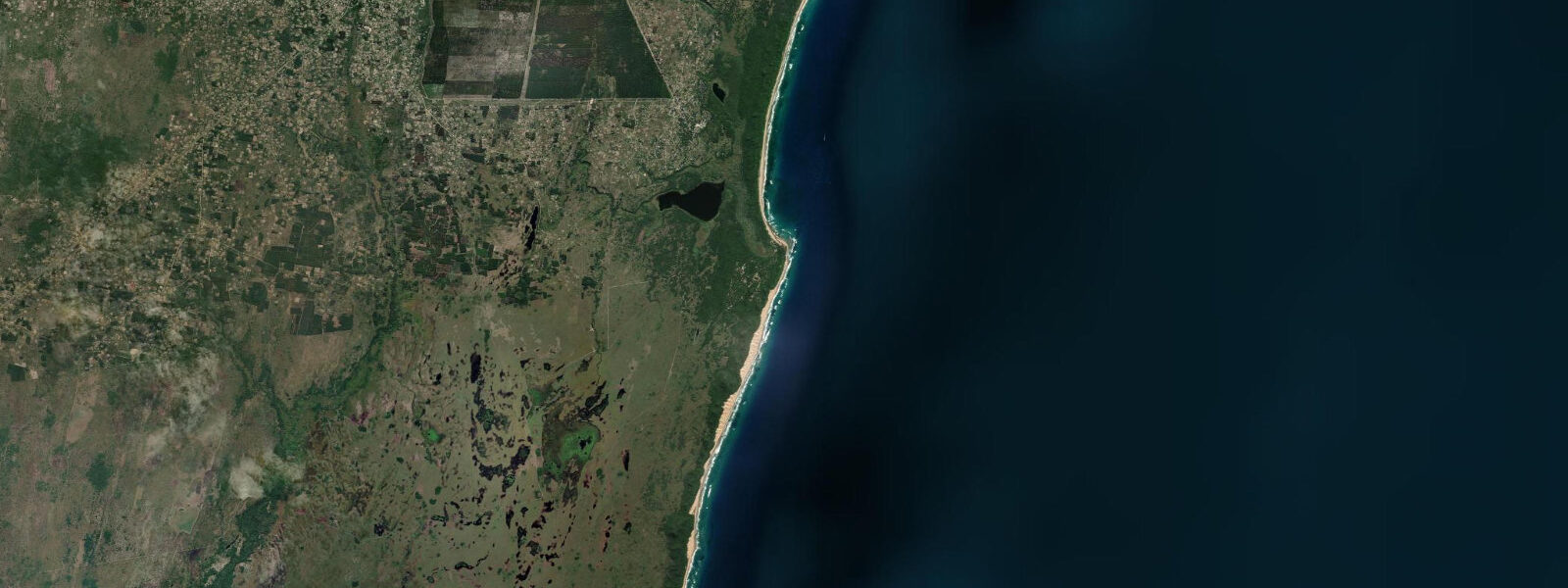
Sodwana Bay tide times
Sodwana Bay tide forecast — heights relative to MSL.
Today's tide times for Sodwana Bay
Tide times at Sodwana Bay on Monday, 3 August 2026: first low tide at 02:00, first high tide at 05:41, second low tide at 11:45, second high tide at 18:03. Sunrise 06:30, sunset 17:21.
Tide chart for Sodwana Bay
24-hour cosine-interpolated curve around the present moment. Heights relative to MSL. Predictions: Predictions: Open-Meteo Marine (MeteoFrance SMOC, 0.08° grid).
Sun, moon and conditions on Mon 03 Aug
Snapshot at build time — refreshes daily. Sea state from Open-Meteo Marine.
Highs and lows next 7 days
Every predicted high and low for the next week, with the daily tidal coefficient (0–120; higher = bigger swing, > 95 means stronger currents).
Other spots nearby
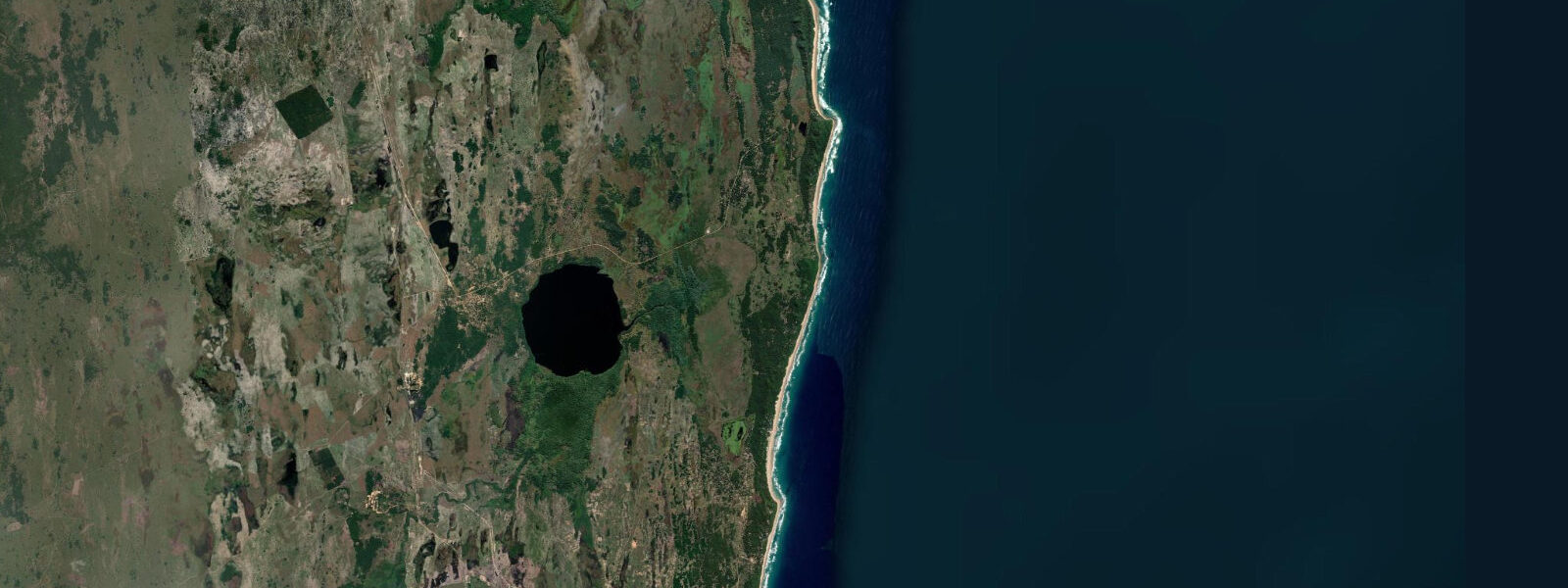
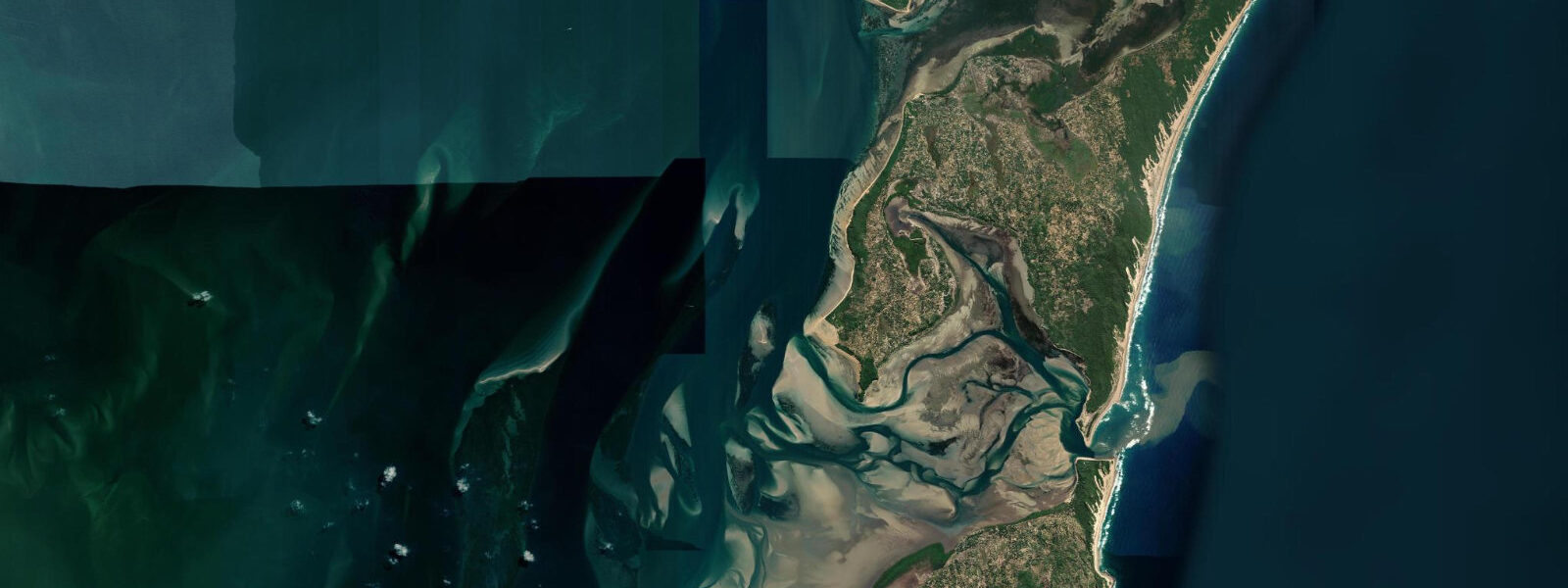
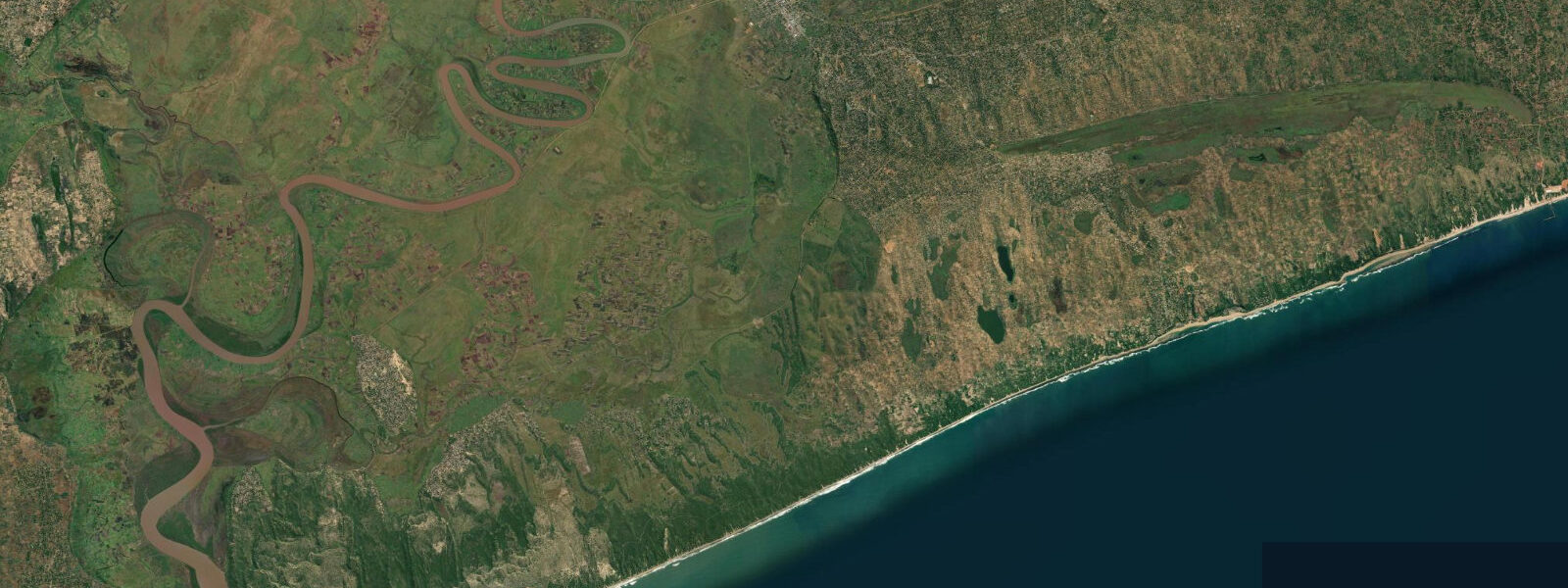
The three closest curated TideTurtle locations to Sodwana Bay, measured by great-circle distance.
Today's solunar windows
Solunar tradition: major periods are the ≈3h windows around moon transit and opposition; minor are ≈2h around moonrise and moonset. Pair with the local tide stage and wind for the best read.
Cycle dates near Sodwana Bay
Last spring tide on Mon 03 Aug (range 1.8m). Next neap on Sat 08 Aug.
Spring tides cluster around new and full moons (biggest swings). Neap tides land on quarter moons (smallest swings). See the spring tide and neap tide glossary entries for the why.
About tides at Sodwana Bay
A short guide to the coastline at Sodwana Bay — geography, sea state, and what the tide is actually doing under your feet.
Sodwana Bay is on the north KwaZulu-Natal coast, inside the iSimangaliso Wetland Park (UNESCO World Heritage), 360 km north of Durban. The bay is completely different from the urban Durban coast — the coral reefs of Sodwana are part of the southernmost coral reef system on the African continent and are considered the best diving in South Africa. Tidal range is semidiurnal with a mean spring range of about 1.4 metres; the tidal current on the outer reefs runs 1 to 2 knots on springs.
The coral reefs at Two Mile Reef, Five Mile Reef, and Nine Mile Reef (named for their distances from the camp) are in 10 to 30 metres of clear Indian Ocean water with visibility often exceeding 20 metres. The fish diversity — tropically influenced by the warm Agulhas Current — includes lion fish, moray eels, many species of grouper, and large game fish including giant trevally and barracuda. Whale sharks pass through the reefs from November through March.
Sodwana Bay has a boat launch that is one of the more exciting in South Africa — the beach launch through the surf zone on the outgoing tide requires experience and coordination between the launch crew and the skipper. Incoming surf can catch small dive boats broadside on a missed timing; the camp's boat handlers manage the operation, but it still gets adrenaline-inducing on big swell days.
The iSimangaliso park surrounding Sodwana contains an extraordinary range of habitats: the St Lucia estuary (hippos and crocodiles, 40 km south), the coastal dune forests (the highest vegetated dunes in Africa, over 160 metres), and the marine environment of Sodwana itself. Self-drive game viewing on the dune forest tracks is productive for red duiker, bushbuck, and the endemic samango monkey.
Leatherback and loggerhead sea turtles nest on the beaches north of Sodwana Bay from October through March. Guided night turtle tours (KZN Wildlife managed, strict group limits) walk the beaches at night to observe nesting females. Hatchling emergence tours in December through February observe the tiny hatchlings emerging and making their run to the sea. Booking through Ezemvelo KZN Wildlife is essential — tours sell out months in advance.
Predictions on this page come from Open-Meteo Marine, a gridded global ocean model. Accuracy is typically within plus or minus 45 minutes on timing and 0.2 to 0.3 metres on height — model-derived, not from a local gauge. For South African tide data, consult SANHO at hydro.navy.mil.za.
Tide questions about Sodwana Bay
Quick answers to the most common questions about tide times, range, and water access at Sodwana Bay.
Is Sodwana Bay good for beginner divers?
Two Mile Reef, the closest and most sheltered reef, is the standard beginner dive site — mostly 8 to 16 metres depth, calm conditions in the morning before the afternoon southeast wind builds, and rich marine life. Dive schools at Sodwana run PADI Open Water courses; the reef gives an exceptional first coral reef experience. More experienced divers use Five Mile and Nine Mile Reefs (deeper, more current, larger fish). The boat launch through the surf zone is the most challenging part of the diving experience.
When can I see whale sharks at Sodwana?
Whale sharks are most commonly encountered at Sodwana from November through March, when they follow plankton concentrations over the outer reefs. Sightings are not guaranteed — the sharks' movements are unpredictable — but the dive boats report encounters on 30 to 50% of trips in peak months. Whale shark encounters at Sodwana are during scuba dives (not snorkel tours like La Paz or the Maldives); divers ascend to the surface to swim alongside them.
Can I see sea turtles nesting near Sodwana?
Yes — leatherback and loggerhead turtles nest on the beaches north of Sodwana from October through March. Guided night tours (strictly managed by Ezemvelo KZN Wildlife, maximum 8 people per guide) walk the beach to observe nesting females laying eggs and, later in the season, hatchlings emerging from nests. Tours are popular and book months in advance; contact Ezemvelo KZN Wildlife directly or through iSimangaliso park booking. No self-guided beach walking at night during nesting season.
What is the boat launch like at Sodwana Bay?
Sodwana's beach boat launch is through the surf zone — the rigid inflatable boats drive straight through the breaking waves at full throttle on the outgoing tide. On small surf days it's exhilarating; on big swell days it requires experienced boat handlers and crew. The camp's professional launch team manages the timing and execution. All passengers keep hands inside the tubes and hold on; the launch is over in 30 seconds. The return (landing through surf) is also managed by the professionals. This is standard procedure at Sodwana and part of the experience.
What wildlife can I see in iSimangaliso park near Sodwana?
iSimangaliso Wetland Park (UNESCO World Heritage) surrounding Sodwana has diverse terrestrial wildlife: hippos and Nile crocodiles in the St Lucia estuary (40 km south), white rhino, elephant, and buffalo in sections of the park, red duiker, bushbuck, and samango monkey in the coastal dune forest. Whale watching (humpback and southern right whales pass the coast June through November) from the beach is common. Raptors including fish eagle and Verreaux's eagle-owl are in the dune forest. Self-drive wildlife drives require a current 4WD with good ground clearance on the sandy tracks.
8-day tide table — Sodwana Bay
Heights relative to MSL. Predictions: Open-Meteo Marine (MeteoFrance SMOC, 0.08° grid) — heights relative to MSL (not chart datum / LAT). Model-derived.
| Day | Type | Time | Height |
|---|---|---|---|
| Mon 03 Aug | Low | 02:00 | 0.0m |
| High | 05:41 | 1.1m | |
| Low | 11:45 | -0.6m | |
| High | 18:03 | 1.2m | |
| Tue 04 Aug | Low | 00:13 | -0.5m |
| High | 06:12 | 1.0m | |
| Low | 12:18 | -0.6m | |
| High | 18:39 | 1.1m | |
| Wed 05 Aug | Low | 00:48 | -0.5m |
| High | 06:51 | 0.8m | |
| Low | 12:54 | -0.5m | |
| High | 19:14 | 0.9m | |
| Thu 06 Aug | Low | 13:40 | -0.3m |
| High | 20:06 | 0.7m | |
| Fri 07 Aug | Low | 15:00 | -0.2m |
| High | 21:47 | 0.5m | |
| Sat 08 Aug | Low | 04:21 | -0.1m |
| High | 11:10 | 0.4m | |
| Low | 17:12 | -0.0m | |
| High | 23:56 | 0.6m | |
| Sun 09 Aug | Low | 19:06 | -0.3m |
| Mon 10 Aug | High | 01:00 | 0.7m |