L'Ermitage-les-Bains tide times
L'Ermitage-les-Bains tide forecast — heights relative to MSL.
Today's tide times for L'Ermitage-les-Bains
Tide times at L'Ermitage-les-Bains on Tuesday, 4 August 2026: first high tide at 03:45pm, first low tide at 10:10pm. Sunrise 06:49am, sunset 06:01pm.
Tide chart for L'Ermitage-les-Bains
24-hour cosine-interpolated curve around the present moment. Heights relative to MSL. Predictions: Predictions: Open-Meteo Marine (MeteoFrance SMOC, 0.08° grid).
Sun, moon and conditions on Tue 04 Aug
Snapshot at build time — refreshes daily. Sea state from Open-Meteo Marine.
Highs and lows next 7 days
Every predicted high and low for the next week, with the daily tidal coefficient (0–120; higher = bigger swing, > 95 means stronger currents).
Other spots nearby
The three closest curated TideTurtle locations to L'Ermitage-les-Bains, measured by great-circle distance.
Today's solunar windows
Solunar tradition: major periods are the ≈3h windows around moon transit and opposition; minor are ≈2h around moonrise and moonset. Pair with the local tide stage and wind for the best read.
Cycle dates near L'Ermitage-les-Bains
Last spring tide on Tue 04 Aug (range 0.3m). Next spring tide on Mon 10 Aug (range 0.3m). Next neap on Thu 06 Aug.
Spring tides cluster around new and full moons (biggest swings). Neap tides land on quarter moons (smallest swings). See the spring tide and neap tide glossary entries for the why.
About tides at L'Ermitage-les-Bains
A short guide to the coastline at L'Ermitage-les-Bains — geography, sea state, and what the tide is actually doing under your feet.
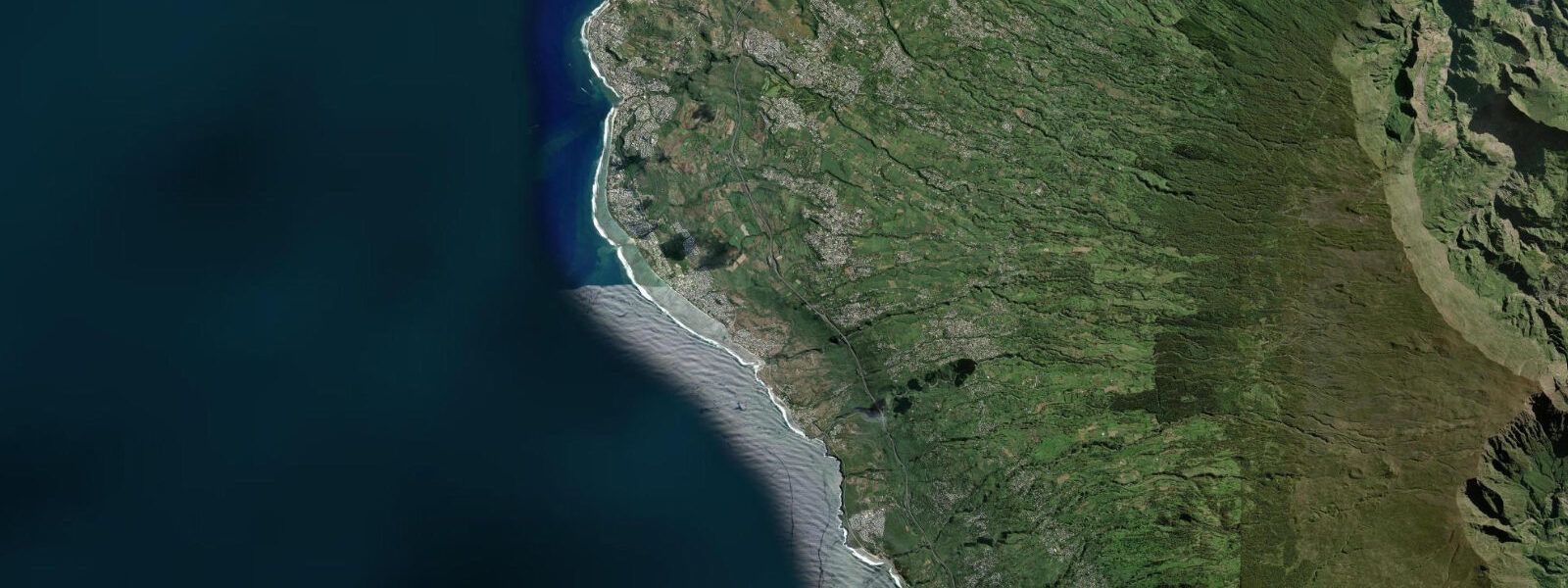
L'Ermitage-les-Bains is a small resort community 3 km south of Saint-Gilles, occupying a section of Réunion's western fringing reef lagoon that is widely regarded as the island's best accessible snorkelling and freediving zone. The lagoon between the beach at L'Ermitage and the reef crest holds a resident population of green turtles (Chelonia mydas), reef fish, and living coral in a depth range of 1 to 3 m at mean water level — shallow enough to snorkel comfortably from the beach without a boat.
The tidal regime at L'Ermitage is semidiurnal with the same spring range as the neighbouring Saint-Gilles coast: approximately 0.9 m springs, 0.4 m neaps. The small range interacts with the lagoon's very shallow bathymetry to produce marked tidal-state dependence on the snorkelling experience. At low water springs the seagrass beds in the inner lagoon can reduce to 0.3 to 0.5 m of depth — comfortable for wading but too shallow for horizontal snorkelling over the seagrass without disturbing the bottom. Green turtles grazing on the seagrass are more easily and closely observed at this low-water state, as the animals cannot dive deep to evade and often continue feeding while observers float slowly overhead.
At mid-tide and above, the lagoon depth over the seagrass zones increases to 1.0 to 2.0 m and snorkelling is comfortable for all ability levels. The inner face of the reef crest — the most species-rich zone — holds hard and soft coral, reef fish (parrotfish, wrasse, triggerfish, moray eels), and the occasional blacktip reef shark (Carcharhinus melanopterus) cruising the crest. Accessing the reef crest requires the same minimum water depth as at Saint-Gilles: mid-flood or above for fin clearance on the crest crossing.
The reef snorkel path at L'Ermitage that most operators and guides use runs parallel to the inner face of the reef crest, from north of the main beach access point south toward the La Saline boundary. The path stays on the lagoon side of the crest and requires at least 0.6 m of water over the crest to navigate without contact. On incoming water from mid-flood onward, the path is clear and the current on the inner crest face is mild. On the ebb below mid-tide, the current strengthens as water drains through the crest channels, and the shallowing depth requires care.
Green turtle observations at L'Ermitage are not incidental. The turtle population using the lagoon seagrass is resident — the same individuals return over years — and the snorkelling encounter rate is high enough that L'Ermitage has become one of Réunion's recognised marine wildlife experiences. The turtles are legally protected; established code of conduct requires floating quietly without chasing, touching, or approaching closer than 2 m when the turtle is resting. The animals habituate to calm, non-pursuing snorkellers and will often remain in the seagrass for extended feeding sessions.
The Route du Littoral, the major coastal motorway linking Saint-Denis to the resort towns, passes directly behind L'Ermitage beach. The road runs on viaduct and against the basalt cliff in several sections and is periodically closed to rockfall. Travel time from Saint-Denis varies depending on route conditions; during closures, traffic diverts inland via the Route des Tamarins (RN1a). The Réunion prefecture maintains real-time road closure information on its website and via local radio broadcast.
Predictions for L'Ermitage-les-Bains come from Open-Meteo Marine, a gridded global ocean model; accuracy is typically within plus or minus 45 minutes on timing and 0.2 to 0.3 m on height above chart datum. SHOM (Service Hydrographique et Océanographique de la Marine) is the authoritative source for Réunion tide tables. These predictions are not for navigation. Check the Vigie-Requin daily beach status before entering the water.
Tide questions about L'Ermitage-les-Bains
Quick answers to the most common questions about tide times, range, and water access at L'Ermitage-les-Bains.
When is the best time to snorkel the lagoon at L'Ermitage?
The best snorkelling window at L'Ermitage runs from approximately one hour after low water to two hours before the next low — a roughly seven-hour window in the twelve-hour semidiurnal cycle. Within this window, the inner lagoon holds 1.0 to 2.0 m over the seagrass beds and the reef crest has 0.5 m or more for fin clearance. The incoming flood is preferable to the outgoing ebb for the crest approach because the current on the inner crest face runs lightly toward the lagoon on the flood, which pushes snorkellers naturally inward and away from the crest edge. On the ebb the current reverses and drainage channels in the crest carry stronger flow. Early morning entry — around one hour after low on a calm day — produces the clearest water before boat traffic stirs sediment in the lagoon.
Are green turtle encounters reliable at L'Ermitage?
Green turtle encounters in the L'Ermitage lagoon are among the most consistently reported in any accessible Indian Ocean snorkelling site. The resident turtle population feeds in the seagrass beds in the inner lagoon and has habituated to calm snorkellers over years. The encounter rate is high enough that most guided snorkel sessions include at least one turtle sighting. The best observation conditions are at low to mid-water, when the seagrass is at 0.3 to 1.0 m depth and the turtles cannot dive deep to evade — they continue grazing and tolerant observers floating quietly overhead can spend extended periods nearby. Approach to within 2 m, touching, and chasing are prohibited under French law (arrêté préfectoral protecting marine turtles in Réunion). Move slowly, breathe quietly, and let the animals set the distance.
What is the tide range and how does it affect the lagoon depth?
Spring tidal range at L'Ermitage is approximately 0.9 m; neap range is around 0.4 m. The lagoon is shallow — 1 to 3 m at mean water level over most of the snorkelling area. At low water springs, the inner seagrass beds can reduce to 0.3 to 0.5 m, which is too shallow for comfortable horizontal snorkelling but good for wading turtle observation. At high water springs the depth increases to 1.5 to 2.5 m in the main snorkelling corridor. The practical effect of the 0.9 m range on a 1 to 3 m lagoon is larger than the range itself suggests: a 0.9 m change is 30 to 90% of the water column depending on where in the lagoon you are. Plan around the tide table to arrive with enough water for the activity you want.
Where do these tide predictions come from?
Tide predictions for L'Ermitage-les-Bains come from Open-Meteo Marine, a free gridded global ocean model. Accuracy is typically within plus or minus 45 minutes on timing and 0.2 to 0.3 m on height above chart datum. At L'Ermitage, where the spring range is only 0.9 m, the height uncertainty is a very substantial fraction of the total range — the model is telling you the approximate tide phase, not a precise depth measurement. For the closest authoritative harmonic tide data for Réunion, consult SHOM (Service Hydrographique et Océanographique de la Marine), the French naval hydrographic service. Use the tide timing on this page to identify high and low water windows, and confirm current depth on the day by visual inspection of the lagoon or from local guides.
Is freediving possible at L'Ermitage and does the tide matter?
L'Ermitage is one of the more frequented freediving locations on Réunion's western coast. The lagoon depth of 1 to 3 m at mean water is too shallow for deep training but suitable for reef exploration, turtle interaction, and breath-hold photography. Freedivers typically prefer mid to high water when the lagoon holds 2 to 3 m — enough depth to dive fully clear of the bottom and approach the reef face on the inner crest from below. At low water the seagrass zone is manageable but the reef crest approach shallows significantly. The outer reef, accessible only from a boat, drops to 30 m and beyond on the ocean side and is the training site for deeper freediving. Vigie-Requin beach status applies to freedivers as much as to snorkellers — check the daily status before entering the water.
8-day tide table — L'Ermitage-les-Bains
Heights relative to MSL. Predictions: Open-Meteo Marine (MeteoFrance SMOC, 0.08° grid) — heights relative to MSL (not chart datum / LAT). Model-derived.
| Day | Type | Time | Height |
|---|---|---|---|
| Tue 04 Aug | High | 15:45 | 0.9m |
| Low | 22:10 | 0.6m | |
| Wed 05 Aug | High | 04:00 | 0.8m |
| Low | 10:10 | 0.5m | |
| Thu 06 Aug | High | 05:00 | 0.7m |
| Low | 10:50 | 0.6m | |
| Fri 07 Aug | High | 19:10 | 0.8m |
| Sat 08 Aug | Low | 03:00 | 0.5m |
| Sun 09 Aug | — | ||
| Mon 10 Aug | High | 23:10 | 0.9m |
| Tue 11 Aug | Low | 03:00 | 0.6m |