Al Khor tide times
Al Khor tide forecast — heights relative to MSL.
Today's tide times for Al Khor
Tide times at Al Khor on Tuesday, 4 August 2026: first low tide at 03:00am, first high tide at 07:05am, second low tide at 01:36pm, second high tide at 06:54pm. Sunrise 05:01am, sunset 06:18pm.
Tide chart for Al Khor
24-hour cosine-interpolated curve around the present moment. Heights relative to MSL. Predictions: Predictions: Open-Meteo Marine (MeteoFrance SMOC, 0.08° grid).
Sun, moon and conditions on Tue 04 Aug
Snapshot at build time — refreshes daily. Sea state from Open-Meteo Marine.
Highs and lows next 7 days
Every predicted high and low for the next week, with the daily tidal coefficient (0–120; higher = bigger swing, > 95 means stronger currents).
Other spots nearby
The three closest curated TideTurtle locations to Al Khor, measured by great-circle distance.
Today's solunar windows
Solunar tradition: major periods are the ≈3h windows around moon transit and opposition; minor are ≈2h around moonrise and moonset. Pair with the local tide stage and wind for the best read.
Cycle dates near Al Khor
Last spring tide on Tue 04 Aug (range 1.0m). Next spring tide on Mon 10 Aug (range 1.5m). Next neap on Wed 05 Aug.
Spring tides cluster around new and full moons (biggest swings). Neap tides land on quarter moons (smallest swings). See the spring tide and neap tide glossary entries for the why.
About tides at Al Khor
A short guide to the coastline at Al Khor — geography, sea state, and what the tide is actually doing under your feet.
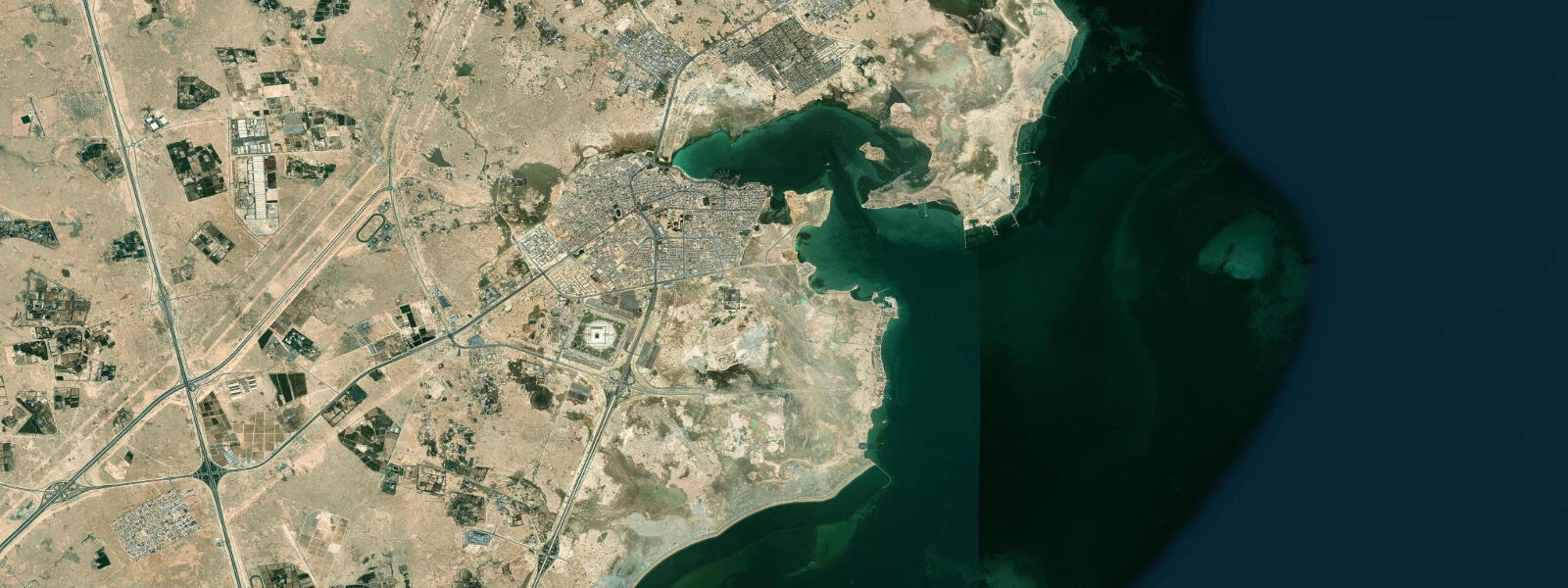
Al Khor is Qatar's second-largest city, sitting on the northeastern coast of the peninsula about 60 km north of Doha. The city wraps around a natural bay — Al Khor Bay — that contains one of the most significant mangrove systems in Qatar. The mangroves are protected and form a conspicuous feature of the inner bay; their presence in the relatively arid Gulf environment is the result of the bay's sheltered geometry and the regular tidal flooding that suits mangrove colonisation. This is not the dense mangrove of the tropics, but by Gulf standards the system is notable and ecologically important.
Tides at Al Khor are semi-diurnal, typical of the Gulf coast, with spring ranges of approximately 1.2-1.8 m. The bay's geometry means tidal exchange is relatively efficient despite being semi-enclosed; the mangroves get regular flooding and draining that maintains their health. At low tide, the bay's inner flats expose mud and sand that are intensively worked by wading birds and the juveniles of various reef fish species that use the mangrove roots as nursery habitat during their early life stages. The tidal timing determines whether the mangrove channels are navigable — a practical consideration for anyone planning a kayak tour through the system.
The corniche along Al Khor Bay's western edge has been developed as a pleasant waterfront promenade — less crowded and less formal than Doha's equivalent, with views across the bay to the mangrove fringe and the open water to the north. Kayaking in the mangroves is one of the better ecotourism experiences available in Qatar, operated by licensed providers who run guided routes through the creek system at high tide. The routes are accessible to beginners and families; the flat, sheltered water of the mangrove creeks is forgiving and safe.
Fishing at Al Khor has a long tradition reaching back before the oil era. The bay and the open coast to the north and east are productive grounds; the city has a functioning fish market where the morning catch from both the bay and offshore is sold fresh. The species range is similar to elsewhere in northern Qatar: hammour, seabream, grouper, king mackerel, and Gulf shrimp. The proximity to the richer northern channel waters gives Al Khor's fishing community access to a more varied fishery than the purely inner-bay sites further south.
Beyond water activities, the Al Khor Museum gives useful context on the coastal heritage of northern Qatar — pearl diving, trade routes, and the traditional fishing economy that sustained communities here for centuries before oil changed everything. Combined with the corniche walk, the mangrove kayak, and the early morning fish market, Al Khor makes a genuinely worthwhile half-day or full-day excursion from Doha for anyone wanting to understand the Qatari coast beyond the Corniche and the Pearl development.
The town's name — Al Khor, meaning 'the creek' — describes the tidal inlet that defines its geography. The creek system and the bay are not incidental to Al Khor; they are the reason the town exists and the reason it has been continuously inhabited for centuries. Every significant activity here — fishing, mangrove ecology, birdwatching, the traditional boat culture — is organised around the tidal creek. Understanding the tide is the key to understanding Al Khor, and the Open-Meteo predictions give a reliable enough baseline to plan a visit that catches the mangroves at high water and the tidal flats at low water in the same half-day. The combination of tidal creek, protected mangrove, productive fishing harbour, and accessible corniche makes Al Khor the most complete single coastal destination in Qatar outside of Doha — a half-day that packs in ecology, history, and working maritime culture in a concentrated geography.
Tide questions about Al Khor
Quick answers to the most common questions about tide times, range, and water access at Al Khor.
What are tides like at Al Khor?
Al Khor Bay follows the Gulf's standard semi-diurnal tidal pattern — two highs and two lows per day. Spring tidal range is approximately 1.2-1.8 m. The bay's partial enclosure moderates current but doesn't significantly reduce the range. The important practical point is the mangrove system: the mangrove creeks are navigable for kayaks at high tide but become shallow or impassable at low tide. Kayak tours are therefore timed around the tide — operators schedule departures in the two hours approaching high water or in the hour immediately after high tide. Open-Meteo gridded predictions apply (±45 min, ±0.3 m). Check the tide before booking to ensure your trip window aligns with the high-tide departure schedule.
How do I kayak through the Al Khor mangroves?
Al Khor's mangrove kayaking is managed by licensed operators based at the Al Khor corniche. Bookings are made in advance and trips run on a schedule aligned with high tide windows — typically early morning and late afternoon to avoid the worst of the midday heat. The routes run through the inner bay mangrove creeks, which are sheltered and calm — suitable for beginners and children over approximately 8 years old. Equipment is provided. The experience is genuinely worthwhile: the canopy of mangrove roots over clear shallow water, herons and egrets in the trees, small fish visible below the kayak, and no boat traffic to contend with. Duration is typically 1.5-2 hours per session. Summer trips are available but an early morning start is strongly recommended.
What birds can I see at Al Khor Bay?
Al Khor Bay's mangroves and tidal flats are among Qatar's best birdwatching sites. Western reef heron nests in the mangroves year-round; grey heron and little egret are regular throughout the seasons. The tidal flats exposed at low tide attract sandpipers, plovers, and dunlin in winter. Greater flamingos feed in the shallows October-April — flocks of hundreds are not unusual in peak season, and their pink colouring against the turquoise water is a striking sight. Ospreys are regular winter visitors, hunting over the bay from prominent perches on the mangrove tops. During spring migration (March-April), the mangrove edges attract Eurasian migrants. Early morning at low tide, during the cooler winter months, gives the best birdwatching conditions.
Is the Al Khor fish market worth visiting?
Yes — Al Khor's fish market is smaller and less organised than Doha's Central Market but has a more local, working character. The morning action runs from roughly 5:30 to 8:30 am when overnight boats return and the catch is unloaded and sorted. Hammour (grouper), seabream, king mackerel, and Gulf shrimp are the reliable species. The market sells direct to local buyers and restaurants. Visiting is informal — arrive early, stand clear of unloading areas, and observe. Buying is straightforward with basic numbers and gestures. The fresh catch is prepared at the market edge by vendors who scale and gut on the spot. The best months for variety and quantity are October-February when cooler water drives peak fish activity in the bay and offshore grounds.
How far is Al Khor from Doha, and how do I get there?
Al Khor is approximately 60 km north of Doha — a 45-minute drive on the main northern highway under normal traffic conditions. The road is dual carriageway and well-signed throughout. There is no public bus or metro connection; a rental car or taxi is the practical option for most visitors. Uber operates in Qatar and the fare from Doha to Al Khor is reasonable for a return day trip. The main visitor draws are concentrated around the bay corniche and the mangrove area, which are within easy walking distance of each other once you arrive at the site. Al Khor pairs well with a further drive to Al Ruwais at the peninsula tip — together they make a full day's northern Qatar coastal route taking in the traditional fishing, mangrove, and open Gulf environments.
7-day tide table — Al Khor
Heights relative to MSL. Predictions: Open-Meteo Marine (MeteoFrance SMOC, 0.08° grid) — heights relative to MSL (not chart datum / LAT). Model-derived.
| Day | Type | Time | Height |
|---|---|---|---|
| Tue 04 Aug | Low | 03:00 | -0.1m |
| High | 07:05 | 0.6m | |
| Low | 13:36 | 0.1m | |
| High | 18:54 | 0.9m | |
| Wed 05 Aug | Low | 14:38 | 0.2m |
| High | 19:25 | 0.8m | |
| Thu 06 Aug | Low | 03:03 | -0.3m |
| High | 09:10 | 0.7m | |
| Low | 16:10 | 0.2m | |
| High | 20:13 | 0.6m | |
| Fri 07 Aug | Low | 03:48 | -0.3m |
| High | 11:00 | 0.7m | |
| Low | 17:42 | 0.3m | |
| High | 21:07 | 0.5m | |
| Sat 08 Aug | Low | 04:43 | -0.2m |
| High | 12:55 | 0.9m | |
| Low | 19:38 | 0.2m | |
| High | 22:21 | 0.4m | |
| Sun 09 Aug | Low | 05:50 | -0.3m |
| High | 13:50 | 1.1m | |
| Low | 20:38 | 0.2m | |
| High | 23:45 | 0.3m | |
| Mon 10 Aug | Low | 06:55 | -0.3m |
| High | 14:35 | 1.2m | |
| Low | 21:42 | 0.0m |