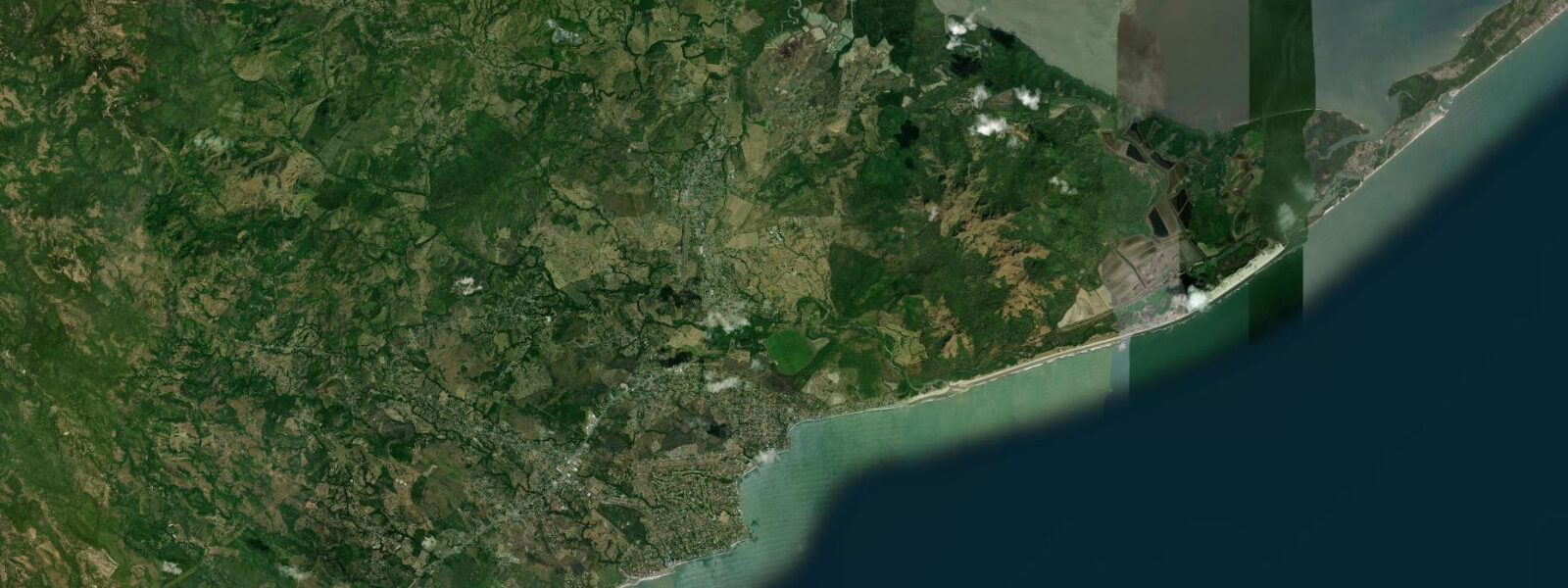
Coronado, Panama tide times
Coronado, Panama tide forecast — heights relative to MSL.
Today's tide times for Coronado, Panama
Tide times at Coronado, Panama on Monday, 3 August 2026: first high tide at 06:11am, first low tide at 12:28pm, second high tide at 06:26pm. Sunrise 06:11am, sunset 06:40pm.
Tide chart for Coronado, Panama
24-hour cosine-interpolated curve around the present moment. Heights relative to MSL. Predictions: Predictions: Open-Meteo Marine (MeteoFrance SMOC, 0.08° grid).
Sun, moon and conditions on Mon 03 Aug
Snapshot at build time — refreshes daily. Sea state from Open-Meteo Marine.
Highs and lows next 7 days
Every predicted high and low for the next week, with the daily tidal coefficient (0–120; higher = bigger swing, > 95 means stronger currents).
Other spots nearby
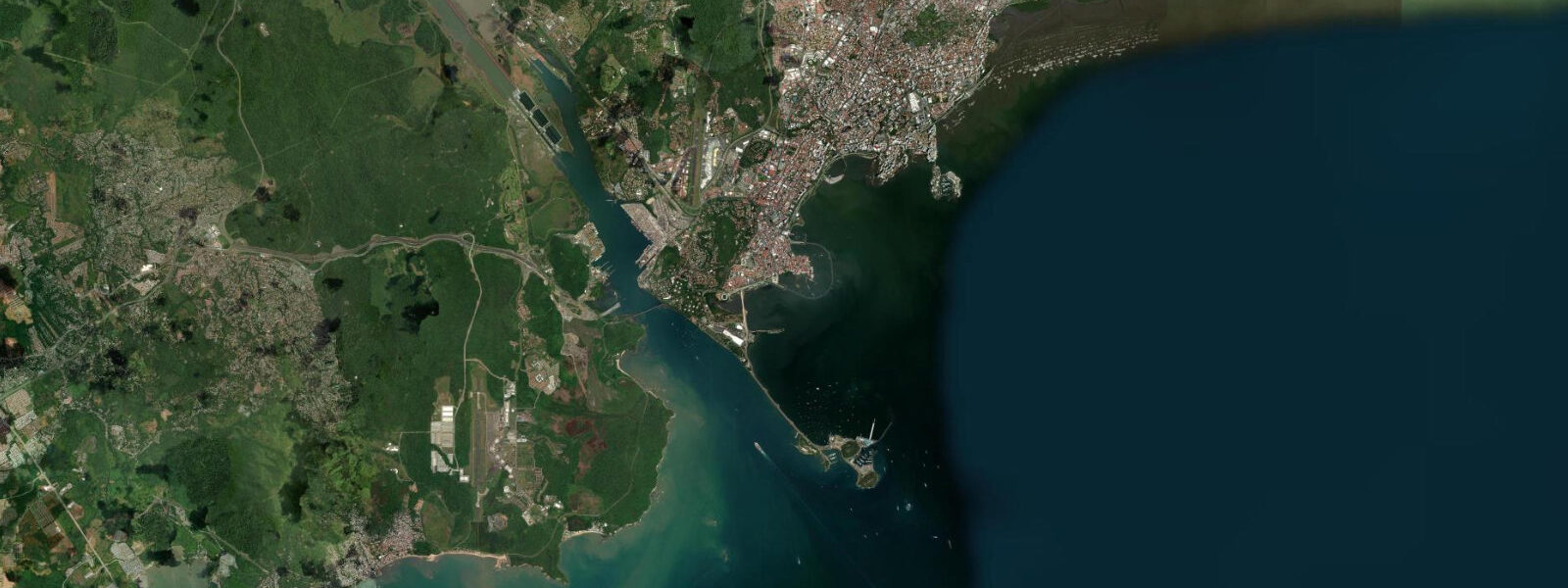
The three closest curated TideTurtle locations to Coronado, Panama, measured by great-circle distance.
Today's solunar windows
Solunar tradition: major periods are the ≈3h windows around moon transit and opposition; minor are ≈2h around moonrise and moonset. Pair with the local tide stage and wind for the best read.
Cycle dates near Coronado, Panama
Last spring tide on Sun 02 Aug (range 3.8m). Next neap on Fri 07 Aug.
Spring tides cluster around new and full moons (biggest swings). Neap tides land on quarter moons (smallest swings). See the spring tide and neap tide glossary entries for the why.
About tides at Coronado, Panama
A short guide to the coastline at Coronado, Panama — geography, sea state, and what the tide is actually doing under your feet.
Playa Coronado is 95 kilometres southwest of Panama City on the Interamericana highway — roughly 90 minutes by road, which makes it the closest serious Pacific beach destination for the capital's two million residents. On weekends the road fills from mid-morning Friday through Sunday evening. The beach itself is 7 kilometres long, oriented roughly east–west, open to the Pacific swell. What defines Coronado above everything else is the tidal range.
Pacific Panama is semidiurnal tide country: two highs and two lows every day, with a mean spring range of 4.0–5.5 m. At low spring water, the beach at Coronado extends 400–600 m seaward from the high-tide line. That is not a misprint. Six hundred metres of newly exposed sand and firm mud-sand flat, broad enough that the far edge disappears into heat shimmer on a sunny afternoon. At high spring water, the same beach narrows to 20–30 m of dry sand above the waterline. The entire width of the beach — the thing visitors are actually trying to use — is a tidal variable.
The low-tide flat at Coronado is firm enough to drive on. Vehicle access to the far eastern end of the beach uses the exposed flat at low tide; trucks and SUVs work the sand routinely. This is not unusual at Pacific Panama beaches, but at Coronado the driving window and the timing are explicit tidal functions. Three hours before low water the flat starts emerging; three hours after low the water returns. Vehicles that ignore the tide and stay too long get wet.
For beach families, the practical read is this: low water in the morning is the widest, safest, most comfortable time. The flat is warm, the sand is firm, and small children can walk hundreds of metres from the waterline before reaching knee-deep water. High water compresses everyone onto a narrow band of dry sand above the swash and makes the beach feel crowded regardless of how many people are present. Plan around the morning low — it is worth checking the day's tide times before driving 90 minutes from Panama City.
Surf at Coronado is a beach break, and the tidal range matters here too. The large range means wave quality shifts substantially through the tidal cycle. The general pattern at Pacific Panama beach breaks: incoming mid-tide produces the most consistent conditions, with enough water over the sandbars to allow proper wave formation and enough range remaining that the sets don't close out. Dead low is often too shallow for surfing — the bars are exposed or barely covered, waves dump rather than peel. Dead high softens the break and reduces power. The specific bar configuration at Coronado shifts seasonally, so ask locally about which end of the beach is producing at a given tide stage. Board rentals and instruction are available near Hotel Coronado.
The Río Caimito estuary enters the ocean at the eastern end of Playa Coronado. The large tidal range drives significant river-mouth current — on a spring flood the volume of water pushing inland is substantial, and snook (Centropomus undecimalis) hold at the margin where freshwater and salt water meet. The technique is straightforward: fish the incoming tide with live bait or large jerkbaits worked through the current seam along the river mouth. Snook in the 3–8 kg range are common; fish above 10 kg are present. The outgoing tide at dawn is the secondary window. There is a smaller river mouth at the western end of the beach with similar dynamics.
Hotel Coronado is the historical anchor of the beach town — a resort development dating from the 1970s that established Coronado as Panama's premier weekend beach address. The hotel complex sits mid-beach and gives the town its name recognition. Around it has grown a broader community of vacation homes, weekend rentals, and local businesses. El Valle de Antón, an inactive stratovolcano with a crater valley 30 kilometres inland, is a common paired destination: beach in the morning, crater-valley market and hiking in the afternoon.
For paddleboarders and kayakers, Coronado's tidal range presents a planning exercise. The wide flat at low tide is shallow and walkable — interesting to cross on a board but not deep enough for comfortable paddling in spots. The best flat-water window is mid-to-high tide, when the bay holds depth. Morning conditions before the trade wind builds are consistently calmer; afternoons can push 15–20 knots from the southwest in the dry season, January through March.
Tide data for Coronado, Panama comes from the Open-Meteo Marine API, a gridded model product. Timing accuracy is ±45 minutes, height accuracy ±0.3 m — usable for trip planning, not for navigation.
Tide questions about Coronado, Panama
Quick answers to the most common questions about tide times, range, and water access at Coronado, Panama.
How wide is Playa Coronado at low tide versus high tide?
The width difference is extreme. At low spring water, the beach extends 400–600 m seaward from the high-tide line — a vast expanse of firm sand and mud-sand flat. At high spring water, only 20–30 m of dry sand remains above the waterline. Spring tides occur around new and full moon. Neap tides produce a smaller but still significant difference. The beach is 7 km long, so there is always somewhere to stand, but the comfortable, wide low-tide beach is a specific tidal window, not a permanent condition. Check tide times before making the 90-minute drive from Panama City — a high-tide arrival means a narrow strip.
Can you actually drive on the beach at Coronado?
Yes, at low tide. The exposed flat at low water is firm enough for vehicles — trucks and SUVs use the exposed beach to access the far eastern end of the beach. The driving window is roughly three hours either side of low water; after that the tide returns and the flat re-floods. Vehicles that misjudge the timing get caught by the returning tide. This is a specific low-tide access function, not all-day beach driving. The flat is exposed by the 4.0–5.5 m spring tidal range, which uncovers several hundred metres of firm substrate that is otherwise submerged.
When is the best time to surf at Coronado?
Coronado is a beach break, and wave quality shifts through the tidal cycle. Incoming mid-tide generally produces the most consistent conditions — enough water over the sandbars for waves to form and peel rather than dump. Dead low is often too shallow; the breaks close out or barely function. Dead high softens the break and reduces power. The dry season (December through April) brings more consistent swell from the northwest Pacific; the wet season (May through November) has its own patterns. Bar configuration shifts seasonally. Ask local surf instructors or the rental shop near Hotel Coronado which section of the beach is working on a given day.
Is there good fishing at Coronado?
The Río Caimito estuary at the eastern end of Playa Coronado is the primary fishing location. Snook (Centropomus undecimalis) hold at the freshwater-saltwater boundary, with the incoming tide being the primary window — the large tidal range drives significant current through the river mouth, concentrating bait and drawing snook to the seam. Fish in the 3–8 kg range are common; larger fish are present. Live bait or large jerkbaits worked through the current edge are the standard approach. There is a secondary river mouth at the western end of the beach. Dawn on the outgoing tide is the backup window. Offshore fishing — tuna, mahi-mahi, sailfish — operates from the marina at nearby Punta Chame.
What else is near Coronado worth combining with a beach day?
El Valle de Antón is 30 kilometres inland from Coronado — an inactive stratovolcano with a crater valley that holds a market town, hiking trails, and a waterfall. It is a standard paired destination: beach morning, crater valley afternoon. The Sunday market in El Valle sells local produce, handicrafts, and the handwoven Panamanian hats incorrectly called Panama hats (properly montunos). Travel time is roughly 45 minutes from Coronado. The route climbs from sea level to around 600 m, so temperatures drop noticeably. Bring a layer if you're coming from the beach.
7-day tide table — Coronado, Panama
Heights relative to MSL. Predictions: Open-Meteo Marine (MeteoFrance SMOC, 0.08° grid) — heights relative to MSL (not chart datum / LAT). Model-derived.
| Day | Type | Time | Height |
|---|---|---|---|
| Mon 03 Aug | High | 06:11 | 2.5m |
| Low | 12:28 | -1.3m | |
| High | 18:26 | 2.3m | |
| Tue 04 Aug | Low | 00:36 | -1.3m |
| High | 06:48 | 2.4m | |
| Low | 13:11 | -1.3m | |
| High | 19:06 | 2.1m | |
| Wed 05 Aug | Low | 01:22 | -1.2m |
| High | 07:27 | 2.3m | |
| Low | 14:00 | -1.2m | |
| High | 19:50 | 1.9m | |
| Thu 06 Aug | Low | 02:13 | -1.1m |
| High | 08:12 | 2.1m | |
| Low | 14:54 | -1.1m | |
| High | 20:45 | 1.7m | |
| Fri 07 Aug | Low | 03:10 | -0.9m |
| High | 09:11 | 2.0m | |
| Low | 15:54 | -1.0m | |
| High | 21:56 | 1.6m | |
| Sat 08 Aug | Low | 04:12 | -0.8m |
| High | 10:25 | 1.9m | |
| Low | 17:00 | -1.0m | |
| High | 23:23 | 1.6m | |
| Sun 09 Aug | Low | 05:22 | -0.8m |
| High | 11:50 | 2.0m | |
| Low | 18:00 | -1.1m |