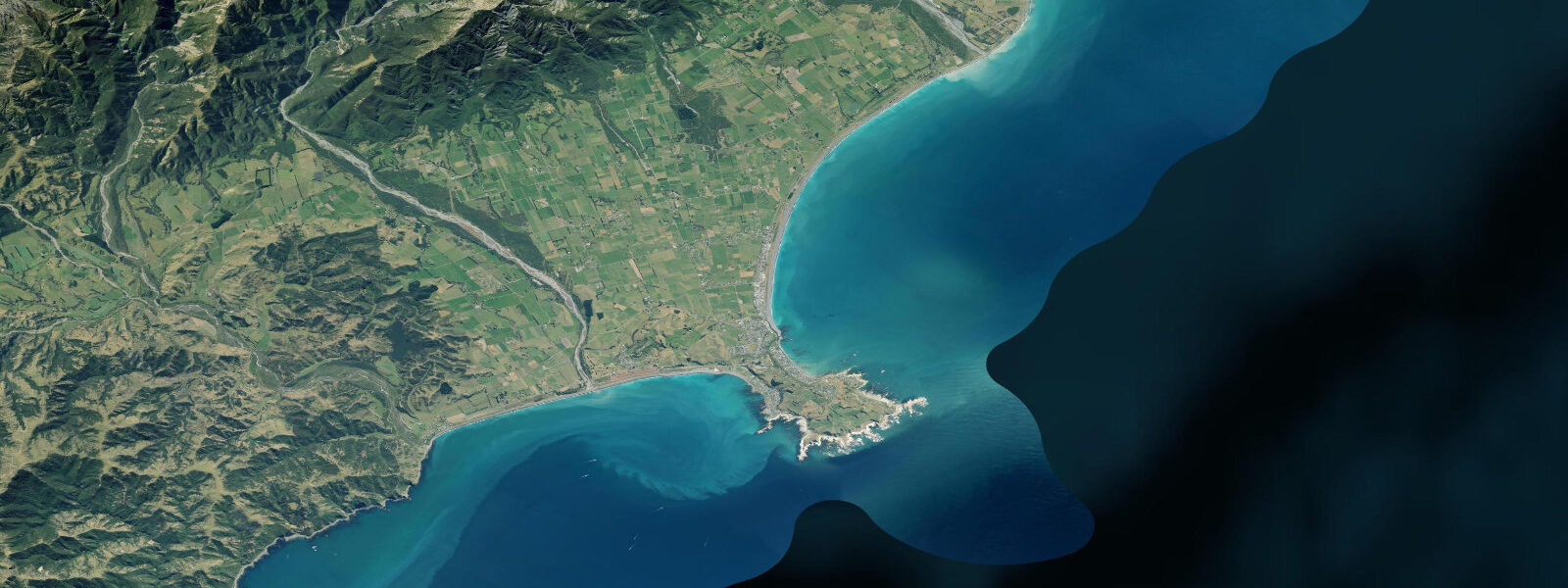
Kaikōura tide times
Kaikōura tide forecast — heights relative to MSL.
Tide chart for Kaikōura
24-hour cosine-interpolated curve around the present moment. Heights relative to MSL. Predictions: Predictions: Open-Meteo Marine (MeteoFrance SMOC, 0.08° grid).
Sun, moon and conditions on Wed 05 Aug
Snapshot at build time — refreshes daily. Sea state from Open-Meteo Marine.
Highs and lows next 7 days
Every predicted high and low for the next week, with the daily tidal coefficient (0–120; higher = bigger swing, > 95 means stronger currents).
Other spots nearby
The three closest curated TideTurtle locations to Kaikōura, measured by great-circle distance.
Today's solunar windows
Solunar tradition: major periods are the ≈3h windows around moon transit and opposition; minor are ≈2h around moonrise and moonset. Pair with the local tide stage and wind for the best read.
Cycle dates near Kaikōura
Next spring tide on Sun 09 Aug (range 1.5m). Last neap on Mon 03 Aug.
Spring tides cluster around new and full moons (biggest swings). Neap tides land on quarter moons (smallest swings). See the spring tide and neap tide glossary entries for the why.
About tides at Kaikōura
A short guide to the coastline at Kaikōura — geography, sea state, and what the tide is actually doing under your feet.
Kaikōura sits on a small peninsula on the northeastern South Island coast, where the Kaikōura Canyon — a submarine trench that plunges to 1000 metres just 800 metres offshore — creates one of the most productive marine upwelling systems in the Southern Hemisphere. The canyon lifts cold, nutrient-rich water from depth; this supports a food chain that brings sperm whales, dusky dolphins, New Zealand fur seals, and abundant seabirds within sight of the coast year-round. The tidal range is modest — mean spring range around 1.6 metres — but the oceanographic conditions driven by the canyon make Kaikōura unlike any other New Zealand coastal town.
Sperm whales are present year-round in the Kaikōura Canyon, making this one of the few locations in the world where deep-diving sperm whales are reliably found close to shore. Whale Watch Kaikōura runs boat tours that locate sperm whales using hydrophones — the whales spend up to 45 minutes on the surface between dives that reach 1000+ metres. Sightings are guaranteed (a large partial refund applies if no whale is seen), making this a premium whale watching operation. The male sperm whales that use the canyon are 15 to 18 metres long.
Dusky dolphins occur in pods of dozens to several hundred individuals in Kaikōura waters. Swim-with-dolphins tours operate from the town; the dolphins are naturally curious and will actively interact with snorkellers, including performing acrobatics. The interaction is best in the morning before the afternoon southerly wind builds. Dolphin season runs year-round but the best conditions are October through May.
New Zealand fur seals are resident on the Kaikōura Peninsula seal colony (accessible by a 30-minute walk from the town). Hundreds of fur seals haul out on the rocky foreshore year-round; pup season is November through January. Snorkelling with fur seals in the clear, cold water at the South Bay seal colony (3 km from town) is offered commercially — the seals investigate snorkellers playfully in their element.
The 2016 Kaikōura earthquake (magnitude 7.8) raised the shoreline by up to 1 metre in places, permanently exposing reef that was previously subtidal. The railway and coastal highway required 2 years of reconstruction; both are now open. The uplift has changed the character of some beaches and rock platforms.
Predictions on this page come from Open-Meteo Marine, a gridded global ocean model. Accuracy is typically within plus or minus 45 minutes on timing and 0.2 to 0.3 metres on height — model-derived, not from a local gauge. For authoritative New Zealand tide data, consult Land Information New Zealand (LINZ) at linz.govt.nz.
Tide questions about Kaikōura
Quick answers to the most common questions about tide times, range, and water access at Kaikōura.
Why are there sperm whales at Kaikōura year-round?
The Kaikōura Canyon — a submarine trench plunging to 1000 metres — starts just 800 metres offshore. The canyon creates upwelling of cold, nutrient-rich deep water that supports an extraordinary food chain. Male sperm whales (15 to 18 m) stay in the canyon year-round to feed on giant squid at depths of 1000+ metres. This proximity to shore makes Kaikōura one of only a handful of places globally where sperm whale encounters are reliably possible on a day trip.
Is it worth doing the Whale Watch Kaikōura tour?
It's the flagship Kaikōura experience for good reason. Whale Watch Kaikōura uses hydrophones to locate whales; a partial refund policy applies if no whale is seen (sightings on approximately 95% of trips). The boat approaches to about 300 metres from a surface whale; encounters typically last 15 to 20 minutes before the whale dives. Book ahead — the tours are popular year-round and summer is frequently sold out. The tour also commonly encounters dusky dolphins and fur seals en route.
Can I swim with dolphins at Kaikōura?
Yes — Encounter Kaikōura runs swim-with-dusky-dolphin tours in the morning. Dusky dolphins are highly interactive; the tour involves entering the water with snorkel gear while the dolphins circle and investigate the group. The key is to swim actively toward them — they respond to active swimmers and ignore passive ones. Tours run October through May with the most reliable conditions. A 5mm wetsuit is provided; water temperature is 12 to 16°C. Book ahead — tours are weather-cancelled.
What did the 2016 Kaikōura earthquake change?
The 7.8 magnitude Kaikōura earthquake on 14 November 2016 raised the shoreline by up to 1 metre, permanently exposing reef and rock platforms that were previously underwater or intertidal. Coastal road and rail were destroyed and took 2 years to rebuild. Some beach access points changed; new reef sections became accessible for snorkelling and rock pooling. The town was isolated for months by road closures — it's now fully accessible again via SH1 and the main trunk rail line.
What is the tidal range at Kaikōura?
Mean spring range at Kaikōura is approximately 1.6 metres. The peninsula's rocky shores expose well on spring low tides, giving access to rock pools and intertidal reef. For snorkelling at the seal colony, mid to high tide gives the best water depth over the reef sections. The 2016 earthquake raised the shoreline by up to 1 metre in places, so the current tidal exposure pattern is different from pre-earthquake charts.
7-day tide table — Kaikōura
Heights relative to MSL. Predictions: Open-Meteo Marine (MeteoFrance SMOC, 0.08° grid) — heights relative to MSL (not chart datum / LAT). Model-derived.
| Day | Type | Time | Height |
|---|---|---|---|
| Wed 05 Aug | Low | 02:04 | -0.5m |
| High | 08:11 | 0.7m | |
| Low | 14:25 | -0.5m | |
| High | 20:38 | 0.7m | |
| Thu 06 Aug | Low | 02:51 | -0.6m |
| High | 09:06 | 0.7m | |
| Fri 07 Aug | Low | 03:41 | -0.6m |
| High | 10:00 | 0.7m | |
| Low | 16:10 | -0.6m | |
| Sat 08 Aug | High | 10:52 | 0.8m |
| Low | 17:07 | -0.5m | |
| High | 23:18 | 0.7m | |
| Sun 09 Aug | Low | 05:26 | -0.5m |
| High | 11:47 | 0.9m | |
| Low | 18:06 | -0.5m | |
| Mon 10 Aug | High | 00:12 | 0.8m |
| Low | 06:22 | -0.6m | |
| High | 12:43 | 0.9m | |
| Low | 19:05 | -0.6m | |
| Tue 11 Aug | High | 01:10 | 0.8m |
| Low | 07:20 | -0.6m | |
| High | 11:00 | 0.4m |