Vlieland tide times
Vlieland tide forecast — heights relative to MSL.
Today's tide times for Vlieland
Tide times at Vlieland on Tuesday, 4 August 2026: first high tide at 02:00, first low tide at 05:38, second high tide at 09:48, third high tide at 12:21, second low tide at 18:20, fourth high tide at 22:07, third low tide at 23:53. Sunrise 05:59, sunset 21:31.
Tide chart for Vlieland
24-hour cosine-interpolated curve around the present moment. Heights relative to MSL. Predictions: Predictions: Open-Meteo Marine (MeteoFrance SMOC, 0.08° grid).
Sun, moon and conditions on Tue 04 Aug
Snapshot at build time — refreshes daily. Sea state from Open-Meteo Marine.
Highs and lows next 7 days
Every predicted high and low for the next week, with the daily tidal coefficient (0–120; higher = bigger swing, > 95 means stronger currents).
Other spots nearby
The three closest curated TideTurtle locations to Vlieland, measured by great-circle distance.
Today's solunar windows
Solunar tradition: major periods are the ≈3h windows around moon transit and opposition; minor are ≈2h around moonrise and moonset. Pair with the local tide stage and wind for the best read.
Cycle dates near Vlieland
Last spring tide on Tue 04 Aug (range 1.9m). Next spring tide on Mon 10 Aug (range 1.9m). Next neap on Fri 07 Aug.
Spring tides cluster around new and full moons (biggest swings). Neap tides land on quarter moons (smallest swings). See the spring tide and neap tide glossary entries for the why.
About tides at Vlieland
A short guide to the coastline at Vlieland — geography, sea state, and what the tide is actually doing under your feet.
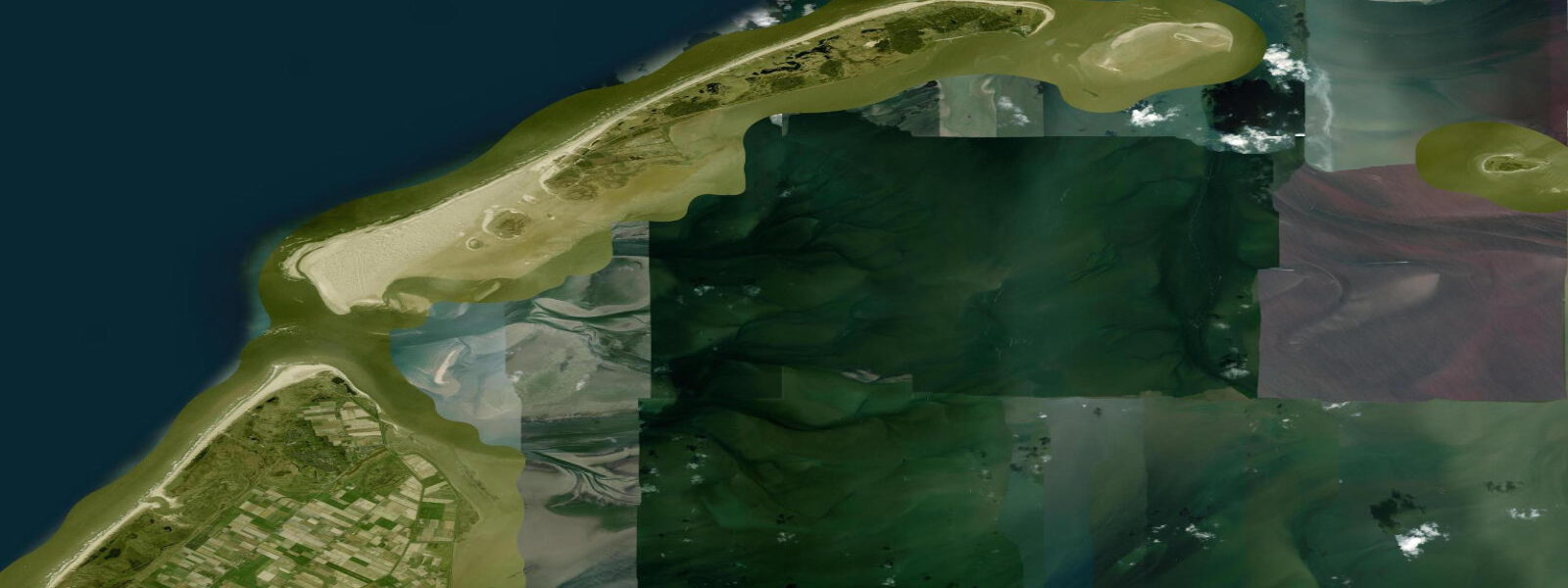
Vlieland is the second-smallest Dutch Wadden Island and, by almost any measure, the quietest. Private cars are banned except for residents; the roughly 1,100 inhabitants use bikes and the island's single bus. Visitors arriving on the 1.5-hour ferry from Harlingen step onto a jetty at the island's one village and choose between two wheels and two feet. The spring tidal range on the North Sea side runs about 1.7 m; inside the Waddenzee the range is slightly less. At low water the broad flats southeast of the island dry out across a distance that makes the small ferry jetty appear to be stranded far from any water.
The Stortemelk — the tidal race in the channel between Vlieland and Terschelling to the east — is the island's defining hydrographic feature. At spring tides the current here tops 3 knots, sometimes reaching 3.5 knots at peak ebb. It is one of the fastest non-estuarine tidal flows in the Dutch Wadden system. Windsurfers work the channel for the reliable wind-against-current chop it generates in southwest conditions. Divers know it as one of the few places in the Netherlands with consistently challenging drift conditions — visibility is around 3–5 m, the profile is sand and shell, and the current does the work. Dive from two hours before to slack water only; do not attempt mid-ebb without a surface support vessel in attendance.
Outer sandbanks extending northwest of Vlieland are the primary haul-out for Wadden harbour seals during the pupping season in June and early July. Access is restricted during this period; RVAC-licensed boat tours keep the required 500 m distance. Outside the pupping season, low-tide sandbank tours by small boat are the standard way to see the colony — a dozen to several hundred animals depending on season and weather. Late summer and early autumn produce the largest concentrations after the moult.
Osprey migrate through Vlieland in April and August–September, using the tidal channels as a hunting corridor. Marsh harriers breed on the island in the dune slacks; spoonbills feed on the mudflats through summer. The dune ridge running the length of the island's North Sea side is continuous — there are no gaps cut by inlets — and the beach below it is one of the least disturbed on the entire Dutch coast.
Walking is the primary activity for most visitors. The dune path runs the full 20 km length of the island and the tidal flat walk east of the village is the easiest low-tide coastal walk in the Wadden chain. The flat is safe at mid-ebb in calm conditions; do not extend beyond 500 m from the dike without a guide if you are unfamiliar with how fast the tide returns on shallow flats. A rising tide on a flat estuary moves faster than a walk — the margin is smaller than it looks.
Photographers who want North Sea dune landscapes without people consistently rate Vlieland as the best option in the Netherlands. The absence of cars changes the acoustic texture of the island completely: wind, seabirds, and the sound of tidal water moving through the channels are audible all the way to the village square. Windsurfers staying more than a day typically use the island's one hotel or small-scale rental properties behind the dunes. Board storage at the harbour is arranged through the island VVV. The island's single restaurant serves fresh Wadden shrimp and North Sea plaice sourced from the morning's catch — worth timing a meal around low tide when the fishermen return.
Tidal predictions here use the Open-Meteo Marine gridded model (±45 minutes on timing, ±0.3 m on height). Not for navigation.
Tide questions about Vlieland
Quick answers to the most common questions about tide times, range, and water access at Vlieland.
What is the tidal range at Vlieland?
Spring tidal range at Vlieland is approximately 1.7 m on the North Sea-facing coast, with slightly less inside the Waddenzee. Neap range runs around 1.1 m. The island's most significant tidal feature is the Stortemelk channel between Vlieland and Terschelling, where spring ebb currents reach 3 to 3.5 knots — one of the fastest tidal flows in the Dutch Wadden system and the primary draw for windsurfers seeking chop and for divers wanting genuine drift-diving conditions in Dutch waters. The 1.7 m range is enough to expose broad eastern mudflats at low water, providing the feeding habitat that sustains the island's resident seal and shorebird populations.
Can I windsurf or dive the Stortemelk?
Yes to both, with caveats. Windsurfers work the Stortemelk channel for the chop generated by southwest wind against an outgoing current; launch from the eastern end of the village near the ferry jetty and ride the current edge. Divers should plan for slack water, arriving on site two hours before the predicted turn. Mid-ebb current at springs exceeds 3 knots and requires a chase boat. Visibility is 3–5 m on most days. The channel floor is sand and broken shell; depth ranges from 8 to 18 m.
How do I get to Vlieland and when do ferries run?
Doeksen operates the Harlingen–Vlieland ferry, with the crossing taking approximately 1.5 hours. A fast boat (45 minutes) runs in summer. In high season there are two to four sailings per day; in winter frequency drops to one daily. Private cars are not permitted on Vlieland except for residents. Book bikes or e-bikes in advance for summer visits — island rental is limited. The ferry timetable does not match tidal windows; the jetty is accessible at all tidal stages from the deep-water side.
When is the best time to see seals at Vlieland?
Harbour seals haul out on the outer sandbanks northwest of Vlieland year-round, but pupping season in June and early July brings the largest concentrations. Access is restricted to licensed tour boats during pupping. Outside this period, low-tide sandbank tours by small RIB run from the village harbour — timing is tied to the tidal window when the banks are exposed, typically two hours either side of low water. Numbers are highest in late summer and autumn after the moult, when up to several hundred animals may be visible at once.
Is Vlieland suitable for birdwatching?
Vlieland is an excellent birdwatching destination. Osprey pass through in April and again in August and September, using the tidal channels to hunt. Marsh harriers breed in the dune slacks. Spoonbills feed on the mudflats from April through August. The tidal flats southeast of the village are productive for waders July through October; oystercatchers, godwits, dunlin, and knot are regular in large numbers. The undisturbed North Sea dune ridge holds breeding shelduck and eider. An east wind in autumn brings Siberian migrants; the island has no formal observatory but is well-regarded on Dutch birding circuits.
8-day tide table — Vlieland
Heights relative to MSL. Predictions: Open-Meteo Marine (MeteoFrance SMOC, 0.08° grid) — heights relative to MSL (not chart datum / LAT). Model-derived.
| Day | Type | Time | Height |
|---|---|---|---|
| Tue 04 Aug | High | 02:00 | -0.5m |
| Low | 05:38 | -1.3m | |
| High | 09:48 | 0.7m | |
| High | 12:21 | 0.6m | |
| Low | 18:20 | -1.2m | |
| High | 22:07 | 0.5m | |
| Low | 23:53 | 0.3m | |
| Wed 05 Aug | High | 00:43 | 0.4m |
| Low | 06:06 | -1.0m | |
| High | 10:26 | 0.8m | |
| Low | 12:12 | 0.6m | |
| High | 12:54 | 0.6m | |
| Low | 18:57 | -1.0m | |
| High | 22:54 | 0.5m | |
| Thu 06 Aug | Low | 00:47 | 0.3m |
| High | 01:37 | 0.3m | |
| Low | 05:24 | -1.0m | |
| High | 11:13 | 0.8m | |
| Low | 13:06 | 0.5m | |
| High | 13:52 | 0.6m | |
| Low | 19:55 | -0.9m | |
| High | 23:39 | 0.4m | |
| Fri 07 Aug | Low | 01:20 | 0.2m |
| High | 02:33 | 0.3m | |
| Low | 06:27 | -1.0m | |
| High | 12:10 | 0.4m | |
| Low | 13:47 | 0.2m | |
| High | 14:51 | 0.3m | |
| Low | 21:02 | -1.1m | |
| Sat 08 Aug | High | 00:39 | 0.2m |
| Low | 01:55 | 0.1m | |
| High | 03:32 | 0.3m | |
| Low | 09:40 | -1.1m | |
| High | 13:14 | 0.3m | |
| Low | 14:05 | 0.2m | |
| High | 15:54 | 0.4m | |
| Low | 22:12 | -1.0m | |
| Sun 09 Aug | High | 04:21 | 0.4m |
| Low | 10:43 | -1.0m | |
| High | 14:21 | 0.3m | |
| Low | 14:41 | 0.2m | |
| High | 16:57 | 0.6m | |
| Low | 23:17 | -0.9m | |
| Mon 10 Aug | High | 05:18 | 0.6m |
| Low | 11:50 | -1.2m | |
| High | 17:53 | 0.5m | |
| Tue 11 Aug | Low | 00:15 | -1.2m |