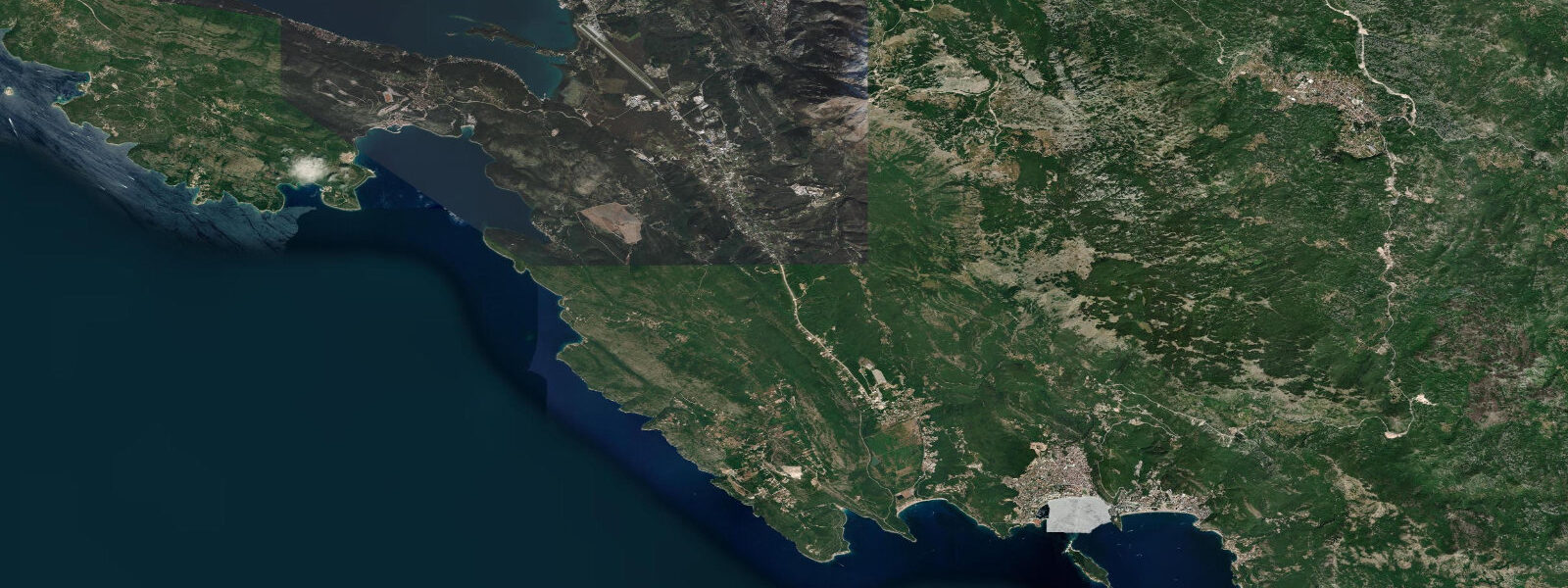
Budva tide times
Budva tide forecast — heights relative to MSL.
Today's tide times for Budva
Tide times at Budva on Tuesday, 4 August 2026: first low tide at 02:00am, first high tide at 07:45am. Sunrise 05:39am, sunset 08:01pm.
Tide chart for Budva
24-hour cosine-interpolated curve around the present moment. Heights relative to MSL. Predictions: Predictions: Open-Meteo Marine (MeteoFrance SMOC, 0.08° grid).
Sun, moon and conditions on Tue 04 Aug
Snapshot at build time — refreshes daily. Sea state from Open-Meteo Marine.
Highs and lows next 7 days
Every predicted high and low for the next week, with the daily tidal coefficient (0–120; higher = bigger swing, > 95 means stronger currents).
Other spots nearby
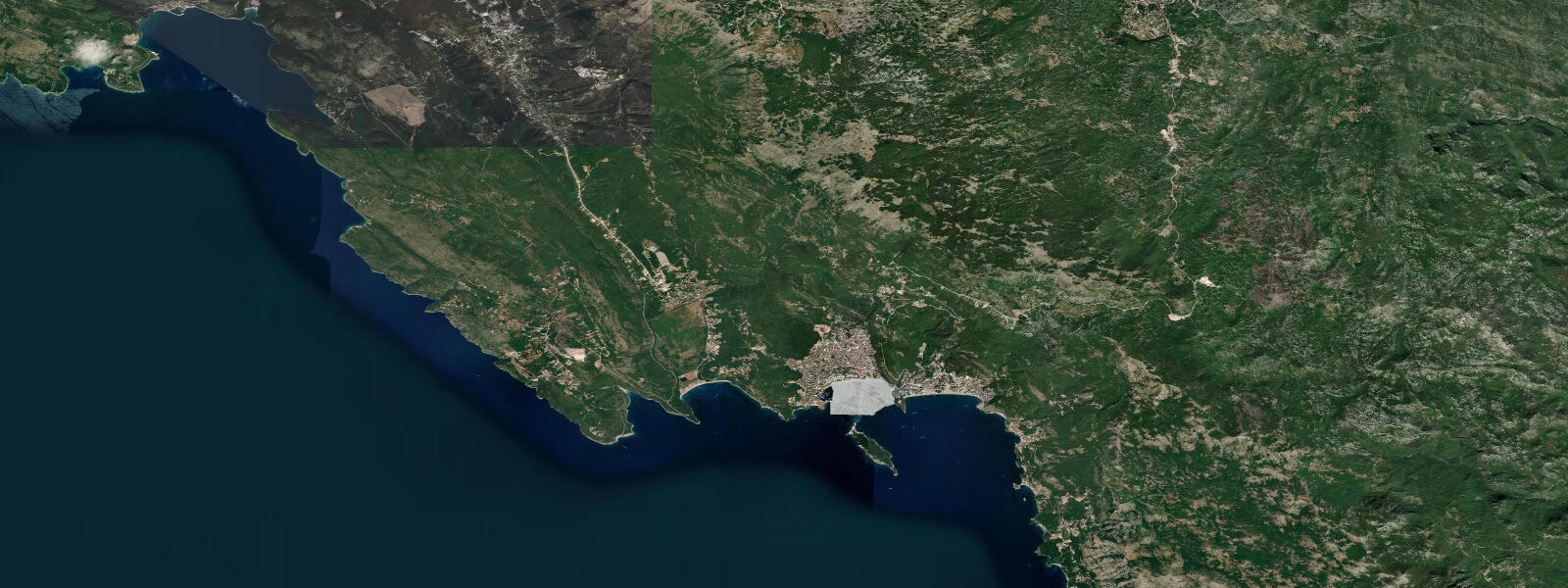
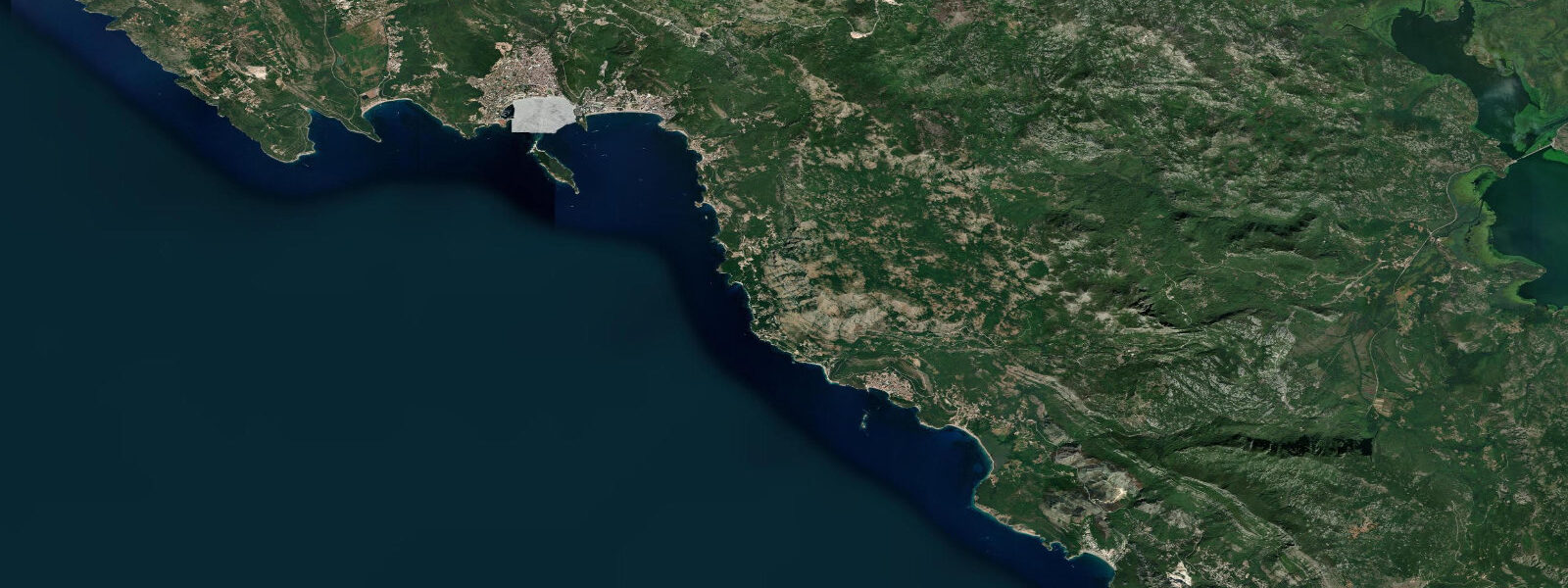
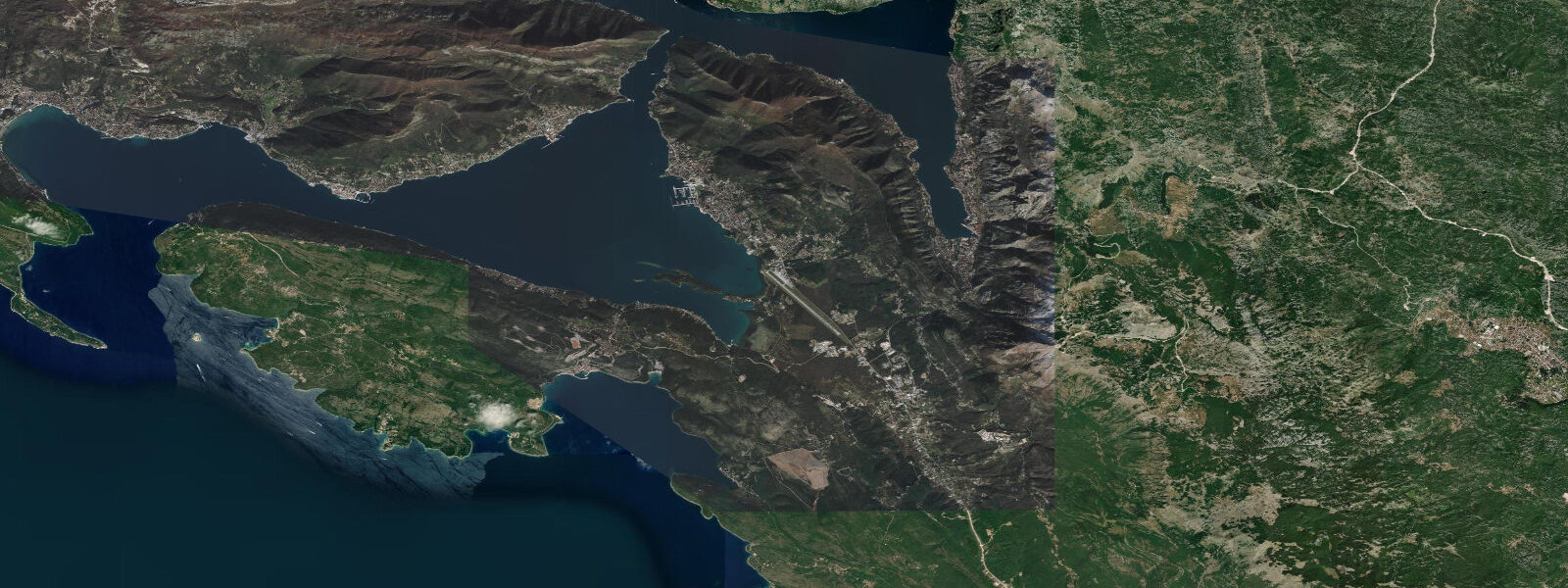
The three closest curated TideTurtle locations to Budva, measured by great-circle distance.
Today's solunar windows
Solunar tradition: major periods are the ≈3h windows around moon transit and opposition; minor are ≈2h around moonrise and moonset. Pair with the local tide stage and wind for the best read.
About tides at Budva
A short guide to the coastline at Budva — geography, sea state, and what the tide is actually doing under your feet.
Budva has been a continuous settlement for roughly 2,500 years, founded as Bouthoe by either Illyrian or Phoenician traders — the historical record is ambiguous — on a small rocky peninsula that juts into the Adriatic between two gently curving bays. The Old Town (Stari Grad) occupies that peninsula today, its stone walls, 15th-century Church of St. Ivan, and narrow streets compressed into a roughly oval area of a few hectares.
0 bora-type, with the epicentre near Ulcinj) was the defining event of the modern Old Town: much of the mediaeval fabric was severely damaged and subsequently reconstructed through the 1980s, preserving the street plan and the massing while replacing most of the building fabric. The result is an authentic-looking Old Town built largely in the 1980s — a fact that surprises visitors who read the masonry as wholly mediaeval. The Archaeological Museum inside the Old Town, housed in the Citadela fortress, holds finds from the full occupation sequence including Iron Age pottery, Hellenistic coins, and Roman glass.
The coastal setting frames the town unmistakably. To the north, Budva City Beach (Slovenska Plaža) extends roughly 600 metres from the Old Town walls; to the south, beyond the Mogren headland accessed through a short tunnel cut into the rock, two sheltered cove beaches — Mogren 1 and Mogren 2 — face south-west into the Adriatic. Each Mogren cove is roughly 100 metres wide; their tucked position behind the headland provides protection from north-westerly winds while remaining exposed to the south-east.
9 kilometres in a broad sand and pebble arc that becomes the Adriatic's most intensively developed resort strip in July and August, with continuous hotel frontage and dense sunbed concessions. 2 metres, two highs and two lows per day of roughly equal size. The Croatian Hydrographic Institute (HHI) provides the regional harmonic reference; Dubrovnik, 50 kilometres north, gives the closest calibrated gauge data.
The tide's direct practical effect on Budva's beaches is modest: the width of sand between the water's edge and the first sunbeds changes by a few metres between high and low, but the beach remains usable throughout the tidal cycle. What actually modifies swimming conditions is wind. The Adriatic south-easterly (jugo) generates swell across the open fetch from the Libyan Sea; after a two-day jugo run the wave height at Budva's south-facing beaches can reach 1 to 2 metres, briefly transforming the normally flat water.
The bora blows cold and sharp from the north-east in winter, raising whitecaps in the bay and temporarily suppressing the water level. The jugo-driven sea-level setup is more significant than the bora for flood risk: a strong jugo can add 30 to 50 centimetres above the predicted tide at the base of the Old Town walls, occasionally flooding the lower cobblestones of the pedestrian seafront. Beach season runs May through October; water temperature peaks at 24 to 26°C in August.
The open south-facing exposure of Budva's beaches means the SE swell produces occasional shore-break on the outer beaches in summer, offering some small-wave activity for bodyboarders and beginning surfboard riders on the rare days when the jugo builds enough fetch. Shore anglers work Mogren headland and the outer breakwaters for sea bream and sea bass. Photographers visiting the Old Town walls at dawn find the limestone walls reflecting the early light in a way the afternoon sun does not replicate; the best position for the classic Budva Old Town shot is from the beach north of the walls looking south, with the walls and the mountain backdrop behind.
Predictions on this page come from Open-Meteo Marine, a gridded global ocean model. 3 metres on height. For the eastern Adriatic, the Croatian Hydrographic Institute (HHI) provides the authoritative harmonic reference.
Tide questions about Budva
Quick answers to the most common questions about tide times, range, and water access at Budva.
When is the next high tide at Budva?
The hero block at the top of this page shows the next predicted high at Budva in local Central European Time (CET/CEST, UTC+1/UTC+2). Spring tidal range at Budva is approximately 0.4 to 0.55 metres — typical for the open eastern Adriatic coast south of Dubrovnik. Two highs and two lows of roughly equal size occur each day. The jugo (south-easterly wind) and the bora (north-easterly) both produce water-level anomalies that can exceed the tidal swing; the jugo drives surge, the bora briefly suppresses water level. The Croatian Hydrographic Institute (HHI) publishes the authoritative harmonic data for this section of the Adriatic.
Was the Budva Old Town actually rebuilt after an earthquake?
Yes. The 1979 earthquake (magnitude 7.0, epicentre near Ulcinj in southern Montenegro) inflicted severe structural damage to the Budva Stari Grad. The reconstruction programme through the 1980s retained the original street plan, the line of the city walls, and the general massing of the buildings, but replaced most of the load-bearing fabric. The Church of St. Ivan and fragments of the Venetian and Byzantine construction survive in their original form; the majority of what a visitor walks through today is 1980s reconstruction built to replicate the appearance of the earlier town. The Budva City Museum inside the Old Town holds artefacts from all periods of the site's occupation, including finds from the Illyrian-era necropolises excavated on the peninsula.
What are beach conditions at Bečić Beach?
Bečić Beach is approximately 1.9 kilometres of sand and pebble extending south from the Budva Old Town peninsula. The beach faces south-west and is open to Adriatic swell from that direction; in calm summer conditions the water is flat and clear. After a sustained jugo (south-easterly) the shore-break builds to 0.5 to 1.5 metres on the outer sections of the beach, which creates some small wave activity but makes the beach less comfortable for families with small children. Beach concessions (sunbeds, umbrellas, jet ski rental, inflatable rides) operate from June through September along the full length; the central and northern sections adjacent to the hotel zone are the most densely developed. The tidal range of 0.4 to 0.55 metres means the beach width does not change dramatically between high and low water.
Is the jugo dangerous for swimmers at Budva?
During and immediately after a strong jugo, the wave height at the south-facing outer beaches — particularly Mogren and the southern Bečić sections — can reach 1 to 2 metres, and the shore-break current increases proportionally. The inner city beach (Slovenska Plaža) north of the Old Town is slightly more sheltered and builds less aggressively. Montenegrin beach lifeguard services post red flag closures when swimming conditions become hazardous; flags are visible at all supervised beach sections. For non-swimmers and families, the calmest swimming at Budva in any wind condition is in the protected coves of the Bay of Kotor (Herceg Novi, Tivat), not on the open Adriatic coast.
Where do these tide predictions come from?
Open-Meteo Marine, a free gridded global ocean model. The model estimates tidal height from oceanographic equations applied across a geographic grid rather than from harmonic analysis of a local gauge record. Accuracy is typically within plus or minus 45 minutes on timing and 0.2 to 0.3 metres on height. For Budva's spring range of 0.4 to 0.55 metres, the model uncertainty is a significant fraction of the total astronomical signal. The Croatian Hydrographic Institute (HHI) publishes the authoritative harmonic reference for the eastern Adriatic; Dubrovnik is the nearest calibrated reference gauge. This page is not suitable for navigation.
8-day tide table — Budva
Heights relative to MSL. Predictions: Open-Meteo Marine (MeteoFrance SMOC, 0.08° grid) — heights relative to MSL (not chart datum / LAT). Model-derived.
| Day | Type | Time | Height |
|---|---|---|---|
| Tue 04 Aug | Low | 02:00 | -0.6m |
| High | 07:45 | -0.4m | |
| Wed 05 Aug | Low | 01:50 | -0.6m |
| High | 19:00 | -0.4m | |
| Thu 06 Aug | Low | 02:00 | -0.6m |
| Fri 07 Aug | — | ||
| Sat 08 Aug | — | ||
| Sun 09 Aug | High | 02:00 | -0.4m |
| Mon 10 Aug | Low | 08:10 | -0.6m |
| High | 15:00 | -0.2m | |
| Low | 22:00 | -0.6m | |
| Tue 11 Aug | High | 01:00 | -0.5m |