Kotor tide times
Kotor tide forecast — heights relative to MSL.
Today's tide times for Kotor
Tide times at Kotor on Tuesday, 4 August 2026: first low tide at 02:00am. Sunrise 05:39am, sunset 08:02pm.
Tide chart for Kotor
24-hour cosine-interpolated curve around the present moment. Heights relative to MSL. Predictions: Predictions: Open-Meteo Marine (MeteoFrance SMOC, 0.08° grid).
Sun, moon and conditions on Tue 04 Aug
Snapshot at build time — refreshes daily. Sea state from Open-Meteo Marine.
Highs and lows next 7 days
Every predicted high and low for the next week, with the daily tidal coefficient (0–120; higher = bigger swing, > 95 means stronger currents).
Other spots nearby
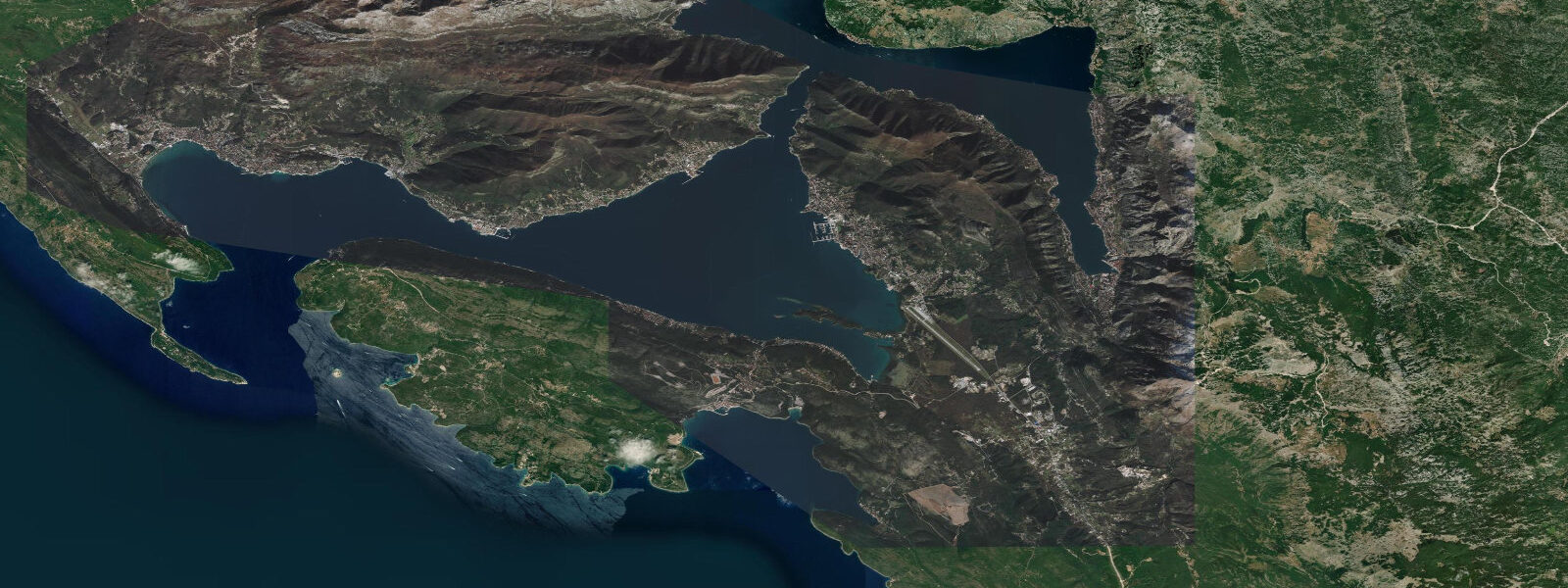
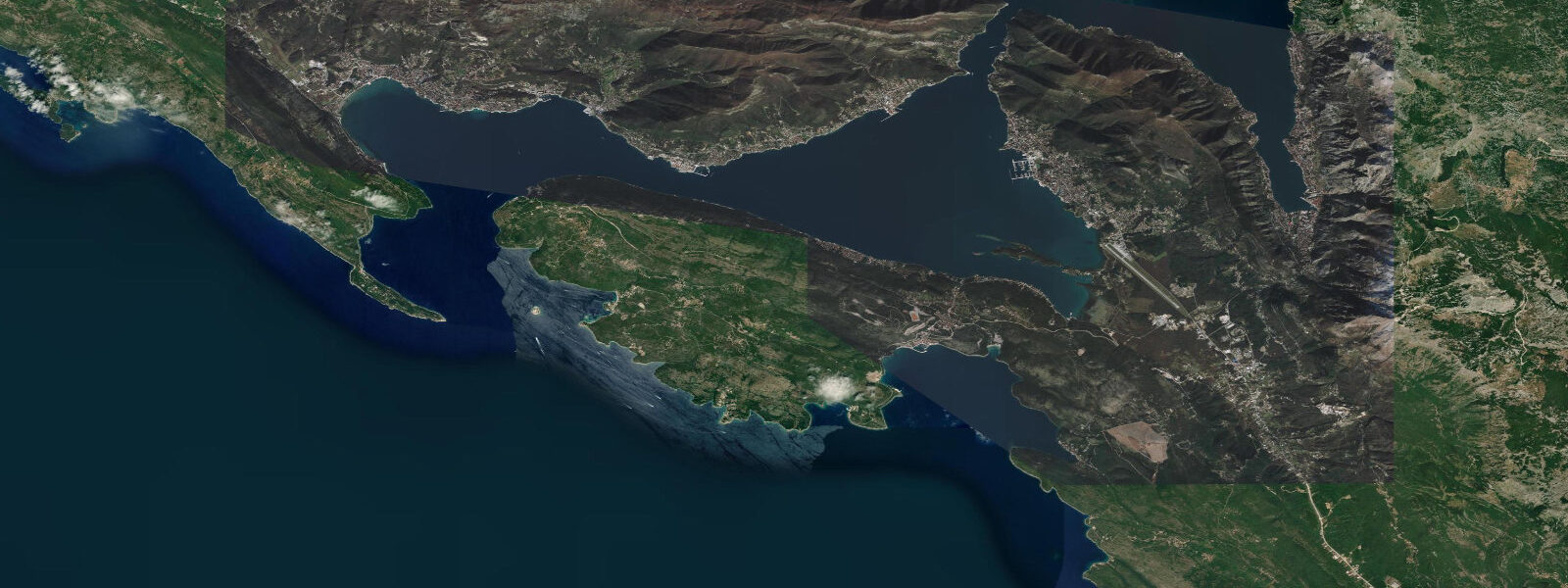
The three closest curated TideTurtle locations to Kotor, measured by great-circle distance.
Today's solunar windows
Solunar tradition: major periods are the ≈3h windows around moon transit and opposition; minor are ≈2h around moonrise and moonset. Pair with the local tide stage and wind for the best read.
About tides at Kotor
A short guide to the coastline at Kotor — geography, sea state, and what the tide is actually doing under your feet.
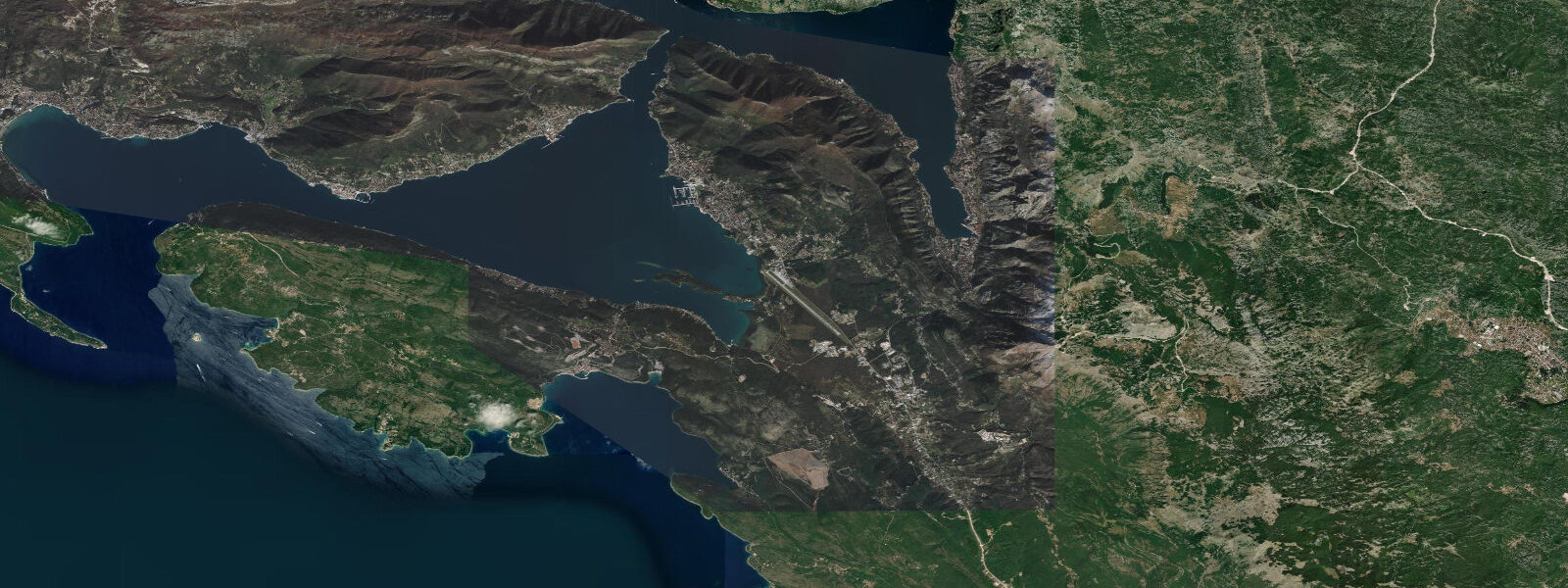
Kotor sits at the innermost reach of the Bay of Kotor, where the limestone walls of St. John's Hill rise 260 metres directly above the city and the Škurda and Ljuta rivers discharge into a bay deep enough to berth cruise ships within 100 metres of the mediaeval walls. The Old City (Stari Grad) is a UNESCO World Heritage Site and one of the best-preserved walled cities on the Adriatic.
5 kilometres of walls climb from sea level to the hilltop fortress of St. John in a series of zig-zagging ramparts studded with towers. The walk to the top gate takes 45 to 60 minutes at a moderate pace; the limestone path gains 260 metres of elevation with over 1,300 steps.
The view from the top takes in all four connected bays of the Boka Kotorska system. The tide at Kotor is the smallest in the Bay of Kotor system. Being the furthest point from the Adriatic entrance, the astronomical signal attenuates as it propagates inward through the Verige Strait and through the Risan Bay.
5 metres — smaller than Herceg Novi at the bay's mouth, and smaller still compared to the Croatian Adriatic islands further north. The predicted difference between high and low water on a typical day is visible as a slow change in the waterline along the quay and the stone steps below the Land Gate. What amplifies or suppresses that signal is the jugo, the sustained south-easterly wind that funnels up the Adriatic and pushes water into the closed end of the Boka.
A three-day jugo can raise Kotor's water level 30 to 60 centimetres above the astronomical prediction — more than the entire spring tidal range — flooding the lower cobblestones of the Piazza of the Arms in front of the Clock Tower. The bora does the reverse: a sharp north-easterly dropping off the Orjen massif behind Herceg Novi briefly lowers sea level and exposes the stone steps to the waterline of the city walls. Beneath the bay floor, submarine freshwater springs — vrulje — rise from the karst aquifer fed by the Orjen and Lovćen mountains above.
These springs deliver cold, low-salinity water through fissures in the limestone; divers and snorkellers encounter shimmering thermocline boundaries where the cold freshwater mixes with the warmer bay water above. Summer bay-water temperature in the surface layer reaches 26 to 28°C; the cold vrulje springs below sit at 8 to 12°C year-round. The standard water-based activity from Kotor Old Town is kayaking: the route from the small beach south of the Land Gate west through the bay to the artificial island of Gospa od Škrpjela (Our Lady of the Rocks) near Perast is a 14-kilometre round trip taking 3 to 4 hours in calm conditions.
The island was constructed from 1452 onward by local sailors who dropped rocks from their boats at the site of a votive image; the tradition of stone-laying continues on 22 July each year. The crossing of the Verige Strait is the most current-affected section — plan to cross near the change of tide, when the flow through the 90-metre gap is at minimum. Predictions on this page come from Open-Meteo Marine, a gridded global ocean model.
3 metres on height. For the Adriatic's small tidal signal, the Croatian Hydrographic Institute (HHI) provides the regional reference harmonic data; the HHI Kotor Bay predictions are closely correlated to this model output and provide a useful cross-check for activity planning.
Tide questions about Kotor
Quick answers to the most common questions about tide times, range, and water access at Kotor.
When is the next high tide at Kotor?
The hero block at the top of this page shows the next predicted high at Kotor in local Central European Time (CET/CEST, UTC+1/UTC+2). The spring tidal range at Kotor is approximately 0.35 to 0.5 metres — one of the smallest in the Mediterranean, attenuated by the journey through the Verige Strait and the enclosed bay geometry. High and low labels on this page describe a slow, small water-level change. The jugo (south-easterly wind) and the bora (north-easterly wind) both produce larger short-term water-level anomalies than the astronomical tide alone. The Croatian Hydrographic Institute (HHI) publishes regional Adriatic harmonic data that serves as the reference for the Boka Kotorska.
Why does the water level flood the lower streets of Kotor's Old Town?
Kotor's low-lying Piazza of the Arms and the waterfront cobblestones occasionally flood not because of unusually high tides but because of storm surge driven by the jugo, the sustained south-easterly wind that funnels northward along the Adriatic and pushes water into the closed end of the Boka Kotorska. A multi-day jugo event can raise the water level 30 to 60 centimetres above the astronomical prediction — enough to lap over the lower quay stones. The effect is similar to Venetian acqua alta, and for the same meteorological reason: the Adriatic is long and narrow, and a southerly wind has a large fetch over which to pile the water. The astronomical tide itself changes the water level by less than half a metre even at springs.
Is it safe to kayak through the Verige Strait to Perast?
The Verige Strait — the narrow 90-metre gap between Tivat Bay and the inner bays — has the most significant current in the Bay of Kotor, reaching 0.3 to 0.8 knots on spring tides. For an experienced kayaker, that is manageable; for a casual paddler in a rental sit-on-top, the crossing is easier near the change of tide when the flow is at minimum. Check this page for the predicted high or low time and plan to cross within 30 minutes of it. The return journey from Kotor Old Town to Our Lady of the Rocks island near Perast covers roughly 7 kilometres one way; allow 1.5 to 2 hours each direction in flat conditions. Vessel traffic through the Verige is continuous in summer — keep to the sides of the channel.
What are the vrulje springs and can I swim near them?
Vrulje are submarine freshwater springs that rise through fissures in the karst limestone floor of the Bay of Kotor, fed by the Orjen and Lovćen mountain aquifers. They deliver water at 8 to 12°C year-round into a summer bay where the surface temperature can reach 27 to 28°C. Snorkellers encounter the mixing zone as a shimmering optical boundary — refraction at the freshwater-saltwater interface creates a visible blur in the water column. The springs are scattered across the bay floor and are most noticeable in summer when the surface-water temperature contrast is greatest. Swimming near the springs is safe; the cold upwelling creates a startling temperature shock but poses no hazard. The springs lower the bay's surface salinity slightly compared with open Adriatic water, particularly after heavy winter rainfall recharges the karst system.
Where do these tide predictions come from?
Open-Meteo Marine, a free gridded global ocean model. The model estimates tidal height from oceanographic equations applied across a geographic grid rather than from harmonic analysis of a dedicated gauge record at Kotor. Accuracy is typically within plus or minus 45 minutes on timing and 0.2 to 0.3 metres on height. For a location where the spring range is only 0.35 to 0.5 metres, that uncertainty is a significant fraction of the total signal. The Croatian Hydrographic Institute (HHI) provides the authoritative harmonic reference for the eastern Adriatic including the Boka Kotorska; their predictions and the Open-Meteo output are closely correlated for this bay. Neither source replaces a marine chart and official port authority guidance for vessel operations.
8-day tide table — Kotor
Heights relative to MSL. Predictions: Open-Meteo Marine (MeteoFrance SMOC, 0.08° grid) — heights relative to MSL (not chart datum / LAT). Model-derived.
| Day | Type | Time | Height |
|---|---|---|---|
| Tue 04 Aug | Low | 02:00 | -0.6m |
| Wed 05 Aug | — | ||
| Thu 06 Aug | — | ||
| Fri 07 Aug | — | ||
| Sat 08 Aug | High | 13:50 | -0.3m |
| Low | 21:10 | -0.5m | |
| Sun 09 Aug | High | 02:00 | -0.4m |
| Low | 07:10 | -0.5m | |
| Mon 10 Aug | High | 03:00 | -0.4m |
| Low | 08:10 | -0.6m | |
| High | 15:10 | -0.2m | |
| Low | 22:00 | -0.6m | |
| Tue 11 Aug | High | 01:00 | -0.5m |