George Town (Penang) tide times
George Town (Penang) tide forecast — heights relative to MSL.
Today's tide times for George Town (Penang)
Tide times at George Town (Penang) on Wednesday, 29 July 2026: first low tide at 08:00am, first high tide at 01:01pm, second low tide at 07:52pm. Sunrise 07:14am, sunset 07:36pm.
Tide chart for George Town (Penang)
24-hour cosine-interpolated curve around the present moment. Heights relative to MSL. Predictions: Predictions: Open-Meteo Marine (MeteoFrance SMOC, 0.08° grid).
Sun, moon and conditions on Wed 29 Jul
Snapshot at build time — refreshes daily. Sea state from Open-Meteo Marine.
Highs and lows next 7 days
Every predicted high and low for the next week, with the daily tidal coefficient (0–120; higher = bigger swing, > 95 means stronger currents).
Other spots nearby
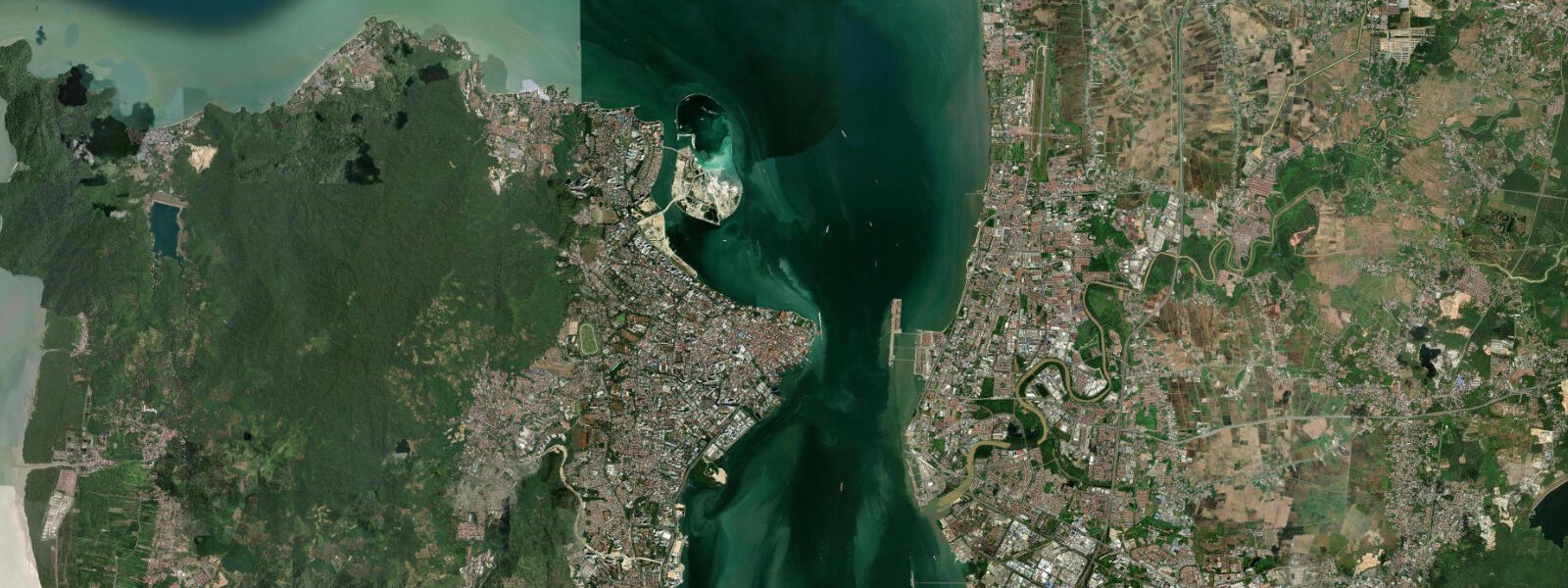
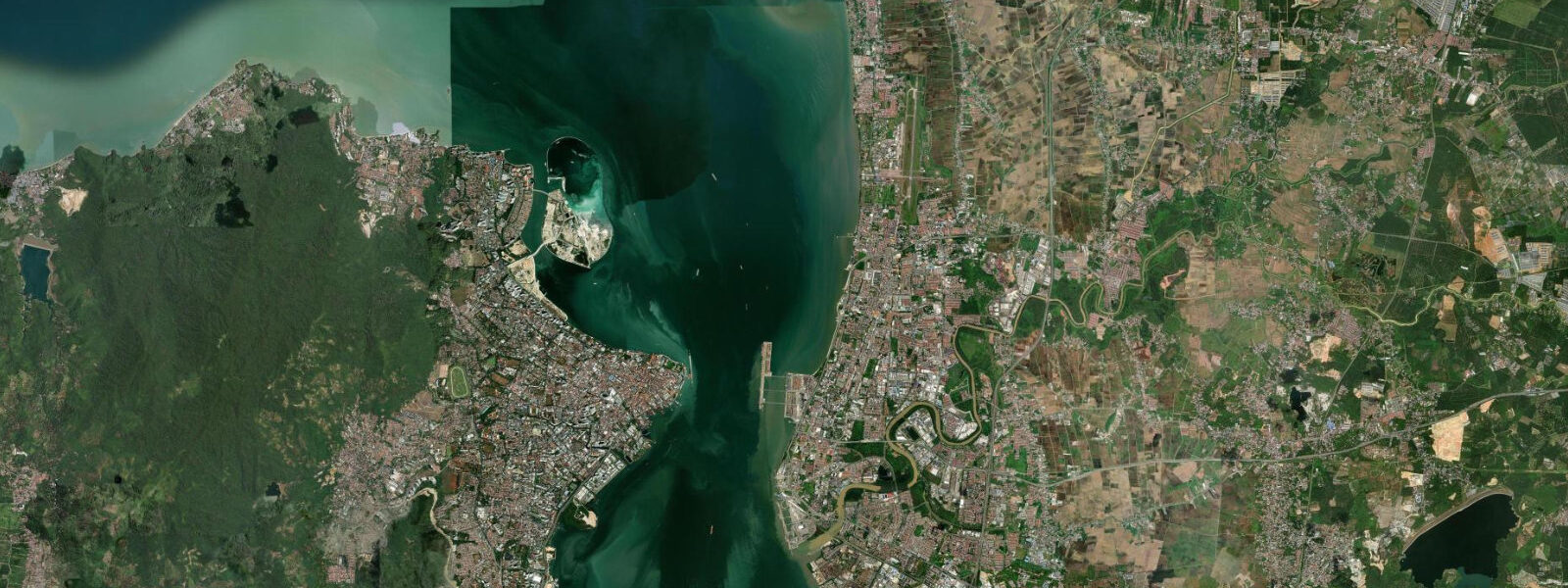
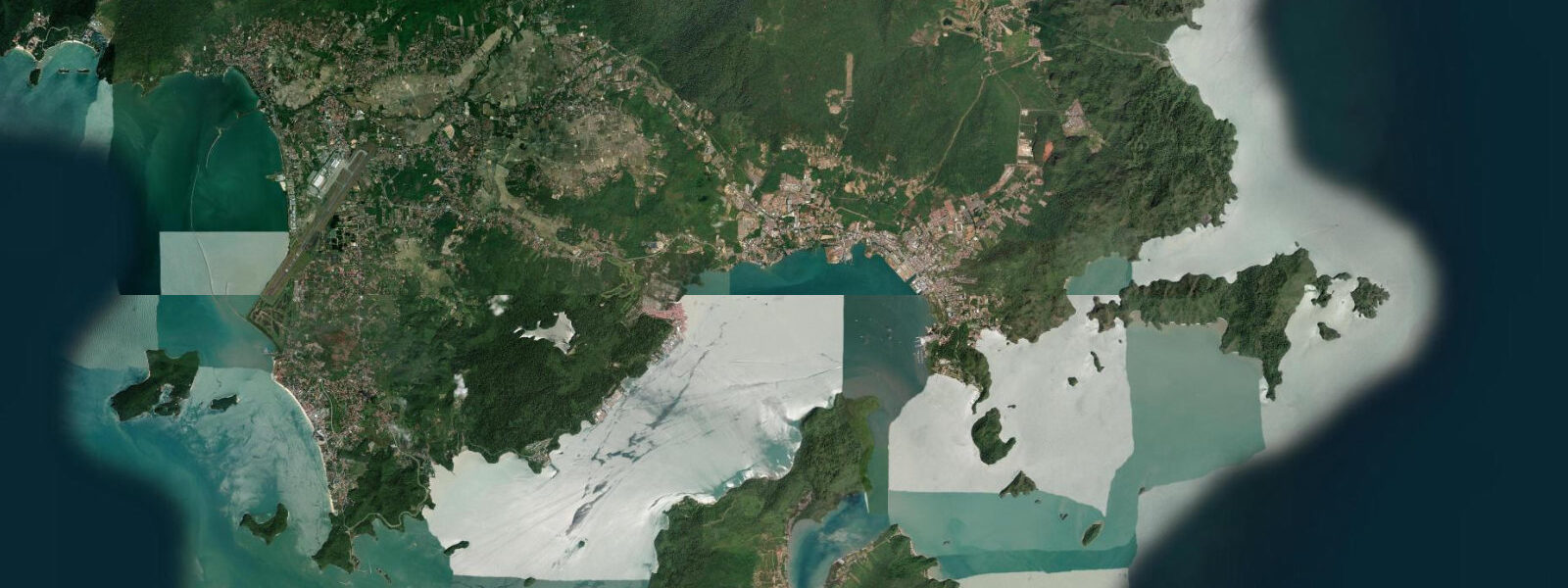
The three closest curated TideTurtle locations to George Town (Penang), measured by great-circle distance.
Today's solunar windows
Solunar tradition: major periods are the ≈3h windows around moon transit and opposition; minor are ≈2h around moonrise and moonset. Pair with the local tide stage and wind for the best read.
Cycle dates near George Town (Penang)
Next spring tide on Fri 31 Jul (range 1.8m). Last neap on Wed 29 Jul. Next neap on Tue 04 Aug.
Spring tides cluster around new and full moons (biggest swings). Neap tides land on quarter moons (smallest swings). See the spring tide and neap tide glossary entries for the why.
About tides at George Town (Penang)
A short guide to the coastline at George Town (Penang) — geography, sea state, and what the tide is actually doing under your feet.
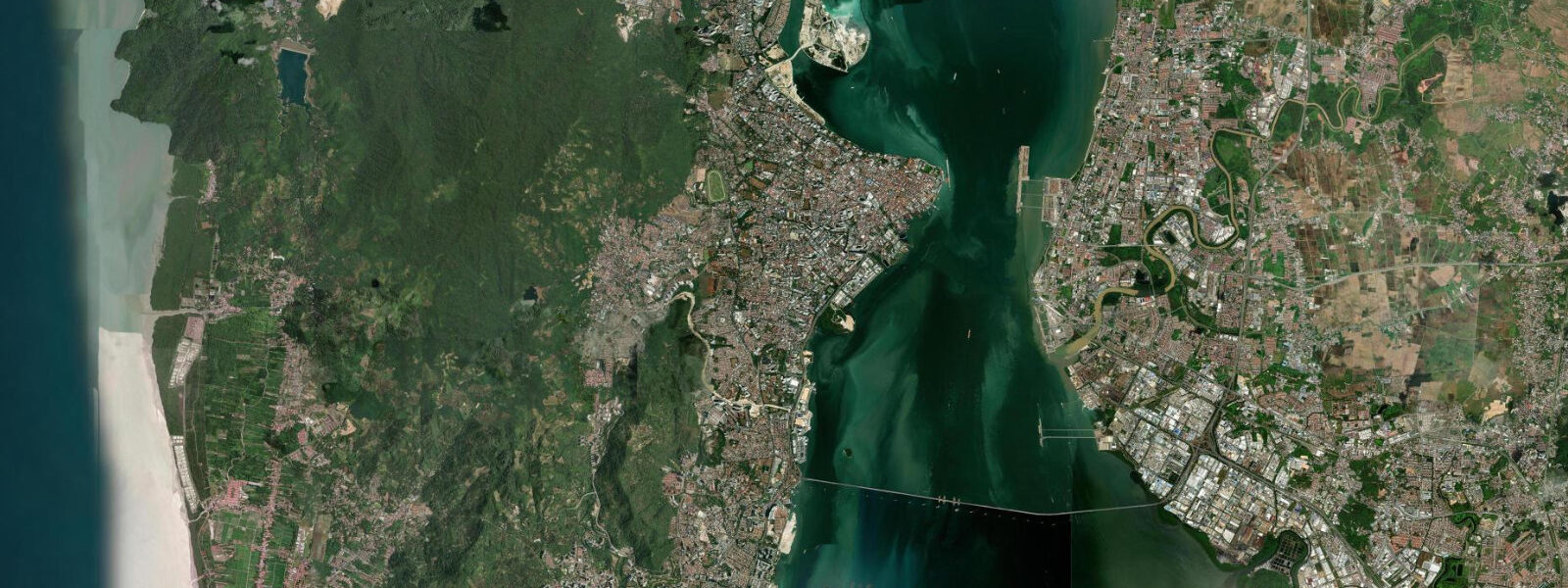
George Town sits on the northeastern shore of Pulau Pinang facing the Penang Channel and the mainland strip of Seberang Perai across two kilometres of working water. The Strait of Malacca runs north and south of the island, the long shipping corridor between Sumatra and the Malay Peninsula that funnels Indian Ocean tidal energy and carries roughly a quarter of the world's seaborne trade past the Penang approaches. The tide here is semidiurnal with a moderate range that the strait geometry amplifies as the open-ocean signal propagates north toward the Andaman Sea.
2 on neaps. Two highs and two lows about twelve and a half hours apart, the timing predictable enough that the ferry skippers running between Weld Quay and Butterworth and the channel pilots guiding container traffic to Penang Port read the table closely. The George Town heritage zone — the UNESCO-listed colonial-era core of clan jetties, shophouses, and the Cheong Fatt Tze mansion — faces the channel from the eastern edge of the island and stays sheltered from open Andaman Sea swell.
Tan Jetty, Lim Jetty, and the other clan jetties extend on stilts over the channel mudflats; the timber walkways sit above the mean spring high but the underside reveals shellfish-encrusted pilings at low water. The Penang Bridge to the south of the city and the Penang Second Bridge further south span the same channel and carry the cross-strait traffic between the island and the mainland. North along the island coast, Gurney Drive's reclaimed-land seafront and the hawker centre at the eastern end overlook the channel at high tide and a wide mudflat at low; further north the coast opens to Tanjung Tokong, Batu Ferringhi, and the resort beaches of the northern shore which face more directly into the strait and pick up the southwest monsoon swell from May through September.
The northeast monsoon from November through March turns the wind around and reduces the swell on the open western shore. Fishers working the channel for tropical shrimp, ikan kembung mackerel, and the seasonal barramundi run target the slack water between flood and ebb — about 30 to 45 minutes either side of the predicted high or low. The mid-tide windows are the working bracket for the small-boat operators running between the clan-jetty piers and the mainland fishing villages around Butterworth and Bagan Ajam.
Mudflat clam-diggers on the Seberang Perai mainland side walk the exposed banks at the lowest spring lows for kerang and the tropical mud crabs that local restaurants serve as kepiting masak lemak — the harvest window opens roughly two hours before the predicted low and closes within 30 minutes of the turn. The strait is also the working ground for pole-and-line baitfish operations that supply the larger Penang seafood industry, and the kelong-style fixed fishing platforms that survive in pockets along the Seberang Perai shore read the same daily tide table. Beach-walkers at the Tanjung Tokong waterfront and shore photographers working the long reflection at the Esplanade headland near Fort Cornwallis time their sessions to the predicted highs at dawn and dusk for the cleanest water against the colonial-era seawall.
The predictions on this page come from Open-Meteo Marine, a free gridded global ocean model that estimates tidal height across a geographic grid rather than from a measured harmonic record at a single gauge. 3 metres on height — small relative to Penang's two-metre mean swing but worth knowing when planning around a precise water level. For navigation, port operations, and any activity where exact water level matters, the Department of Survey and Mapping Malaysia (JUPEM) and the National Hydrographic Centre publish the authoritative Malaysian tide tables for the Pulau Pinang gauge, and Penang Port Authority pilotage guidance is the operational reference for the commercial channel traffic.
Tide questions about George Town (Penang)
Quick answers to the most common questions about tide times, range, and water access at George Town (Penang).
When is the next high tide at George Town (Penang)?
The hero block at the top of this page shows the next predicted high at George Town in local Malaysia Standard Time (MYT, UTC+8, no daylight-saving). For the full week, scroll to the 7-day table. Predictions come from the Open-Meteo Marine gridded global ocean model. For authoritative Pulau Pinang gauge data and navigation-grade tide tables, use the Department of Survey and Mapping Malaysia (JUPEM) and the National Hydrographic Centre, which operate the official Malaysian coastal gauge network.
What's the typical tide range at George Town?
Mean astronomical range at the Pulau Pinang gauge is roughly 1.8 to 2.2 metres — a moderate semidiurnal Strait of Malacca signal. Spring tides around new and full moons push past 2.5 metres; neap tides during the quarter moons compress toward 1.2 metres. Two highs and two lows of comparable size each day, about twelve and a half hours apart. The strait geometry funnels Indian Ocean tidal energy northward, which is why the range here is larger than the open Andaman Sea archipelagos to the west but smaller than the head of the strait near Port Klang.
Where do these tide predictions come from?
Open-Meteo Marine, a free gridded global ocean model. The model estimates tidal height from oceanographic equations applied across a geographic grid, not from a measured harmonic record at a single gauge. Accuracy is typically within plus or minus 45 minutes on timing and within roughly 0.3 metres on height. For Penang's two-metre mean range that uncertainty is small relative to the actual swing, but for any activity where precise water level matters — port operations, navigation, dive planning at the Sungai Pinang river-mouth zones — the Department of Survey and Mapping Malaysia (JUPEM) and the National Hydrographic Centre are the authoritative sources.
When can I see the clan-jetty pilings at low water?
The wooden jetties at Tan Jetty, Lim Jetty, and the other clan-jetty walkways at the George Town waterfront sit on stilts above the channel mudflats. The shellfish-encrusted lower pilings and the working channel below are exposed at the lowest spring-tide lows — typically when the predicted low drops below 0.5 metres above chart datum, which happens around new and full moons. Check the 7-day table for the lowest predicted lows of the cycle; arriving 60 to 90 minutes before the listed low gives the best photographic light along the underside of the walkway.
Is this safe to use for navigation?
No. For piloting in or out of Penang Port, the channel ferry crossings between Weld Quay and Butterworth, or any navigation through the Penang Channel and the wider Strait of Malacca approaches, use the official Malaysian Admiralty tide tables published by the Department of Survey and Mapping Malaysia (JUPEM) and the National Hydrographic Centre. Penang Port Authority pilotage guidance is the operational reference for commercial traffic. The Open-Meteo Marine gridded predictions on this page are useful for daily planning but do not replace gauge-calibrated harmonic data for navigational use.
8-day tide table — George Town (Penang)
Heights relative to MSL. Predictions: Open-Meteo Marine (MeteoFrance SMOC, 0.08° grid) — heights relative to MSL (not chart datum / LAT). Model-derived.
| Day | Type | Time | Height |
|---|---|---|---|
| Wed 29 Jul | Low | 08:00 | 0.2m |
| High | 13:01 | 1.4m | |
| Low | 19:52 | -0.2m | |
| Thu 30 Jul | High | 01:42 | 1.1m |
| Low | 07:42 | 0.1m | |
| High | 13:39 | 1.5m | |
| Low | 20:22 | -0.3m | |
| Fri 31 Jul | High | 02:22 | 1.1m |
| Low | 08:12 | 0.0m | |
| High | 14:11 | 1.5m | |
| Low | 20:56 | -0.3m | |
| Sat 01 Aug | High | 02:56 | 1.2m |
| Low | 08:54 | 0.0m | |
| High | 14:36 | 1.5m | |
| Low | 21:24 | -0.3m | |
| Sun 02 Aug | High | 15:03 | 1.4m |
| Low | 21:54 | -0.3m | |
| Mon 03 Aug | High | 03:55 | 1.1m |
| Low | 22:20 | -0.3m | |
| Tue 04 Aug | High | 15:55 | 1.1m |
| Low | 22:50 | -0.1m | |
| Wed 05 Aug | High | 05:03 | 1.1m |
| Low | 07:00 | 0.9m |