Beppu tide times
Beppu tide forecast — heights relative to MSL.
Today's tide times for Beppu
Tide times at Beppu on Monday, 3 August 2026: first high tide at 10:07, first low tide at 16:04, second high tide at 22:36. Sunrise 05:27, sunset 19:12.
Tide chart for Beppu
24-hour cosine-interpolated curve around the present moment. Heights relative to MSL. Predictions: Predictions: Open-Meteo Marine (MeteoFrance SMOC, 0.08° grid).
Sun, moon and conditions on Mon 03 Aug
Snapshot at build time — refreshes daily. Sea state from Open-Meteo Marine.
Highs and lows next 7 days
Every predicted high and low for the next week, with the daily tidal coefficient (0–120; higher = bigger swing, > 95 means stronger currents).
Other spots nearby
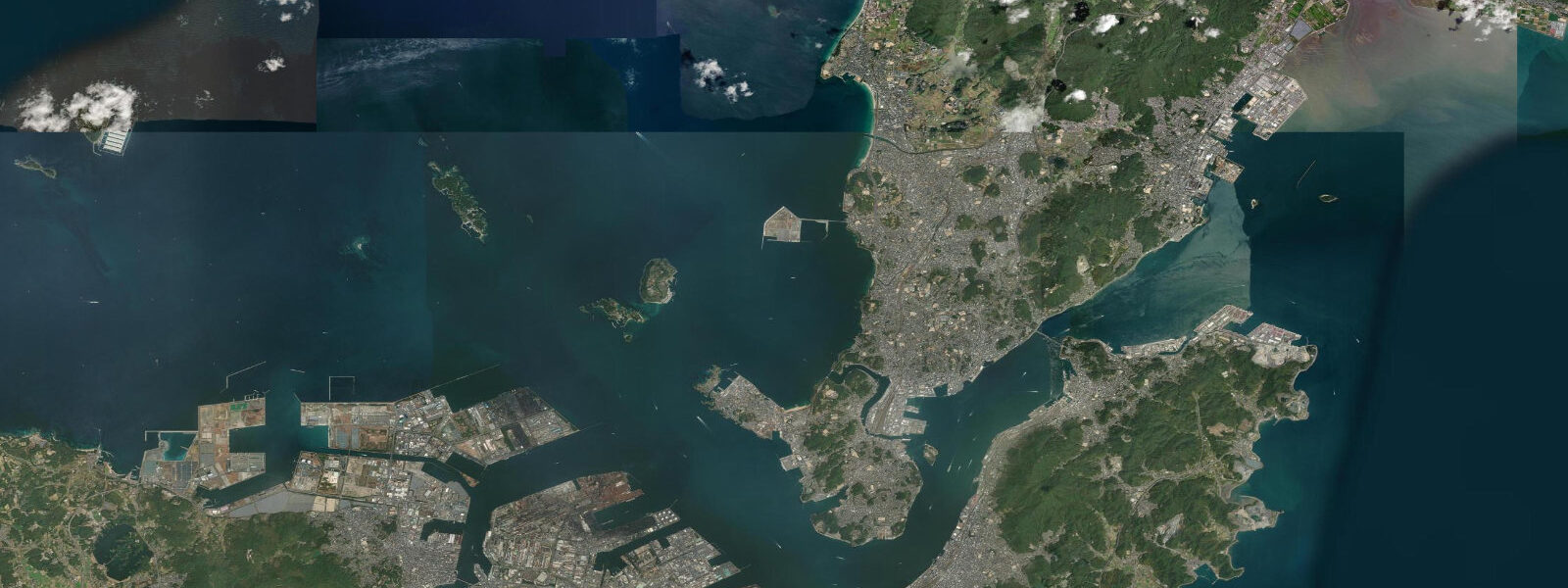
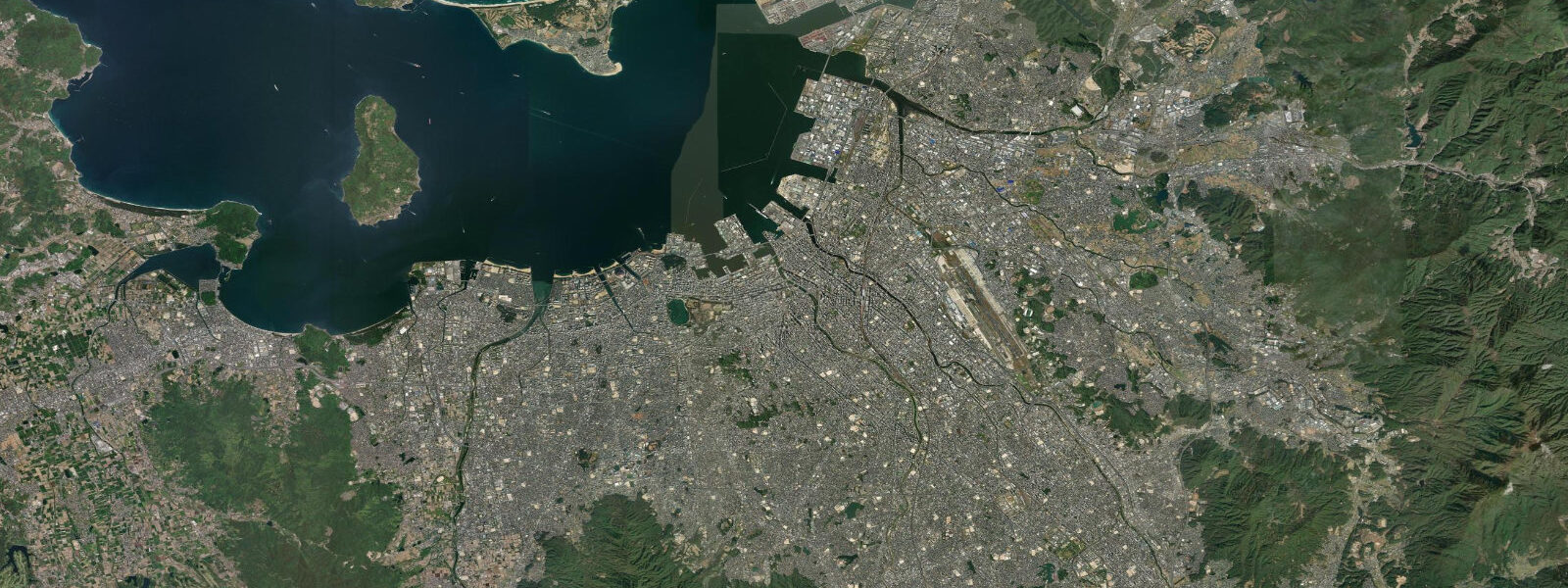
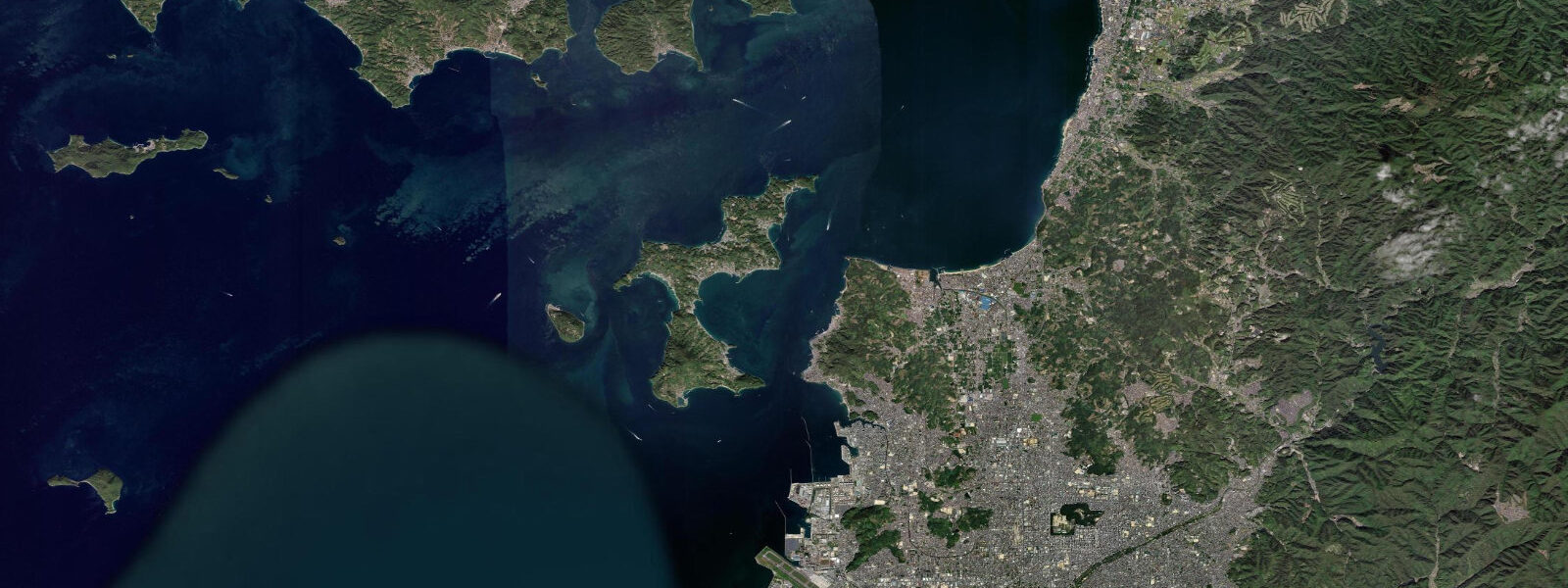
The three closest curated TideTurtle locations to Beppu, measured by great-circle distance.
Today's solunar windows
Solunar tradition: major periods are the ≈3h windows around moon transit and opposition; minor are ≈2h around moonrise and moonset. Pair with the local tide stage and wind for the best read.
Cycle dates near Beppu
Last spring tide on Mon 03 Aug (range 1.5m). Next spring tide on Sun 09 Aug (range 1.7m). Next neap on Thu 06 Aug.
Spring tides cluster around new and full moons (biggest swings). Neap tides land on quarter moons (smallest swings). See the spring tide and neap tide glossary entries for the why.
About tides at Beppu
A short guide to the coastline at Beppu — geography, sea state, and what the tide is actually doing under your feet.
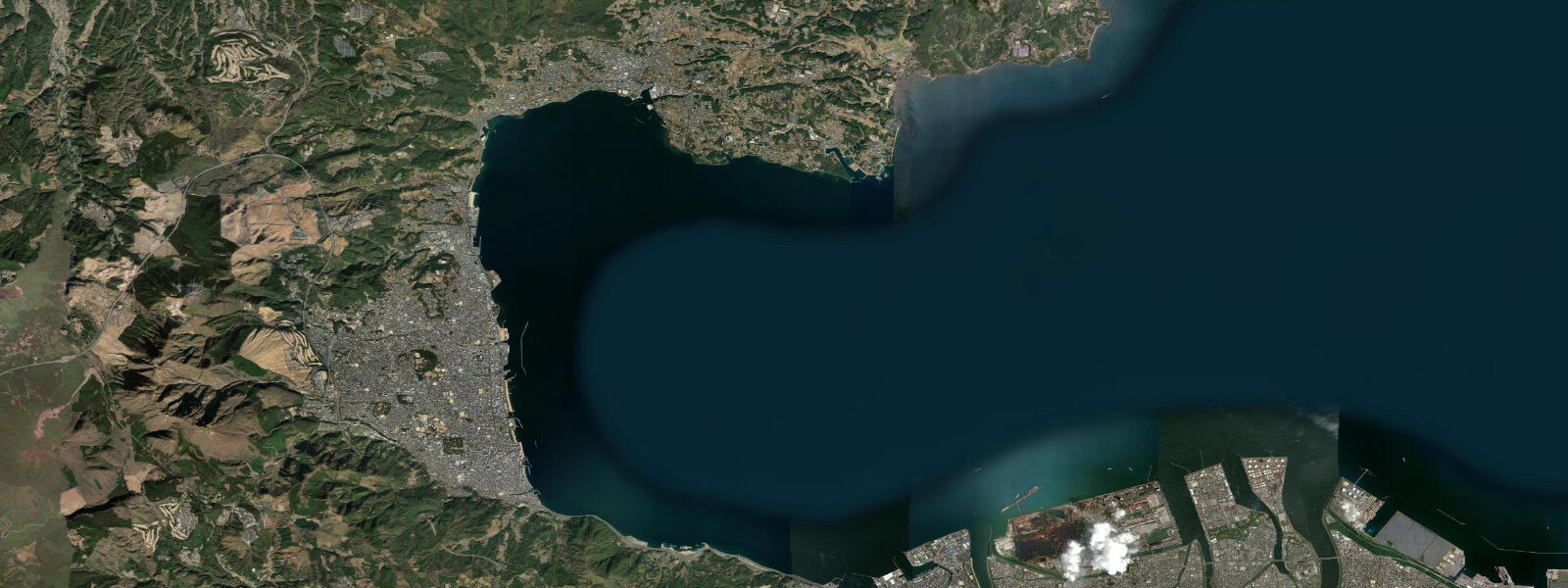
Beppu is on the east coast of Kyushu on Beppu Bay, the most geothermally active resort town in Japan and the second-highest volume of hot spring discharge in the world (after Yellowstone). Steam rises from pipes, gutters, drains, and roadside vents throughout the city. The tidal pattern is semidiurnal with a mean spring range of about 1.8 metres. The coast faces west into Beppu Bay, sheltered from the Pacific Ocean by the Kunisaki Peninsula; the bay is calm and warm, with water temperatures boosted slightly by the geothermal activity in the bay margins.
The 'Hells' (Jigoku) of Beppu — nine distinct hot spring pools with different mineral compositions and temperatures — are the tourist attraction that defines the city. The Chinoike Jigoku (Blood Pond Hell) is red from dissolved iron; Umi Jigoku (Sea Hell) is cobalt blue from aluminium and calcium. The hells average 98°C and are for viewing, not bathing; the viewing circuit covers seven of the nine in a 3-km walk with entry fees. Bathing in thermal springs is at the hygienic public baths (sento onsen) and the sand baths (sunayu) at Beppu Beach.
The Beppu Beach Sand Bath (sunayu) is unique — bathers lie on the black volcanic sand of the beach while attendants shovel thermal sand over them. The sand is heated to 40 to 45°C by geothermal water circulating through it. Bathers lie for 15 to 20 minutes in a shallow sand tomb while the heat penetrates; the sensation is profoundly relaxing. The sand bath operates on the beach in the harbour area; a yukata is provided and worn during the experience.
Fishing in Beppu Bay targets yellowtail (hamachi, in autumn), sea bream (tai), and flounder (hirame). The bay's relatively enclosed geometry and warm water from geothermal inputs support productive aquaculture; locally farmed sea bream (Beppu tai) is a regional specialty. Shore fishing from the harbour walls and rock platforms is accessible without a licence in Japanese saltwater fishing.
The Beppu ropeway ascends Tsurumi-dake (1375 m) from the city outskirts, giving views across Beppu Bay and the Oita coast.
Predictions on this page come from Open-Meteo Marine, a gridded global ocean model. Accuracy is typically within plus or minus 45 minutes on timing and 0.2 to 0.3 metres on height — model-derived, not from a local gauge. For authoritative Japanese tide data, consult the Japan Meteorological Agency at jma.go.jp.
Tide questions about Beppu
Quick answers to the most common questions about tide times, range, and water access at Beppu.
What are the Beppu Hells?
The Beppu Jigoku (Hells) are nine natural hot spring pools with extreme temperatures (average 98°C) and distinctive appearances caused by their mineral composition. The most famous: Chinoike Jigoku (Blood Pond Hell, red from iron hydroxide), Umi Jigoku (Sea Hell, cobalt blue from minerals), and Tatsumaki Jigoku (Tornado Hell, a geyser erupting every 30 to 40 minutes). Seven of the nine are on a combined entry pass (approximately ¥2,200). They are for viewing only — not bathing. Allow 2 to 3 hours for the circuit.
What is the sand bath at Beppu?
The Beppu sunayu (sand bath) at Shoumonkai Beach on the harbour is a unique geothermal experience. Bathers wear a yukata (provided), lie in a shallow excavated sand bed, and have 40 to 45°C thermal sand shovelled over them by attendants. Immersion time is 15 to 20 minutes; the deep heat penetrates muscle tissue more effectively than hot spring water bathing. Entry is approximately ¥1,500 including yukata; open daily (check seasonal hours). The experience is best in cooler weather — summer visits are challenging.
What is the tidal range at Beppu?
Mean spring range at Beppu Bay is approximately 1.8 metres. The bay is relatively enclosed by the Kunisaki Peninsula to the north and the Tsurumi headland to the south, sheltering it from Pacific Ocean swell. The bay's warm water (partially from geothermal groundwater inputs along the coast) supports productive aquaculture and makes the coastal fishing more productive year-round than the open Pacific coast.
How do I get to Beppu?
By train from Fukuoka (Hakata Station): Limited Express Sonic to Oita, then local train to Beppu — about 2 hours total (¥4,000–¥5,000). Direct Limited Express Sonic from Hakata to Beppu in 1 hour 50 minutes on some services. From Osaka/Kyoto/Tokyo, the night ferry (Sunflower Ferry) from Osaka Nanko to Beppu takes 12 hours and is a comfortable alternative to overnight rail. From Tokyo by shinkansen: Hakata-Oita-Beppu is the standard routing (6+ hours).
Is swimming in Beppu Bay safe?
Beppu Bay is calm and sheltered — the designated swimming beach at the sand bath area and the harbour beaches are safe for swimming in summer (water temperature 22 to 26°C July through September). The bay has light boat traffic. The unique feature is the slightly elevated water temperature near the shore (from geothermal groundwater seeps along the coastline), which can make the shallows noticeably warmer than the main bay in summer. Jellyfish (primarily Aurelia aurita moon jellies) appear in late summer.
8-day tide table — Beppu
Heights relative to MSL. Predictions: Open-Meteo Marine (MeteoFrance SMOC, 0.08° grid) — heights relative to MSL (not chart datum / LAT). Model-derived.
| Day | Type | Time | Height |
|---|---|---|---|
| Mon 03 Aug | High | 10:07 | 1.0m |
| Low | 16:04 | -0.3m | |
| High | 22:36 | 1.2m | |
| Tue 04 Aug | Low | 04:50 | -0.2m |
| High | 11:01 | 0.9m | |
| Low | 16:47 | -0.1m | |
| High | 23:10 | 1.2m | |
| Wed 05 Aug | Low | 05:34 | -0.2m |
| High | 12:02 | 1.0m | |
| Low | 17:34 | 0.2m | |
| High | 23:46 | 1.2m | |
| Thu 06 Aug | Low | 06:26 | -0.2m |
| High | 13:13 | 1.0m | |
| Fri 07 Aug | Low | 07:26 | -0.2m |
| High | 14:54 | 1.0m | |
| Low | 19:55 | 0.6m | |
| Sat 08 Aug | High | 01:12 | 1.0m |
| Low | 08:35 | -0.3m | |
| High | 16:42 | 1.0m | |
| Sun 09 Aug | Low | 09:55 | -0.5m |
| High | 17:55 | 1.2m | |
| Low | 23:40 | 0.6m | |
| Mon 10 Aug | High | 04:02 | 0.9m |
| Low | 08:00 | 0.2m |