Bushehr tide times
Bushehr tide forecast — heights relative to MSL.
Today's tide times for Bushehr
Tide times at Bushehr on Tuesday, 4 August 2026: first low tide at 04:13am, first high tide at 09:45am, second low tide at 04:21pm, second high tide at 10:45pm. Sunrise 05:28am, sunset 06:56pm.
Tide chart for Bushehr
24-hour cosine-interpolated curve around the present moment. Heights relative to MSL. Predictions: Predictions: Open-Meteo Marine (MeteoFrance SMOC, 0.08° grid).
Sun, moon and conditions on Tue 04 Aug
Snapshot at build time — refreshes daily. Sea state from Open-Meteo Marine.
Highs and lows next 7 days
Every predicted high and low for the next week, with the daily tidal coefficient (0–120; higher = bigger swing, > 95 means stronger currents).
Other spots nearby
The three closest curated TideTurtle locations to Bushehr, measured by great-circle distance.

Today's solunar windows
Solunar tradition: major periods are the ≈3h windows around moon transit and opposition; minor are ≈2h around moonrise and moonset. Pair with the local tide stage and wind for the best read.
Cycle dates near Bushehr
Next spring tide on Mon 10 Aug (range 1.7m). Next neap on Wed 05 Aug.
Spring tides cluster around new and full moons (biggest swings). Neap tides land on quarter moons (smallest swings). See the spring tide and neap tide glossary entries for the why.
About tides at Bushehr
A short guide to the coastline at Bushehr — geography, sea state, and what the tide is actually doing under your feet.
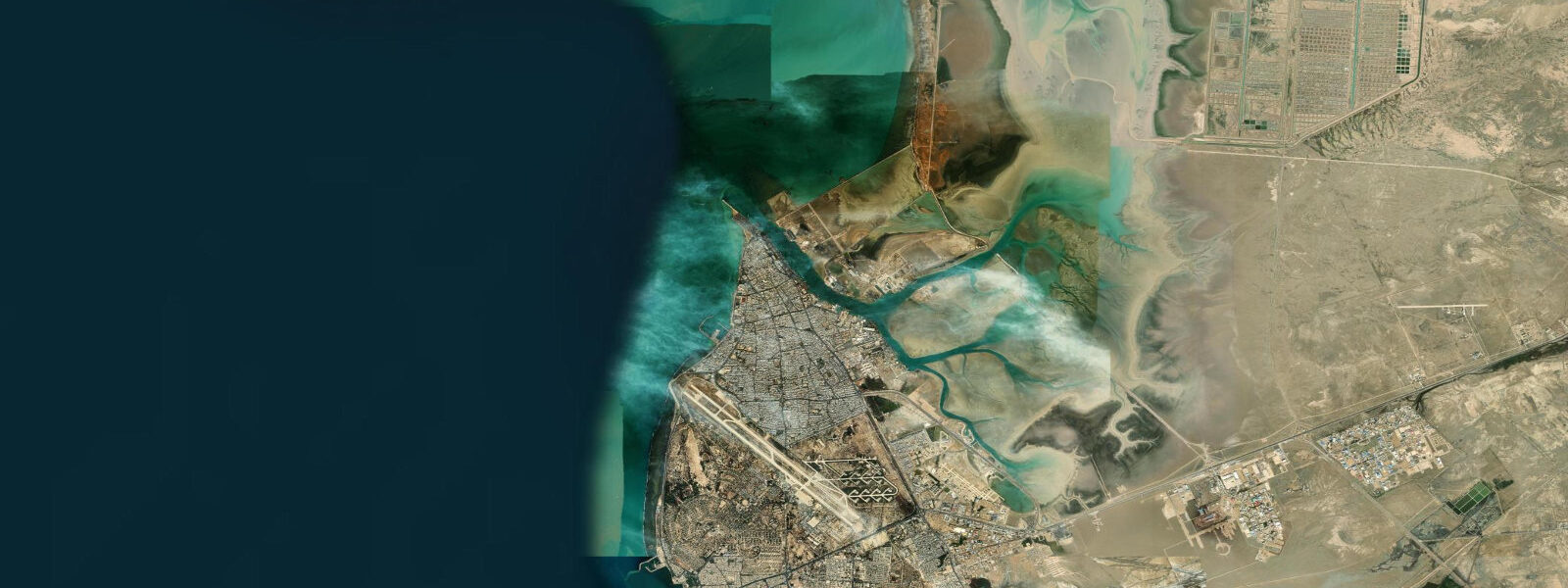
Bushehr sits on a low rocky peninsula on Iran's Persian Gulf coast, one of the oldest continuously inhabited port cities in the Gulf. The historic old town — Shahr-e Kuhan — occupies the narrow finger of the peninsula, its traditional wind-tower architecture and coral-block buildings a reminder that this coast was part of major maritime trade routes long before oil, before modern states, before any of the current Gulf infrastructure existed. The city now also hosts Iran's nuclear power plant about 20 km to the southeast, which gives Bushehr a peculiar dual character: ancient coastal port and contemporary strategic site, two identities that coexist in the same city without obvious resolution.
Tides at Bushehr follow the Persian Gulf semi-diurnal pattern, but the western Iranian coast sees somewhat moderated ranges compared to the northern Gulf. Spring tidal range here is approximately 1.4-1.8 m. The coast is generally flat with a mix of sandy beach, mudflat, and rocky section. The gulf water off Bushehr's coast is shallow for many kilometres offshore — the western Iranian shelf extends broadly, and depth rarely exceeds 10-20 m within close range. This shallowness drives the Gulf's characteristic extreme temperature range: summer sea temperatures off Bushehr reach 32-34°C, while January drops to 18-20°C.
Fishing is central to Bushehr's identity and economy in ways that even the oil era has not fully displaced. The city has one of the Gulf's most active fishing harbours, with boats working both inshore waters and the deeper outer Gulf for hammour (grouper), seabream, kingfish, and shrimp. The morning fish market — near the old harbour — is one of the more atmospheric coastal markets on the Iranian Gulf coast, active from before dawn when the night fleet returns with its catch. The variety of species reflects Bushehr's position in the mid-Gulf: both western Gulf reef species and the pelagic migrants that move through the deeper channel to the southeast.
The old town of Bushehr, while in partial disrepair, is worth exploring seriously for the maritime architecture. The wind towers (badgirs) that provided ventilation before air conditioning, the coral-block courtyard houses built from the material the sea provided, and the narrow lanes that once housed merchants trading between India, Africa, and Mesopotamia give the city texture and depth that the newer Gulf developments cannot replicate. The sea is visible from many points in the old town, and the relationship between the architecture and the coastal environment is clear in every building: everything oriented for catching the sea breeze, everything built from marine materials. Walking the old town at dusk, with the smell of the sea coming in from the Gulf, is one of the better cultural coastal experiences in the region.
Climate: Bushehr's coastal position makes it one of the Gulf's more humid locations. Summer heat is intense (40°C+) with high humidity that makes the outdoor experience genuinely punishing. Winter is the recommended visiting window: 15-22°C air, 18-20°C water, comfortable for all outdoor activities.
The connection between the sea and the old town is not just aesthetic — it was structural. The merchants who built these coral houses in the 17th and 18th centuries were in the import-export trade: Indian textiles, Gulf pearls, East African ivory, Mesopotamian dates. The sea was the highway. The wind towers were the air conditioning. The narrow alleys channelled the sea breeze from the Gulf into the interior of the houses before electricity arrived. Walking the old town in winter with the Gulf breeze coming in from the north is to experience the building as it was designed to function. The fish available in Bushehr's harbourside restaurants — grilled hammour, prawn curries, whole seabream with Persian spices — is some of the best seafood cooking on the Gulf coast, drawing on both the maritime catch and the Iranian spice tradition that gives it a different character from the Arab Gulf equivalent.
Tide questions about Bushehr
Quick answers to the most common questions about tide times, range, and water access at Bushehr.
What are tides like at Bushehr?
Bushehr on Iran's western Gulf coast experiences semi-diurnal tides with spring ranges of approximately 1.4-1.8 m. The flat coastal shelf means low tide exposes considerable sandy and mudflat area in the shallow inner coastal zone. Tidal currents are moderate rather than strong — the western Iranian coast doesn't have the dramatic channel flows of northern Kuwait or the Qatar straits. Practical implications for visitors: shore fishing is best timed for the hours either side of low tide when retreating water concentrates fish on structure edges; boat access from the harbour is unobstructed at all states of tide given the maintained harbour depth. Open-Meteo gridded predictions apply (±45 min, ±0.3 m).
When is the best time to visit Bushehr?
October through April is the comfortable window. Winter (November-February) is Bushehr's best season: temperatures of 15-22°C, calm Gulf water, and the old town's architecture is pleasant to explore without the oppression of Gulf summer heat. Sea temperature drops to 18-20°C in January — cool enough for a short swim if acclimatised, comfortable in a 3 mm wetsuit for snorkelling. March and April bring warmer air (22-30°C) and sea (22-25°C) before summer arrives. The summer months (May-September) are extremely hot and humid — Bushehr's coastal position amplifies humidity relative to inland Gulf cities — and are not recommended for outdoor exploration or coastal activities. The fishing harbour is active year-round but the morning market visit is most comfortable in winter.
Is Bushehr's old town worth visiting for coastal heritage?
Yes, unambiguously. Shahr-e Kuhan (Old Bushehr) is one of the better-preserved examples of traditional Gulf maritime architecture on the Iranian coast, despite significant neglect over the past century. The wind-tower houses (badgirs), coral-block construction, and narrow alley network of the old peninsula tip represent a building tradition common across the entire Gulf in the pre-air-conditioning era. The sea is visible from much of the old town, and the relationship between the architecture and the coastal environment is clear: everything oriented for catching the sea breeze, everything built from marine materials. Allow two to three hours to walk the old town with enough time to look inside courtyard houses and down to the waterfront.
What fishing is available at Bushehr?
Bushehr has a large, active fishing harbour and the surrounding Gulf waters are productive. Shore fishing from the harbour breakwaters and the rocky coastal sections south of the old town targets hammour (grouper), seabream, and mullet. Boat fishing extends to offshore banks where kingfish (king mackerel), barracuda, and cobia are caught alongside the reef species. The morning fish market near the harbour sells the overnight catch and gives a good picture of local species diversity — expect hammour, snapper, nagroor (emperor), various shrimp species, and occasionally cuttlefish and squid. No formal sport fishing charter industry is established at Bushehr in the style of Gulf Arab marina operators; connections are made at the harbour directly through the fishing community.
Is it safe to visit Bushehr as a foreign traveller?
Bushehr is a regular destination for Iranian domestic tourism from Tehran and Isfahan. Foreign travellers need standard Iranian visa arrangements and should follow current travel advice from their home country's foreign affairs ministry, as the area around Bushehr is more geopolitically sensitive than other Iranian coastal cities given the nuclear facility nearby. That said, the old town and fishing harbour are ordinary civilian areas with no restriction on visiting. Photographing the power plant or military installations is prohibited and inadvisable. The Iranian tourist infrastructure in Bushehr is developing — guesthouses and basic hotels in the old town area are available. Food is excellent: fresh Gulf seafood is Bushehr's culinary speciality and restaurants near the harbour serve it well.
8-day tide table — Bushehr
Heights relative to MSL. Predictions: Open-Meteo Marine (MeteoFrance SMOC, 0.08° grid) — heights relative to MSL (not chart datum / LAT). Model-derived.
| Day | Type | Time | Height |
|---|---|---|---|
| Tue 04 Aug | Low | 04:13 | 0.0m |
| High | 09:45 | 0.8m | |
| Low | 16:21 | -0.2m | |
| High | 22:45 | 0.9m | |
| Wed 05 Aug | Low | 05:16 | -0.0m |
| High | 10:24 | 0.6m | |
| Low | 16:45 | -0.2m | |
| High | 23:27 | 0.9m | |
| Thu 06 Aug | Low | 06:30 | -0.1m |
| Fri 07 Aug | High | 00:16 | 1.0m |
| Low | 07:52 | -0.1m | |
| High | 12:36 | 0.2m | |
| Low | 17:12 | -0.0m | |
| Sat 08 Aug | High | 01:13 | 1.1m |
| Low | 09:34 | -0.1m | |
| Sun 09 Aug | High | 02:33 | 1.2m |
| Low | 11:10 | -0.3m | |
| Mon 10 Aug | High | 03:49 | 1.3m |
| Low | 12:13 | -0.5m | |
| Tue 11 Aug | High | 02:30 | 1.0m |