Gili Trawangan tide times
Gili Trawangan tide forecast — heights relative to MSL.
Today's tide times for Gili Trawangan
Tide times at Gili Trawangan on Tuesday, 4 August 2026: first low tide at 08:00. Sunrise 06:29, sunset 18:14.
Tide chart for Gili Trawangan
24-hour cosine-interpolated curve around the present moment. Heights relative to MSL. Predictions: Predictions: Open-Meteo Marine (MeteoFrance SMOC, 0.08° grid).
Sun, moon and conditions on Tue 04 Aug
Snapshot at build time — refreshes daily. Sea state from Open-Meteo Marine.
Highs and lows next 7 days
Every predicted high and low for the next week, with the daily tidal coefficient (0–120; higher = bigger swing, > 95 means stronger currents).
Other spots nearby
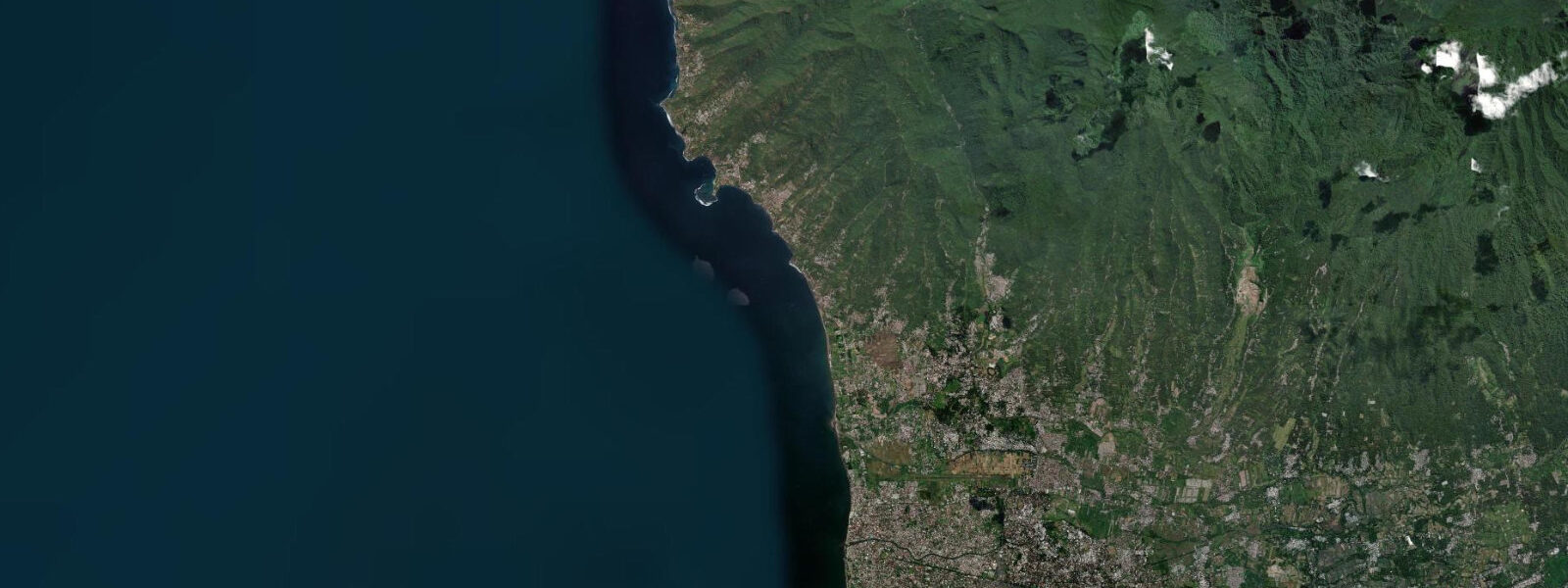
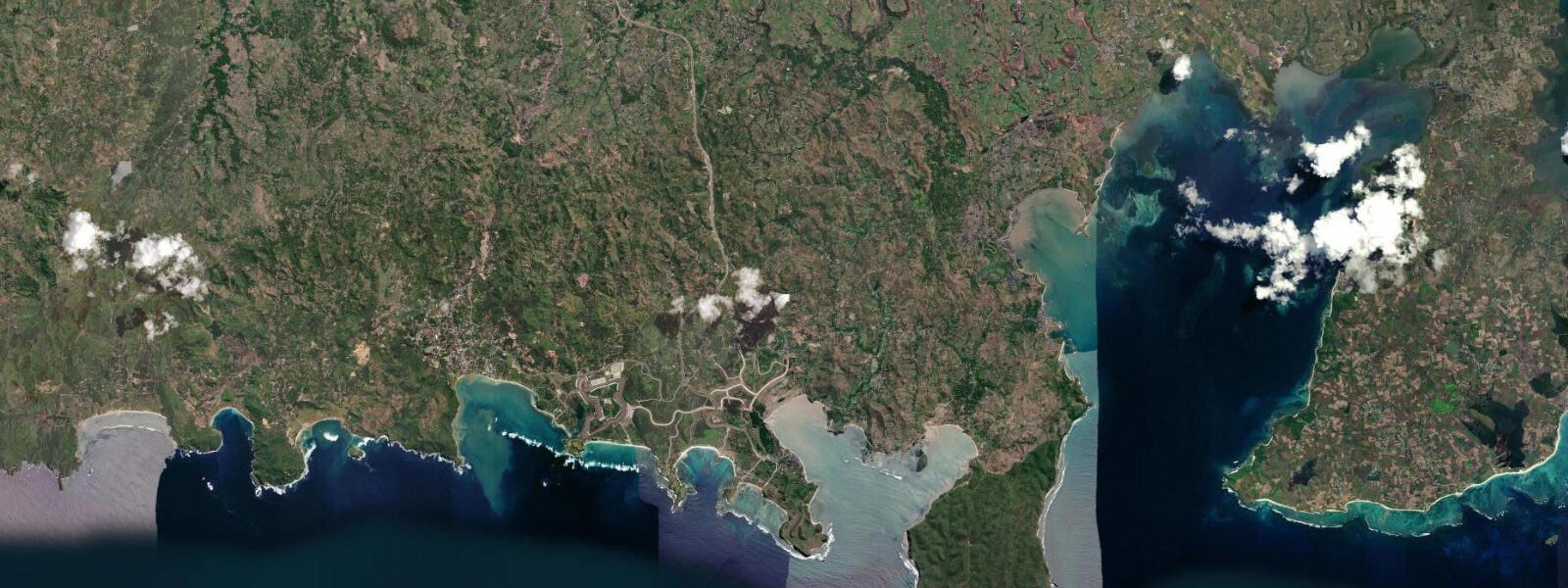
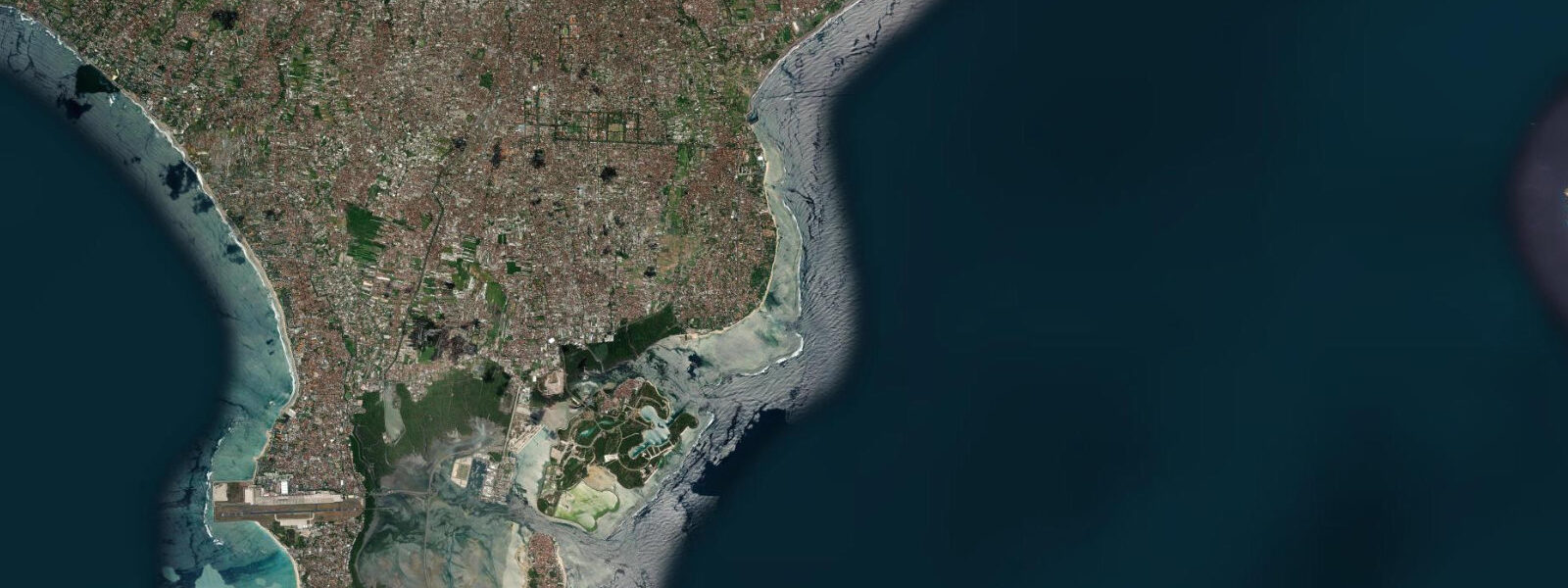
The three closest curated TideTurtle locations to Gili Trawangan, measured by great-circle distance.
Today's solunar windows
Solunar tradition: major periods are the ≈3h windows around moon transit and opposition; minor are ≈2h around moonrise and moonset. Pair with the local tide stage and wind for the best read.
Cycle dates near Gili Trawangan
Next spring tide on Mon 10 Aug (range 1.6m). Last neap on Tue 04 Aug.
Spring tides cluster around new and full moons (biggest swings). Neap tides land on quarter moons (smallest swings). See the spring tide and neap tide glossary entries for the why.
About tides at Gili Trawangan
A short guide to the coastline at Gili Trawangan — geography, sea state, and what the tide is actually doing under your feet.
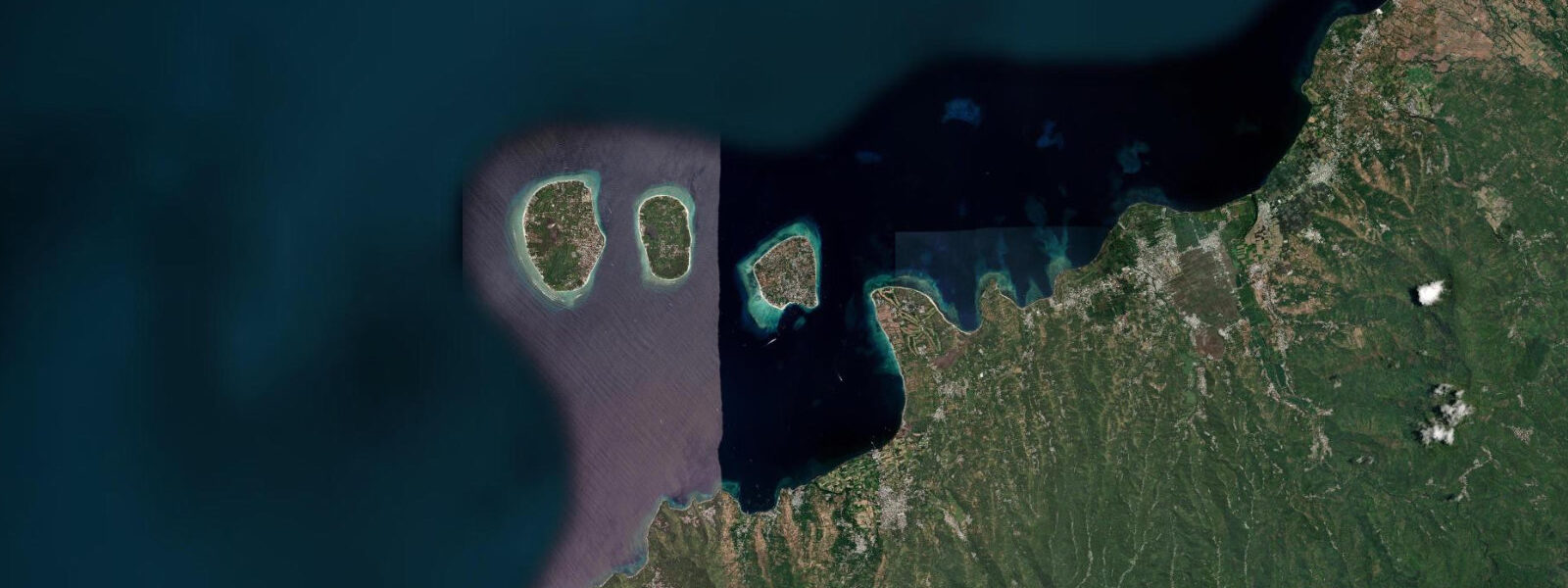
Gili Trawangan is the largest and westernmost of the three Gili Islands, sitting off the northwest coast of Lombok separated by a shallow channel that belies its tidal intensity. The island is roughly 3 km from end to end, ringed by a coral reef platform and a beach that runs unbroken around the entire circumference. No motor vehicles are permitted on Gili T — transport is by bicycle or cidomo (the two-wheeled horse cart that is as much a local symbol as the sea turtles).
The absence of engine noise is one of the island's more immediately striking characteristics. 0 m. The Lombok Strait to the west carries the Indonesian Throughflow — one of the most oceanographically significant current systems in the world — and the spring tidal currents in the main strait reach 3–5 knots.
The Gili Channel, the passage between Gili Trawangan and the Lombok mainland, runs at a reduced but still significant 2–3 knots at peak spring ebb or flood. The dive sites around Gili T are positioned in and around this current, and the entire dive operation on the island is structured around current timing rather than simply high and low tide. The drift dives through the north channel — Shark Point, Hans Reef, and the Halik reef — are done on the ebb when the current runs west to east and divers are carried through the coral gardens without fin effort.
The dive briefings at every operator include current prediction; a guide walks through the tidal state before each drift dive departure. Sea turtles are the headline encounter at the Gilis — both green turtles (Chelonia mydas) and hawksbill turtles (Eretmochelys imbricata) are resident and reliably seen at the shallow turtle nursery sites on the east coast. Turtle sightings are independent of tidal state at the nursery sites; the turtles rest on the coral at any water level.
The deeper turtle sites at Turtle Heaven (12–20 m depth, south coast) are best approached on a slow current — the neap-tide slack window gives the longest in-water time at depth. The east coast of Gili T is the calm side, facing the Lombok mainland; the beach here is narrower, mostly shaded by vegetation, and the snorkelling reef is within 20–30 m of the waterline. 6 m — and snorkelling without fins touching coral requires careful depth management.
0 m. The west coast faces the Lombok Strait and the Bali sunset view; the beach is wider and the snorkelling is less protected, with the current from the strait more directly felt. Sunset from the west beach is the dominant social ritual on the island — the volcanic profile of Gunung Agung on Bali (3,142 m) is visible on the horizon in clear conditions, and the sun drops behind it or close to it depending on the time of year.
The beach at sunset is at its widest at low tide; at high spring the water can reach close to the restaurant terraces. Fast boat transfers from Bali (Padang Bai or Serangan harbour) take 2 hours; the Lombok ferry from Bangsal pier (mainland Lombok, 25 km south) takes 30 minutes by public boat or 15 minutes by fast charter. 4 m of water over the sandy approach and passengers may wade.
3 m. For operational tide data in Indonesian waters, BIG (Badan Informasi Geospasial) publishes the authoritative tables.
Tide questions about Gili Trawangan
Quick answers to the most common questions about tide times, range, and water access at Gili Trawangan.
How does the Lombok Strait current affect diving around Gili Trawangan?
The Lombok Strait is part of the Indonesian Throughflow and carries tidal currents of 3–5 knots in the main channel at spring ebb and flood. The Gili Channel, between Gili Trawangan and the Lombok mainland, reduces this to 2–3 knots at peak spring. Dive operations at Gili T are built around this current: drift dives at Shark Point, Hans Reef, and Halik reef are done on the ebb current (running west to east through the north channel), when divers are carried through the coral without effort. Neap tide periods produce the gentlest currents — best for turtle encounters at depth (Turtle Heaven, 12–20 m) and for less experienced divers. Every dive briefing at Gili T operators includes current prediction for the day; ask which sites are scheduled for the current state when booking. Open-Meteo Marine provides the tide timing; BIG is the authoritative Indonesian source.
When is the best time to snorkel off Gili Trawangan's east coast reef?
The east coast reef flat is the most accessible snorkelling site — within 20–30 m of the beach, with resident sea turtles. The reef flat at low spring tide sits under 0.4–0.6 m of water, which is too shallow for comfortable snorkelling without touching coral. The best window is the two hours either side of high water, when depth over the flat runs 1.5–2.0 m. Spring range at the Gilis is 1.5–2.0 m, so the difference between the low-tide and high-tide snorkelling experience is significant. For the shallow turtle nursery sites specifically, mid-to-high tide gives clear water at comfortable depth; turtles rest at the reef regardless of tidal state but are more accessible and visible in adequate depth. Check the predicted high-water time on this page.
How do I get to Gili Trawangan from Bali or Lombok?
From Bali: fast boat from Padang Bai (east coast) or Serangan harbour (Denpasar), approximately 2 hours to Gili T. Multiple operators run daily services; booking ahead is recommended in July and August. From Lombok mainland: public wooden boat from Bangsal pier (near Pemenang, 25 km north of Mataram), 30 minutes, approximately 20,000 IDR. Fast charter boat from Bangsal, 15 minutes. From Lombok Airport (Praya): taxi or shuttle to Bangsal, 45–60 minutes depending on traffic. Bangsal pier loading is tidal-sensitive for the public boats at low spring — the sandy ramp approach can have 0.3–0.4 m of water with soft footing. No vehicles are permitted on Gili T; bicycles and horse carts are the only transport options on the island.
Are there sharks at Gili Trawangan?
Blacktip reef sharks (Carcharhinus melanopterus) and whitetip reef sharks (Triaenodon obesus) are resident at several Gili T dive sites. Shark Point on the north coast is the most reliable blacktip site — the current carries the sharks through the channel and they rest on the sandy bottom at 8–14 m depth. Sightings are common at any tidal state; the peak current period on the ebb brings the most active shark behaviour as the current activates feeding. Nurse sharks (Nebrius ferrugineus) are occasionally seen resting under coral overhangs at the deeper sites (18–25 m) on the south coast. None of the resident shark species at the Gilis present a hazard to snorkellers or divers under normal circumstances. The dive guide briefing will note the current state and expected shark activity at the relevant sites.
Where do the tide predictions for Gili Trawangan come from?
Predictions on this page are from Open-Meteo Marine, a free gridded global ocean model, with typical accuracy of ±45 minutes on timing and ±0.2–0.3 m on height. For a site where diving decisions depend on current timing, this accuracy is suitable as a planning guide but not as the primary operational input — the local current state at Shark Point or Hans Reef varies with the specific phase of the tidal cycle and is best judged by local guides with site knowledge. BIG (Badan Informasi Geospasial), Indonesia's national mapping authority, publishes the authoritative Indonesian tide tables. Cross-reference the predicted high and low times on this page with BIG tables if you are planning a drift dive on a specific current window.
8-day tide table — Gili Trawangan
Heights relative to MSL. Predictions: Open-Meteo Marine (MeteoFrance SMOC, 0.08° grid) — heights relative to MSL (not chart datum / LAT). Model-derived.
| Day | Type | Time | Height |
|---|---|---|---|
| Tue 04 Aug | Low | 08:00 | 0.3m |
| Wed 05 Aug | High | 02:16 | 1.0m |
| Low | 09:03 | 0.2m | |
| Thu 06 Aug | High | 02:52 | 1.1m |
| Low | 19:10 | 0.4m | |
| Fri 07 Aug | — | ||
| Sat 08 Aug | High | 04:50 | 1.1m |
| Low | 13:54 | -0.1m | |
| Sun 09 Aug | High | 06:07 | 1.2m |
| Low | 14:56 | -0.3m | |
| Mon 10 Aug | High | 07:23 | 1.3m |
| Low | 15:43 | -0.4m | |
| High | 23:06 | 0.6m | |
| Tue 11 Aug | Low | 01:50 | 0.5m |
| High | 07:00 | 1.2m | |