Bonavista tide times
Bonavista tide forecast — heights relative to MSL.
Today's tide times for Bonavista
Tide times at Bonavista on Tuesday, 4 August 2026: first low tide at 04:39am, first high tide at 10:51am, second low tide at 05:02pm, second high tide at 11:03pm. Sunrise 05:10am, sunset 08:05pm.
Tide chart for Bonavista
24-hour cosine-interpolated curve around the present moment. Heights relative to MSL. Predictions: Predictions: Open-Meteo Marine (MeteoFrance SMOC, 0.08° grid).
Sun, moon and conditions on Tue 04 Aug
Snapshot at build time — refreshes daily. Sea state from Open-Meteo Marine.
Highs and lows next 7 days
Every predicted high and low for the next week, with the daily tidal coefficient (0–120; higher = bigger swing, > 95 means stronger currents).
Other spots nearby
The three closest curated TideTurtle locations to Bonavista, measured by great-circle distance.
Today's solunar windows
Solunar tradition: major periods are the ≈3h windows around moon transit and opposition; minor are ≈2h around moonrise and moonset. Pair with the local tide stage and wind for the best read.
Cycle dates near Bonavista
Last spring tide on Mon 03 Aug (range 0.8m). Next spring tide on Sun 09 Aug (range 0.7m). Next neap on Wed 05 Aug.
Spring tides cluster around new and full moons (biggest swings). Neap tides land on quarter moons (smallest swings). See the spring tide and neap tide glossary entries for the why.
About tides at Bonavista
A short guide to the coastline at Bonavista — geography, sea state, and what the tide is actually doing under your feet.
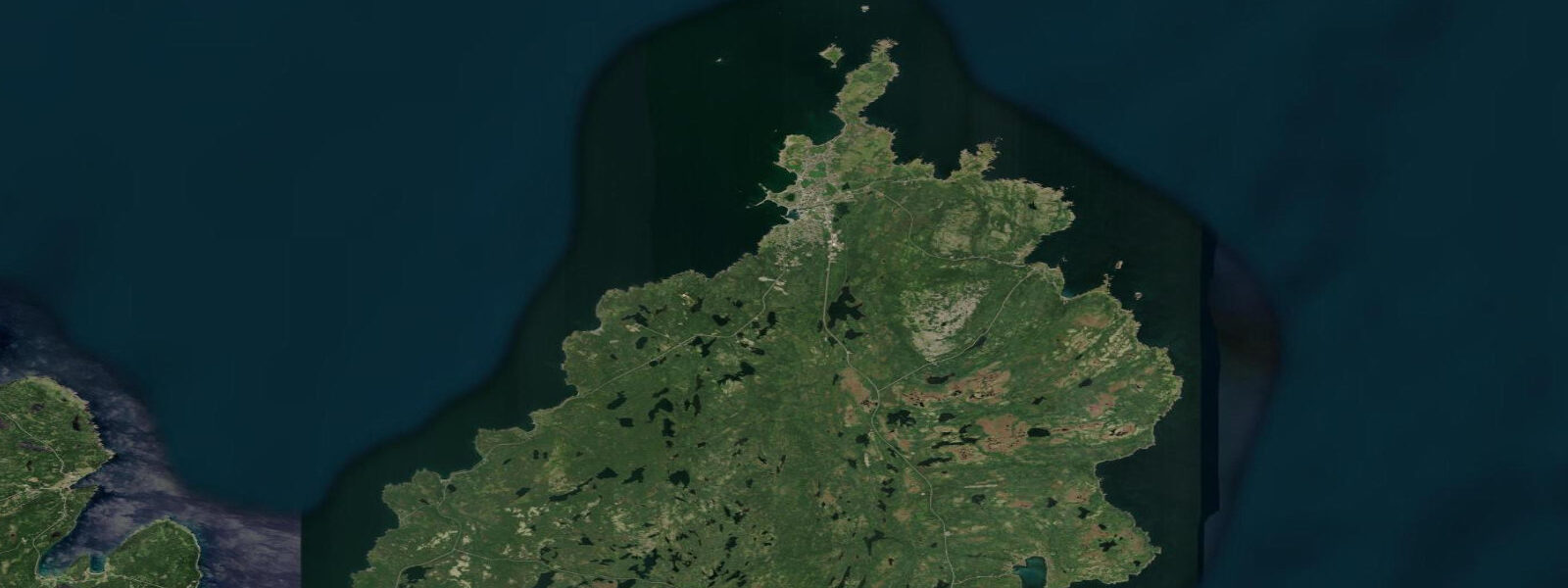
Bonavista sits at the tip of the Bonavista Peninsula on Newfoundland's northeast coast, a long finger of land extending into the open North Atlantic. The tidal regime is semidiurnal with a mean range of approximately 1.8 metres — higher than St. John's because the peninsula's exposure and local bathymetry amplify the tidal signal modestly. Spring ranges reach around 2.2 metres. Cape Bonavista, the outermost point, is claimed as the North American landfall of John Cabot on 24 June 1497 — the date is Midsummer Day, which is why Bonavista translates from the Italian as 'O happy sight.' A replica of Cabot's vessel Matthew is moored at the Bonavista waterfront; the 1843 Cape Bonavista Lighthouse at the cape tip has been restored and is open seasonally.
The shoreline at Cape Bonavista is one of the best iceberg viewing locations on the Avalon coast. The cape faces northeast directly into the Labrador Current transport corridor; icebergs drifting south from Greenland often pass close enough to the cape to be visible from the lighthouse platform without binoculars. Late April through early June is the prime window. At low water, the rock platforms at the base of the cape extend outward and the full wave-cut geometry of the headland is accessible — the rock has been polished and undercut by thousands of years of North Atlantic swell. At high water on a northeasterly ground swell, access to the lower rocks is not advisable.
The town of Bonavista, 4 kilometres back from the cape, is an outport community with a history rooted in the cod fishery. The inshore cod trap fishery operated here from the 17th century until the federal moratorium in July 1992, which halted an industry that had defined the town for 400 years. The Ryan Premises National Historic Site preserves a complete merchant outfitting business from the 1800s — salt fish stores, cooperage, and retail — on the Bonavista waterfront. The town's three fishing stages at the inner harbour are still in seasonal use for crab and lobster landings.
Sea Stack Trail and the coastal paths around the cape give the best shore access. The sea stacks offshore from the cape are exposed at low water; at mid to high water they become partially or fully surrounded. Humpback whales feed along the peninsula in summer on the capelin and krill pushed up by the cold Labrador Current — July through September is the reliable whale-watching window from shore. Puffins nest on rocky outcrops at nearby islands from May through August.
Bonavista itself has a compact commercial street, Ryan Premises, and the seasonal interpretation programs at the lighthouse and Matthew replica. The nearest major service centre is Clarenville, 120 kilometres southwest on the Trans-Canada Highway.
Tide predictions on this page come from Open-Meteo Marine, a gridded global ocean model. Accuracy is typically within plus or minus 45 minutes on timing and 0.2 to 0.3 metres on height — model-derived, not from a DFO gauge at this specific location. For authoritative official Canadian predictions, consult Fisheries and Oceans Canada (DFO) at tides.gc.ca.
Tide questions about Bonavista
Quick answers to the most common questions about tide times, range, and water access at Bonavista.
What is the tidal range at Bonavista and how does it compare to St. John's?
Mean tidal range at Bonavista is approximately 1.8 metres — noticeably larger than the 1.3 metre mean range at St. John's. The difference reflects the Bonavista Peninsula's more exposed northeast-facing position and local bathymetry effects. Spring ranges reach approximately 2.2 metres. The practical consequence is that rock platforms at Cape Bonavista are accessible over a wider vertical extent at low water than equivalent features on the Avalon Peninsula, and the tidal change over a 6-hour half-cycle is more dramatic. Iceberg and whale watching from the cape is best at low to mid water when the lower platforms are dry.
Is Cape Bonavista really where John Cabot landed in 1497?
The landfall claim for Cape Bonavista is traditional and widely accepted in Newfoundland, supported by the Italian origin of the name ('O happy sight' — a lookout call from the rigging) and the cape's position as a logical first landfall for a vessel crossing from Bristol on the route Cabot would have taken. Most historians treat it as plausible but not definitively proven — some competing theories place the landfall at Cape Breton Island in Nova Scotia or at other points on the Newfoundland coast. The 1843 Cape Bonavista Lighthouse stands at the claimed spot; the Ryan Premises National Historic Site and the Matthew replica at the waterfront mark the 500th-anniversary commemorations from 1997.
When is the best time to see icebergs and whales at Bonavista?
Icebergs pass Cape Bonavista from late March through early June; the peak concentration is typically late April to mid-May. The cape faces northeast into the Labrador Current transport corridor, making it one of the better shore-based iceberg viewing points on the northeast Newfoundland coast. Humpback and minke whales follow capelin inshore from July through September; the cape and the coastal trail offer good vantage points. Puffins and other seabirds are present at offshore rocks from May through August. For a single trip that covers icebergs, whales, and puffins, late June to early July is the statistical overlap window, though iceberg numbers decline by then.
What can I see at low tide at Cape Bonavista?
At low water, the rock platforms at the base of Cape Bonavista are accessible from the lighthouse path — the exposed surface is wave-cut quartzite and sandstone, polished smooth and pitted with tidal pools. The full geometry of the wave-cut notch and cliff undercut is visible at low water; at high water the lower platforms are submerged and the sea reaches the base of the cliff face directly. Sea stacks immediately offshore from the cape are most dramatic when partially exposed at low to mid tide. The lighthouse platform above gives the iceberg-watch vantage regardless of tide. On a northeasterly swell at high water, the lower rock platforms are not safe on foot.
Are the tide predictions on this page official forecasts I can use for navigation or safety planning?
No. The predictions shown here come from Open-Meteo Marine, a global ocean model with typical accuracy of plus or minus 45 minutes on timing and 0.2 to 0.3 metres on height. They are suitable for planning rock platform walks, timing iceberg viewing from accessible shore positions, or understanding the general tidal cycle — not for vessel navigation, harbour entry, or any decision where precise tide heights are safety-critical. For authoritative official Canadian predictions, consult Fisheries and Oceans Canada (DFO) at tides.gc.ca. Storm surge from North Atlantic cyclones can significantly exceed predicted heights on this open-coast northeast-facing shoreline.
7-day tide table — Bonavista
Heights relative to MSL. Predictions: Open-Meteo Marine (MeteoFrance SMOC, 0.08° grid) — heights relative to MSL (not chart datum / LAT). Model-derived.
| Day | Type | Time | Height |
|---|---|---|---|
| Tue 04 Aug | Low | 04:39 | -1.0m |
| High | 10:51 | -0.2m | |
| Low | 17:02 | -0.9m | |
| High | 23:03 | -0.2m | |
| Wed 05 Aug | Low | 05:12 | -0.8m |
| High | 11:46 | -0.1m | |
| Low | 17:56 | -0.6m | |
| High | 23:50 | -0.2m | |
| Thu 06 Aug | Low | 06:03 | -0.7m |
| Fri 07 Aug | High | 00:52 | -0.4m |
| Low | 06:50 | -0.7m | |
| High | 13:37 | -0.2m | |
| Low | 20:21 | -0.7m | |
| Sat 08 Aug | High | 02:07 | -0.4m |
| Low | 08:04 | -0.7m | |
| High | 14:52 | -0.1m | |
| Low | 22:00 | -0.7m | |
| Sun 09 Aug | High | 03:42 | -0.4m |
| Low | 09:22 | -0.7m | |
| High | 16:10 | -0.1m | |
| Low | 23:50 | -0.7m | |
| Mon 10 Aug | High | 05:15 | -0.4m |
| Low | 10:47 | -0.7m | |
| High | 17:24 | -0.0m | |
| Low | 20:00 | -0.2m |