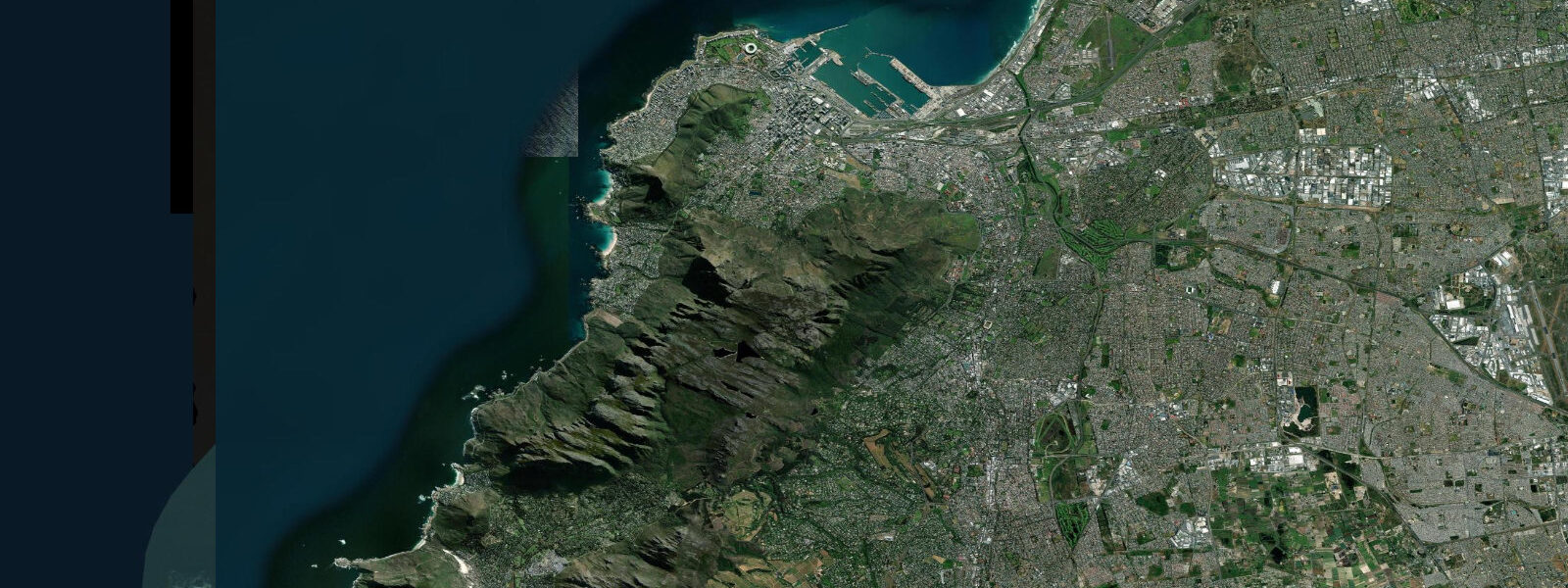
Cape Town, Western Cape tide times
Cape Town, Western Cape tide forecast — heights relative to MSL.
Today's tide times for Cape Town, Western Cape
Tide times at Cape Town, Western Cape on Sunday, 26 July 2026: first high tide at 02:00, first low tide at 07:06. Sunrise 07:44, sunset 18:01.
Tide chart for Cape Town, Western Cape
24-hour cosine-interpolated curve around the present moment. Heights relative to MSL. Predictions: Predictions: Open-Meteo Marine (MeteoFrance SMOC, 0.08° grid).
Sun, moon and conditions on Sun 26 Jul
Snapshot at build time — refreshes daily. Sea state from Open-Meteo Marine.
Highs and lows next 7 days
Every predicted high and low for the next week, with the daily tidal coefficient (0–120; higher = bigger swing, > 95 means stronger currents).
Other spots nearby
The three closest curated TideTurtle locations to Cape Town, Western Cape, measured by great-circle distance.
Today's solunar windows
Solunar tradition: major periods are the ≈3h windows around moon transit and opposition; minor are ≈2h around moonrise and moonset. Pair with the local tide stage and wind for the best read.
Cycle dates near Cape Town, Western Cape
Next spring tide on Sat 01 Aug (range 1.4m). Last neap on Sun 26 Jul.
Spring tides cluster around new and full moons (biggest swings). Neap tides land on quarter moons (smallest swings). See the spring tide and neap tide glossary entries for the why.
About tides at Cape Town, Western Cape
A short guide to the coastline at Cape Town, Western Cape — geography, sea state, and what the tide is actually doing under your feet.
Cape Town sits on the Atlantic-facing shore of the Cape Peninsula at the south-western tip of Africa, with Table Mountain at its back, the V&A Waterfront harbour at its feet, and Cape Point an hour south down the peninsula where the cold Benguela current up the Atlantic side brushes past the warm Agulhas current sweeping down the Indian Ocean side. The textbook two-oceans meeting line is at Cape Agulhas a hundred and fifty kilometres east, but the temperature contrast between Camps Bay on the Atlantic and Muizenberg on False Bay can run ten degrees on the same afternoon. 9 on neaps.
The defining wind is the Cape Doctor, a south-easter that sweeps down off Table Mountain through the summer, scours the city clean of pollution, and pushes the surface water offshore on the Atlantic side, dropping inshore sea-surface temperatures into single digits even in February. The Two Oceans Aquarium at the V&A Waterfront runs a tidal-pool exhibit that exchanges water with the harbour each cycle and is one of the better introductions to the local intertidal you will find in any city aquarium. Surf at Muizenberg, kelp-forest dives off Cape Point, kayak crossings to the Robben Island heritage site, the rock pools at St James and Kalk Bay, the long sand at Noordhoek and Long Beach Kommetjie, and the protected swimming at Clifton's four beaches all read the table for different windows.
Open-Meteo Marine drives the gridded predictions on this page; for authoritative South African tide data, the South African Navy Hydrographic Office (SANHO) publishes the official tide tables and operates the Cape Town reference gauge.
Tide questions about Cape Town, Western Cape
Quick answers to the most common questions about tide times, range, and water access at Cape Town, Western Cape.
When is the next high tide at Cape Town?
The hero block at the top of this page shows the next high tide at the Cape Town harbour gauge in local South African Standard Time (UTC+2, no DST). The 7-day table covers all the highs and lows. High water at Hout Bay south of the city arrives a few minutes ahead of the inner-harbour gauge; at Simon's Town on the False Bay side it lags by about twenty minutes.
What's the typical tide range at Cape Town?
Mean range at the harbour gauge is about 1.4 metres, climbing past 1.8 metres on spring tides around new and full moons and dropping near 0.9 metres on neaps. The pattern is cleanly semidiurnal — two highs and two lows of comparable size each day, twelve and a half hours apart — and is well-resolved by harmonic prediction under normal weather.
Where do these tide predictions come from?
Open-Meteo Marine, a gridded global ocean model. Useful for daily planning around the V&A Waterfront, the Atlantic-side beaches, and the False Bay coast. For authoritative South African tide data, the South African Navy Hydrographic Office (SANHO) publishes the official tide tables and operates the Cape Town reference gauge.
How does the Cape Doctor wind affect the tide?
It does not affect the astronomical tide directly, but the Cape Doctor — the south-easterly that sweeps down off Table Mountain through summer — pushes surface water offshore on the Atlantic side and can lower apparent water level by 10 to 20 cm at the city beaches while it blows. The same wind drops inshore sea-surface temperatures by several degrees through Ekman transport. Surfers and cold-water swimmers read the wind forecast as much as the tide table.
Is this safe to use for navigation?
No. For piloting in or out of Cape Town harbour, transiting the Cape Point waters, or working the open False Bay coast, use the South African Navy Hydrographic Office authoritative tide tables, the Transnet National Ports Authority pilotage guidance, and the South African Maritime Safety Authority's notices to mariners. The Cape of Good Hope south of the peninsula is one of the working hazards of South Atlantic shipping and the rip currents off the Atlantic-facing beaches at Llandudno are working-hazardous in any state of tide.
8-day tide table — Cape Town, Western Cape
Heights relative to MSL. Predictions: Open-Meteo Marine (MeteoFrance SMOC, 0.08° grid) — heights relative to MSL (not chart datum / LAT). Model-derived.
| Day | Type | Time | Height |
|---|---|---|---|
| Sun 26 Jul | High | 02:00 | -0.1m |
| Low | 07:06 | -0.7m | |
| Mon 27 Jul | High | 01:24 | 0.2m |
| Low | 07:55 | -0.8m | |
| High | 13:55 | 0.1m | |
| Low | 20:10 | -0.9m | |
| Tue 28 Jul | High | 02:02 | 0.0m |
| Low | 08:20 | -1.1m | |
| High | 14:34 | 0.1m | |
| Low | 20:38 | -0.9m | |
| Wed 29 Jul | High | 02:38 | 0.2m |
| Low | 08:50 | -1.0m | |
| High | 15:05 | 0.3m | |
| Low | 21:10 | -0.9m | |
| Thu 30 Jul | High | 03:11 | 0.3m |
| Low | 09:18 | -0.9m | |
| High | 15:33 | 0.4m | |
| Low | 21:42 | -0.9m | |
| Fri 31 Jul | High | 03:40 | 0.3m |
| Low | 09:47 | -1.0m | |
| High | 16:05 | 0.4m | |
| Low | 22:12 | -1.0m | |
| Sat 01 Aug | High | 04:15 | 0.3m |
| Low | 10:15 | -1.0m | |
| High | 16:37 | 0.5m | |
| Low | 22:46 | -0.8m | |
| Sun 02 Aug | High | 01:00 | -0.5m |