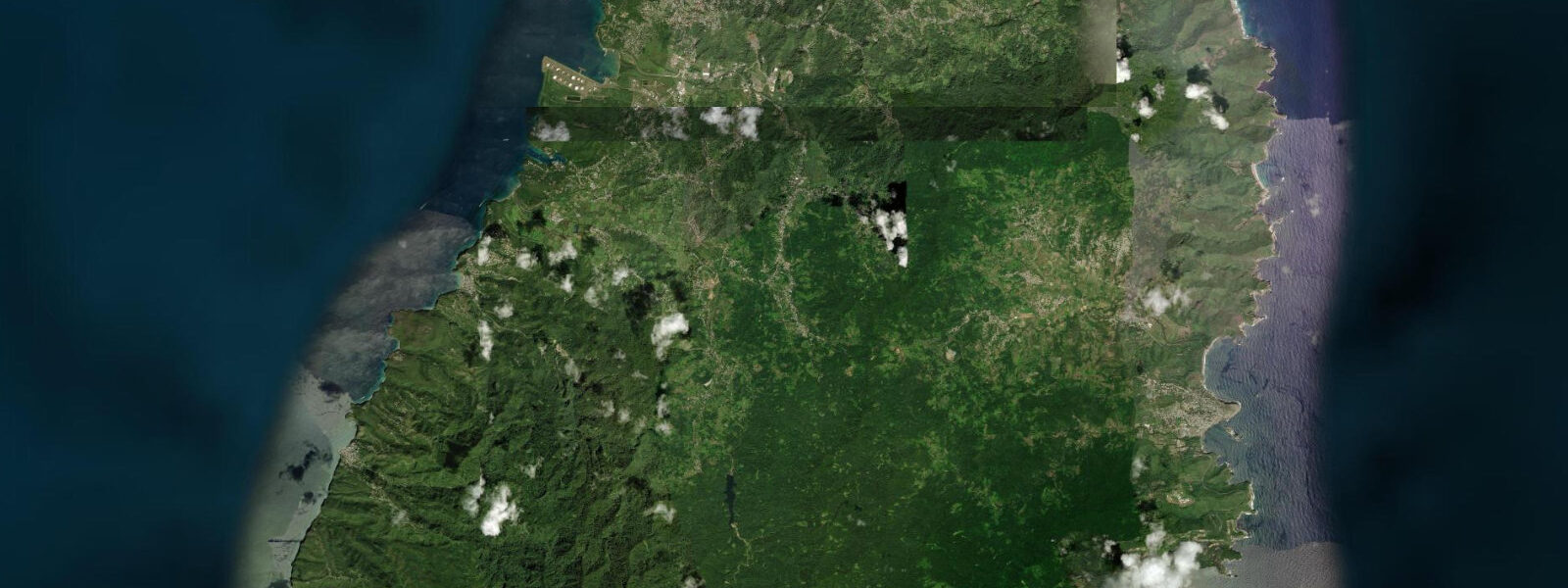
Marigot Bay, Saint Lucia tide times
Marigot Bay, Saint Lucia tide forecast — heights relative to MSL.
Today's tide times for Marigot Bay, Saint Lucia
Tide times at Marigot Bay, Saint Lucia on Tuesday, 4 August 2026: first low tide at 11:50am. Sunrise 05:48am, sunset 06:31pm.
Tide chart for Marigot Bay, Saint Lucia
24-hour cosine-interpolated curve around the present moment. Heights relative to MSL. Predictions: Predictions: Open-Meteo Marine (MeteoFrance SMOC, 0.08° grid).
Sun, moon and conditions on Tue 04 Aug
Snapshot at build time — refreshes daily. Sea state from Open-Meteo Marine.
Highs and lows next 7 days
Every predicted high and low for the next week, with the daily tidal coefficient (0–120; higher = bigger swing, > 95 means stronger currents).
Other spots nearby
The three closest curated TideTurtle locations to Marigot Bay, Saint Lucia, measured by great-circle distance.
Today's solunar windows
Solunar tradition: major periods are the ≈3h windows around moon transit and opposition; minor are ≈2h around moonrise and moonset. Pair with the local tide stage and wind for the best read.
About tides at Marigot Bay, Saint Lucia
A short guide to the coastline at Marigot Bay, Saint Lucia — geography, sea state, and what the tide is actually doing under your feet.
Marigot Bay is 8 km south of Castries by road and a reliable stop on the charter yacht circuit that runs the leeward coast of Saint Lucia. The bay is almost entirely enclosed — the entrance channel is narrow enough that the inner anchorage is invisible from seaward until you are actually through the gap — and the shelter it provides from trade wind and swell has made it a recognised hurricane hole since the age of sail. The story most often attached to the bay is the claimed use by a British admiral during the American Revolutionary War who anchored a fleet here and disguised the masts with cut palm branches to avoid detection; the historical documentation is thin, but the story has persisted.
The more verifiable history is that Rex Harrison filmed Doctor Dolittle here in 1967, and the bay appears as a recognisable backdrop in the film. Today the inner anchorage operates with a fee-based mooring system; the Marina village on the south shore and the Discovery at Marigot Bay resort on the north shore are the two main facilities, connected by a small foot-ferry that crosses the 80-metre channel every few minutes. The mangrove fringe on the north shore is accessible by kayak from the marina; the roots provide shelter for juvenile fish and the occasional green heron.
5 metres. 0 knots, noticeable for kayakers and dinghy sailors transiting in or out. The passage is straightforward for powered vessels; for paddlecraft the ebb is the current to time carefully.
The outer bay, immediately inside the headlands before the narrow inner throat, is exposed to the southwest swell that wraps around the island's southern end; the inner anchorage is effectively calm in all but extreme conditions. Restaurants on both the north and south shores of the inner anchorage operate from the water, accessible by dinghy or foot-ferry. The Rainforest Hideaway on the north shore is a floating restaurant on a pontoon in the mangrove; access is by the foot-ferry from the south marina.
Kayakers and paddleboarders based at the marina typically work the outer bay and the stretch of coast south toward Anse la Raye in the morning glass before the trade fills — the outer headlands produce a short, steep chop by afternoon that makes the return to the marina into the wind significantly harder. Shore anglers fish the outer point on the north headland on the morning flood; the deep water immediately below the cliff holds snapper and jack. 3 metres on height.
For the entrance channel current, time your transit for the half-tide rising, when the current has slowed from the ebb but has not yet built toward the flood peak.
Tide questions about Marigot Bay, Saint Lucia
Quick answers to the most common questions about tide times, range, and water access at Marigot Bay, Saint Lucia.
Is Marigot Bay good for sailing and anchoring?
Marigot Bay is one of the best natural anchorages on the Saint Lucia leeward coast and a standard stop on the charter yacht circuit between Rodney Bay and Soufrière. The inner anchorage behind the narrow entrance throat is sheltered from trade wind and swell and is recognised as a hurricane-category anchorage in extreme conditions. The bay operates a fee-based mooring buoy system; anchoring independently is possible in the outer section but not in the fully enclosed inner basin. The marina on the south shore provides fuel, water, and provisioning. Check in with the marina for the current mooring fee and buoy availability.
What is the tidal current at the entrance channel?
The narrow throat of Marigot Bay's entrance constricts the water exchange between the inner anchorage and the outer bay. On a spring ebb the current through the channel runs at roughly 0.5 to 1.0 knots — noticeable for kayakers and dinghy sailors but manageable for powered vessels of any size. The maximum ebb current occurs approximately one hour after the predicted high water. For paddlecraft timing, the half-tide rising is the most comfortable transit window: the ebb has slowed, the flood has not yet built, and the current is minimal through the channel.
What is the tide range at Marigot Bay?
Caribbean microtidal throughout: spring range 0.3 to 0.5 metres, mixed semidiurnal. Inside the enclosed anchorage the tidal signal is essentially the same as the open coast outside; the enclosure dampens wave action but does not significantly reduce tidal range at this scale. Two unequal highs and two unequal lows each day, with the neap range compressing toward 0.2 to 0.3 metres and spring range approaching 0.5 metres around new and full moons.
Where do the tide predictions for Marigot Bay come from?
Open-Meteo Marine, a free gridded global ocean model. Accuracy is typically within plus or minus 45 minutes on timing and 0.2 to 0.3 metres on height — a meaningful fraction of the total 0.3 to 0.5 metre spring range. The Saint Lucia Meteorological Service publishes weather and swell forecasts for the west coast. For authoritative Caribbean tide reference data, the Caribbean Meteorological Organisation coordinates the regional tide gauge network.
Is this safe to use for navigation?
No. The Marigot Bay entrance channel is narrow and the inner anchorage is busy with charter traffic, particularly from November through April. For vessel navigation in the bay, use the current Eastern Caribbean Pilot and the relevant chart from the Caribbean Hydrographic Institute. The entrance approach from the west requires identifying the correct break in the headland; the inner throat is invisible until close approach. Open-Meteo Marine gridded predictions are not authoritative navigational data.
7-day tide table — Marigot Bay, Saint Lucia
Heights relative to MSL. Predictions: Open-Meteo Marine (MeteoFrance SMOC, 0.08° grid) — heights relative to MSL (not chart datum / LAT). Model-derived.
| Day | Type | Time | Height |
|---|---|---|---|
| Tue 04 Aug | Low | 11:50 | 0.1m |
| Wed 05 Aug | High | 07:00 | 0.2m |
| Low | 12:00 | 0.2m | |
| High | 19:10 | 0.4m | |
| Thu 06 Aug | — | ||
| Fri 07 Aug | Low | 05:00 | 0.0m |
| High | 20:50 | 0.4m | |
| Sat 08 Aug | Low | 06:00 | 0.0m |
| High | 22:00 | 0.5m | |
| Sun 09 Aug | Low | 06:50 | -0.0m |
| High | 23:10 | 0.5m | |
| Mon 10 Aug | Low | 07:45 | -0.1m |
| High | 19:00 | 0.2m | |