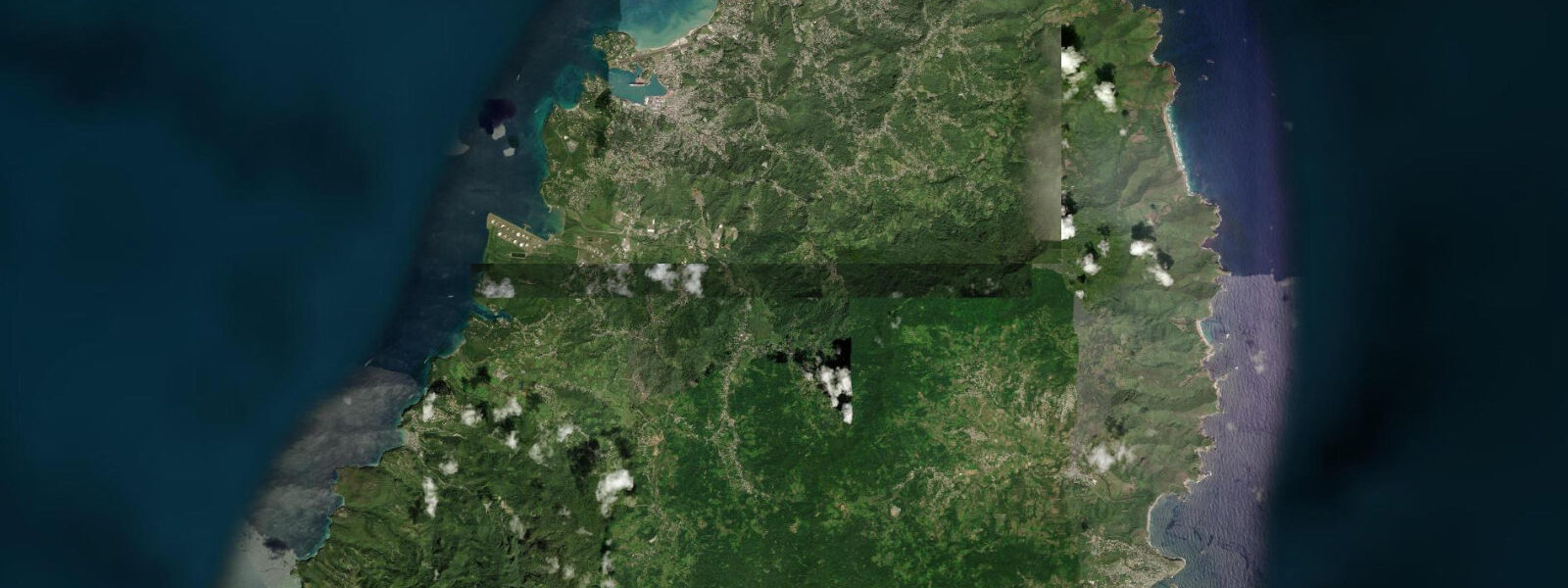
Castries tide times
Castries tide forecast — heights relative to MSL.
Today's tide times for Castries
Tide times at Castries on Monday, 3 August 2026: first high tide at 06:00pm. Sunrise 05:48am, sunset 06:31pm.
Tide chart for Castries
24-hour cosine-interpolated curve around the present moment. Heights relative to MSL. Predictions: Predictions: Open-Meteo Marine (MeteoFrance SMOC, 0.08° grid).
Sun, moon and conditions on Mon 03 Aug
Snapshot at build time — refreshes daily. Sea state from Open-Meteo Marine.
Highs and lows next 7 days
Every predicted high and low for the next week, with the daily tidal coefficient (0–120; higher = bigger swing, > 95 means stronger currents).
Other spots nearby
The three closest curated TideTurtle locations to Castries, measured by great-circle distance.
Today's solunar windows
Solunar tradition: major periods are the ≈3h windows around moon transit and opposition; minor are ≈2h around moonrise and moonset. Pair with the local tide stage and wind for the best read.
About tides at Castries
A short guide to the coastline at Castries — geography, sea state, and what the tide is actually doing under your feet.
Castries is the capital of Saint Lucia and a working Caribbean port city rather than a purpose-built resort — cruise ships dock at the Pointe Seraphine terminal, market stalls line the waterfront, and the Castries Market is the genuinely functional heart of the city. The geography of Saint Lucia shapes everything: the island is volcanic, narrow, and mountainous, with the Atlantic on the east and the Caribbean on the west. The Pitons — Gros Piton and Petit Piton — are 50 kilometres south of Castries and define the island's visual identity from the sea.
Tidal range at Castries is 0.3 to 0.6 metres — standard eastern Caribbean. Trade winds from the northeast blow consistently, making the east coast rough and the Caribbean west coast the focus of resort and water sport activity. Vigie Beach, directly north of the Castries Harbour, is the main public beach accessible from the capital: a curved stretch of sand with calm conditions inside the harbour approaches and a more open Atlantic-influenced section to the north.
The Anse Chastanet marine reserve, about 40 kilometres south near the Pitons, is Saint Lucia's premier dive destination — largely for the consistency of the underwater landscape rather than proximity to Castries. The reefs off Anse Chastanet and the adjacent Soufrière Marine Management Area (SMMA) have been protected since 1986 and have some of the healthiest coral coverage in the eastern Caribbean. Depths range from a shallow reef garden at 3 metres to a volcanic wall at 30–40 metres with black coral, sponges, and the endemic frogfish population the site is known for.
From Castries, day trips south to the Pitons can be done by road (about 90 minutes) or by boat charter (2 hours, with snorkelling stops). The Piton area has its own snorkelling directly from the black-sand beach at Anse des Pitons. The volcanic sulphur springs at Sulphur Springs in Soufrière (the world's only drive-in volcano, which is marketing but accurate in the sense that you can drive to within 10 metres of the bubbling mud pools) are a complementary stop.
Castries market on Saturday morning is a specific experience worth planning around: spices, mangoes, dasheen, christophene, fresh fish from the Atlantic coast fleet, and the general organised chaos of a functioning agricultural market for a small island. The city's mix of French and British colonial heritage (it changed hands 14 times in the colonial period) shows in the Creole cuisine, the patois, and the nineteenth-century cast-iron market building itself.
Predictions on this page come from Open-Meteo Marine, a gridded global ocean model. Accuracy is typically within plus or minus 45 minutes on timing and 0.2 to 0.3 metres on height — model-derived, not from a local gauge. For authoritative Saint Lucia tide data, consult the Saint Lucia Air and Sea Ports Authority (SLASPA).
Tide questions about Castries
Quick answers to the most common questions about tide times, range, and water access at Castries.
What is the tidal range at Castries?
Castries is Caribbean micro-tidal — spring range is 0.3 to 0.6 metres. Trade winds (northeast) dominate conditions; the Caribbean west coast where Castries sits is the calm side of the island. Tidal state has minimal practical effect on beach or snorkelling planning. The SMMA marine reserve further south has a shallow reef at 3 metres that is accessible at all tide stages.
Do I need to go south of Castries for good diving?
For the best diving on Saint Lucia, yes. The Soufrière Marine Management Area (SMMA) around Anse Chastanet, 40 km south, has the healthiest coral and most diverse dive sites. The shallow reef garden starts at 3 metres; the Anse Chastanet wall drops to 40 metres with black coral and sponge communities. From Castries, this is done as a day trip (90 min by road, 2 hours by boat) or by staying in the Soufrière area.
Can I see the Pitons from Castries?
Only from elevated points north of the city or from a boat offshore. The Pitons are 50 kilometres south of Castries and not visible from the harbour. The best perspective on both peaks simultaneously is from the sea — a day-sail or charter from Castries heading south passes directly by both. From land, the road over the ridge near Marigot Bay gives the first dramatic view.
Is Vigie Beach suitable for swimming?
Yes — the sheltered southern end near the harbour entrance is calm and accessible. The beach is a 15-minute walk from the city centre and has no entry fee. The northern section becomes more exposed as it opens to the Atlantic influence. Sea temperature is 26–29°C year-round. Avoid swimming near the harbour entrance itself where boat traffic is active.
When is the best time to visit Saint Lucia?
December through May is the dry season — trade winds consistent, humidity lower, and no hurricane risk. February through April has the best combination of clear skies and sea conditions for diving. June through November is the wet season and hurricane season; Saint Lucia has been struck by significant storms and the risk is real. The Saint Lucia Jazz and Arts Festival in May is a peak tourism period with advance booking needed.
7-day tide table — Castries
Heights relative to MSL. Predictions: Open-Meteo Marine (MeteoFrance SMOC, 0.08° grid) — heights relative to MSL (not chart datum / LAT). Model-derived.
| Day | Type | Time | Height |
|---|---|---|---|
| Mon 03 Aug | High | 18:00 | 0.4m |
| Tue 04 Aug | Low | 00:50 | 0.1m |
| High | 06:00 | 0.3m | |
| Wed 05 Aug | Low | 02:00 | 0.1m |
| Thu 06 Aug | High | 20:00 | 0.4m |
| Fri 07 Aug | Low | 05:00 | 0.0m |
| High | 21:00 | 0.4m | |
| Sat 08 Aug | Low | 06:00 | 0.0m |
| High | 22:10 | 0.5m | |
| Sun 09 Aug | Low | 07:00 | -0.0m |
| High | 19:00 | 0.3m |