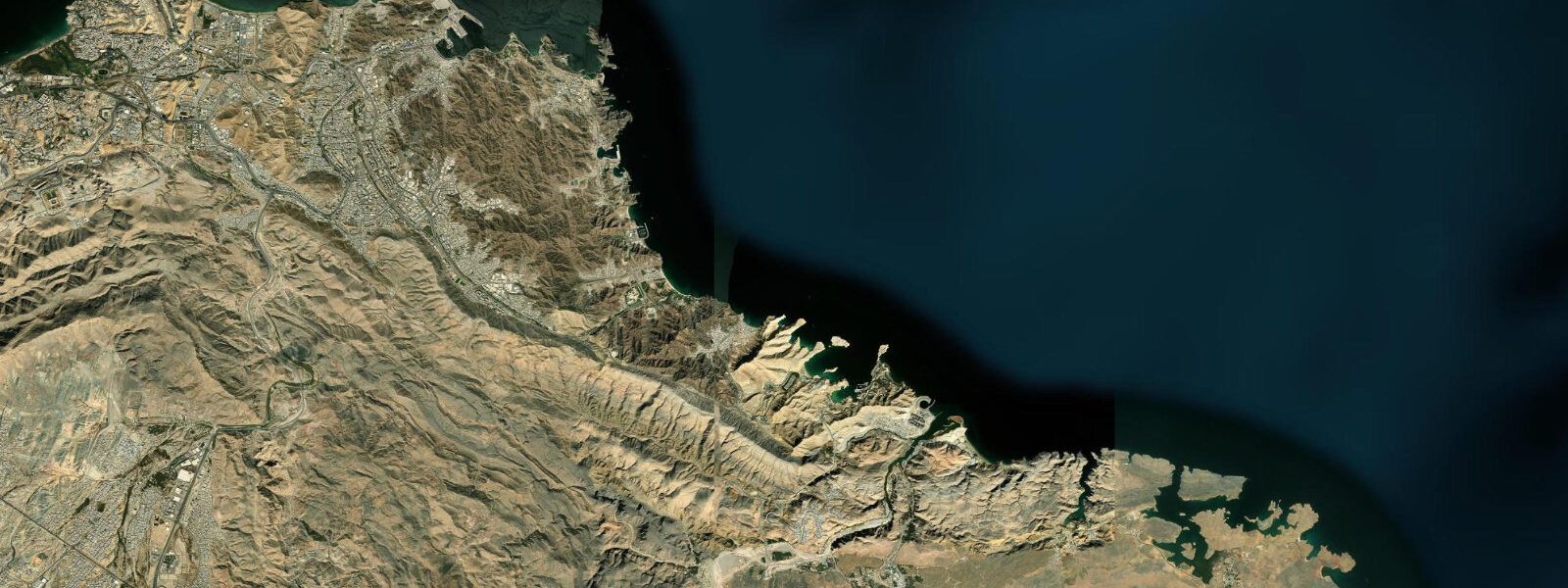
Qantab Beach tide times
Qantab Beach tide forecast — heights relative to MSL.
Today's tide times for Qantab Beach
Tide times at Qantab Beach on Tuesday, 4 August 2026: first high tide at 04:00am, first low tide at 05:54am, second high tide at 12:12pm, second low tide at 06:55pm. Sunrise 05:36am, sunset 06:46pm.
Tide chart for Qantab Beach
24-hour cosine-interpolated curve around the present moment. Heights relative to MSL. Predictions: Predictions: Open-Meteo Marine (MeteoFrance SMOC, 0.08° grid).
Sun, moon and conditions on Tue 04 Aug
Snapshot at build time — refreshes daily. Sea state from Open-Meteo Marine.
Highs and lows next 7 days
Every predicted high and low for the next week, with the daily tidal coefficient (0–120; higher = bigger swing, > 95 means stronger currents).
Other spots nearby
The three closest curated TideTurtle locations to Qantab Beach, measured by great-circle distance.
Today's solunar windows
Solunar tradition: major periods are the ≈3h windows around moon transit and opposition; minor are ≈2h around moonrise and moonset. Pair with the local tide stage and wind for the best read.
Cycle dates near Qantab Beach
Next spring tide on Wed 05 Aug (range 1.9m). Next neap on Fri 07 Aug.
Spring tides cluster around new and full moons (biggest swings). Neap tides land on quarter moons (smallest swings). See the spring tide and neap tide glossary entries for the why.
About tides at Qantab Beach
A short guide to the coastline at Qantab Beach — geography, sea state, and what the tide is actually doing under your feet.
Qantab is a small fishing village and beach in a narrow cove 15 km SE of central Muscat, tucked between limestone headlands that drop steeply from the Hajar Mountain foothills to the Gulf of Oman. The beach is short — roughly 200 m of sand — but the cove geometry gives excellent shelter from the NE swell and from the afternoon sea breeze, making the water here notably calmer than the exposed outer headlands only a kilometre away. The village retains a working fishing character: small fibreglass fishing boats are moored in the bay and haul out on the beach at low water.
The tidal regime at Qantab follows the Muscat mixed semidiurnal pattern: spring range approximately 1.5–2.0 m above Chart Datum. At low water the beach extends to the full width of the cove floor, exposing the rock ledges on either side of the sand. These rock ledges carry an accessible intertidal community — sea urchins (Diadema setosum), hermit crabs, and various small reef fish visible in the tide pools at low water. At high water the ledges are submerged and the snorkelling over the shallow rocky habitat at the cove edges is productive.
Qantab is the main departure point for boat trips to Bandar Khayran, the sheltered multi-cove inlet 14 km SE along the coast. Small open boats carry snorkellers, day-trippers, and kayakers to the Bandar Khayran area; the trip takes 30–40 minutes one-way. The best conditions for this crossing are in the morning before the afternoon sea breeze builds and before the swell increases in the afternoon hours.
The waters around the Qantab cove are used for sea kayaking; the sheltered character of the cove allows even inexperienced paddlers to explore the rocky shores at the cove edges. The 3 km rocky shoreline from Qantab to the next cove north carries a mix of sea caves and rock arches accessible by kayak at high water; at low water the arches are exposed but the approach through the surge zone on the rock platforms is more complicated.
Snorkelling from the beach at Qantab is rewarding from October through April when visibility is highest. The right-hand side of the cove (facing the sea) has a rocky reef slope down to 5–8 m; the sandy bottom further out hosts the occasional ray and the larger fish typical of the Gulf of Oman reef system — grouper, parrotfish, and emperor. Green turtle sightings are occasional; the main turtle nesting area for Muscat Governorate is at Ras Al-Hadd to the SE.
Tide predictions here come from Open-Meteo Marine: accuracy ±45 min / ±0.2–0.3 m. National Hydrographic Office of Oman publishes the official Omani tide tables referenced to Muscat Port.
The village itself still has its original character: traditional Omani barasti (palm frond) and concrete houses above the cove, a small mosque, and the fishing boat storage area on the sand at the southern end of the beach. Several local families run informal accommodation and day-trip boat services. The cove is quiet on weekdays; weekend (Thursday–Saturday in Oman) mornings bring Muscat families for day visits. Early morning visits before 08:00 give the cove largely to the fishing boats returning from dawn trips and the intertidal wildlife on the exposed rock ledges.
The cove at Qantab is not signed from the main Muscat coastal road; the access requires a turn off the Bandar Khayran coastal track approximately 3 km from the main junction. The road drops steeply into the cove via a series of hairpin bends; the final approach is a single-lane descent. Parking at the cove is limited; weekday morning visits avoid the weekend congestion. The village mosque at the top of the access road is audible from the beach at prayer times (the call carries clearly in the enclosed cove geometry).
Tide questions about Qantab Beach
Quick answers to the most common questions about tide times, range, and water access at Qantab Beach.
Is Qantab Beach good for snorkelling, and when is the best time?
Yes. The rocky reef on the right side of the cove (facing seaward) drops to 5–8 m and carries a typical Gulf of Oman reef community: grouper, parrotfish, emperor fish, sea urchins, and occasional rays on the sandy bottom. Best conditions are October through April when visibility reaches 10–15 m and water temperature is 22–27°C. Snorkelling is most comfortable at high water when the reef ledges are submerged and entry off the sand is straightforward; at low water the entry requires crossing exposed rock. Check the predicted high time on this page. Snorkel entry from the sandy centre of the cove at high water keeps you clear of the urchin-covered ledges on the rocky margins.
Where do the tide predictions on this page come from?
Open-Meteo Marine, a free gridded global ocean model. Accuracy is typically ±45 minutes on timing and ±0.2–0.3 m on height. There is no dedicated gauge at Qantab; predictions are referenced to the nearby Muscat Port station. The National Hydrographic Office of Oman publishes official tide tables for Omani ports. For navigation, use the official Omani tables. This page is not for navigation. nhc.gov.om (National Hydrographic Centre of Oman) is the official source for Omani tide data. The National Hydrographic Centre (nhc.gov.om) publishes Omani tide tables for free download in English and Arabic.
Can I take a boat from Qantab to Bandar Khayran?
Yes — Qantab is the main departure point for boat trips to Bandar Khayran. Licensed operators run open fibreglass boats to the Bandar Khayran inlet, 30–40 minutes SE along the coast. Departure in the morning (before 09:00) gives the calmest sea conditions; the afternoon sea breeze builds from around 13:00 and increases the chop on the return crossing. Confirm the boat's certification and the operator's safety equipment before boarding. The trip is not tide-state dependent; the Bandar Khayran inlet is accessible at all tide states. Confirm the Bandar Khayran boat departure at least the day before; informal operators may not run on short notice without pre-arrangement.
Is Qantab Beach suitable for children?
The cove geometry at Qantab gives good shelter, making the water calmer than the exposed outer coast. At high water the sandy beach gives easy entry; at low water the sand extends further and the water is very shallow for 15–20 m from the tideline, which is suitable for children wading. The rock ledges on either side of the cove are exposed at low water and carry sea urchins (Diadema setosum) with sharp spines; keep children off the bare rock ledges and in the sandy central area of the cove. There are no lifeguards. Sea urchins (Diadema setosum) have long spines; rubber-soled water shoes are the minimum protection on the rock ledge margins.
What is the water temperature at Qantab, and is it comfortable for swimming year-round?
Sea temperatures in the Gulf of Oman at Qantab range from around 22°C in January–February to 30–32°C in September. From October through May the water is clear and comfortable for extended swimming and snorkelling. From June through September the combination of air temperatures above 38°C, high humidity, and water at 28–32°C makes outdoor activity uncomfortable in the middle of the day; early morning swimming (before 08:00) is feasible. The SW monsoon season (June–September) also increases sea state on exposed outer headlands, though Qantab cove remains relatively sheltered. The SW monsoon (June–September) increases humidity in Muscat but does not produce the dramatic wave conditions seen on the Dhofar coast; Qantab cove remains swimmable.
8-day tide table — Qantab Beach
Heights relative to MSL. Predictions: Open-Meteo Marine (MeteoFrance SMOC, 0.08° grid) — heights relative to MSL (not chart datum / LAT). Model-derived.
| Day | Type | Time | Height |
|---|---|---|---|
| Tue 04 Aug | High | 04:00 | -0.0m |
| Low | 05:54 | -0.3m | |
| High | 12:12 | 1.2m | |
| Low | 18:55 | -0.6m | |
| Wed 05 Aug | High | 12:45 | 1.2m |
| Low | 19:45 | -0.7m | |
| Thu 06 Aug | High | 02:21 | 0.7m |
| Low | 07:18 | 0.2m | |
| High | 13:21 | 1.1m | |
| Low | 20:47 | -0.7m | |
| Fri 07 Aug | High | 14:05 | 1.1m |
| Low | 21:56 | -0.8m | |
| Sat 08 Aug | High | 05:45 | 0.8m |
| Low | 10:04 | 0.5m | |
| High | 15:18 | 1.0m | |
| Low | 23:13 | -0.9m | |
| Sun 09 Aug | High | 07:06 | 1.0m |
| Low | 11:56 | 0.5m | |
| High | 16:50 | 1.0m | |
| Mon 10 Aug | Low | 00:24 | -1.0m |
| High | 07:55 | 1.1m | |
| Low | 13:11 | 0.3m | |
| High | 18:14 | 1.0m | |
| Tue 11 Aug | Low | 01:24 | -1.1m |
| High | 03:00 | -0.9m |