Kiel tide times
Kiel tide forecast — heights relative to MSL.
Today's tide times for Kiel
Tide times at Kiel on Monday, 3 August 2026: first low tide at 02:00, first high tide at 05:15, second high tide at 08:00, second low tide at 14:10, third high tide at 20:50. Sunrise 05:33, sunset 21:17.
Tide chart for Kiel
24-hour cosine-interpolated curve around the present moment. Heights relative to MSL. Predictions: Predictions: Open-Meteo Marine (MeteoFrance SMOC, 0.08° grid).
Sun, moon and conditions on Mon 03 Aug
Snapshot at build time — refreshes daily. Sea state from Open-Meteo Marine.
Highs and lows next 7 days
Every predicted high and low for the next week, with the daily tidal coefficient (0–120; higher = bigger swing, > 95 means stronger currents).
Other spots nearby
The three closest curated TideTurtle locations to Kiel, measured by great-circle distance.
Today's solunar windows
Solunar tradition: major periods are the ≈3h windows around moon transit and opposition; minor are ≈2h around moonrise and moonset. Pair with the local tide stage and wind for the best read.
Cycle dates near Kiel
Next spring tide on Sun 09 Aug (range 0.3m). Next neap on Fri 07 Aug.
Spring tides cluster around new and full moons (biggest swings). Neap tides land on quarter moons (smallest swings). See the spring tide and neap tide glossary entries for the why.
About tides at Kiel
A short guide to the coastline at Kiel — geography, sea state, and what the tide is actually doing under your feet.
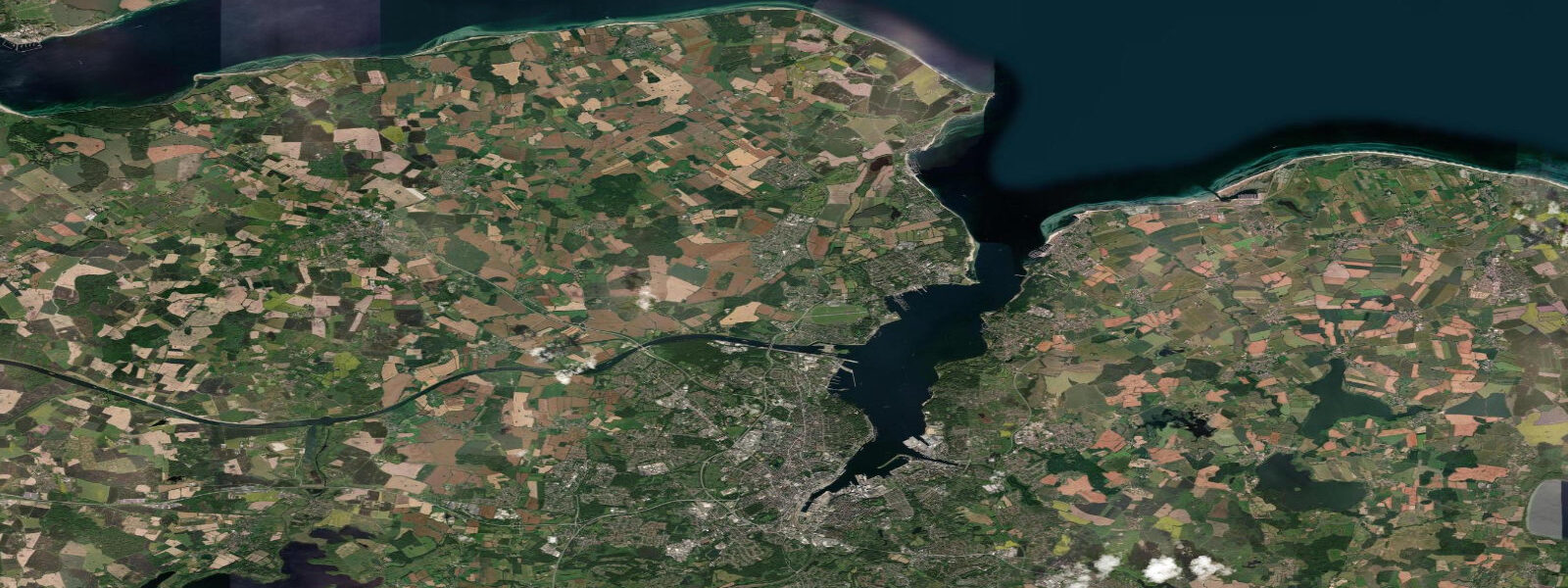
Kiel sits at the head of the Kieler Förde — a 17-kilometre fjord-like inlet that channels Baltic water into one of Germany's busiest naval and ferry ports. The city is the capital of Schleswig-Holstein and has run the Kieler Woche (Kiel Week) sailing regatta since 1882, making it one of the oldest and largest sailing events in the world. The fjord that gives the city its geography is also its amenity: the eastern and western shores of the Förde provide protected sailing, swimming, and waterfront access within the city limits.
Tidal range at Kiel is 0.1 to 0.2 metres. Like all of the western Baltic, wind drives water-level changes more than gravity. The Förde orientation (north-south) means that north winds can push a metre or more of additional water into the inner harbour. In calm conditions, the water level is stable and predictable. The Förde's sheltered geography makes it one of the best inland-sea sailing training environments in Northern Europe.
Kieler Woche runs for nine days in late June and draws over 5,000 sailors from 50-plus countries. The racing covers multiple classes from Olympic keelboats to offshore yachts, and the public programme — concerts, food markets, international pavilions on the Kiel waterfront — makes it a major event regardless of sailing interest. The Kieler Woche dinghy racing in the inner Förde is visible from the shore at multiple points; the offshore fleet departure is typically the most spectacular public moment.
The Kieler Förde's eastern shore has the main beach and recreation infrastructure: Strande, Schilksee (Olympic sailing centre from Munich 1972), and Falckenstein beach are the principal swimming and watersport zones. Schilksee marina is Germany's largest dedicated sailing marina. The western shore is quieter, with the Friedrichsort headland and smaller beach areas at Möltenort and Heikendorf.
The North Sea-Baltic Canal (Kiel Canal, or Nord-Ostsee-Kanal) begins at the Kiel harbour, running 98 kilometres west to Brunsbüttel on the Elbe. It is the world's busiest artificial waterway by ship count — approximately 30,000 vessels per year. The canal locks at Holtenau are visible from the city and the ship traffic (everything from container ships to pleasure yachts) makes for constant entertainment at the viewing area.
Predictions on this page come from Open-Meteo Marine, a gridded global ocean model. Accuracy is typically within plus or minus 45 minutes on timing and 0.2 to 0.3 metres on height — model-derived, not from a local gauge. For authoritative German tide data, consult the Bundesamt für Seeschifffahrt und Hydrographie (BSH).
Tide questions about Kiel
Quick answers to the most common questions about tide times, range, and water access at Kiel.
What is the tidal range at Kiel?
Kiel's tidal range is 0.1 to 0.2 metres — the western Baltic is effectively non-tidal. Wind is the dominant driver of water level. North winds can push 0.5–1.0 metres of additional water into the inner Förde. In calm conditions, water level is stable and no tidal planning is needed for swimming or boat operations.
When is Kieler Woche and how big is it?
Kiel Week runs annually for nine days in late June, typically ending on the last Sunday of June. It draws over 5,000 sailors from 50+ countries and is considered one of the world's largest sailing events. The public programme on the Kiel waterfront (Kiellinie) includes concerts, food markets, and national pavilions — it is a city festival as much as a sailing regatta. Racing is visible from the shore; the main racing areas are the outer Förde and open water north of Schilksee.
Where are the best beaches near Kiel?
The eastern shore of the Kieler Förde has the main beach areas: Strande (village beach, popular with families), Schilksee (open water, adjacent to the Olympic sailing centre), and Falckenstein (largest beach, about 8 km north of the city centre). All are reachable by bike along the Förde cycle path. The Förde itself is suitable for swimming from June through September; water temperature peaks at 18–20°C in August.
Can I watch ships pass through the Kiel Canal?
Yes — the Holtenau locks where the Kiel Canal meets the Förde have a public viewing area immediately beside the locks. Ship traffic runs 24 hours and includes everything from bulk carriers to container ships to yachts. The passage through the locks takes 20–45 minutes per vessel. The lock area is easily reachable by bike from the city centre (about 6 km north). There is no charge to watch.
Is the Kieler Förde suitable for sailing beginners?
Yes. The Förde's sheltered, fetch-limited water with consistent sea breezes makes it one of the standard Baltic training grounds for dinghy sailing. The Schilksee Olympic Sailing Centre has infrastructure and training capacity from its 1972 Olympic mandate. Multiple sailing schools operate in the Förde. The wind is typically 8–15 knots on summer afternoons; the non-tidal water eliminates one variable for learners.
8-day tide table — Kiel
Heights relative to MSL. Predictions: Open-Meteo Marine (MeteoFrance SMOC, 0.08° grid) — heights relative to MSL (not chart datum / LAT). Model-derived.
| Day | Type | Time | Height |
|---|---|---|---|
| Mon 03 Aug | Low | 02:00 | -0.2m |
| High | 05:15 | -0.0m | |
| High | 08:00 | -0.0m | |
| Low | 14:10 | -0.2m | |
| High | 20:50 | 0.0m | |
| Tue 04 Aug | Low | 03:06 | -0.1m |
| High | 05:00 | -0.1m | |
| Low | 11:45 | -0.2m | |
| High | 21:10 | -0.1m | |
| Wed 05 Aug | Low | 12:45 | -0.4m |
| High | 19:00 | -0.2m | |
| Thu 06 Aug | Low | 01:00 | -0.3m |
| High | 06:45 | -0.2m | |
| Low | 09:10 | -0.3m | |
| High | 10:45 | -0.2m | |
| Low | 13:18 | -0.3m | |
| High | 22:45 | -0.3m | |
| Fri 07 Aug | Low | 01:54 | -0.4m |
| High | 12:00 | -0.1m | |
| Low | 14:00 | -0.2m | |
| High | 20:10 | -0.1m | |
| Sat 08 Aug | High | 00:00 | -0.1m |
| Low | 02:45 | -0.2m | |
| Low | 06:10 | -0.2m | |
| High | 08:50 | -0.1m | |
| High | 12:00 | -0.1m | |
| Low | 18:45 | -0.3m | |
| High | 21:06 | -0.2m | |
| Sun 09 Aug | High | 00:45 | -0.2m |
| Low | 12:00 | -0.3m | |
| High | 12:50 | -0.3m | |
| Low | 16:00 | -0.4m | |
| Mon 10 Aug | High | 01:00 | -0.1m |