Kep, Cambodia tide times
Kep, Cambodia tide forecast — heights relative to MSL.
Tide chart for Kep, Cambodia
24-hour cosine-interpolated curve around the present moment. Heights relative to MSL. Predictions: Predictions: Open-Meteo Marine (MeteoFrance SMOC, 0.08° grid).
Sun, moon and conditions on Tue 04 Aug
Snapshot at build time — refreshes daily. Sea state from Open-Meteo Marine.
Highs and lows next 7 days
Every predicted high and low for the next week, with the daily tidal coefficient (0–120; higher = bigger swing, > 95 means stronger currents).
Other spots nearby
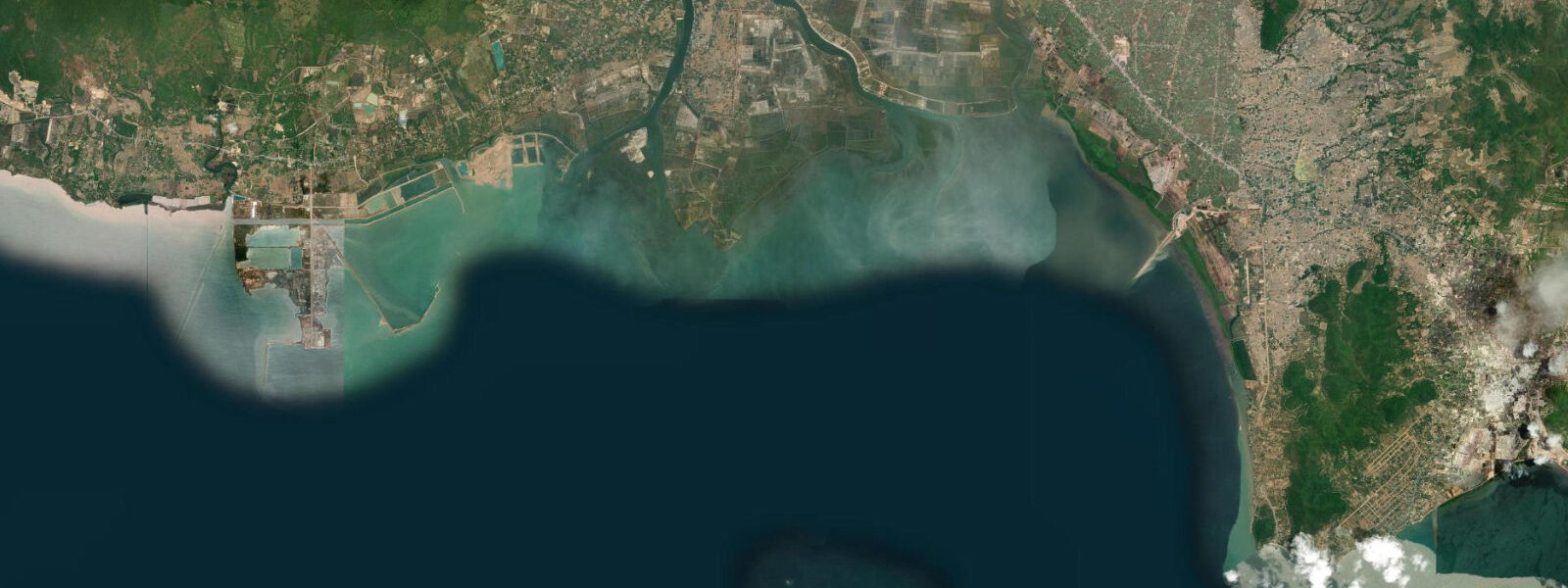
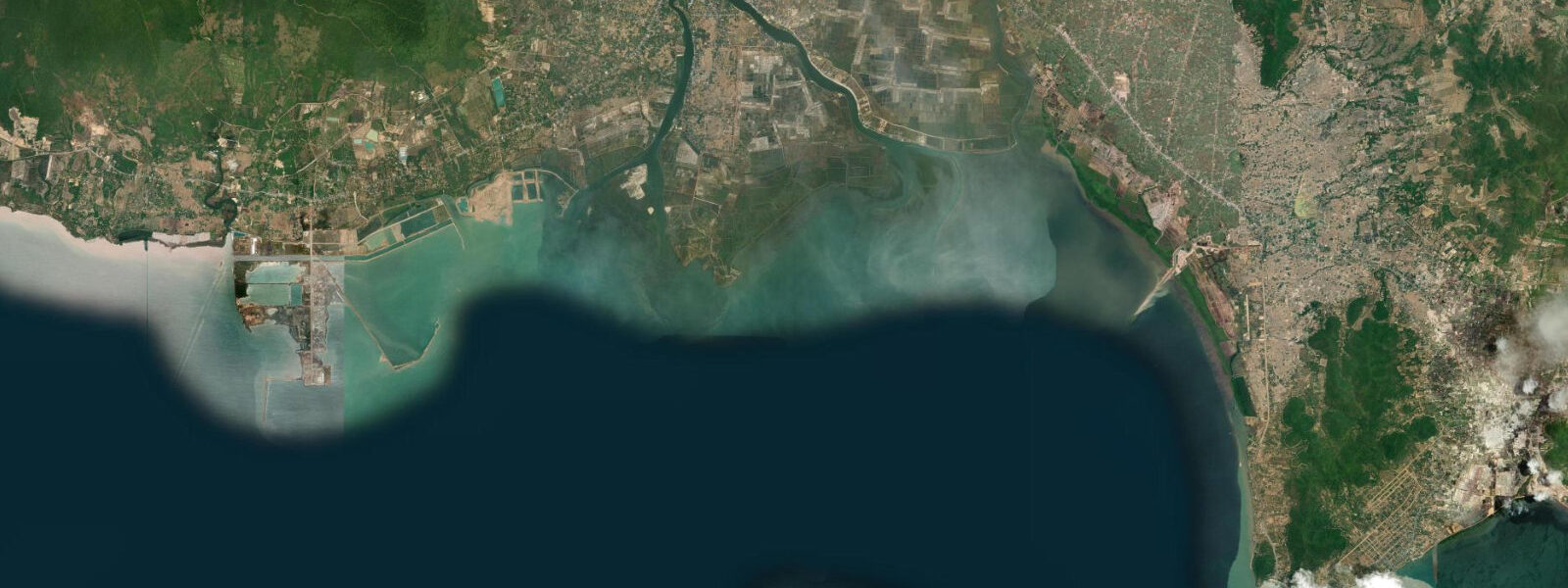
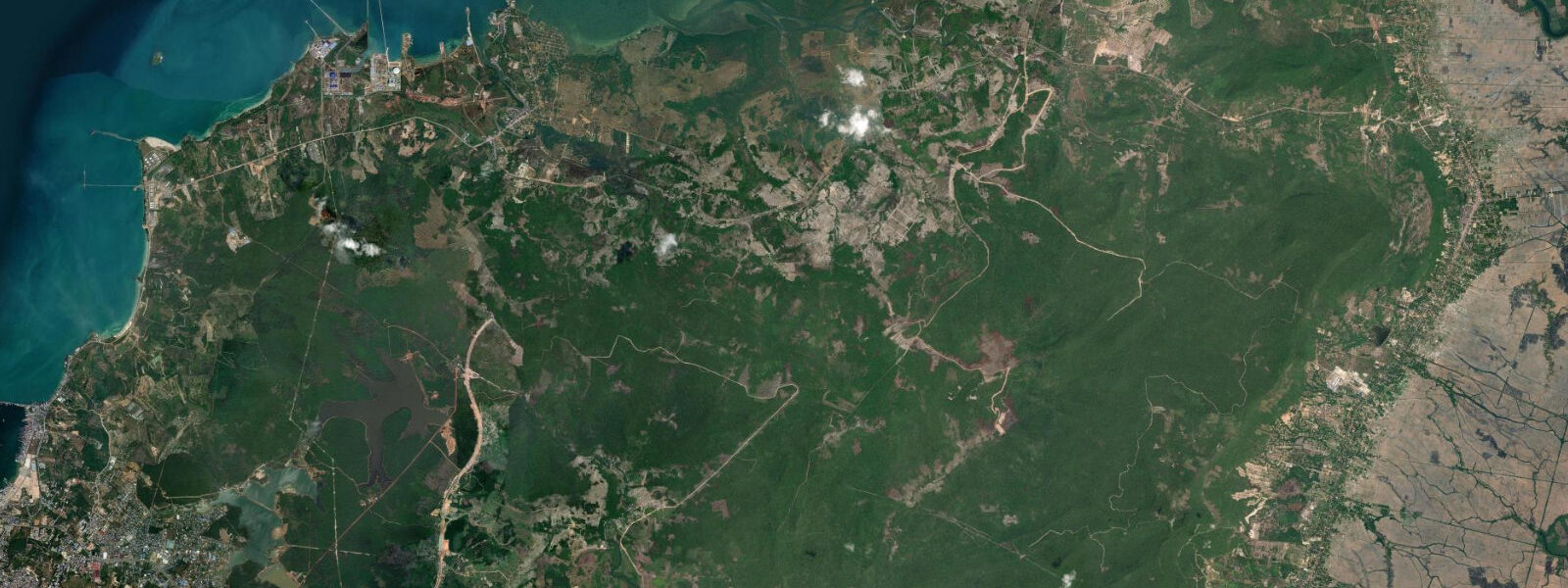
The three closest curated TideTurtle locations to Kep, Cambodia, measured by great-circle distance.
Today's solunar windows
Solunar tradition: major periods are the ≈3h windows around moon transit and opposition; minor are ≈2h around moonrise and moonset. Pair with the local tide stage and wind for the best read.
About tides at Kep, Cambodia
A short guide to the coastline at Kep, Cambodia — geography, sea state, and what the tide is actually doing under your feet.
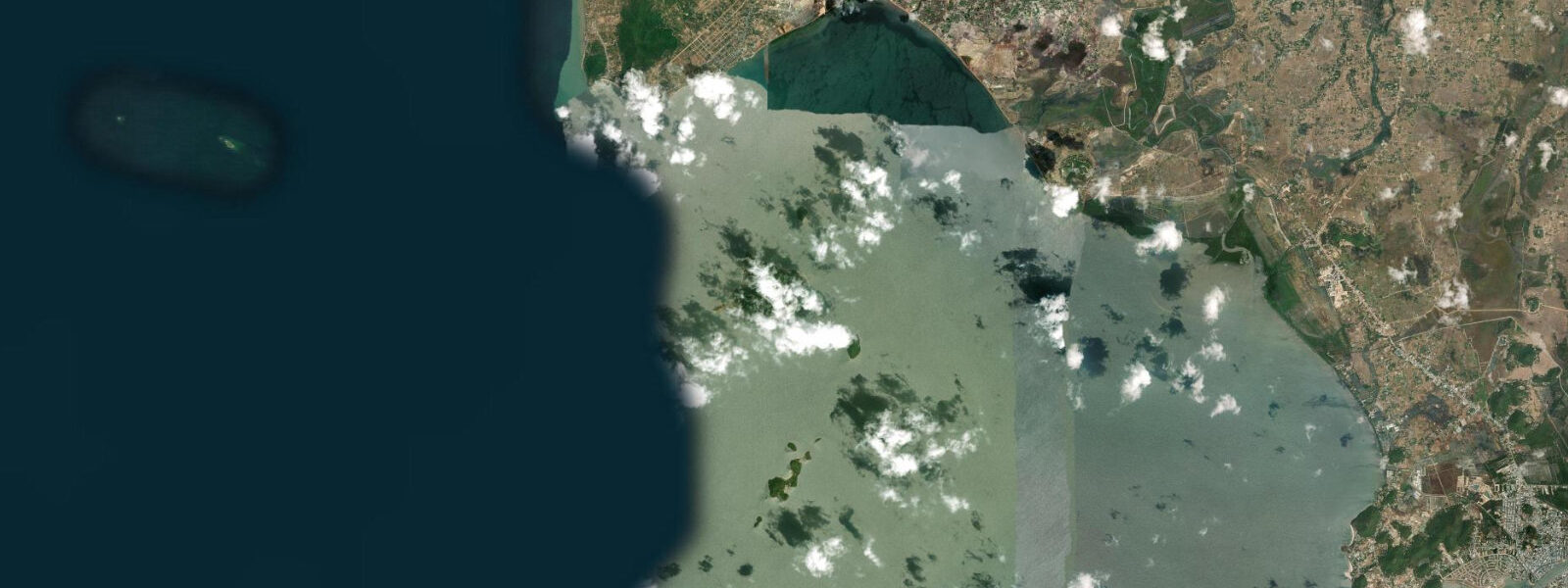
Kep sits on a rocky headland at the southwestern corner of Cambodia where the Cardamom Mountains reach the Gulf of Thailand. It was a French colonial beach resort from 1908 onward, built for the administrative and professional class of Phnom Penh who wanted a weekend coastal escape accessible by a half-day train journey. The villas from that period are still there — concrete modernist structures from the 1950s and 1960s, half-consumed by jungle vines, facades crumbling behind palm groves. The Khmer Rouge period emptied the town; most villas were never reoccupied or repaired, and the jungle has continued its work. The ruins are not blight — they are woven into the coastal landscape now, a layer of history visible from the road that circles the headland.
The town has rebuilt around the fishing pier and the crab market. Blue swimmer crabs are harvested from cage traps set in the bay, the traps visible in lines at low water when the cagemen check them on foot across the exposed mudflat. The crabs are sold alive at the market and cooked on the premises with locally grown Kampot pepper — the red and black varieties from the hillside farms above Kampot, 25 km north — in a preparation that has defined the food identity of this coast. The crab market operates daily from morning through afternoon, with peak activity in the mid-morning when the overnight catch arrives and the cooks are at full pace.
The Gulf of Thailand at Kep runs a mixed semidiurnal tidal pattern — two highs and two lows of unequal size each day — with a spring range of 1.0 to 1.5 m. The gentle gradient of the bay floor means the ebb at spring tides exposes significant mudflat between the pier and the mangrove fringe, and the crab-trap network extends into this zone. At the spring low, the flats are walkable for 1 to 2 hours. At spring high, the water reaches the mangrove roots and the trap lines are submerged.
Koh Tonsay — Rabbit Island — is a 20-minute longtail boat ride from Kep pier. It has two sandy beaches, minimal facilities (bungalows, hammocks, fresh fish, and limited electricity after dark on most sections), and coral patches on the western side accessible to snorkellers in calm conditions. The crossing is straightforward on flat mornings and can be choppy in the afternoon when the sea breeze builds; morning departures are always preferable. Snorkelling visibility on the western reef patches of Koh Tonsay runs 3 to 8 m depending on recent weather.
The main town beach at Kep is rocky rather than sandy — the headland geology dictates that. The narrow sandy strip at Kep Beach itself, a 5-minute walk from the crab market, is the local swimming beach and is accessible at most tide states. The view from the headland at sunset shows the Gulf of Thailand islands — including Vietnam's Phu Quoc, 30 km southeast — fading through stages of blue on the horizon. Shore anglers fish from the rocky outcrops around the headland for snapper, jack, and grouper; the incoming tide against the rocks is the preferred window for most of the regulars who work this coast. Predictions on this page come from Open-Meteo Marine (gridded model, ±45 min / ±0.2–0.3 m). The rocky foreshore around the Kep headland holds more than fishing: at low water, the rock pools below the old villas expose communities of barnacles, small crabs, sea cucumbers, and the occasional sea hare in the deeper pools. The half-hour of exploring the Kep headland rocks at the spring low is a reliable activity for families with children, with enough variety in the rock pools to hold attention. The road around the headland from the crab market to Kep Beach is flat and walkable; the sunset from the headland above the market is the evening gathering point for most of the town.
Tide questions about Kep, Cambodia
Quick answers to the most common questions about tide times, range, and water access at Kep, Cambodia.
When is the next high tide at Kep?
The hero block shows the next predicted high tide at Kep in Indochina Time (ICT, UTC+7). The Gulf of Thailand at Kep follows a mixed semidiurnal pattern — two unequal highs and two unequal lows each day. Spring range 1.0 to 1.5 m, with the largest tidal swings in the 3 to 4 days around new and full moons. At the spring low, the mudflats in the bay extend well beyond the crab-trap lines. Predictions from Open-Meteo Marine (gridded model, ±45 min / ±0.2–0.3 m).
What is the tidal range at Kep?
Spring range at Kep runs 1.0 to 1.5 m, with the mixed semidiurnal pattern meaning two unequal pairs of highs and lows each day. Neap tides during quarter moons reduce the swing to about 0.5 to 0.8 m. The bay floor gradient is gentle — even a 1.0 m ebb exposes a wide mudflat — which is why the crab-trap operators work the lower bay on foot at the spring low. The larger of the two daily swings on a spring day can be nearly double the smaller one.
Where do these predictions come from?
Open-Meteo Marine, a free gridded global ocean model, accuracy ±45 min / ±0.2–0.3 m. Cambodia does not publish open-access tidal gauge data for the Kep coast; the Open-Meteo gridded estimate is the practical baseline for activity planning here. The Gulf of Thailand mixed semidiurnal regime at this latitude is well-represented in the model. Gulf of Thailand mixed semidiurnal regime predictions are well-modelled by Open-Meteo at this latitude; the typical ±45 minute timing error is acceptable for planning crab-trap access and island day trips.
How do I get to Koh Tonsay (Rabbit Island) from Kep?
Longtail boats depart from Kep pier; the crossing takes 20 minutes each way. The schedule is informal — operators run when there are enough passengers, typically from around 08:00 to 16:00. Confirm the return pickup time and last boat of the day with the operator before landing on the island. The open-Gulf crossing is usually calm before 11:00 and can be choppy in the afternoon when the sea breeze picks up. Tide state doesn't affect the crossing itself, but landing on the beach at Koh Tonsay is easier at mid to high tide when the foreshore is covered.
Is this safe to use for navigation?
No. TideTurtle is a planning tool, not a nautical resource. For vessel operations in Cambodian coastal waters, including the Kep bay approaches and the routes to Koh Tonsay and the outer islands, use official Cambodian maritime authority chart sources. Open-Meteo Marine gridded predictions are not gauge-calibrated harmonic data and do not replace authoritative navigation sources for any vessel operation. The Cambodian maritime authority (Autorité de l'Aviation Civile et de la Marine Marchande) governs vessel operations in Cambodian coastal waters; use official chart sources for any commercial or extended coastal vessel operation.
8-day tide table — Kep, Cambodia
Heights relative to MSL. Predictions: Open-Meteo Marine (MeteoFrance SMOC, 0.08° grid) — heights relative to MSL (not chart datum / LAT). Model-derived.
| Day | Type | Time | Height |
|---|---|---|---|
| Tue 04 Aug | — | ||
| Wed 05 Aug | Low | 00:50 | 0.5m |
| Thu 06 Aug | — | ||
| Fri 07 Aug | — | ||
| Sat 08 Aug | — | ||
| Sun 09 Aug | High | 11:16 | 1.3m |
| Mon 10 Aug | Low | 03:45 | 0.2m |
| High | 12:21 | 1.3m | |
| Tue 11 Aug | Low | 04:12 | 0.2m |
| High | 06:00 | 0.3m | |