Kampot tide times
Kampot tide forecast — heights relative to MSL.
Today's tide times for Kampot
Tide times at Kampot on Tuesday, 4 August 2026: first high tide at 02:00pm. Sunrise 05:52am, sunset 06:26pm.
Tide chart for Kampot
24-hour cosine-interpolated curve around the present moment. Heights relative to MSL. Predictions: Predictions: Open-Meteo Marine (MeteoFrance SMOC, 0.08° grid).
Sun, moon and conditions on Tue 04 Aug
Snapshot at build time — refreshes daily. Sea state from Open-Meteo Marine.
Highs and lows next 7 days
Every predicted high and low for the next week, with the daily tidal coefficient (0–120; higher = bigger swing, > 95 means stronger currents).
Other spots nearby
The three closest curated TideTurtle locations to Kampot, measured by great-circle distance.
Today's solunar windows
Solunar tradition: major periods are the ≈3h windows around moon transit and opposition; minor are ≈2h around moonrise and moonset. Pair with the local tide stage and wind for the best read.
Cycle dates near Kampot
Next spring tide on Sun 09 Aug (range 1.0m). Next neap on Wed 05 Aug.
Spring tides cluster around new and full moons (biggest swings). Neap tides land on quarter moons (smallest swings). See the spring tide and neap tide glossary entries for the why.
About tides at Kampot
A short guide to the coastline at Kampot — geography, sea state, and what the tide is actually doing under your feet.
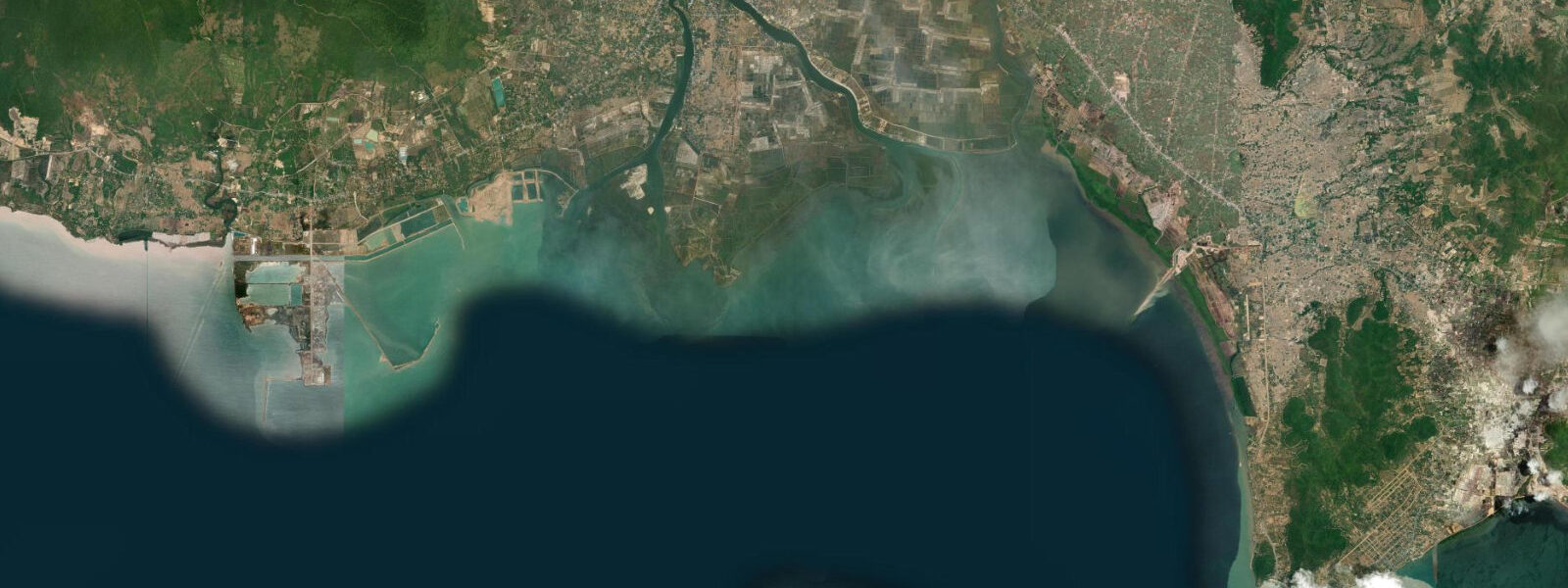
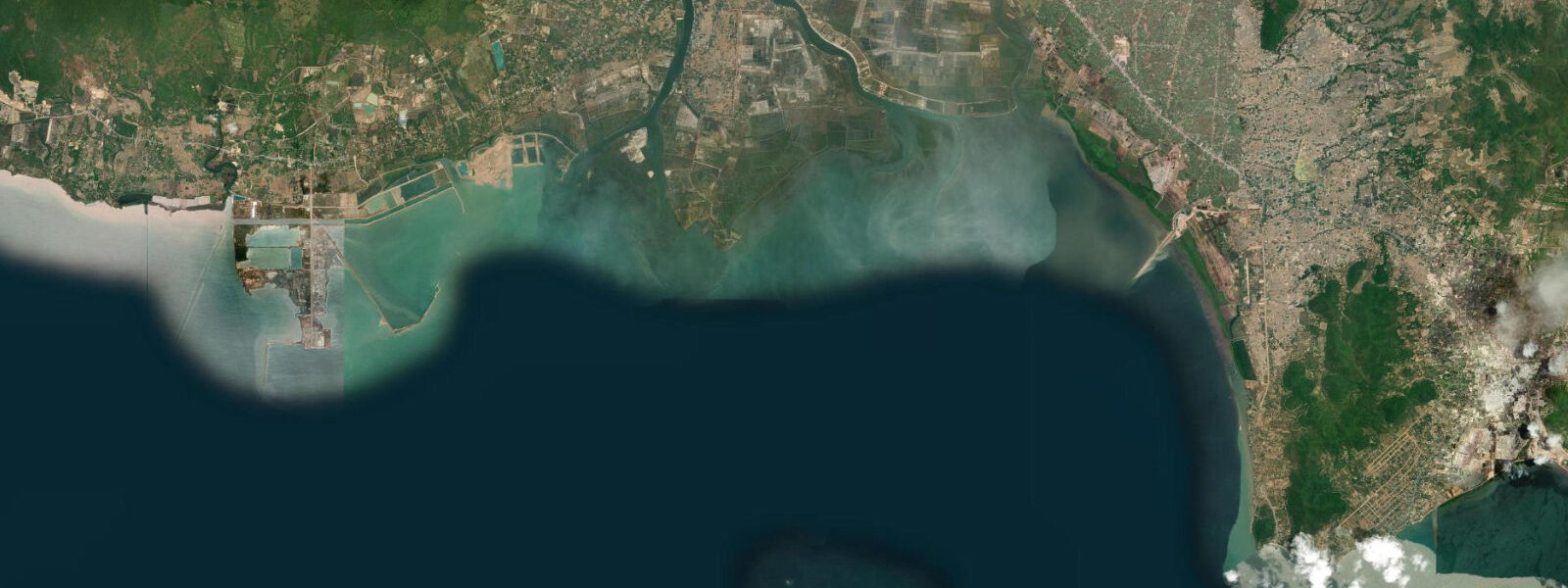
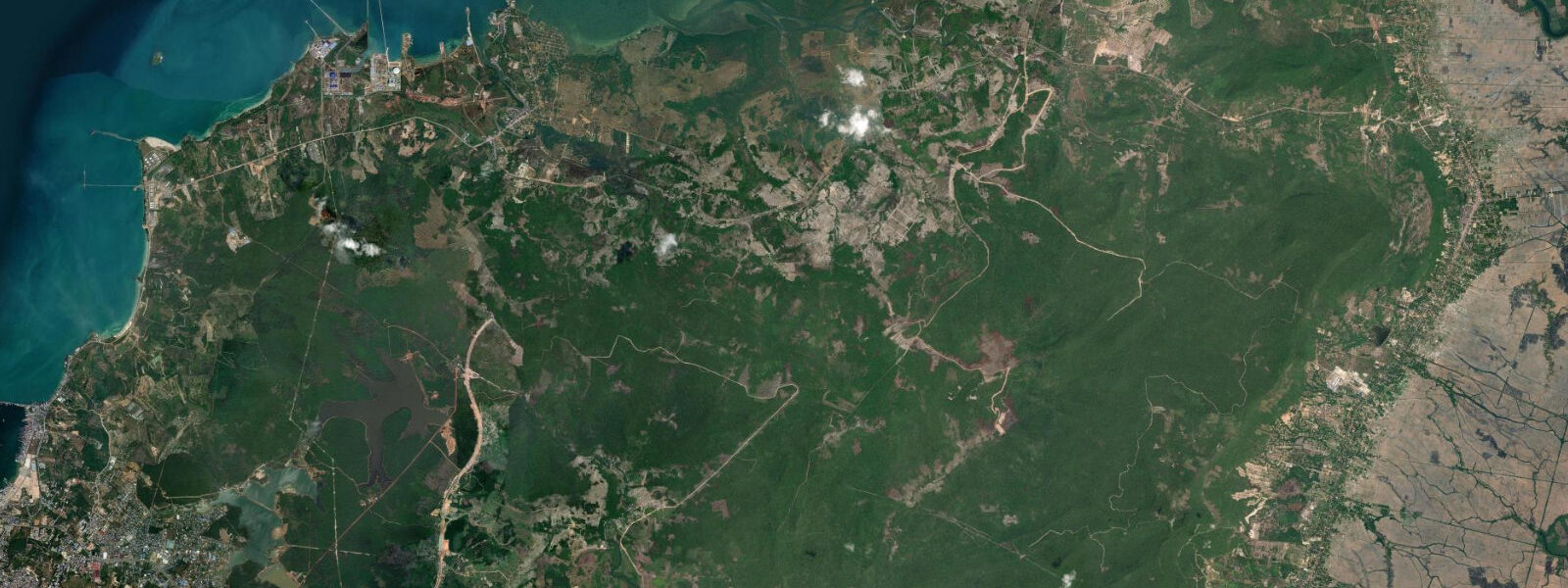
Kampot is a provincial town on the Praek Tuek Chhu river in southern Cambodia, 25 kilometres from the Gulf of Thailand coast. The town has developed as a slow-travel destination since the mid-2000s, attracting visitors who combine the riverside character of Kampot with day trips to the coast at Kep, Rabbit Island, and the nearby Bokor Hill Station. The town's most famous export is Kampot pepper — a black, red, and white pepper with a distinctive floral aroma, cultivated on the river valley slopes between the Elephant Mountains and the coast, and considered one of the world's finest peppers.
The river at Kampot is tidal. The Praek Tuek Chhu drains a large catchment in the Elephant Mountains, but its lower reaches, from the coast to Kampot town 25 kilometres upstream, are influenced by the Gulf of Thailand tidal signal. Spring tidal range at the coast near Kampot is approximately 2.5 metres. This tidal signal propagates upstream and arrives at Kampot with a time lag and reduced amplitude — the river level at Kampot rises and falls approximately 1 to 1.5 metres on spring tides, a noticeable fluctuation visible alongside the riverside promenade where the water level against the embankment changes measurably through the day.
The riverside promenade that fronts the town's main accommodation and restaurant strip runs along the eastern bank of the river. At high water springs, the water surface is close to the promenade level; at low water springs, the river drops 1 to 1.5 metres below the promenade edge, exposing the lower embankment and the muddy lower bank. The distinction between high and low water is clearly readable from the promenade without consulting a tide table — the boats moored alongside drop and rise with the river level, and the exposed bank section grows and shrinks through the day.
The estuary of the Praek Tuek Chhu at the coast, near Kep, has tidal mudflats and mangrove that are productive for wading birds during the northern winter migration. Common sandpiper, grey plover, and greater sand plover use the mudflats at low water. Egrets and herons work the estuary edge throughout the day. The meeting of the tidal river and the Gulf of Thailand at the estuary mouth creates a plankton-rich mixing zone that concentrates fish and the birds and dolphins that feed on them.
Kep, 25 kilometres south of Kampot by road, is the coastal town most associated with the pepper-growing region. The Kep crab market, on the waterfront, sells freshly landed mud crab (Scylla serrata) from boats that work the mangrove-lined bays near the coast. The crab boats work the flood tide in the mangrove channels, returning to market as the tide turns. The crab with Kampot pepper (whole mud crab stir-fried with the fresh green peppercorns from the nearby plantations) is the signature dish of the regional cuisine.
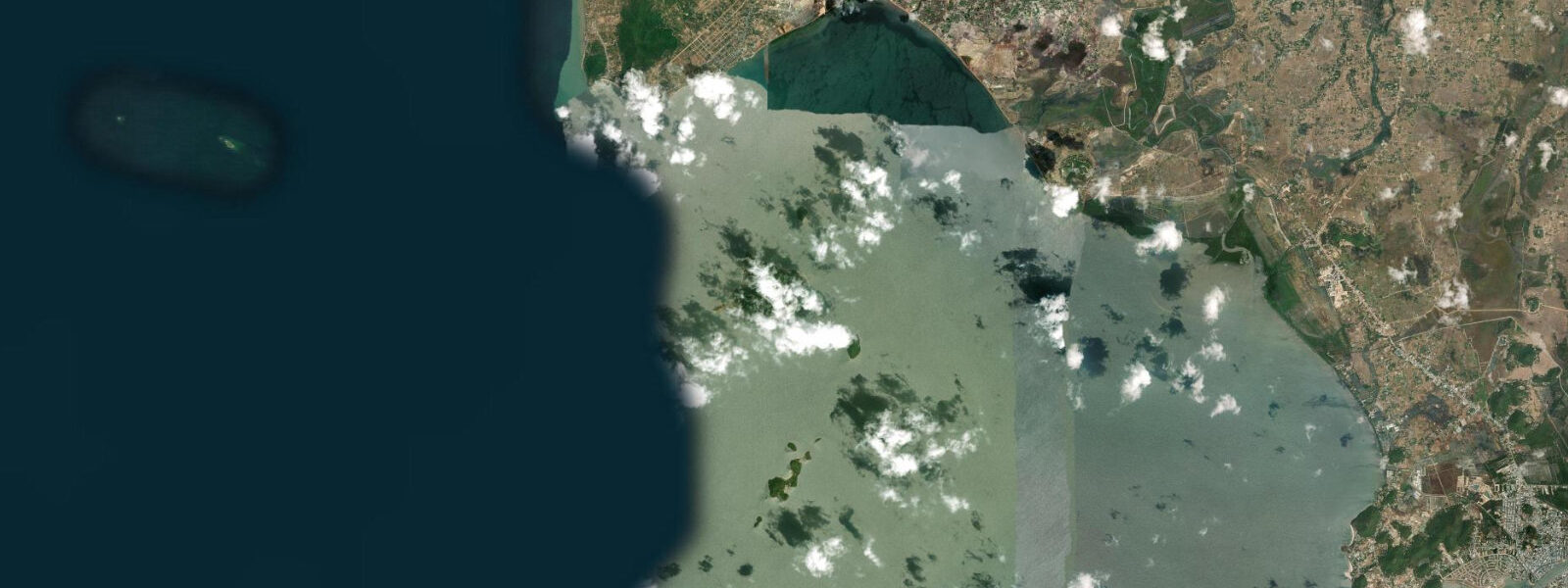
Rabbit Island (Koh Tonsay), a 20-minute boat ride from Kep, has basic beach accommodation, a reef in 2 to 5 metres on its southern face, and mangrove channels on its northern side. The island is quiet and sees far fewer visitors than Ko Chang or Koh Rong.
Predictions on this page come from Open-Meteo Marine, a gridded global ocean model. Accuracy is typically within plus or minus 45 minutes on timing and 0.2 to 0.3 metres on height — model-derived, not from a local gauge. The local tide authority is the Department of Hydrology and River Works, Ministry of Public Works and Transport, Cambodia.
Tide questions about Kampot
Quick answers to the most common questions about tide times, range, and water access at Kampot.
Is the river at Kampot tidal?
Yes. The Praek Tuek Chhu is tidal for approximately 25 kilometres upstream from the coast to Kampot town. Spring tidal range at the coast near Kampot is approximately 2.5 metres; this signal arrives at Kampot with a time lag and reduced amplitude, raising and lowering the river level at the town by approximately 1 to 1.5 metres. The fluctuation is visible from the riverside promenade — boats moored alongside rise and fall noticeably through the day, and the lower embankment exposes and re-floods with the tidal cycle. The tidal rhythm is fully legible from the promenade without consulting a tide table.
What is Kampot pepper and where can I buy it?
Kampot pepper (Piper nigrum) is grown on the river valley slopes between the Elephant Mountains and the coast around Kampot. The pepper's distinctive floral, slightly spicy aroma — unlike most commercial black pepper — results from the specific soil chemistry, microclimate, and traditional cultivation methods of the Kampot growing area. The pepper has geographical indication protection in Cambodia. Black, red, and white varieties are produced from the same berries at different stages of ripeness. The best places to buy direct from farms: the Kampot Pepper Cooperative in the pepper plantations north of town, and the farms visible on the road between Kampot and Kep that have roadside sale points.
What is the crab with Kampot pepper dish?
The signature dish of the Kampot-Kep coastal cuisine: freshly landed mud crab (Scylla serrata) from the Gulf of Thailand stir-fried with fresh green Kampot peppercorns (harvested before fully ripe). The combination — sweet mud crab meat with the fresh, aromatic heat of green pepper — is considered a benchmark of Cambodian coastal cooking. The dish is available in restaurants throughout Kampot and Kep. At the Kep crab market on the waterfront, live crabs are purchased and cooked at the adjacent crab shacks. The crab boats that supply the market work the flood tide in the mangrove channels and return as the tide turns.
How do I get to Kampot?
By road from Phnom Penh — approximately 3.5 to 4 hours (148 km) on National Road 3, with frequent bus services and shared taxi options. From Sihanoukville, the journey is approximately 1.5 hours east by road. From Bangkok, via the Klong Yai or Poipet border crossing and onward to Phnom Penh then Kampot — the total journey is approximately 12 to 14 hours by bus. Kampot is a compact town navigable on foot or by hired bicycle or motorbike. The riverside promenade runs along the east bank of the Praek Tuek Chhu.
What is the tidal range near Kampot?
Spring tidal range at the coast near Kampot and Kep is approximately 2.5 metres. The tidal signal propagates upstream into the Praek Tuek Chhu river and reaches Kampot town (25 km inland) with a time lag of approximately 2 to 3 hours and a reduced amplitude of 1 to 1.5 metres. Predictions here cover the coastal position near the river mouth. Not for navigation; consult the Department of Hydrology and River Works, Cambodia. Predictions come from Open-Meteo Marine (±45 minutes on timing, ±0.3 m on height — model-derived, not from a local gauge).
8-day tide table — Kampot
Heights relative to MSL. Predictions: Open-Meteo Marine (MeteoFrance SMOC, 0.08° grid) — heights relative to MSL (not chart datum / LAT). Model-derived.
| Day | Type | Time | Height |
|---|---|---|---|
| Tue 04 Aug | High | 14:00 | 0.8m |
| Wed 05 Aug | Low | 01:00 | 0.5m |
| High | 14:00 | 0.8m | |
| Thu 06 Aug | Low | 00:45 | 0.5m |
| High | 08:42 | 1.1m | |
| Fri 07 Aug | Low | 01:38 | 0.4m |
| High | 10:00 | 1.1m | |
| Sat 08 Aug | Low | 01:45 | 0.3m |
| High | 11:00 | 1.1m | |
| Sun 09 Aug | Low | 02:42 | 0.2m |
| High | 11:22 | 1.2m | |
| Mon 10 Aug | Low | 03:47 | 0.2m |
| Tue 11 Aug | High | 06:00 | 0.3m |