Ream National Park tide times
Ream National Park tide forecast — heights relative to MSL.
Today's tide times for Ream National Park
Tide times at Ream National Park on Tuesday, 4 August 2026: first low tide at 09:12am, first high tide at 02:16pm, second low tide at 09:55pm. Sunrise 05:54am, sunset 06:28pm.
Tide chart for Ream National Park
24-hour cosine-interpolated curve around the present moment. Heights relative to MSL. Predictions: Predictions: Open-Meteo Marine (MeteoFrance SMOC, 0.08° grid).
Sun, moon and conditions on Tue 04 Aug
Snapshot at build time — refreshes daily. Sea state from Open-Meteo Marine.
Highs and lows next 7 days
Every predicted high and low for the next week, with the daily tidal coefficient (0–120; higher = bigger swing, > 95 means stronger currents).
Other spots nearby
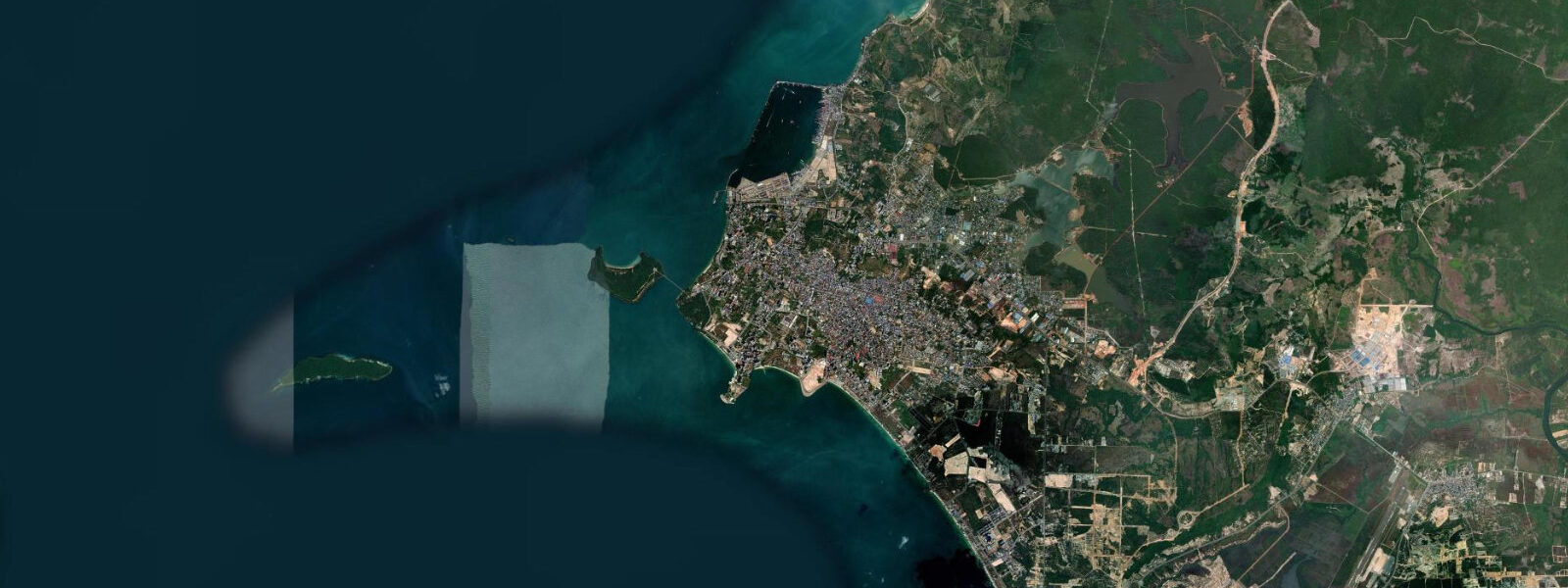
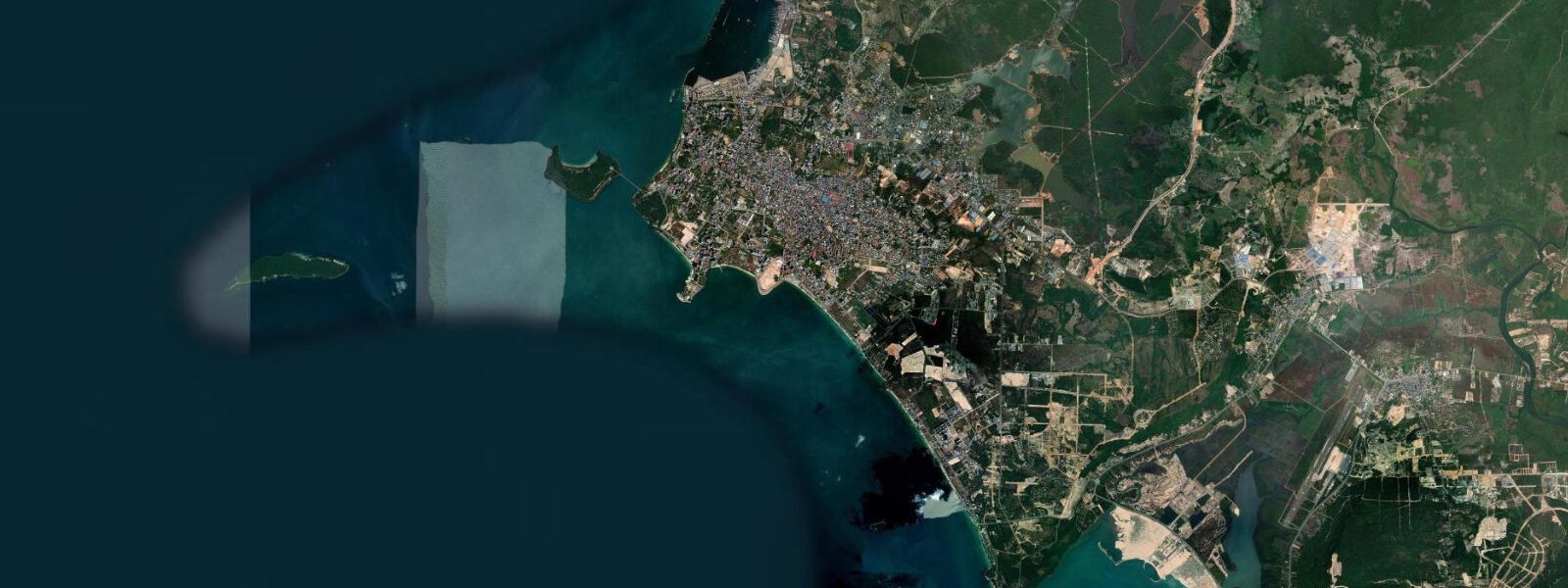
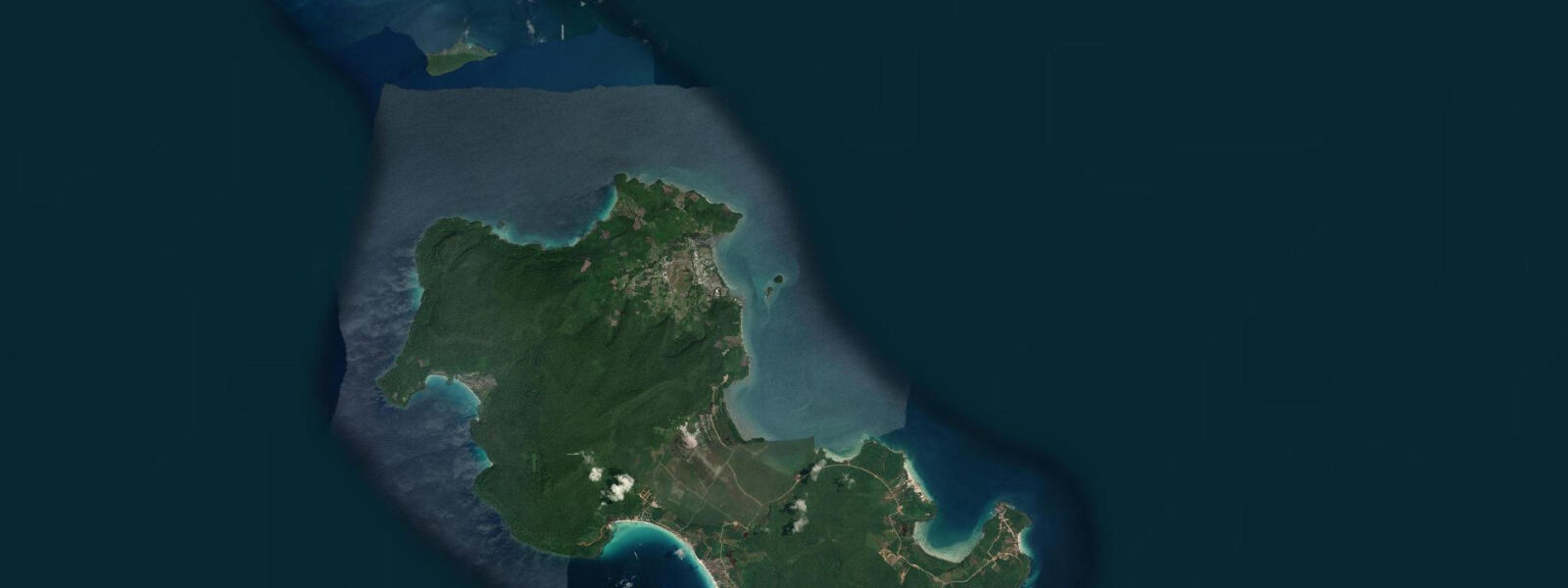
The three closest curated TideTurtle locations to Ream National Park, measured by great-circle distance.
Today's solunar windows
Solunar tradition: major periods are the ≈3h windows around moon transit and opposition; minor are ≈2h around moonrise and moonset. Pair with the local tide stage and wind for the best read.
About tides at Ream National Park
A short guide to the coastline at Ream National Park — geography, sea state, and what the tide is actually doing under your feet.
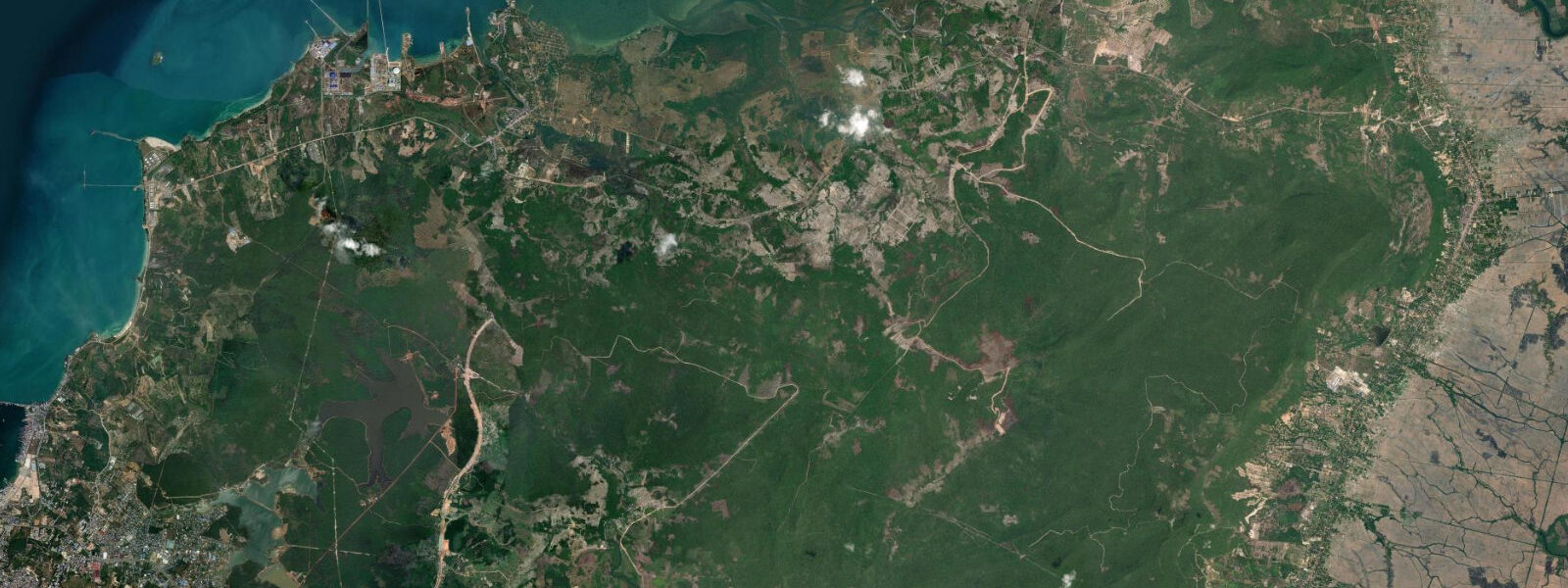
Ream National Park covers approximately 210 square kilometres of coast, estuary, and marine habitat in Preah Sihanouk Province, Cambodia, bordering the Gulf of Thailand. The park was established in 1993 and protects a mosaic of mangrove forest, beach, open water, and coral reef that represents one of the most complete coastal ecosystem sequences remaining in Cambodia. The main terrestrial habitats — coastal forest and mangrove — are accessed via the Prek Tuk Sap estuary, a tidal river that bisects the park's interior.
The tidal regime at Ream is mixed semidiurnal, with a spring range of approximately 2 metres. The Gulf of Thailand coast has a predominantly diurnal character on some days — one high water dominates the daily cycle — which is characteristic of this semi-enclosed basin's tidal dynamics. The Prek Tuk Sap estuary is tidal for most of its accessible length, with the mangrove flooding cycle driven by the daily tidal signal. At high water, the mangrove root systems are submerged by 1 to 1.5 metres and the river appears to flow through a forest. At low water, the root architecture is fully exposed, and the mud between the roots is the feeding ground for the crabs, molluscs, and small fish that sustain the estuary's bird and dolphin community.
Irrawaddy dolphins (Orcaella brevirostris) are present in the Prek Tuk Sap estuary and the adjacent Gulf waters. This is one of the southernmost records of the species on Cambodia's coast; the Irrawaddy dolphin, also called the snubfin dolphin, is a small, round-headed cetacean with no prominent beak and a distinctive back-roll surface behaviour. Population estimates for the Ream coastal area are not well-documented; sightings are regular but not guaranteed on any given boat tour. The dolphins are most often seen at the estuary mouth and in the outer Gulf waters adjacent to the park, particularly on incoming tides when they follow fish into the estuary.
Boat tours of the Prek Tuk Sap from the park headquarters jetty last 2 to 3 hours and pass through the mangrove forest at a pace that allows observation of the avifauna — brown-winged kingfisher (a mangrove specialist found only in coastal Southeast Asia), mangrove whistler, black-naped oriole, and lesser adjutant stork (which nests in tall trees at the mangrove-forest edge). Sea eagles and ospreys hunt the estuary surface for fish. The tour's value is greatest at low water when the mangrove root community is exposed and most bird activity is concentrated at the water's edge.
Snorkelling at Ream is available at the park's beach (Koh Thmei island is offshore and has a small resort, accessible by park boat), with reef in 3 to 8 metres in acceptable condition by Cambodia standards — visibility is typically 3 to 6 metres and best on incoming tides. Fish diversity is moderate; the reef has had limited protection historically but recovery is measurable in the years since conservation enforcement improved.
The park headquarters is located 18 kilometres from Sihanoukville by road. Guided tours and boat hire are arranged at the headquarters. Independent entry is permitted to the beach areas; the estuary boat tours are guide-mandatory.
Predictions on this page come from Open-Meteo Marine, a gridded global ocean model. Accuracy is typically within plus or minus 45 minutes on timing and 0.2 to 0.3 metres on height — model-derived, not from a local gauge. The local tide authority is the Department of Hydrology and River Works, Ministry of Public Works and Transport, Cambodia.
Tide questions about Ream National Park
Quick answers to the most common questions about tide times, range, and water access at Ream National Park.
Can I see Irrawaddy dolphins at Ream National Park?
Irrawaddy dolphins (Orcaella brevirostris) are present in the Prek Tuk Sap estuary and adjacent Gulf waters. They are most often seen at the estuary mouth and in the outer Gulf on incoming tides when they follow fish shoreward. Sightings are regular but not guaranteed — the population in this coastal area is small and not well-surveyed. Boat tour guides at the park headquarters have current information on recent sighting frequency. If dolphins are encountered, maintain a distance of at least 50 metres and reduce boat speed to idle; do not enter the water in the presence of dolphins.
What birds can I see on the Ream estuary boat tour?
The Prek Tuk Sap estuary is a productive birding site, particularly at low water when the mangrove roots are exposed. Specialists: brown-winged kingfisher (coastal Southeast Asia mangrove specialist), mangrove whistler, and collared kingfisher. Regular species: little egret, grey heron, osprey, white-bellied sea eagle, and lesser adjutant stork (which nests in tall trees at the mangrove edge). In migration season (October to February): additional waders and small passerines use the mangrove edge. The 2 to 3 hour boat tour covers the most productive estuary section; departure at low-to-mid tide gives the best access to the mangrove edge.
What is the tidal range at Ream National Park?
Spring tidal range at Ream is approximately 2 metres. The Gulf of Thailand tidal regime has a pronounced diurnal inequality — on some days, one of the two daily highs dominates, making the tidal pattern effectively diurnal. The mangrove flooding cycle in the Prek Tuk Sap responds to this signal: at high water the root systems are submerged by 1 to 1.5 metres; at low water the roots are exposed and the mud community is accessible. Predictions here come from Open-Meteo Marine (±45 minutes on timing, ±0.3 m on height). Not for navigation.
How do I get to Ream National Park from Sihanoukville?
The park headquarters is 18 kilometres from central Sihanoukville by road — approximately 30 minutes by tuk-tuk or 20 minutes by taxi. Follow National Road 4 east from Sihanoukville and turn south onto the park access road. Tuk-tuks are available from Sihanoukville town for the day trip. Boat hire, guided tours, and basic refreshments are arranged at the park headquarters. A park entry fee applies. The headquarters is open from approximately 07:00; morning visits (07:00 to 10:00) are most productive for birds and the estuary boat tour.
Is there snorkelling at Ream National Park?
Snorkelling is available at the park beaches and around Koh Thmei island offshore, which has reef in 3 to 8 metres with moderate coral and fish diversity. Visibility is typically 3 to 6 metres and best on incoming tides. Koh Thmei has a small eco-resort accessible by park boat from the headquarters. Snorkel trips are arranged through the park or the Koh Thmei resort. The reef condition is moderate — the Gulf of Thailand coast does not have the rich reef of Thailand's Andaman coast, but it is a reasonable snorkel experience with reef fish including parrotfish, butterflyfish, and occasional reef shark.
8-day tide table — Ream National Park
Heights relative to MSL. Predictions: Open-Meteo Marine (MeteoFrance SMOC, 0.08° grid) — heights relative to MSL (not chart datum / LAT). Model-derived.
| Day | Type | Time | Height |
|---|---|---|---|
| Tue 04 Aug | Low | 09:12 | 0.5m |
| High | 14:16 | 1.0m | |
| Low | 21:55 | 0.5m | |
| Wed 05 Aug | High | 01:18 | 0.7m |
| Low | 04:21 | 0.6m | |
| Low | 09:18 | 0.6m | |
| High | 15:12 | 1.0m | |
| Thu 06 Aug | — | ||
| Fri 07 Aug | — | ||
| Sat 08 Aug | Low | 01:18 | 0.3m |
| High | 16:20 | 1.2m | |
| Sun 09 Aug | — | ||
| Mon 10 Aug | — | ||
| Tue 11 Aug | Low | 05:07 | 0.1m |