Jericoacoara tide times
Jericoacoara tide forecast — heights relative to MSL.
Today's tide times for Jericoacoara
Tide times at Jericoacoara on Monday, 3 August 2026: first low tide at 00:52, first high tide at 07:00, second low tide at 13:10, second high tide at 19:25. Sunrise 05:48, sunset 17:48.
Tide chart for Jericoacoara
24-hour cosine-interpolated curve around the present moment. Heights relative to MSL. Predictions: Predictions: Open-Meteo Marine (MeteoFrance SMOC, 0.08° grid).
Sun, moon and conditions on Mon 03 Aug
Snapshot at build time — refreshes daily. Sea state from Open-Meteo Marine.
Highs and lows next 7 days
Every predicted high and low for the next week, with the daily tidal coefficient (0–120; higher = bigger swing, > 95 means stronger currents).
Other spots nearby
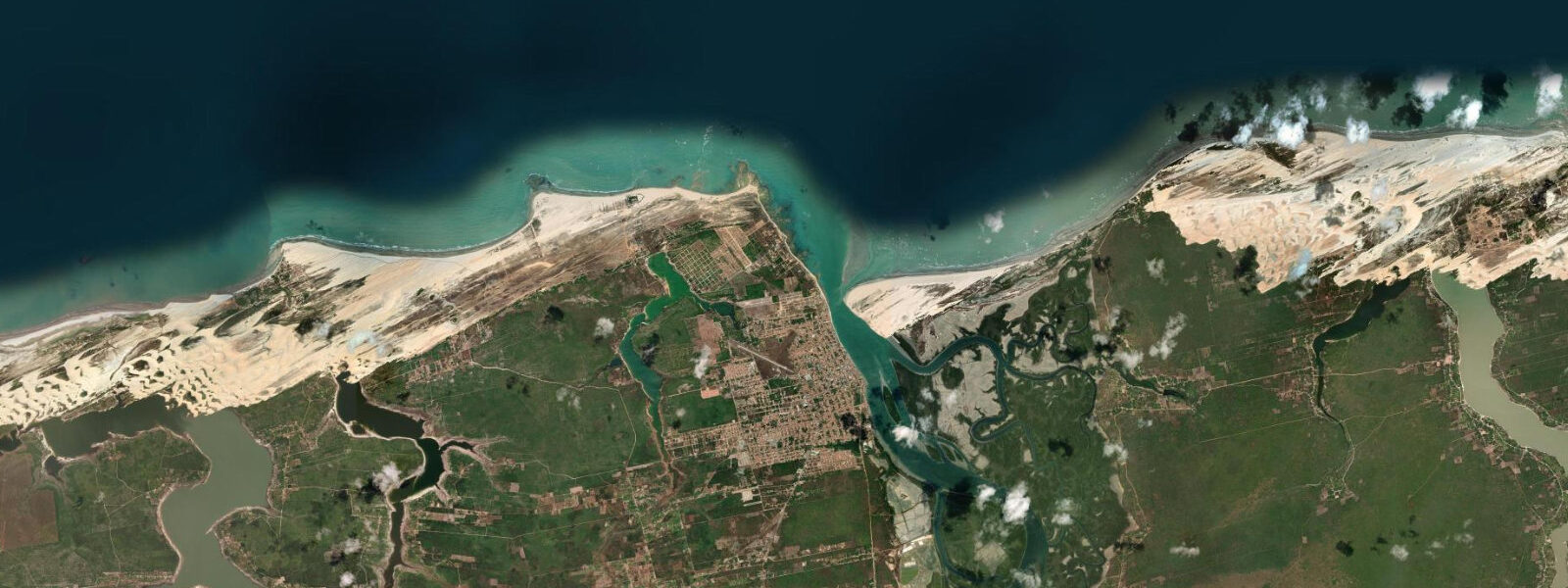
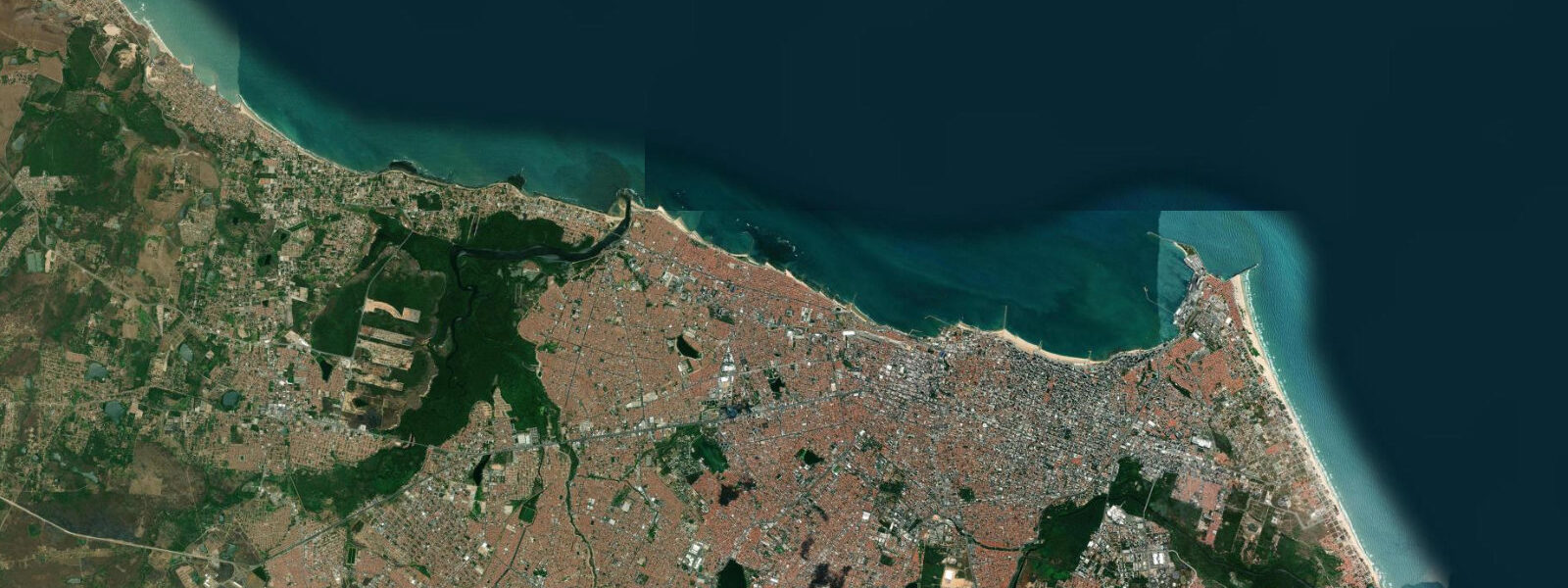
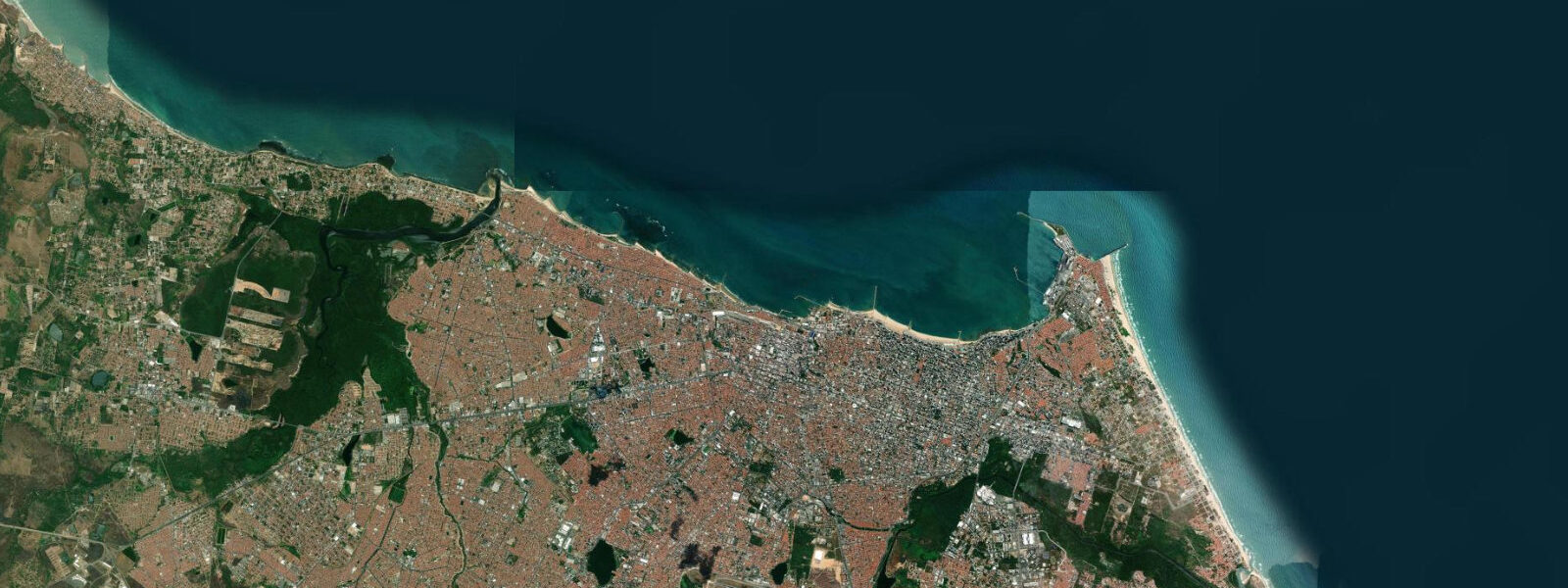
The three closest curated TideTurtle locations to Jericoacoara, measured by great-circle distance.
Today's solunar windows
Solunar tradition: major periods are the ≈3h windows around moon transit and opposition; minor are ≈2h around moonrise and moonset. Pair with the local tide stage and wind for the best read.
Cycle dates near Jericoacoara
Last spring tide on Sun 02 Aug (range 2.4m). Next spring tide on Sat 08 Aug (range 2.1m). Next neap on Thu 06 Aug.
Spring tides cluster around new and full moons (biggest swings). Neap tides land on quarter moons (smallest swings). See the spring tide and neap tide glossary entries for the why.
About tides at Jericoacoara
A short guide to the coastline at Jericoacoara — geography, sea state, and what the tide is actually doing under your feet.
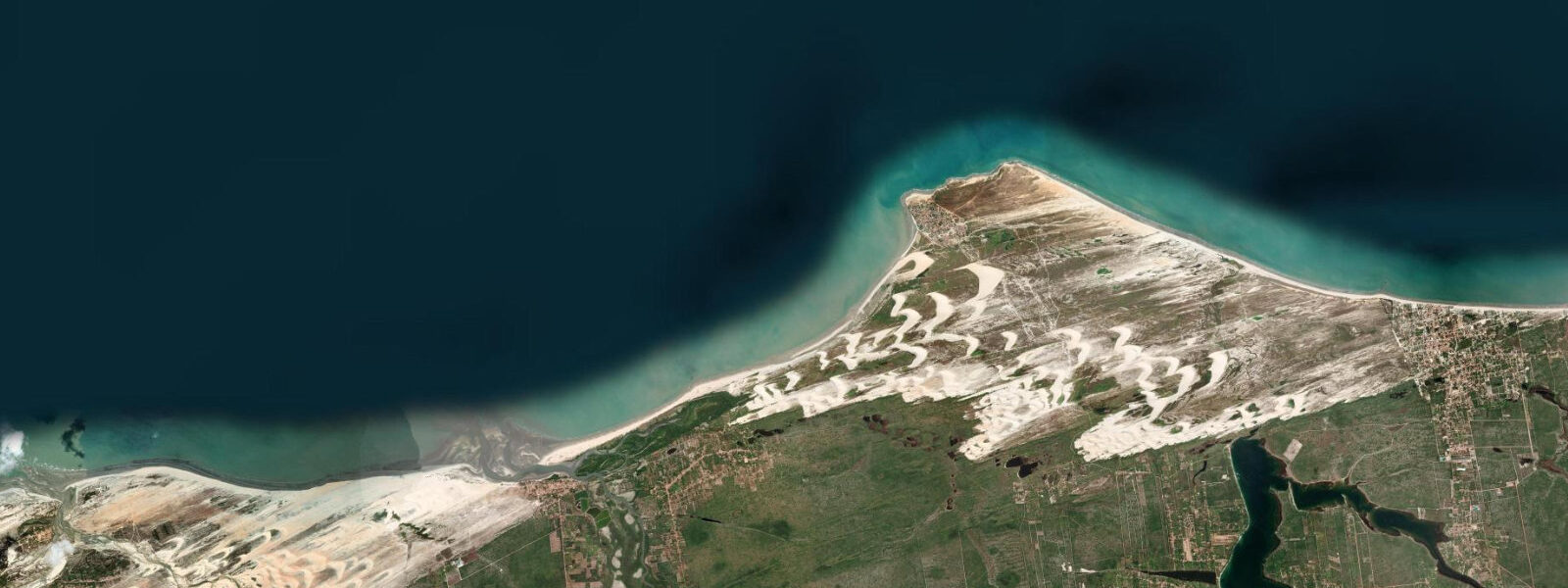
Jericoacoara (Jeri) is a former fishing village on the Ceará coast of northeast Brazil, accessible by 4WD through sand dunes from a paved road that ends 30 kilometres short. The village has no paved streets; the main square and the streets are sand. A national park surrounds the village, which strictly limits construction and vehicle access. The result is a village that has grown as a kite and windsurf destination without becoming a conventional resort. Tidal pattern is semidiurnal with a mean spring range of about 1.5 metres — larger than the southeast coast, and significant for the lagoon and beach dynamics.
The trade wind blows from the northeast almost continuously from July through January — 20 to 35 knots, with remarkable consistency. This makes Jericoacoara one of the five best kitesurfing destinations in the world, and it's on every serious kiter's travel list. The wind picks up at around 11 a.m., builds to peak strength in the afternoon, and dies at sunset. The morning is calm — this is when kitesurfing equipment floods the beach from sunrise until the first gust arrives and the session window opens.
The Lagoa do Paraíso (Tatajuba lagoon, 6 km east) and the Lagoa Azul are freshwater lagoons surrounded by dunes, connected to a series of other lagoons accessible by dune buggy or 4WD. Kitesurfing on the lagoons is more sheltered than the beach — the surrounding dunes provide some wind shadow but maintain usable wind. The lagoon water is fresh, clear, and warm — kite sessions without the salt and chop of the ocean.
The Sunset Dune (Duna do Pôr do Sol) west of the village is the daily gathering point at sunset — the town population plus all current visitors walks up the dune to watch the sun drop into the sea from the top. It's a genuinely communal ritual with no commercial overlay.
Kite fishing from the beach at Jeri is a local tradition — fishermen use box kites to deploy long lines far offshore, harnessing the trade wind's consistent power. The technique is unique to the Ceará coast.
Predictions on this page come from Open-Meteo Marine, a gridded global ocean model. Accuracy is typically within plus or minus 45 minutes on timing and 0.2 to 0.3 metres on height — model-derived, not from a local gauge. For Brazilian tide data, consult the DHN at mar.mil.br/dhn.
Tide questions about Jericoacoara
Quick answers to the most common questions about tide times, range, and water access at Jericoacoara.
Is Jericoacoara good for beginner kitesurfers?
Yes — the consistent northeast trade wind, the warm water (28 to 30°C), and the flat lagoon surfaces make Jericoacoara ideal for learning. Several well-equipped IKO schools operate on the beach and the lagoons. The trade wind blows at a consistent direction and strength (20 to 30 knots most afternoons July through January), making it far more learner-friendly than European or Pacific locations with gusty or variable conditions. The main hazard is the strong afternoon wind — start with a school.
How do I get to Jericoacoara?
Fly to Fortaleza (nearest international airport, 300 km east) or to Jijoca de Jericoacoara (the nearest small airport, 30 km away, served by domestic flights from São Paulo and Fortaleza). From Fortaleza: private transfer (4 to 5 hours) or bus to Jijoca (6 hours), then 4WD truck through the dunes (30 minutes, included with most packages). The final section through sand dunes and the dry riverbed requires 4WD — no ordinary vehicles reach the village.
What are the lagoons near Jericoacoara?
The Lagoa do Paraíso (also called Tatajuba lagoon, 6 km east) is a large freshwater lagoon surrounded by white sand dunes, accessible by dune buggy. The Lagoa Azul (Blue Lagoon) is close to the village and is the main kite training lagoon. There's also a chain of smaller lagoons (Lagoa das Ondas, etc.) that fill from rain in the wet season (February through May) and are popular for stand-up paddleboarding and kite training.
When is the best time to visit Jericoacoara?
July through January is the trade wind season — peak kitesurfing and windsurfing conditions with 20 to 35 knots from the northeast almost every afternoon. October and November are peak season for wind sports. The wet season (February through May) brings rain, calmer wind, and the best beach walking and lagoon paddling conditions. June is the transition month. Accommodation is significantly cheaper in the wet season; the wind sports crowd largely leaves.
What is the tidal range at Jericoacoara?
Mean spring range at Jericoacoara is approximately 1.5 metres — one of the larger tidal ranges on the Brazilian coast, due to the northeast coast's geometry. At low spring tide, broad sand flats are exposed north of the village, creating the shallow conditions ideal for the traditional kite fishing (using large box kites to deploy fishing lines offshore). The beach width changes significantly through the tidal cycle.
7-day tide table — Jericoacoara
Heights relative to MSL. Predictions: Open-Meteo Marine (MeteoFrance SMOC, 0.08° grid) — heights relative to MSL (not chart datum / LAT). Model-derived.
| Day | Type | Time | Height |
|---|---|---|---|
| Mon 03 Aug | Low | 00:52 | -1.0m |
| High | 07:00 | 1.3m | |
| Low | 13:10 | -1.0m | |
| High | 19:25 | 1.3m | |
| Tue 04 Aug | Low | 01:31 | -1.0m |
| High | 07:45 | 1.2m | |
| Low | 13:52 | -0.9m | |
| High | 20:09 | 1.2m | |
| Wed 05 Aug | Low | 02:21 | -0.8m |
| High | 08:39 | 1.0m | |
| Low | 14:39 | -0.7m | |
| High | 21:02 | 1.1m | |
| Thu 06 Aug | Low | 03:19 | -0.8m |
| High | 09:48 | 0.9m | |
| Low | 15:40 | -0.6m | |
| High | 22:06 | 1.1m | |
| Fri 07 Aug | Low | 04:36 | -0.7m |
| High | 11:03 | 0.8m | |
| Low | 17:00 | -0.5m | |
| High | 23:16 | 1.1m | |
| Sat 08 Aug | Low | 06:07 | -0.8m |
| High | 12:18 | 0.8m | |
| Low | 18:26 | -0.6m | |
| Sun 09 Aug | High | 00:38 | 1.2m |
| Low | 07:24 | -0.9m | |
| High | 13:38 | 1.0m | |
| Low | 20:00 | -0.7m |