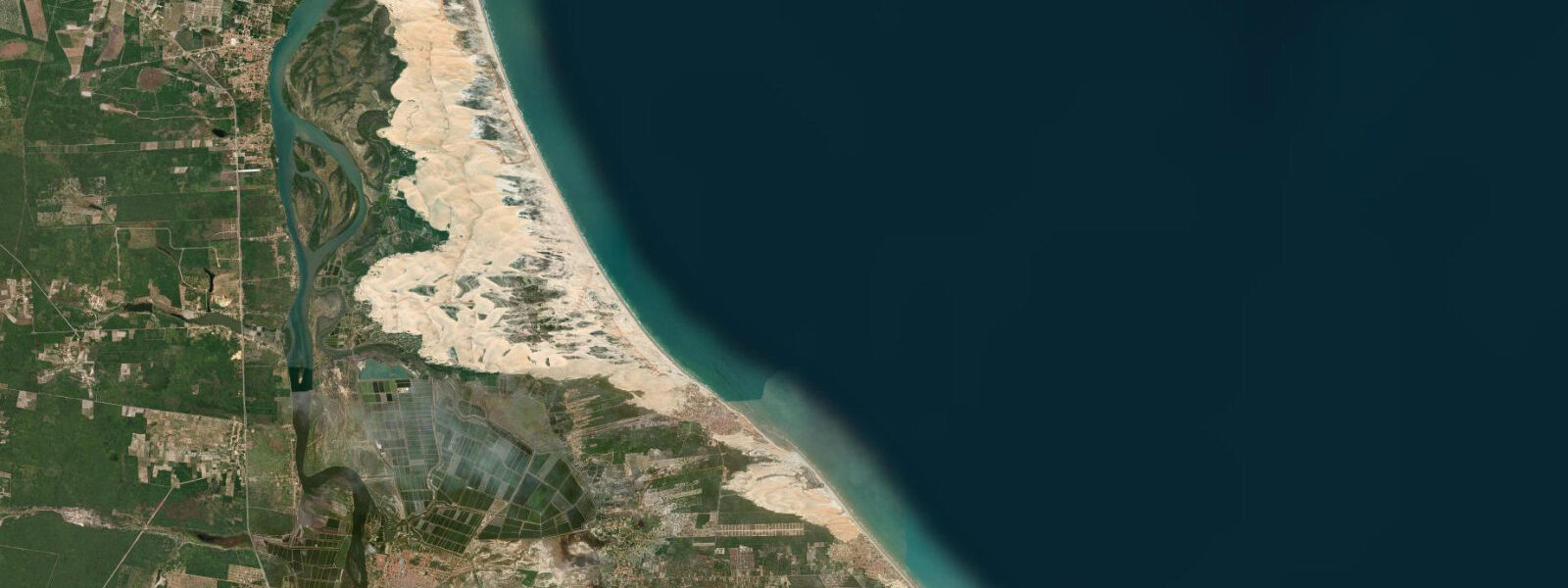
Canoa Quebrada, Ceará tide times
Canoa Quebrada, Ceará tide forecast — heights relative to MSL.
Today's tide times for Canoa Quebrada, Ceará
Tide times at Canoa Quebrada, Ceará on Monday, 3 August 2026: first low tide at 00:42, first high tide at 06:48, second low tide at 13:01, second high tide at 19:13. Sunrise 05:39, sunset 17:34.
Tide chart for Canoa Quebrada, Ceará
24-hour cosine-interpolated curve around the present moment. Heights relative to MSL. Predictions: Predictions: Open-Meteo Marine (MeteoFrance SMOC, 0.08° grid).
Sun, moon and conditions on Mon 03 Aug
Snapshot at build time — refreshes daily. Sea state from Open-Meteo Marine.
Highs and lows next 7 days
Every predicted high and low for the next week, with the daily tidal coefficient (0–120; higher = bigger swing, > 95 means stronger currents).
Other spots nearby
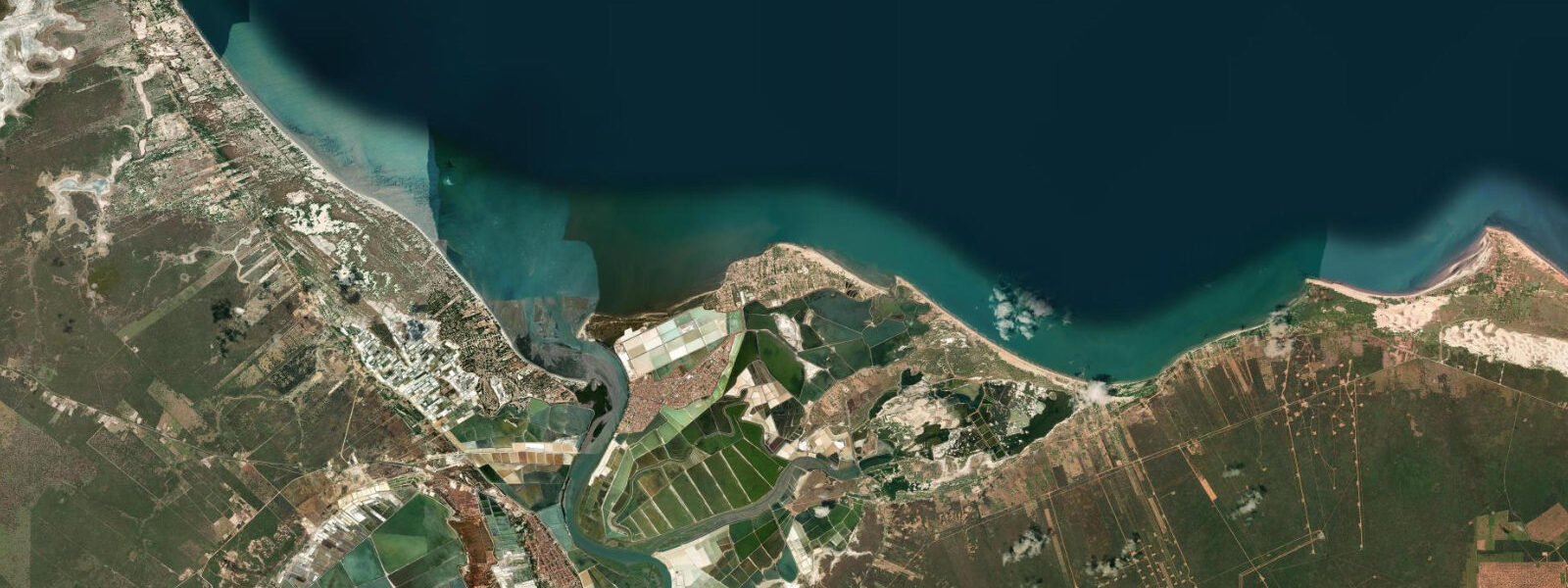
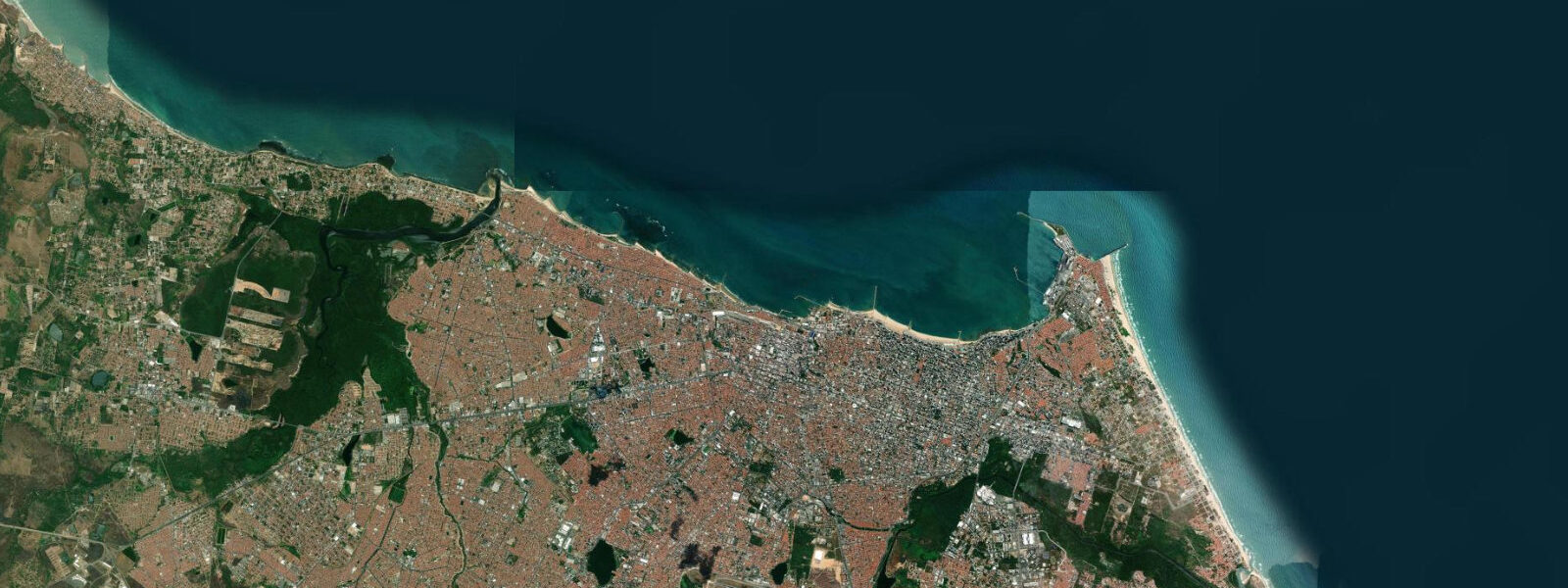
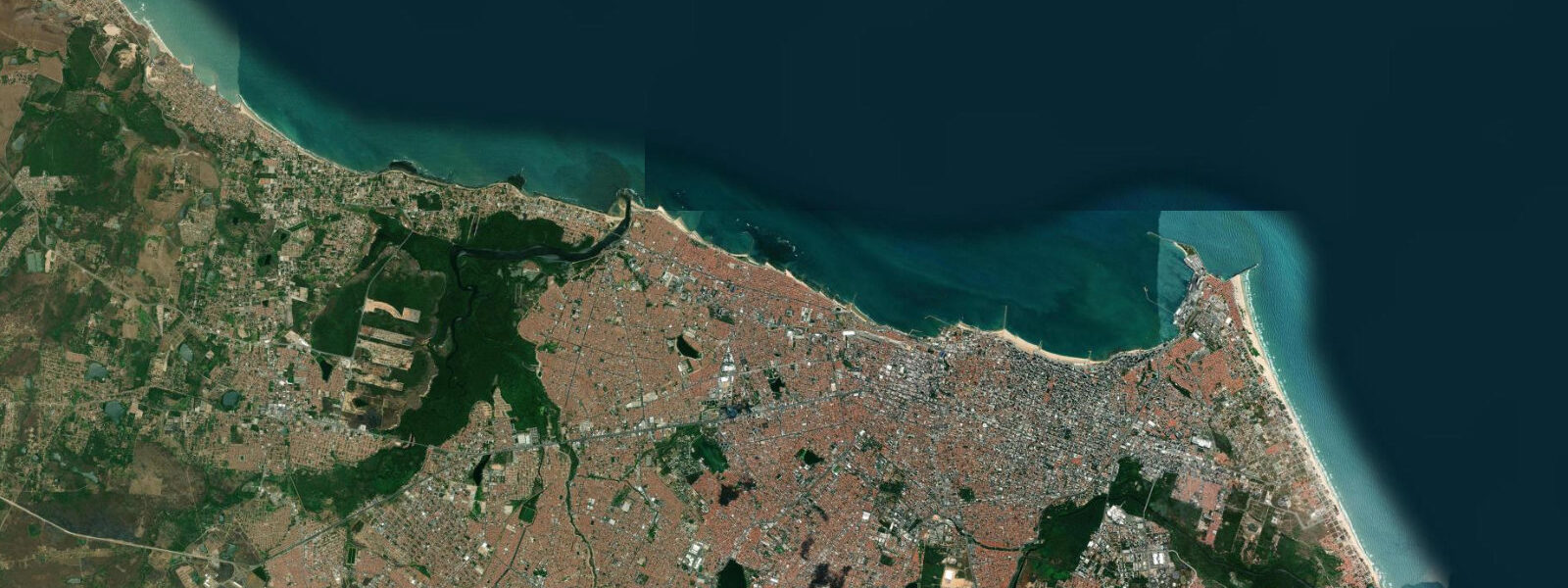
The three closest curated TideTurtle locations to Canoa Quebrada, Ceará, measured by great-circle distance.
Today's solunar windows
Solunar tradition: major periods are the ≈3h windows around moon transit and opposition; minor are ≈2h around moonrise and moonset. Pair with the local tide stage and wind for the best read.
Cycle dates near Canoa Quebrada, Ceará
Last spring tide on Sun 02 Aug (range 2.2m). Next spring tide on Sat 08 Aug (range 2.0m). Next neap on Wed 05 Aug.
Spring tides cluster around new and full moons (biggest swings). Neap tides land on quarter moons (smallest swings). See the spring tide and neap tide glossary entries for the why.
About tides at Canoa Quebrada, Ceará
A short guide to the coastline at Canoa Quebrada, Ceará — geography, sea state, and what the tide is actually doing under your feet.
Canoa Quebrada is a 3-kilometre crescent bay on the northeast Ceará coast, backed by sandstone cliffs that run ochre, terracotta, and rust-red depending on the hour and the angle of the sun. The cliffs reach 30 metres at the highest section near the village, eroded into columns and alcoves that trap shadow in the morning and glow in the afternoon. The village sits on top, accessed from the beach by a path cut into the cliff face. Aracati, the nearest town with a pharmacy, hospital, and bus connections, is 13 kilometres west.
The northeast Brazil tidal regime is Atlantic semidiurnal, with a mean spring range of 2.0 to 3.0 metres — one of the larger tidal ranges on the Brazilian coast. A spring low water at Canoa Quebrada typically reaches 0.2 to 0.3 m; high water on the same tide reaches 2.5 to 2.8 m. The practical consequence for the beach is significant: at low spring water, the beach extends 80 to 120 metres seaward from the base of the cliffs, and the entire 3-kilometre crescent is accessible on foot along dry sand. At high spring water, the surf reaches the base of the cliffs at several points, and passage along the beach requires timing.
Jangadas — the traditional flat-bottomed sail-and-paddle fishing rafts of the northeast — still operate from Canoa Quebrada, though most now have small outboard motors supplementing or replacing the sail. The jangadas launch at first light, typically 05:00 to 05:30, catching the last of the ebb or the start of the flood to clear the surf zone with minimum effort. Captains read the wave rhythm and the tidal state together; a jangada launching into a 1.5 m shore break on an outgoing tide uses a different line than the same launch on a calm morning. Return is usually in the early afternoon, 13:00 to 15:00, when the sea breeze has built and the catch is sold directly from the boats on the sand. Watching the jangadas work the surf on their return is one of the consistent spectacles of Canoa Quebrada — the rafts use the wave energy to slide up the beach rather than fighting into the shallower water.
The trade winds blow consistently from the east-northeast year-round at Canoa Quebrada — typically 15 to 25 knots in the afternoon. The same wind that shapes the cliff face, slowly carving it back by carrying sand against the stone, makes this one of the main kitesurfing and windsurfing locations in Ceará. The downwinder run along the coast in either direction from Canoa Quebrada is popular with more experienced kiters. The beach's crescent shape and the consistent wind direction create a recoverable zone at the western end of the bay where learners can depower safely.
Morro do Careca — the bald headland at the east end of the bay — is the canonical photography position. From the top, the ochre cliff line, the arc of white surf, and the full 3-kilometre beach width are visible in a single frame. The best photographic light is dawn on a clear day at low spring water: the cliffs catch the early horizontal light from the east, the beach is at maximum width, and the jangadas are launching into the surf. The combination runs perhaps 30 minutes before the light rises too high to be interesting. Afternoon low water produces the same beach width but the light on the cliffs is flat by mid-afternoon.
Praia do Leblon is the quieter south end of the bay, past the main concentration of beach bars and kite schools. The name is a nod to the famous Rio beach — the comparison is the quieter, less commercial end, not the geography. At low water, Leblon is the widest part of the beach because the cliff geometry allows more sand to deposit there. Families who want space set up in this section.
Rua Broadway is the main street of the cliff-top village, named by the hippie travellers who settled Canoa Quebrada in the 1970s when it was accessible only by rough track from Aracati. The name has stuck. The street runs parallel to the cliff edge and has the concentration of pousadas, restaurants, and shops.
Tide data for Canoa Quebrada, Ceará comes from the Open-Meteo Marine API, a gridded model product. Timing accuracy is ±45 minutes, height accuracy ±0.3 m — usable for trip planning, not for navigation.
Tide questions about Canoa Quebrada, Ceará
Quick answers to the most common questions about tide times, range, and water access at Canoa Quebrada, Ceará.
How much does the tide change the beach width at Canoa Quebrada?
At low spring water, the beach at Canoa Quebrada extends 80 to 120 metres seaward from the base of the cliffs — the full 3-kilometre crescent is walkable on dry sand. At high spring water, the surf reaches the cliff base at several sections and passage along the beach requires timing or is impassable at the narrowest points. The mean spring range is 2.0 to 3.0 metres, making it one of the larger tidal ranges on the Brazilian Atlantic coast. Planning beach walks, cliff-base access, and photography around a low spring tide makes a concrete difference to what is accessible.
When do the jangada fishing rafts launch and return at Canoa Quebrada?
Jangadas typically launch between 05:00 and 05:30, catching the first usable light and working the tidal state to clear the surf zone with the ebb or the start of the flood. Captains read the wave interval and the current together before launching — the timing shifts by 45 to 50 minutes each day as the tide cycles. Return is usually 13:00 to 15:00 when the afternoon sea breeze has built and the fish market on the beach is most active. The jangadas use the incoming wave energy to slide up the sand rather than fighting through the break — watching the landing technique is worth the wait.
What is the best time and position to photograph the Canoa Quebrada cliffs?
Morro do Careca, the east headland, gives the full composition — cliff line, beach arc, surf fringe. The best window is dawn on a clear day at low spring water: the early horizontal light from the east catches the ochre and terracotta cliff face, and the beach is at maximum width. This window lasts around 30 minutes before the light rises and the colour flattens. Check the tide table the evening before and aim to be on the headland 20 minutes before sunrise. Afternoon low water gives the same beach width but the cliff light is less interesting after midday.
Is Canoa Quebrada suitable for kitesurfing beginners?
The consistent east-northeast trade wind (15 to 25 knots in the afternoon year-round) and the crescent bay geometry make Canoa Quebrada a functional location for beginner kite lessons, though it is not as protected as purpose-built flat-water lagoons like Lagoa da Conceição in Florianópolis or Cumbuco near Fortaleza. The western end of the bay provides a recovery zone downwind of the main kite area. Several schools on the beach offer IKO-certified courses. The 2.0 to 3.0 m tidal range affects the beach width available for launching and landing — check whether the school operates at low or high water and which state is more appropriate for your lesson.
How do I get from Aracati to Canoa Quebrada, and what is in Aracati?
Aracati is 13 kilometres west of Canoa Quebrada, connected by a paved road. Mototaxis and shared taxis (vans) run the route throughout the day; the journey takes 20 to 30 minutes. Aracati is the nearest town with a full hospital, pharmacy, bank branches, and intercity bus services — the village of Canoa Quebrada has limited services. Aracati also has the most intact baroque colonial architecture in Ceará, centred on the Rua Coronel Alexanzito, including the Igreja Matriz de Nossa Senhora do Rosário (18th century). Visiting Aracati for half a day and returning to Canoa Quebrada for sunset is a standard combination.
7-day tide table — Canoa Quebrada, Ceará
Heights relative to MSL. Predictions: Open-Meteo Marine (MeteoFrance SMOC, 0.08° grid) — heights relative to MSL (not chart datum / LAT). Model-derived.
| Day | Type | Time | Height |
|---|---|---|---|
| Mon 03 Aug | Low | 00:42 | -0.8m |
| High | 06:48 | 1.4m | |
| Low | 13:01 | -0.8m | |
| High | 19:13 | 1.3m | |
| Tue 04 Aug | Low | 01:27 | -0.8m |
| High | 07:36 | 1.2m | |
| Low | 13:47 | -0.7m | |
| High | 19:58 | 1.2m | |
| Wed 05 Aug | Low | 02:18 | -0.7m |
| High | 20:52 | 1.2m | |
| Thu 06 Aug | Low | 03:20 | -0.6m |
| High | 09:35 | 0.9m | |
| Low | 15:44 | -0.4m | |
| High | 21:56 | 1.1m | |
| Fri 07 Aug | Low | 04:35 | -0.6m |
| High | 10:51 | 0.9m | |
| Low | 16:58 | -0.4m | |
| High | 23:13 | 1.1m | |
| Sat 08 Aug | Low | 05:53 | -0.6m |
| High | 12:06 | 0.9m | |
| Low | 18:15 | -0.5m | |
| Sun 09 Aug | High | 00:25 | 1.2m |
| Low | 07:04 | -0.8m | |
| High | 13:16 | 1.1m | |
| Low | 19:23 | -0.6m |