Hoi An, Central Vietnam tide times
Hoi An, Central Vietnam tide forecast — heights relative to MSL.
Today's tide times for Hoi An, Central Vietnam
Tide times at Hoi An, Central Vietnam on Monday, 3 August 2026: first low tide at 07:00, first high tide at 11:45, second low tide at 18:42. Sunrise 05:28, sunset 18:17.
Tide chart for Hoi An, Central Vietnam
24-hour cosine-interpolated curve around the present moment. Heights relative to MSL. Predictions: Predictions: Open-Meteo Marine (MeteoFrance SMOC, 0.08° grid).
Sun, moon and conditions on Mon 03 Aug
Snapshot at build time — refreshes daily. Sea state from Open-Meteo Marine.
Highs and lows next 7 days
Every predicted high and low for the next week, with the daily tidal coefficient (0–120; higher = bigger swing, > 95 means stronger currents).
Other spots nearby
The three closest curated TideTurtle locations to Hoi An, Central Vietnam, measured by great-circle distance.
Today's solunar windows
Solunar tradition: major periods are the ≈3h windows around moon transit and opposition; minor are ≈2h around moonrise and moonset. Pair with the local tide stage and wind for the best read.
About tides at Hoi An, Central Vietnam
A short guide to the coastline at Hoi An, Central Vietnam — geography, sea state, and what the tide is actually doing under your feet.
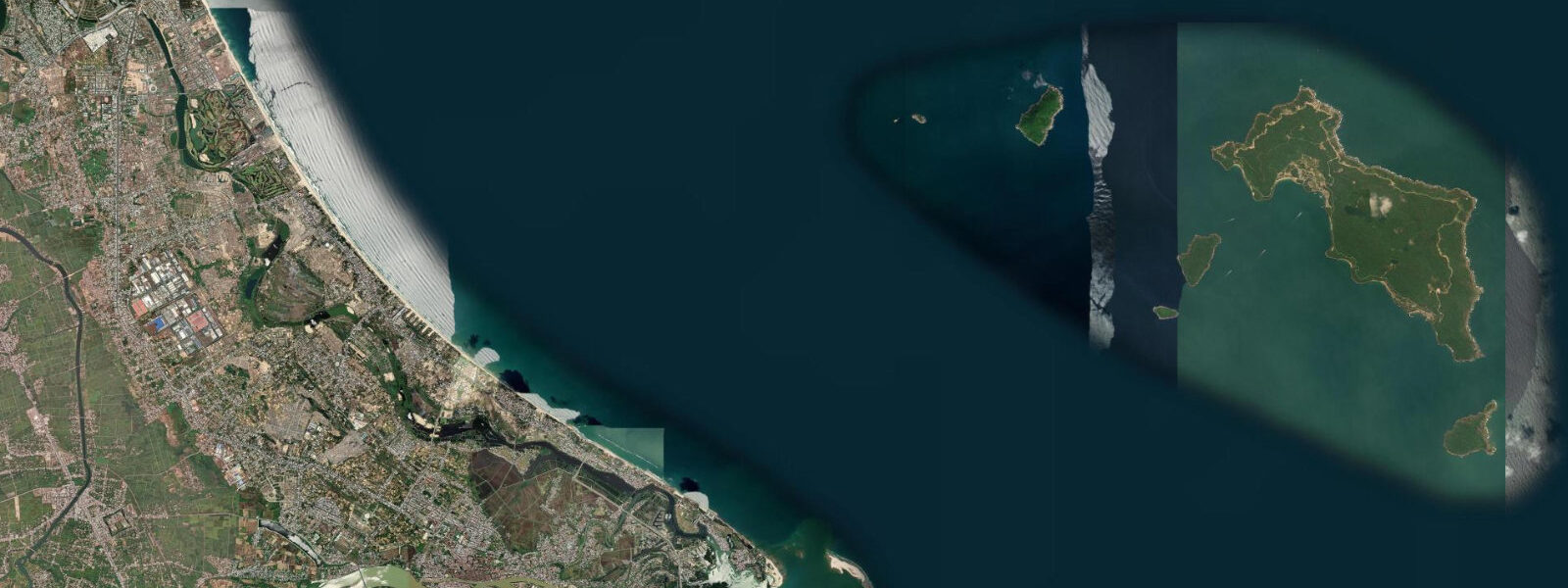
Hoi An sits on the Thu Bon River estuary in Quảng Nam province, the ancient merchant quarter a few minutes' walk from the water. The South China Sea is 3 km east at Cua Dai Beach; the tidal signal travels that entire distance up the river channel and shapes almost every water-based activity in town.
The tidal pattern here is mixed semidiurnal with a pronounced diurnal inequality — in practice that means two highs and two lows per day, but one high is noticeably taller than the other. Mean spring range at the Thu Bon mouth is 0.5–1.0 m, unusually small for the South China Sea. The shallow continental shelf geometry at this latitude compresses the tidal amplitude; what you lose in range you feel in current. The flood tide pushes into the river mouth from roughly 0800 to 1400 local time on a typical day, and the ebb drains back through the late afternoon and evening. The timing shifts by 45–50 minutes each day, so checking the day's specific table matters.
For anglers and boat handlers, the current direction in the Thu Bon channel is the number that counts. At flood, upwelling from the sea pushes nutrients into the lower estuary and concentrates fish near the bends between the Ancient Town and Cua Dai. Local fishermen using hand lines and nets from small motorised skiffs time their sets to the last hour of flood and the first hour of ebb — the transition period when baitfish school near the surface. The traditional thuyền thúng, round coracle-style basket boats woven from bamboo and sealed with pitch, launch from the villages between the Ancient Town and the beach. Their low draft means they handle any tide state, but returns to shore go with the ebb when the work is done.
Cua Dai Beach is the direct coastal face of the estuary. The beach has lost more than 100 m of width since 2010 — upstream dams on the Thu Bon River system cut off the sand supply that historically replenished the shore. At high tide the water now reaches the base of the remaining seawall and the beach can all but disappear. At low tide, a 40–60 m strip of wet sand exposes, wide enough for swimming and walking but not the broad beach the town was known for a decade ago. Photography of the remaining beach is better timed to the two hours around low water, when the sand is exposed and the light on the dune remnants is clean. Sunrise shoots work well from the beach — face east toward open water.
An Bang Beach, 3 km north of Cua Dai along the coast road, is slightly more sheltered and loses less width at high water because it sits in a minor embayment. Families with young children often prefer it for that reason — the depth gradient is gentler and the beach width more consistent across the tidal cycle.
The Cham Islands — Cù Lao Chàm — lie 18 km offshore as part of a UNESCO Biosphere Reserve. Speedboats make the crossing in 20 minutes from Cua Dai pier; wooden tourist boats take 45 minutes. Departure times are set around the morning flood tide window, typically 0800–0830, which gives calmer conditions outbound. The anchor grounds and snorkel sites around the islands have depths of 3–8 m, and low tide exposes coral heads that are navigable for wooden boats but require care from anything drawing more than a metre. Return departures from the islands cluster around 1200–1300 before the afternoon ebb strengthens and the chop builds on the crossing.
The monthly Lantern Festival — held on the 14th night of each lunar month when the moon is full — turns the Ancient Town electric-light-free after dark. Paper lanterns floated on the Thu Bon River drift with whatever the tidal current is doing at the time. In the flood window the lanterns move upriver, inland, past the old warehouses and away from the Japanese Covered Bridge. On the ebb they reverse toward the sea. The direction is uncontrolled and adds to the spectacle — check whether the festival night falls in a flood or ebb window if you want to photograph lanterns drifting in a specific direction.
The Japanese Covered Bridge at the western edge of the Ancient Town is the symbolic centre of Hoi An and sits right on the river bank. At the highest tides of the spring cycle, river levels at the bridge rise noticeably — not dangerously, but the stone steps at the riverbank access points go underwater. This is worth knowing for photographers setting up low-angle shots of the bridge reflected in the water.
Tide data for Hoi An, Central Vietnam comes from the Open-Meteo Marine API, a gridded model product. Timing accuracy is ±45 minutes, height accuracy ±0.3 m — usable for trip planning, not for navigation.
Tide questions about Hoi An, Central Vietnam
Quick answers to the most common questions about tide times, range, and water access at Hoi An, Central Vietnam.
When is the best time of day to visit Cua Dai Beach at Hoi An?
Two hours either side of low tide gives you the most beach. Because Cua Dai has lost over 100 m of width to erosion since 2010, at high tide the water reaches close to the seawall and the exposed sand is minimal. At low water a 40–60 m strip opens up — enough for a comfortable walk or swim. The tidal turn at Cua Dai happens roughly 1–2 hours after the tidal turn at the Thu Bon River mouth, and it shifts by 45–50 minutes each day, so check a current tide table rather than assuming a fixed hour. Sunrise at low water is particularly clean for photography: face east toward open water with the wet sand reflecting the light.
What time do boats depart for the Cham Islands from Hoi An?
Boats to Cù Lao Chàm depart from Cua Dai pier, typically between 0800 and 0830. That window aligns with the morning flood tide, which keeps the crossing calmer. Speedboats take around 20 minutes; wooden tourist boats take closer to 45. Return trips cluster around 1200–1300 to get back before the afternoon ebb strengthens and sea state deteriorates. Low tide around the islands exposes coral heads in the 3–8 m anchor grounds — wooden boats with local knowledge navigate these without difficulty, but boat operators adjust departure timing when tidal windows shift significantly. Check the day's schedule at Cua Dai pier the morning before travel.
Which direction do the lanterns float during the Hoi An Lantern Festival?
It depends on the tidal current at the time the lanterns are released. The Thu Bon River at Hoi An Ancient Town experiences a flood current pushing upriver (inland) roughly 0800–1400 and an ebb current draining toward the sea through the late afternoon and evening. The Lantern Festival is held on the 14th night of each lunar month. If the release happens during a flood window, lanterns drift upstream, past the old merchant warehouses. During ebb they move toward the river mouth. The exact timing shifts each month, so the direction is genuinely uncontrolled. Check a tide table for the festival night if direction matters for photography composition.
What tidal conditions do the basket-boat fishermen at Hoi An use?
The thuyền thúng — traditional round basket boats made from woven bamboo — launch from fishing villages between Hoi An Ancient Town and Cua Dai Beach. Fishermen using them as tenders to larger vessels, and as independent fishing platforms, favour the transition period around tidal turns: the last hour of the flood tide and the first hour of ebb. That is when baitfish school near the surface in the lower Thu Bon estuary and fishing is most productive. The basket boats draw very little water so they can operate at any tide state, but the tidal current itself governs where and when fish concentrate. Afternoon returns tend to ride the ebb current back toward shore.
How small is the tidal range at Hoi An compared to other Vietnamese beaches?
The mean spring tidal range at the Thu Bon River mouth near Hoi An is 0.5–1.0 m — notably smaller than most of Vietnam's central coast beaches. The shallow continental shelf geometry at this latitude compresses tidal amplitude. By comparison, Quy Nhon 250 km south runs 1.0–1.5 m spring range, and Long Hai in the south sees 2.0–3.0 m. At Hoi An the small range means tidal height differences have a more modest effect on beach width than at larger-range sites, but the tidal current in the Thu Bon channel is still the primary force for anyone navigating or fishing the river. For beach access, the erosion-driven width loss at Cua Dai matters more than the range.
8-day tide table — Hoi An, Central Vietnam
Heights relative to MSL. Predictions: Open-Meteo Marine (MeteoFrance SMOC, 0.08° grid) — heights relative to MSL (not chart datum / LAT). Model-derived.
| Day | Type | Time | Height |
|---|---|---|---|
| Mon 03 Aug | Low | 07:00 | 0.7m |
| High | 11:45 | 0.9m | |
| Low | 18:42 | 0.3m | |
| Tue 04 Aug | High | 13:00 | 0.8m |
| Low | 18:50 | 0.4m | |
| Wed 05 Aug | High | 01:42 | 0.9m |
| Low | 19:00 | 0.5m | |
| Thu 06 Aug | High | 02:06 | 1.0m |
| Low | 09:45 | 0.4m | |
| High | 16:00 | 0.7m | |
| Low | 18:50 | 0.6m | |
| Fri 07 Aug | High | 02:42 | 1.1m |
| Low | 11:00 | 0.3m | |
| Sat 08 Aug | — | ||
| Sun 09 Aug | — | ||
| Mon 10 Aug | High | 05:18 | 1.2m |