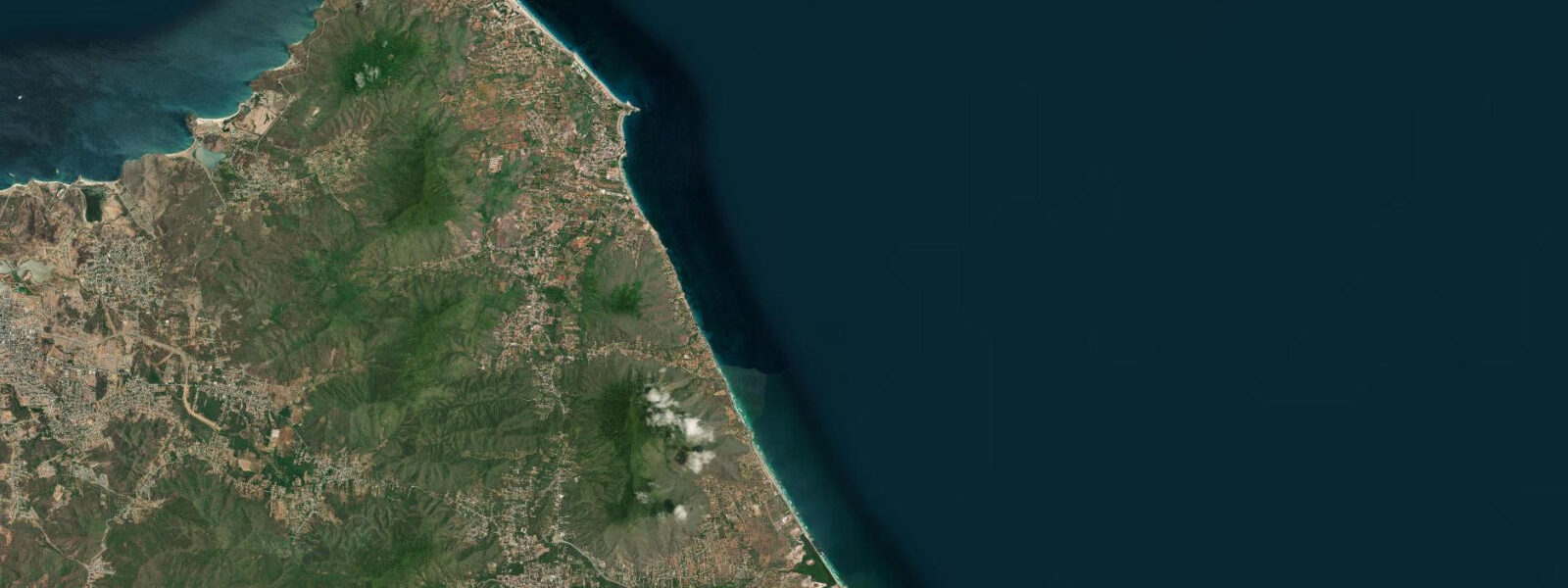
Playa El Yaque, Margarita Island tide times
Playa El Yaque, Margarita Island tide forecast — heights relative to MSL.
Today's tide times for Playa El Yaque, Margarita Island
Tide times at Playa El Yaque, Margarita Island on Tuesday, 4 August 2026: first low tide at 01:10am, first high tide at 04:20am, second low tide at 10:18am, second high tide at 05:18pm. Sunrise 06:04am, sunset 06:38pm.
Tide chart for Playa El Yaque, Margarita Island
24-hour cosine-interpolated curve around the present moment. Heights relative to MSL. Predictions: Predictions: Open-Meteo Marine (MeteoFrance SMOC, 0.08° grid).
Sun, moon and conditions on Tue 04 Aug
Snapshot at build time — refreshes daily. Sea state from Open-Meteo Marine.
Highs and lows next 7 days
Every predicted high and low for the next week, with the daily tidal coefficient (0–120; higher = bigger swing, > 95 means stronger currents).
Other spots nearby
The three closest curated TideTurtle locations to Playa El Yaque, Margarita Island, measured by great-circle distance.
Today's solunar windows
Solunar tradition: major periods are the ≈3h windows around moon transit and opposition; minor are ≈2h around moonrise and moonset. Pair with the local tide stage and wind for the best read.
Cycle dates near Playa El Yaque, Margarita Island
Next spring tide on Sat 08 Aug (range 0.6m). Next neap on Wed 05 Aug.
Spring tides cluster around new and full moons (biggest swings). Neap tides land on quarter moons (smallest swings). See the spring tide and neap tide glossary entries for the why.
About tides at Playa El Yaque, Margarita Island
A short guide to the coastline at Playa El Yaque, Margarita Island — geography, sea state, and what the tide is actually doing under your feet.
Playa El Yaque occupies the south-central coast of Isla de Margarita, facing the Canal de Coche strait. It is one of the most recognised kitesurfing and windsurfing venues in South America, with the consistent ENE trade winds that define Caribbean Venezuela driving steady 15–25 knot winds across the shallow tidal flat for 8–9 months of the year. The beach is flat and open, the water warm and turquoise, and the approach from the airport in Porlamar takes 15 minutes — no boat transfer, no jungle road, just a short drive to the kite beach.
The tidal pattern is microtidal Caribbean: spring range 20–40 cm, mixed semidiurnal, with irregular diurnal inequality. Open-Meteo Marine provides the forecast data — timing accuracy ±45 minutes, height accuracy ±0.2–0.3 m. The shallow tidal flat that extends 200–400 m from the beach at lower water states is one of the key assets for beginner kiters and windsurfers: a wipeout means shallow water to stand in rather than a swim.
For kiters and windsurfers, the optimal season is December through August when the trades are most consistent. The wind window at El Yaque is well established: steady thermal reinforcement after 11 am builds the wind progressively to afternoon peaks. September and October see lighter and less consistent wind as the trade pattern weakens seasonally. A school infrastructure of rental shops, instructors, and repair facilities has built up along the beach road — this is not a remote spot requiring self-sufficiency.
For anglers, the shallow flat adjacent to the kite beach is less productive than the rocky points and deeper water either side of the bay. The eastern headland, where the flat ends and the rocky substrate begins, holds snapper, jack, and occasionally tarpon. Fishing from shore is possible at dawn and dusk before the kite beach activates. Boat fishing from Porlamar accesses the deeper Caribbean waters north of the island.
Beach families find El Yaque a straightforward beach day: calm, warm, shallow water inside the flat, facilities including restaurants and accommodation along the beach road. The kite activity on the water adds visual interest without danger if families stay in the clearly demarcated swimming zones. The downside is that the beach can feel crowded on weekends and during school holidays.
Photographers get clean action frames of kiters against the flat horizon and the mainland mountains of Sucre state visible to the south across the canal. The light from the east in the morning is sharp and contrast-heavy on the water surface. At dusk the sky above the Coche island to the west can be spectacular.
Tide questions about Playa El Yaque, Margarita Island
Quick answers to the most common questions about tide times, range, and water access at Playa El Yaque, Margarita Island.
What makes El Yaque one of the world's best kitesurfing spots?
Three factors converge: the ENE trade winds are consistent (15–25 knots for 8–9 months), the water is shallow (0.3–1.5 m on the tidal flat) and warm (26–28°C year-round), and the logistics are simple — the beach is 15 minutes from the international airport at Porlamar with full school and rental infrastructure on-site. The wind accelerates between Margarita and the mainland due to the channel effect of the Canal de Coche, adding velocity to the already-reliable trade flow. The combination of shallow flat, consistent wind, and good infrastructure is rare globally, which is why El Yaque draws kiters from Europe and North America as a destination session rather than just a stopover.
What is the tidal range at El Yaque and how does it affect the flat?
Spring tidal range is 20–40 cm — microtidal with mixed semidiurnal pattern and notable diurnal inequality. The tidal flat that extends from the beach can be 0.3 m deep at higher low water and barely 0.05 m at the lowest astronomical tides, effectively becoming exposed ground. Most kitesurfing takes place on the flat when it has 0.3–1.0 m of water — conditions that match the higher portions of the tidal cycle. Open-Meteo Marine provides forecast data with ±45-minute timing accuracy and ±0.2–0.3 m height accuracy. Check the forecast before sessions when you need to know whether the flat will be deep enough for waterstarting or too shallow to ride safely.
When is the best time of year to kitesurf at El Yaque?
December through August is the primary season, with the most consistent wind. January through April is peak — steady trades, less rain, and the best odds of 10+ consecutive days of good wind. The flat is at its clearest (least sediment) in the dry months of January–April. September and October are the weakest wind months as the trade pattern shifts with the Inter-Tropical Convergence Zone moving south — expect lighter, gustier conditions. November marks the return of the trades and conditions improve quickly. The beach infrastructure (schools, rental shops, accommodation) operates year-round.
Is El Yaque suitable for beginner kiters?
El Yaque is considered one of the better learning environments in the Caribbean specifically because of the shallow flat. A beginner who loses control and crashes into the water 100–200 m from shore can stand up in waist-deep or knee-deep water rather than having to swim in or be rescued. Multiple IKO-certified schools operate on the beach with certified instructors and quality rental gear. Beginners should book lessons in advance during January–April peak season when the beach is busiest. The flat does have shallow coral patches at the eastern margin — instructors mark these during lessons and the main flat is sand-bottomed.
How do I travel to El Yaque from outside Venezuela?
The Santiago Mariño Caribbean International Airport (PMV) at Porlamar receives domestic flights from Caracas (approximately 1 hour) and occasional international charter services. El Yaque is 15 minutes by taxi from the airport. The ferry from Cumaná on the mainland is an alternative for budget travellers — the crossing takes 3–4 hours to Punta de Piedras, then a 30-minute drive to El Yaque. Note that entry requirements, currency, and logistics for travel to Venezuela require current, country-specific research before planning; conditions change and consular advisories should be checked. The kite schools at El Yaque can often assist with current on-the-ground logistics.
7-day tide table — Playa El Yaque, Margarita Island
Heights relative to MSL. Predictions: Open-Meteo Marine (MeteoFrance SMOC, 0.08° grid) — heights relative to MSL (not chart datum / LAT). Model-derived.
| Day | Type | Time | Height |
|---|---|---|---|
| Tue 04 Aug | Low | 01:10 | -0.1m |
| High | 04:20 | -0.0m | |
| Low | 10:18 | -0.2m | |
| High | 17:18 | 0.1m | |
| Wed 05 Aug | Low | 02:15 | -0.2m |
| High | 05:10 | -0.1m | |
| Low | 10:50 | -0.2m | |
| High | 18:06 | 0.1m | |
| Thu 06 Aug | Low | 03:42 | -0.3m |
| High | 06:10 | -0.2m | |
| High | 09:10 | -0.2m | |
| Fri 07 Aug | Low | 04:45 | -0.3m |
| High | 10:06 | -0.2m | |
| Low | 12:00 | -0.2m | |
| High | 20:00 | 0.1m | |
| Sat 08 Aug | Low | 05:45 | -0.4m |
| High | 11:15 | -0.2m | |
| Low | 12:42 | -0.2m | |
| High | 21:45 | 0.2m | |
| Sun 09 Aug | Low | 06:22 | -0.4m |
| High | 12:15 | -0.2m | |
| Mon 10 Aug | Low | 07:10 | -0.4m |
| High | 19:00 | -0.1m |