Big Bay tide times
Big Bay tide forecast — heights relative to MSL.
Today's tide times for Big Bay
Tide times at Big Bay on Tuesday, 4 August 2026: first high tide at 11:00am, first low tide at 01:18pm, second high tide at 08:03pm. Sunrise 06:14am, sunset 05:43pm.
Tide chart for Big Bay
24-hour cosine-interpolated curve around the present moment. Heights relative to MSL. Predictions: Predictions: Open-Meteo Marine (MeteoFrance SMOC, 0.08° grid).
Sun, moon and conditions on Tue 04 Aug
Snapshot at build time — refreshes daily. Sea state from Open-Meteo Marine.
Highs and lows next 7 days
Every predicted high and low for the next week, with the daily tidal coefficient (0–120; higher = bigger swing, > 95 means stronger currents).
Other spots nearby
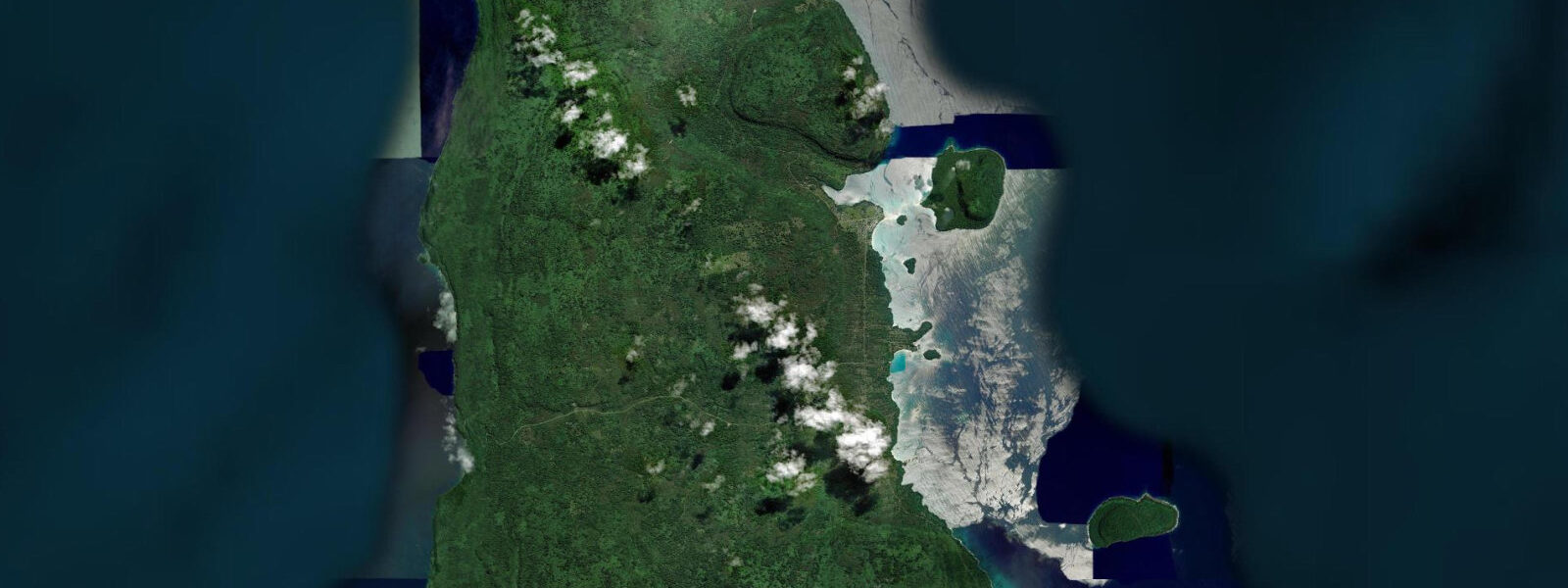
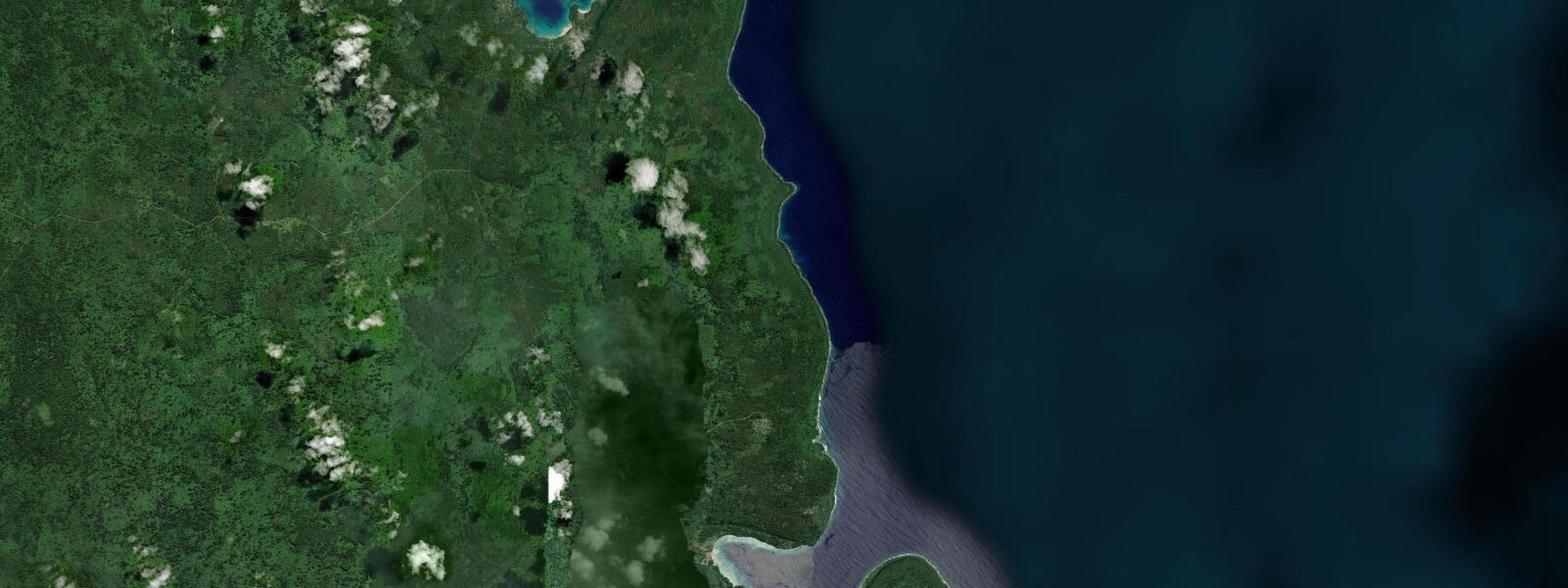
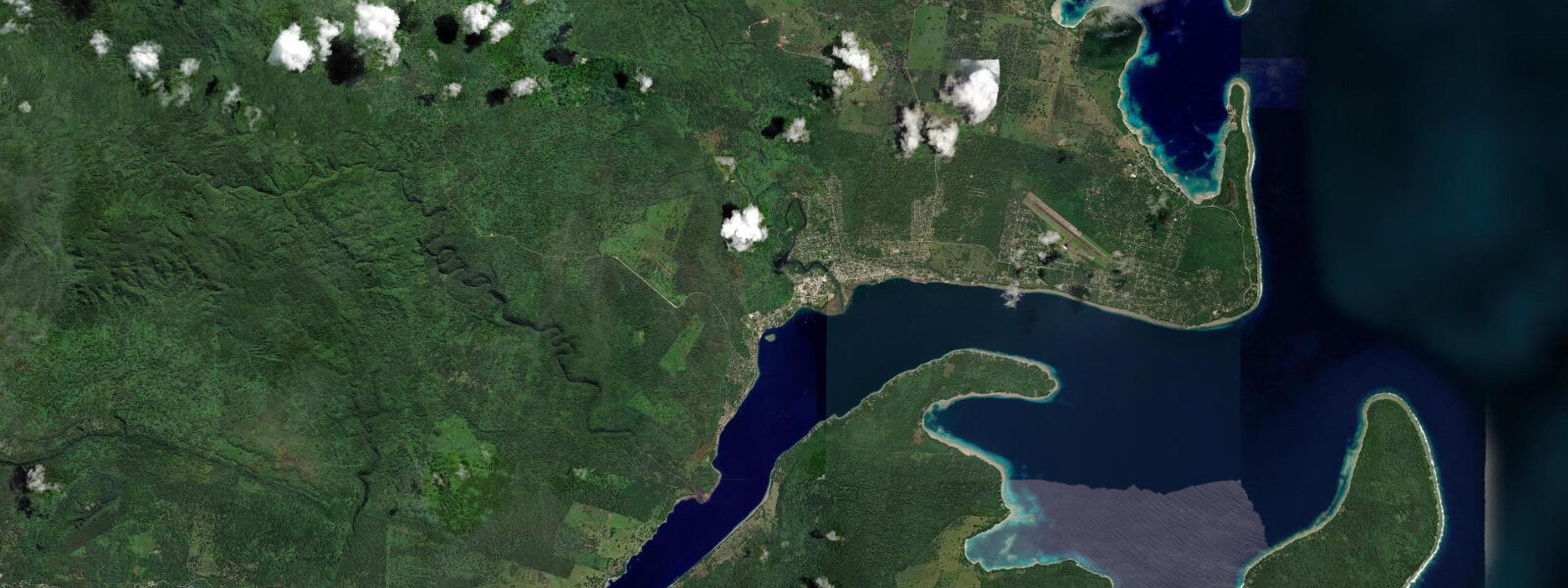
The three closest curated TideTurtle locations to Big Bay, measured by great-circle distance.
Today's solunar windows
Solunar tradition: major periods are the ≈3h windows around moon transit and opposition; minor are ≈2h around moonrise and moonset. Pair with the local tide stage and wind for the best read.
Cycle dates near Big Bay
Last spring tide on Tue 04 Aug (range 0.8m). Next spring tide on Mon 10 Aug (range 1.5m). Next neap on Fri 07 Aug.
Spring tides cluster around new and full moons (biggest swings). Neap tides land on quarter moons (smallest swings). See the spring tide and neap tide glossary entries for the why.
About tides at Big Bay
A short guide to the coastline at Big Bay — geography, sea state, and what the tide is actually doing under your feet.
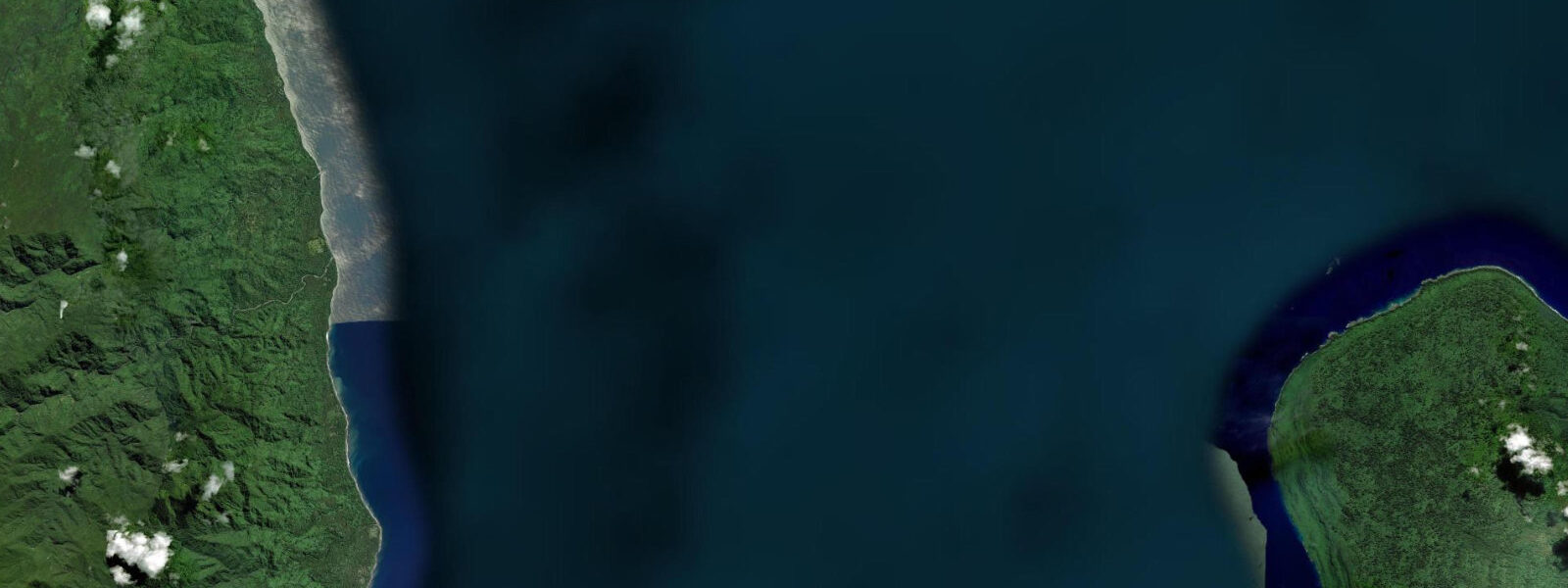
Big Bay is the large open bay on the northeast coast of Espiritu Santo, Vanuatu's largest island. It faces northeast into the Coral Sea and is bounded on its eastern shore by the forests of the Santo interior — one of the largest intact tropical rainforest blocks in the Pacific islands. The bay is not a destination in the conventional sense; it has no resort infrastructure, and access is by rough track from Luganville or by small boat around the northern cape. That remoteness is also why it is worth the effort.
Tides at Big Bay are mixed semidiurnal with a range of 1.0 to 1.5 metres. Two unequal highs and two unequal lows each day create a variable tidal rhythm. Open-Meteo Marine forecasts for this part of the Coral Sea are accurate to ±45 minutes on timing and ±0.2 to 0.3 metres on height. For practical purposes, the tidal variation matters most for small boat landings on Big Bay's fringing reef — the inner reef flat at the river mouths on the bay's eastern shore exposes at low water and can trap shallow-draft vessels. The safest window for beach landings on the inner bay is one to two hours either side of high water.
The bay is best known among divers for its proximity to the WWII history concentrated around Luganville, about 80 kilometres south. The SS President Coolidge — a 22,000-tonne American luxury liner converted to a troopship and sunk in October 1942 after striking two US defensive mines in the approach to Luganville — lies in 21 to 67 metres just off the shore at Luganville, not directly in Big Bay. It is the world's largest accessible WWII dive wreck by displacement and one of the most detailed: intact guns, cargo, vehicles, personal effects, and the famous figurine of The Lady in first-class salon, all penetrable by recreational divers with an open-water certification. Big Bay itself has its own wreck sites from WWII aircraft that went down in the northeast approaches to Santo; these are in shallower water (8 to 25 metres) and less visited.
The northeast Santo coast approaching Big Bay carries an intact fringing reef that has been largely untouched by commercial fishing pressure — the remoteness that keeps tourists away also keeps trawlers away. Reef fish density is noticeably higher here than on the more accessible reefs around Luganville. Visibility peaks in June to August when trade wind conditions are established and coastal runoff is minimal after the dry season sets in. Dive sites inside Big Bay's northern section are accessible by small boat from the nearest village or from a liveaboard based in Luganville.
The Matevulu Blue Hole and the Jordan River, inland from Big Bay's southern shore, are freshwater systems that connect indirectly to the coastal aquifer. The Blue Hole is a spring-fed freshwater pool with exceptional clarity — visibility of 30+ metres is normal — and makes for a compelling contrast with marine diving on the same day. The tidal zone here is negligible (freshwater spring, not tidal), but access tracks to both sites wash out during the wet season.
For WWII history beyond the President Coolidge, the Million Dollar Point site south of Luganville — where the US military dumped millions of dollars of equipment into the sea at the end of the war rather than hand it to the British and French colonial administration — is a shallow snorkel or easy dive site. Bulldozers, jeeps, forklifts, and ammunition cases lie in 6 to 30 metres. It is not a protected wreck site in the formal sense, which means recreational divers can surface with small items — though local operators and guides strongly discourage removal.
Luganville is the logistics base for all of this. Big Bay itself has no formal accommodation; the nearest options are the village guesthouses accessible from the northern track. Luganville has hotels, dive operators, car hire, and the island's main hospital. Air Vanuatu connects Santo Airport (IATA: SON) to Port Vila multiple times daily; flight time is 40 minutes.
Tide questions about Big Bay
Quick answers to the most common questions about tide times, range, and water access at Big Bay.
What are the best conditions for diving the SS President Coolidge near Luganville?
The President Coolidge lies in 21 to 67 metres just off Luganville's eastern shore — not directly in Big Bay, but the standard access point for divers based in the region. Tides at this part of Santo are mixed semidiurnal with a 1.0 to 1.5 metre range, and the wreck sits in relatively sheltered water where tidal current is modest (typically under 0.5 knots). The most important variable is visibility rather than tidal timing — best in June to August when Coral Sea conditions are clearest. Open-Meteo Marine forecasts timing to ±45 minutes and height to ±0.2–0.3 metres; dive operators in Luganville run two dives daily and schedule around conditions rather than strict tidal windows. The upper sections of the wreck (25–35 metres) are accessible on an open-water certification; the deep bow and engine rooms require advanced or wreck speciality credentials.
How do you access Big Bay itself from Luganville?
Big Bay is approximately 80 kilometres north of Luganville by road — a mix of sealed highway and rough 4WD track through the Santo interior and northeast coast. Drive time is two to three hours depending on conditions; the northern section of track becomes impassable in wet season rains (November to April). The alternative is by small boat around the northern cape from the east coast, a sea passage of about 50 kilometres that requires calm conditions and a seaworthy vessel. Most visitors to Big Bay come on liveaboard dive trips departing from Luganville that include Big Bay reef diving on a multi-day itinerary. Day access from Luganville by road is feasible in the dry season with a 4WD; allow a full day for the return journey.
Are Big Bay's WWII aircraft wrecks suitable for recreational divers?
The WWII aircraft wrecks in the waters off Big Bay's northern approaches lie in 8 to 25 metres — within recreational depth limits and accessible without wreck speciality certification for the shallower examples. These sites are significantly less visited than the President Coolidge, and dive operators from Luganville occasionally run them on multi-day liveaboard itineraries. The wrecks are in various states of integrity — 80 years of salt water and coral growth means structural details are blurring into reef, which some divers find adds character. Tidal current through the northeast approaches can run to 1 knot on spring tides; plan entries within 60 to 90 minutes of slack water for the most comfortable conditions. Exact site coordinates are held by local operators rather than published in open sources.
What is the Matevulu Blue Hole and how does it relate to the coast?
The Matevulu Blue Hole is a freshwater spring pool accessible from a track inland from the Big Bay coastal area, approximately 30 kilometres south of the bay itself near the Matevulu College grounds. It is spring-fed, not tidal — the water level stays relatively constant regardless of ocean tidal state. Visibility exceeds 30 metres in normal conditions, created by the deep blue of the spring column. It is swimmable and snorkellable, with large eels visible in the deeper sections. The site is a compelling complement to a marine diving day: the contrast between the blue hole's freshwater clarity and the reef's biodiversity is striking. Access tracks wash out in heavy rain; best visited May to October. A small donation to the landowners (the Matevulu College) is standard.
When is the best time of year to visit Big Bay for diving and reef snorkelling?
May to October is the reliable window. Southeast trade winds bring clear skies, lower rainfall, and the best water clarity on the reefs of northeast Santo — visibility of 25 to 35 metres on healthy reef sites is normal during this period. November to April is cyclone season; Vanuatu has been struck by several severe cyclones in recent years (including Winston-level events) and Big Bay's exposed northeast orientation makes it one of the more vulnerable stretches of Santo coastline. Beyond cyclone risk, the wet season's heavy rainfall generates coastal runoff that reduces visibility on fringing reefs to 5 to 10 metres on affected days. For the President Coolidge specifically, year-round diving is possible given its sheltered location near Luganville, but the combination of best reef visibility and most reliable flight connections from Port Vila aligns with May to October.
8-day tide table — Big Bay
Heights relative to MSL. Predictions: Open-Meteo Marine (MeteoFrance SMOC, 0.08° grid) — heights relative to MSL (not chart datum / LAT). Model-derived.
| Day | Type | Time | Height |
|---|---|---|---|
| Tue 04 Aug | High | 11:00 | 0.6m |
| Low | 13:18 | 0.4m | |
| High | 20:03 | 1.2m | |
| Wed 05 Aug | Low | 14:00 | 0.5m |
| High | 20:55 | 1.2m | |
| Thu 06 Aug | Low | 04:00 | 0.5m |
| High | 09:54 | 0.8m | |
| Low | 15:00 | 0.6m | |
| High | 22:00 | 1.2m | |
| Fri 07 Aug | Low | 05:40 | 0.4m |
| High | 12:10 | 0.8m | |
| Sat 08 Aug | Low | 07:00 | 0.3m |
| Sun 09 Aug | High | 00:45 | 1.3m |
| Low | 08:00 | 0.2m | |
| High | 14:37 | 1.0m | |
| Low | 19:37 | 0.6m | |
| Mon 10 Aug | High | 01:46 | 1.4m |
| Low | 08:51 | 0.1m | |
| High | 15:24 | 1.1m | |
| Low | 20:40 | 0.6m | |
| Tue 11 Aug | High | 02:38 | 1.5m |
| Low | 10:00 | 0.0m |