Luganville tide times
Luganville tide forecast — heights relative to MSL.
Today's tide times for Luganville
Tide times at Luganville on Tuesday, 4 August 2026: first high tide at 11:00am, first low tide at 01:24pm, second high tide at 08:02pm. Sunrise 06:13am, sunset 05:41pm.
Tide chart for Luganville
24-hour cosine-interpolated curve around the present moment. Heights relative to MSL. Predictions: Predictions: Open-Meteo Marine (MeteoFrance SMOC, 0.08° grid).
Sun, moon and conditions on Tue 04 Aug
Snapshot at build time — refreshes daily. Sea state from Open-Meteo Marine.
Highs and lows next 7 days
Every predicted high and low for the next week, with the daily tidal coefficient (0–120; higher = bigger swing, > 95 means stronger currents).
Other spots nearby
The three closest curated TideTurtle locations to Luganville, measured by great-circle distance.
Today's solunar windows
Solunar tradition: major periods are the ≈3h windows around moon transit and opposition; minor are ≈2h around moonrise and moonset. Pair with the local tide stage and wind for the best read.
Cycle dates near Luganville
Last spring tide on Tue 04 Aug (range 0.9m). Next spring tide on Mon 10 Aug (range 1.6m). Next neap on Fri 07 Aug.
Spring tides cluster around new and full moons (biggest swings). Neap tides land on quarter moons (smallest swings). See the spring tide and neap tide glossary entries for the why.
About tides at Luganville
A short guide to the coastline at Luganville — geography, sea state, and what the tide is actually doing under your feet.
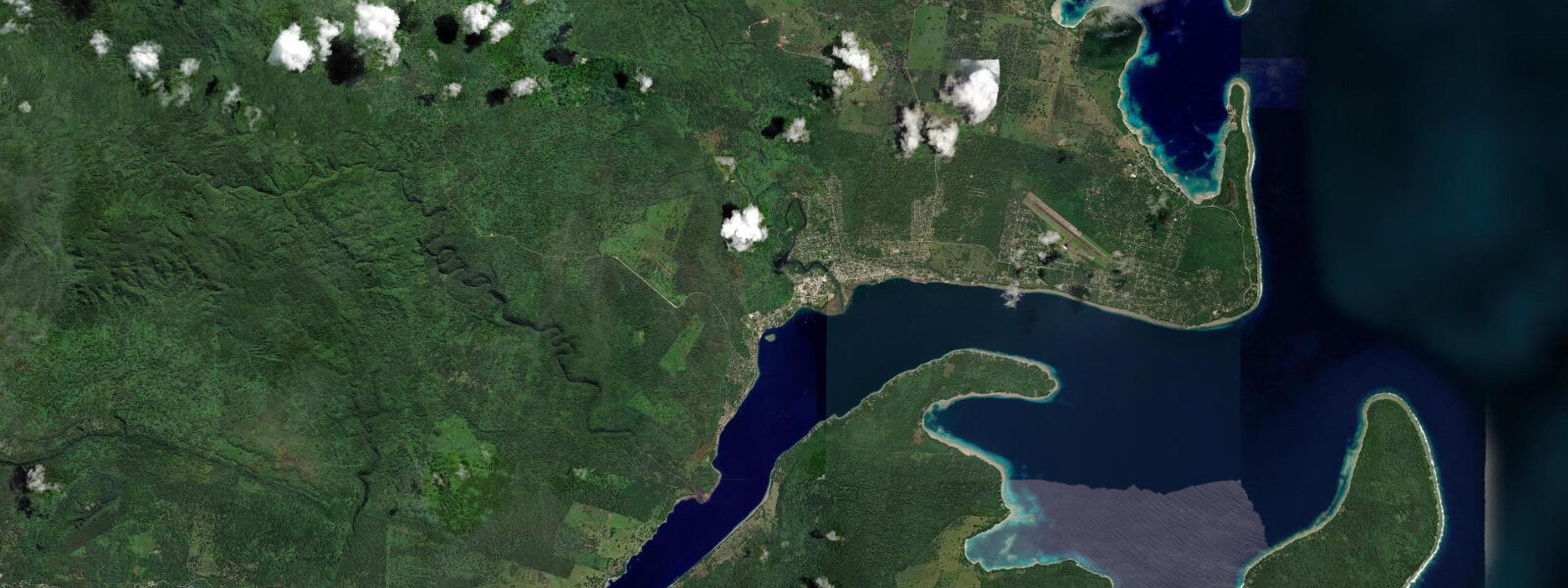
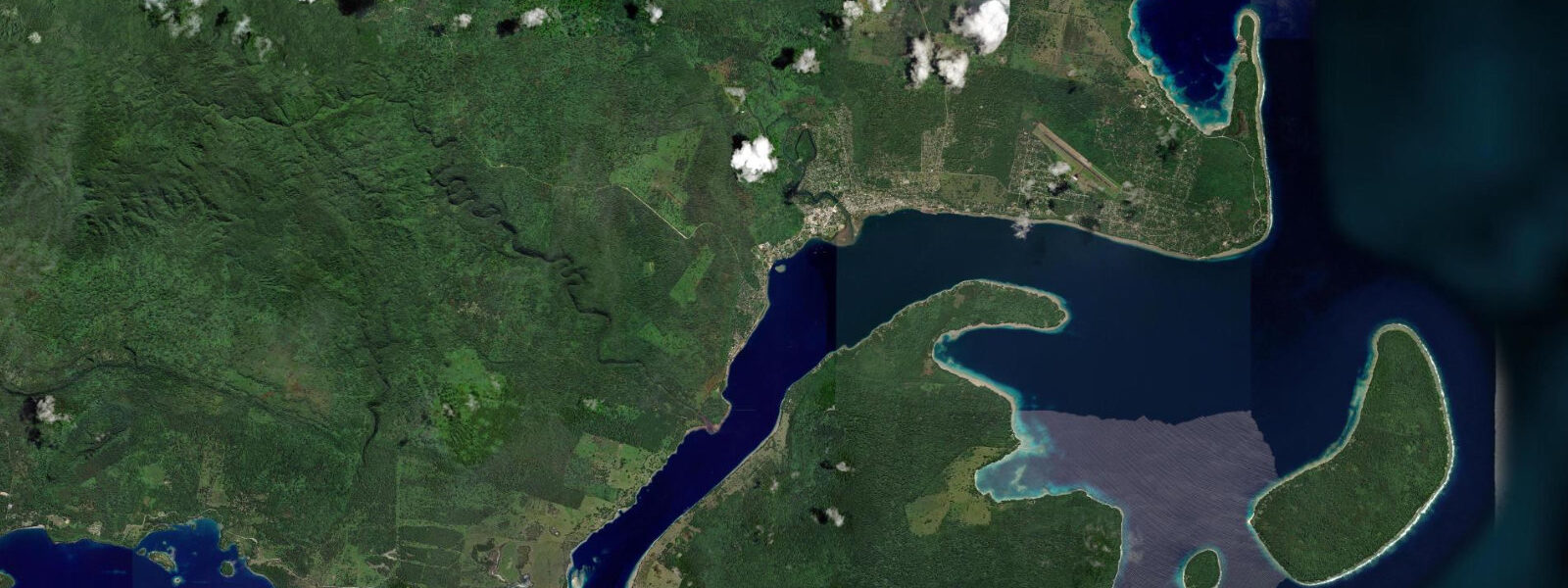
Luganville is the main town of Espiritu Santo, Vanuatu's largest island, situated on the southeast coast of the island on the Second Channel — the passage between Santo and the smaller Aore Island offshore. The town grew from a World War II US military base: the Americans constructed roads, airstrips, and port facilities across the island between 1942 and 1945, and the infrastructure legacy is still visible. At the end of the war, the US military dumped vast quantities of equipment, vehicles, and munitions into the shallow water off Million Dollar Point rather than sell them to local colonial authorities at a reduced rate. Today that dump is a snorkelling and diving site.
The headline attraction is the SS President Coolidge. This 22,000-tonne former luxury liner, converted to a US troop transport, struck two American mines at the harbour entrance on 26 October 1942. Captain Henry Nelson ran the ship aground on the reef to avoid sinking in deep water, allowing 5,050 of the 5,052 men aboard to survive. The Coolidge now rests on a slope from 21 m at the bow to 73 m at the stern, accessible from shore by wading in at the Coolidge dive site (signposted from the main road). The wreck is one of the most accessible and intact large ship dives in the world.
The tidal regime at Luganville is mixed semidiurnal, consistent with the broader Vanuatu pattern. Spring range approximately 1.0–1.3 m above Chart Datum. Tidal current in the Second Channel — between Santo and Aore — runs at 0.5–1.0 knots on spring tides, direction alternating with the tidal phase. For Coolidge diving, the current over the wreck is a primary operational variable: the bow section at 21–35 m sits in the open channel where spring tidal current can run at 0.7–1.0 knots. Most operators plan entry during the slack-water windows around the tidal turns — the 30–45 minutes of negligible current around high and low water — to allow controlled buoyancy work inside the wreck's penetration sections.
The Coolidge interior includes the famous Mast Head, the American Lady figurehead in the first-class lounge at 42 m, and the Pool Deck, all accessible to experienced divers on guided penetration dives. Photographers working the interior need natural light for the shallowest sections (21–28 m) and strobes for the deeper sections; the best natural-light window is 08:00–11:00 when the sun angle is high enough to penetrate the water and illuminate the wreck's exterior. Visibility runs 15–25 m on the flood when oceanic water moves through the channel; on the ebb, runoff from Santo's rivers can drop visibility to 8–12 m after heavy rain.
Million Dollar Point is a separate shallower site 3 km west of the Coolidge: tanks, trucks, jeeps, and bulldozers covered in coral at 5–25 m, snorkellable from shore at high tide when the shallow sections carry sufficient depth. At low spring water, the shallowest jeep roofs are less than 1 m below the surface — excellent for snorkel observation but too shallow for safe scuba diving without impact risk.
For anglers, the Second Channel is productive for trevally, snapper, and grouper along the bottom structure of the old wharf pilings at the eastern end of Luganville's waterfront. The flooding tide concentrates fish on the upcurrent side of the pilings; the ebb concentrates them on the downstream shadow. Dawn fishing on either tidal phase produces more aggressive feeding than midday.
Luganville's freshwater Blue Holes — spring-fed pools in the jungle south of town — are not tide-dependent but are best visited in the morning before tour buses arrive. The coastal and wreck environments are the primary tide-dependent activities.
All tide predictions for Luganville come from the Open-Meteo Marine gridded model. Timing accuracy is ±45 minutes; height accuracy is ±0.3 m above Chart Datum.
Tide questions about Luganville
Quick answers to the most common questions about tide times, range, and water access at Luganville.
What tidal conditions are best for diving the SS President Coolidge?
Plan entry for the slack-water windows around the tidal turns — typically 30–45 minutes of negligible current. Spring tidal current over the bow section at 21–35 m runs 0.7–1.0 knots during the peak flood and ebb, making precise buoyancy work inside the penetration sections significantly harder. Most Luganville operators time their first boat of the day to hit the morning slack around high water. Open-Meteo Marine predictions carry ±45 minutes timing uncertainty — build that buffer into your dive schedule. Natural-light photography of the exterior is best 08:00–11:00 when the sun angle is high enough to penetrate the water column.
Can you snorkel Million Dollar Point and at what tide level?
Million Dollar Point is snorkellable from shore at gauge readings above 0.5 m. The shallowest jeep roofs sit less than 1 m below the surface at low spring water — interesting to observe but too shallow for comfortable free-diving without impact risk. At mid-tide rising (0.5–0.8 m on the gauge), the site carries 1.5–2.5 m of water over the shallowest vehicles, ideal for snorkelling. The deeper tanks and heavy equipment at 8–25 m are accessible at all tidal states. Visibility is best on the flood when oceanic water moves through the channel; after heavy rain, river runoff from Santo can reduce visibility to 5–8 m on the ebb.
How does river runoff affect visibility at the Coolidge and Million Dollar Point?
Espiritu Santo receives some of the highest rainfall in Vanuatu — the island's interior mountains generate convective rain year-round, with peak intensity during the cyclone season (November–April). River runoff after heavy rain discharges into the Second Channel on the ebb and can drop visibility at both dive sites to 8–12 m within hours of a significant rain event. The flood tide brings oceanic water in from the open sea and restores visibility to 15–25 m. Plan dives for the first two hours of the flood after a rain event, and delay entry on the ebb following overnight rainfall. Check tidal direction against any significant rainfall the previous 12 hours.
What species are caught from the Luganville waterfront pilings?
The old wharf pilings at the eastern waterfront hold trevally, snapper, and grouper on the bottom structure at 4–10 m depth. Flooding tide concentrates fish on the upcurrent face of the pilings as baitfish pile up in the current shadow; ebb concentrates them on the downstream shadow. Jig vertically alongside the piling structure in 6–10 m for the best results — the fish hold tight to the structure on both tidal directions but in different positions relative to the flow. Dawn on either tidal phase produces the most aggressive feeding. Fishing from the public end of the waterfront is permitted; confirm current local access before setting up tackle.
Is it safe to swim at the main Luganville beach during all tidal states?
The main beach at Luganville fronts the Second Channel, which carries tidal current of 0.5–1.0 knots on spring tides. Swimming is safe close to shore where the current is deflected by the beach gradient, but open-water swimming perpendicular to shore is not recommended during peak tidal flow — the current will set swimmers downchannel toward the open passage between Santo and Aore. Swim parallel to shore or stay inside the protected sections behind any visible reef or point. The safest swimming window is the 30–45 minutes around slack high water when channel current is at minimum. Avoid the ebb on spring tides for any extended open-water swimming.
8-day tide table — Luganville
Heights relative to MSL. Predictions: Open-Meteo Marine (MeteoFrance SMOC, 0.08° grid) — heights relative to MSL (not chart datum / LAT). Model-derived.
| Day | Type | Time | Height |
|---|---|---|---|
| Tue 04 Aug | High | 11:00 | 0.6m |
| Low | 13:24 | 0.3m | |
| High | 20:02 | 1.2m | |
| Wed 05 Aug | Low | 14:10 | 0.5m |
| High | 20:55 | 1.2m | |
| Thu 06 Aug | Low | 04:00 | 0.5m |
| High | 09:45 | 0.8m | |
| Low | 15:15 | 0.5m | |
| High | 22:00 | 1.2m | |
| Fri 07 Aug | Low | 05:38 | 0.4m |
| High | 11:54 | 0.8m | |
| Sat 08 Aug | Low | 06:52 | 0.3m |
| Sun 09 Aug | High | 00:43 | 1.3m |
| Low | 07:50 | 0.1m | |
| Mon 10 Aug | High | 01:45 | 1.4m |
| Low | 08:42 | 0.0m | |
| Tue 11 Aug | High | 02:34 | 1.5m |
| Low | 09:26 | -0.1m |