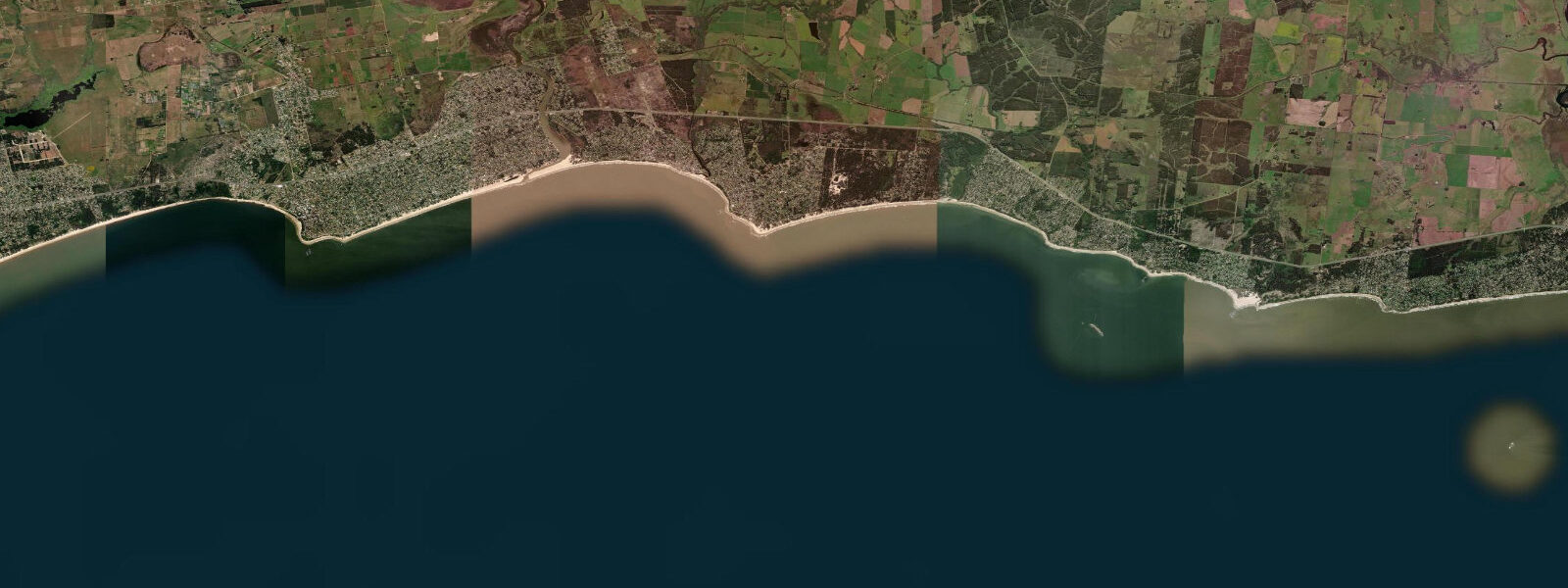
La Floresta, Uruguay tide times
La Floresta, Uruguay tide forecast — heights relative to MSL.
Today's tide times for La Floresta, Uruguay
Tide times at La Floresta, Uruguay on Tuesday, 4 August 2026: first high tide at 05:00am, first low tide at 08:00am, second high tide at 11:54am. Sunrise 07:33am, sunset 06:03pm.
Tide chart for La Floresta, Uruguay
24-hour cosine-interpolated curve around the present moment. Heights relative to MSL. Predictions: Predictions: Open-Meteo Marine (MeteoFrance SMOC, 0.08° grid).
Sun, moon and conditions on Tue 04 Aug
Snapshot at build time — refreshes daily. Sea state from Open-Meteo Marine.
Highs and lows next 7 days
Every predicted high and low for the next week, with the daily tidal coefficient (0–120; higher = bigger swing, > 95 means stronger currents).
Other spots nearby
The three closest curated TideTurtle locations to La Floresta, Uruguay, measured by great-circle distance.
Today's solunar windows
Solunar tradition: major periods are the ≈3h windows around moon transit and opposition; minor are ≈2h around moonrise and moonset. Pair with the local tide stage and wind for the best read.
Cycle dates near La Floresta, Uruguay
Next spring tide on Sat 08 Aug (range 0.4m). Last neap on Mon 03 Aug. Next neap on Sun 09 Aug.
Spring tides cluster around new and full moons (biggest swings). Neap tides land on quarter moons (smallest swings). See the spring tide and neap tide glossary entries for the why.
About tides at La Floresta, Uruguay
A short guide to the coastline at La Floresta, Uruguay — geography, sea state, and what the tide is actually doing under your feet.
La Floresta is a beach town on the Canelones coast of Uruguay, 60 km east of Montevideo on Route 11, sitting between Atlántida and Solis on the Río de la Plata estuary-facing shore. The town is low-rise and pine-shaded — the streets are unpaved behind the principal beach road, the houses are summer chalets behind hedgerows, and the off-season empties the place down to a core of permanent residents. The beach runs 1.5 km of grey-brown sand, wide at low water, with the dunes holding the pines back from the high-tide line.
The coastal regime here is the Río de la Plata southern shore: wind-dominated water levels rather than classical ocean tides. Open-Meteo Marine provides forecast data — timing accuracy ±45 minutes, height accuracy ±0.2–0.3 m for the modelled tidal signal. The dominant water-level driver is wind: sudestadas (SE winds) pile water against the Uruguayan shore, raising levels 0.5–2 m; NW wind reversals drain it. The astronomical tidal range is 0.3–0.6 m on this section of the estuary coast.
For beach families, La Floresta is the classic Uruguayan summer resort experience in its quieter form. The water temperature peaks at 20–22°C in January–February. The beach is wide, the waves are mild (fetch-limited by the estuary geometry), and the pines behind the dunes give shade from the afternoon sun and shelter from the wind. The main beach has lifeguards in season (December–March). Facilities include a handful of restaurants, a small supermarket, and the public beach infrastructure.
Surfers and body-boarders find that La Floresta's estuary-facing exposure limits wave quality — the best waves arrive on NE to E winds during cold fronts that generate short-period chop rather than groundswell. This is paddleboarding and casual boogie board territory rather than serious wave-riding ground. Playa de los Ingleses, 3 km east, occasionally gets better wave conditions when SE swell wraps around the Punta del Este headland further east.
Anglers working the beach and the rocky points at either end of the bay target corvina (croaker), pejerrey, and cazón (school shark) from the shore. The incoming tide window — the two hours before high water — consistently produces the most fish from the beach. Simple paternoster rigs with cut bait (mullet, shrimp) at 40–60 m casting range are the local standard.
Photographers get the classic winter Canelones coast image here — grey sky, grey-brown beach, grey-green pines, and a surfer silhouette in the flat cold water — a monochrome palette that's very different from the tropical colour palette of the Caribbean places in this batch. The dramatic cold-front sky over the estuary, with the low Argentine coast barely visible on the horizon 40 km away, makes for strong landscape photography in winter.
Tide questions about La Floresta, Uruguay
Quick answers to the most common questions about tide times, range, and water access at La Floresta, Uruguay.
What are the water and beach conditions at La Floresta in summer?
January and February are the peak beach months: water temperature reaches 20–22°C, southerly winds are less frequent, and the beach is at its widest with the longer days and drier sand. The estuary water here is brown-tinged from river sediment rather than the clear turquoise of the Atlantic beaches further east toward Punta del Este and Rocha. The waves are mild — short-period chop from local wind rather than ocean groundswell. Lifeguard service operates on the main beach from late December through early March. Facilities include food vendors, a shower and toilet block at the main access, and parking along the beach road. The beach fills at weekends but stays manageable on weekdays.
What fish species are caught from La Floresta beach?
Corvina blanca (Micropogonias furnieri) and corvina rubia (Pachyurus bonariensis) are the primary surf fishing targets on the Canelones coast. The incoming tide window — two hours before to one hour after high water — is the most productive period, consistent with the feeding behaviour of corvina on rising water. Pejerrey (silverside) school in the shallower estuary margins and are caught on small sabiki rigs or light-spinning tackle. Cazón (Galeorhinus galeus, school shark) appear from October through March in the surf zone — they fight hard on light beach-casting rods and are released by most anglers. Simple paternoster rigs with cut mullet or shrimp at 40–80 m are the local standard.
How does the wind-driven water level work on the Canelones coast?
The Río de la Plata is a large, shallow estuarine system where sustained wind creates setup (raised water levels on the downwind shore). Sustained SE to S winds — sudestadas — pile water against the Uruguayan shore and raise sea level by 0.5–2 m within 12–24 hours, depending on wind strength and duration. NW winds reverse this, draining the estuary and lowering levels below the tidal prediction. Open-Meteo Marine models the tidal component with ±45-minute timing and ±0.2–0.3 m height accuracy, but the total water level variation at La Floresta in storm conditions routinely exceeds 1.5 m. The astronomical tidal range is only 0.3–0.6 m — a small fraction of the total variability.
Is La Floresta open year-round or only in summer?
La Floresta has a small permanent population but most businesses operate seasonally from late November through March. Outside of that window, restaurants and shops may be closed or operating with reduced hours; accommodation options shrink significantly to a handful of year-round rental properties and one or two posadas. The beach itself is accessible year-round and the winter Canelones coast has a distinctive character — cold, windswept, empty, with the pines dropping needles on the dunes. Photography in winter is excellent for that reason. Anglers find the off-season productive as fish move closer to shore in cooler water. Check accommodation availability before a winter visit.
How does La Floresta compare to Atlántida and Solis as a beach destination?
Atlántida, 10 km west, is the largest and most developed town on the central Canelones coast — more services, more accommodation, more beach infrastructure, and correspondingly more crowds in January. Solis, 8 km east, is quieter than both and has a small creative community (the Escuela Municipal de Cerámica is there) and a more intimate feel. La Floresta sits between the two: more facilities than Solis, less development than Atlántida, with the pine-street aesthetic and the slightly lower price point that characterises the middle tier of Canelones beach towns. Families who've done Atlántida and found it too busy typically favour La Floresta for its lower intensity.
7-day tide table — La Floresta, Uruguay
Heights relative to MSL. Predictions: Open-Meteo Marine (MeteoFrance SMOC, 0.08° grid) — heights relative to MSL (not chart datum / LAT). Model-derived.
| Day | Type | Time | Height |
|---|---|---|---|
| Tue 04 Aug | High | 05:00 | 0.0m |
| Low | 08:00 | -0.0m | |
| High | 11:54 | 0.1m | |
| Wed 05 Aug | Low | 08:50 | -0.0m |
| High | 13:20 | 0.2m | |
| High | 17:15 | 0.1m | |
| Low | 21:00 | 0.0m | |
| Thu 06 Aug | High | 14:18 | 0.4m |
| Low | 21:00 | 0.4m | |
| Fri 07 Aug | High | 02:40 | 0.7m |
| High | 06:42 | 0.6m | |
| Sat 08 Aug | Low | 00:10 | 0.0m |
| Low | 10:15 | 0.0m | |
| High | 20:50 | 0.4m | |
| Sun 09 Aug | Low | 01:10 | 0.3m |
| High | 04:45 | 0.5m | |
| Low | 06:42 | 0.4m | |
| High | 17:20 | 0.7m | |
| Mon 10 Aug | Low | 14:40 | 0.5m |
| High | 18:18 | 0.7m |