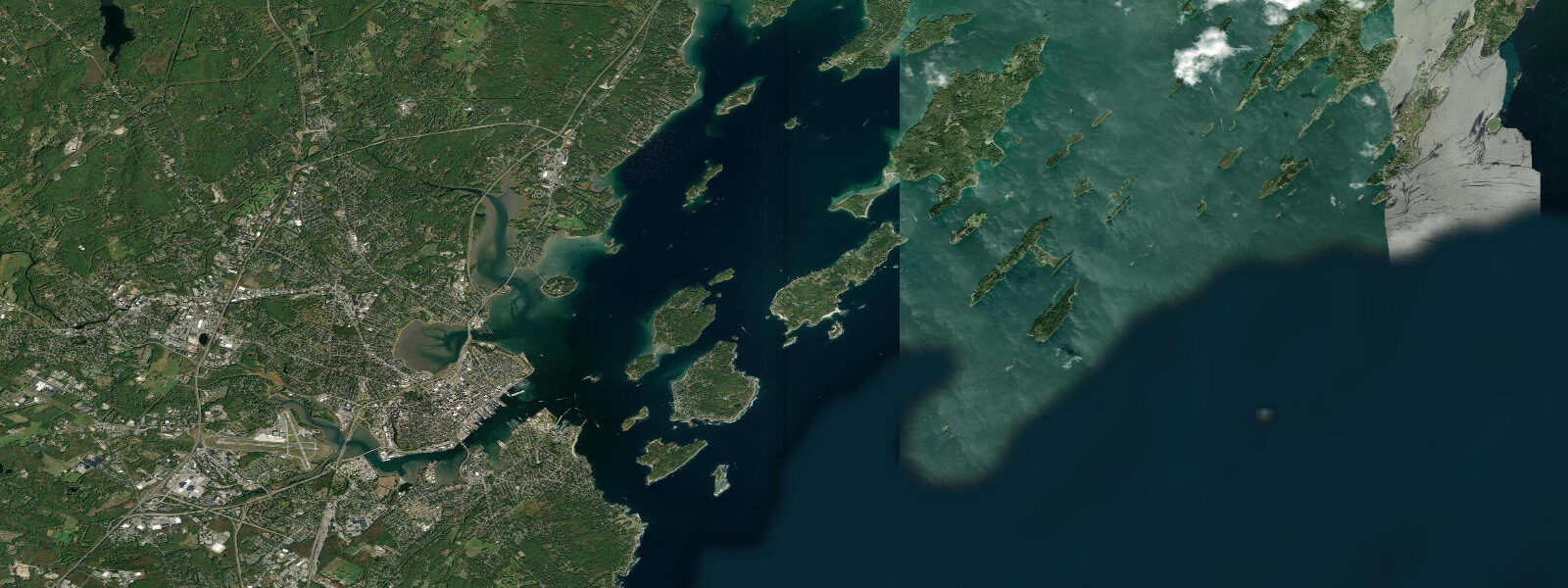
Portland, ME tide times
Portland, ME tide forecast — heights relative to MSL.
Today's tide times for Portland, ME
Tide times at Portland, ME on Monday, 3 August 2026: first high tide at 02:01am, first low tide at 08:08am, second high tide at 02:24pm, second low tide at 08:36pm. Sunrise 05:32am, sunset 08:02pm.
Tide chart for Portland, ME
24-hour cosine-interpolated curve around the present moment. Heights relative to MSL. Predictions: Predictions: Open-Meteo Marine (MeteoFrance SMOC, 0.08° grid).
Sun, moon and conditions on Mon 03 Aug
Snapshot at build time — refreshes daily. Sea state from Open-Meteo Marine.
Highs and lows next 7 days
Every predicted high and low for the next week, with the daily tidal coefficient (0–120; higher = bigger swing, > 95 means stronger currents).
Other spots nearby
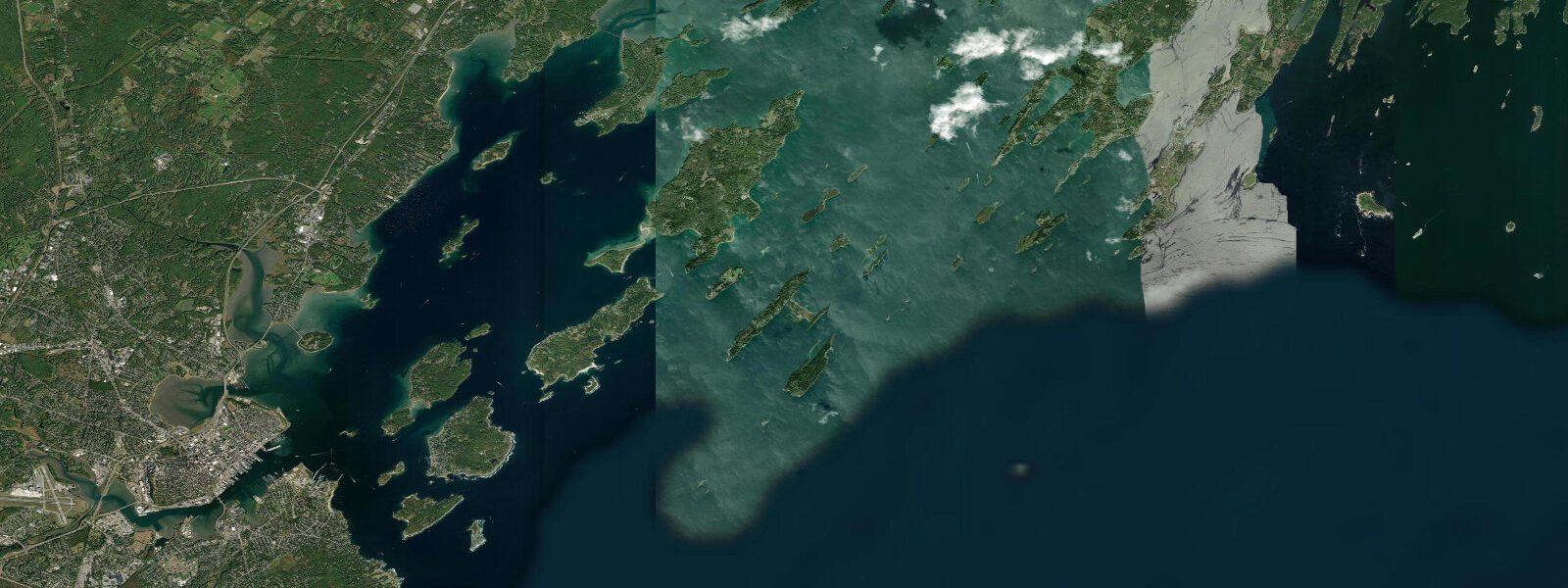
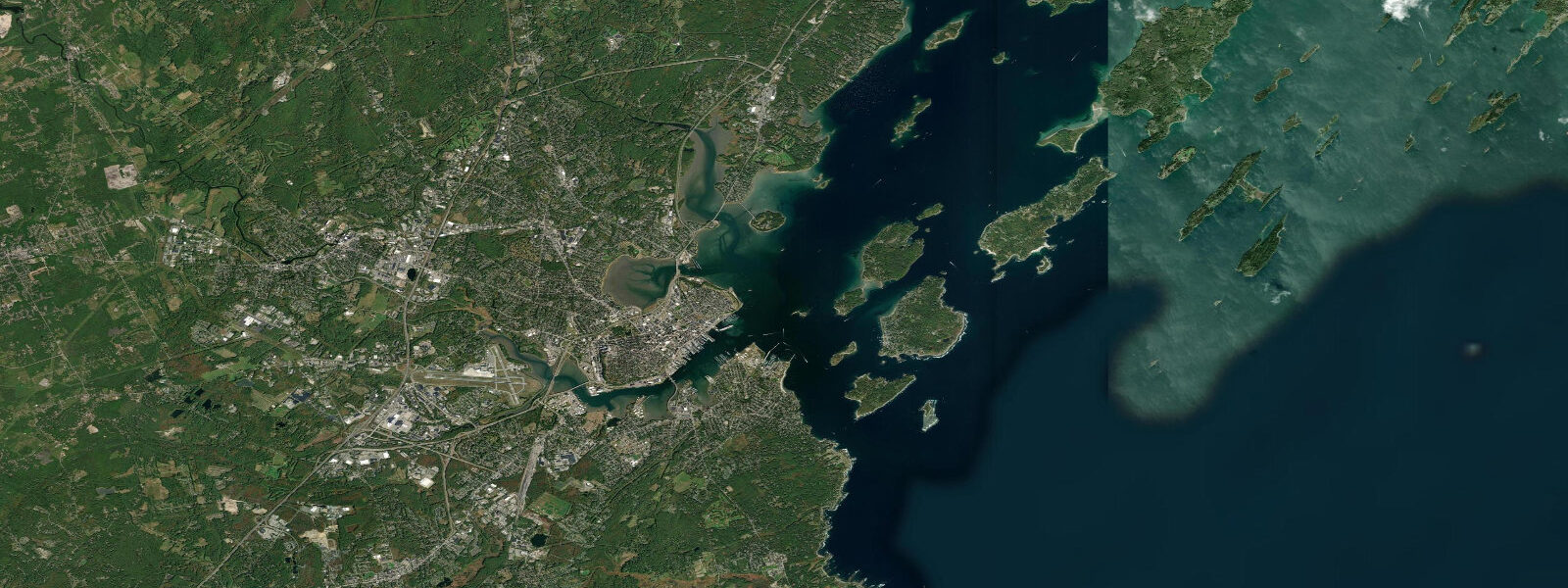
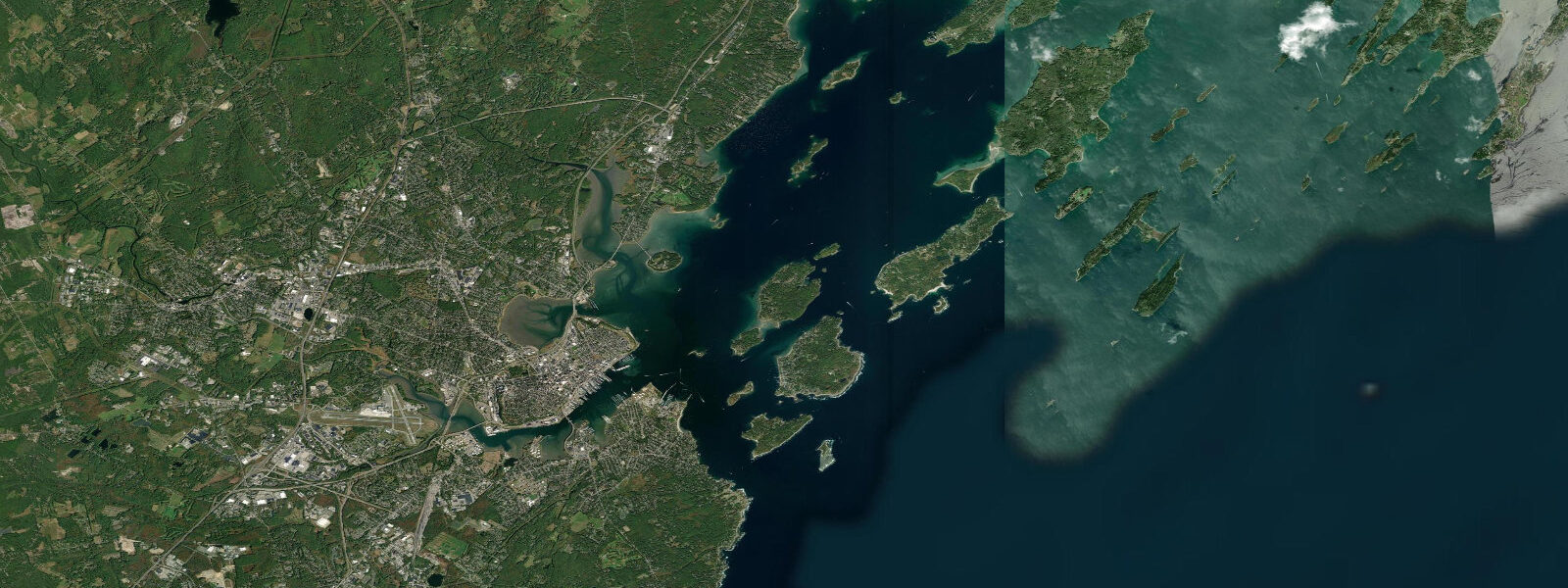
The three closest curated TideTurtle locations to Portland, ME, measured by great-circle distance.
Today's solunar windows
Solunar tradition: major periods are the ≈3h windows around moon transit and opposition; minor are ≈2h around moonrise and moonset. Pair with the local tide stage and wind for the best read.
Cycle dates near Portland, ME
Next spring tide on Sat 08 Aug (range 2.9m / 9.5ft). Next neap on Mon 03 Aug.
Spring tides cluster around new and full moons (biggest swings). Neap tides land on quarter moons (smallest swings). See the spring tide and neap tide glossary entries for the why.
About tides at Portland, ME
A short guide to the coastline at Portland, ME — geography, sea state, and what the tide is actually doing under your feet.
Portland is the largest city on the Maine coast and its harbour has been operating continuously since European settlement in the 1630s. The tidal regime here is substantial by US East Coast standards: mean spring range at the Custom House Wharf gauge runs around 3.2 metres, and neap tides still produce a 1.8-metre swing between high and low. That 3-metre variation drives the character of the waterfront entirely — at low water, the working wharves expose their full pilings, the rocky shore below the Eastern Promenade is accessible to walkers, and Casco Bay narrows to a more intimate geometry between its many islands.
The Casco Bay archipelago — Calendar Islands, so named by John Smith who counted 365 of them in 1614 (the real count is around 200) — is accessible year-round by the Casco Bay Lines ferry from the Maine State Pier on Commercial Street. Ferries serve Peaks Island (15 minutes), Little Diamond and Great Diamond Islands, Long Island, Chebeague Island, and Cliff Island. The ferry schedule is tide-independent for most crossings, but the landing ramps on the outer islands adjust with the tide, and the approaches to some island piers are depth-limited at the lowest tides.
Portland Head Light in Fort Williams Park in Cape Elizabeth, 8 kilometres south of the city, is the most visited lighthouse in New England and one of the oldest in continuous operation in the US (commissioned 1791 under President Washington). The rocky platform below the lighthouse is partially accessible at low water spring tides, though the exposed ledge is slippery and caution is warranted. The tidal current at the main shipping channel entrance to Portland Harbour runs to 2 knots on spring tides — easily observed from the Fort Williams headland.
The Portland Fish Pier on Commercial Street is the centre of Maine's commercial fishing industry, landing lobster, groundfish (haddock, cod, pollock), and scallops. The fishing vessels work Casco Bay and the deeper offshore grounds, and their schedules are timed partly around tidal state in the harbour — particularly for vessels with deeper drafts navigating the main channel.
Shore fishing from the rocks at Fort Williams Park and along the Eastern Promenade produces mackerel (jigging in summer), pollock, and striped bass on tidal transitions. The outgoing tide along the Eastern Promenade waterfront concentrates mackerel schools against the shore in June through August. Kayakers launch from the East End Beach below the Eastern Promenade and can paddle to Peaks Island in about 30 minutes in calm conditions — the crossing is tide-and-wind dependent, and the return trip against a flood current is noticeably harder than the outbound with the ebb.
The Portland Observatory on Munjoy Hill, a 26-metre signal tower built in 1807, was designed to watch for incoming ships from its hilltop vantage. The harbour below changes character dramatically with the tidal cycle — the high-water views from the observatory hill show a different city than the low-water views, with more beach and rock exposed around the islands.
Predictions on this page come from Open-Meteo Marine, a gridded global ocean model. Accuracy is typically within plus or minus 45 minutes on timing and 0.2 to 0.3 metres on height — model-derived, not from a local gauge. For authoritative US tide data, consult NOAA CO-OPS at tidesandcurrents.noaa.gov.
Tide questions about Portland, ME
Quick answers to the most common questions about tide times, range, and water access at Portland, ME.
When is high tide at Portland, Maine?
The tide table on this page shows predicted times in Eastern Time (EST UTC-5, EDT UTC-4). Portland runs semidiurnal with mean spring range around 3.2 metres — two high and two low tides per day. The NOAA CO-OPS reference gauge is at Portland, Maine (station 8418150), and predictions there are based on harmonic analysis of the local gauge record. Open-Meteo Marine estimates on this page may differ slightly. Tidal cycles shift about 50 minutes later each day through the lunar month.
What is the tidal range at Portland compared to Bar Harbor?
Portland's mean spring range is approximately 3.2 metres. Bar Harbor (80 km northeast on the coast) has a larger range of around 4.0 to 4.5 metres mean spring — the Gulf of Maine amplifies tidal energy as it narrows toward the northeast, reaching its extreme at the upper Bay of Fundy (15+ metres). The difference between Portland and Bar Harbor is noticeable — the dramatic tidal falls at some locations near Bar Harbor reflect the larger range. Both are macrotidal environments by most definitions.
Can I take a ferry to the Casco Bay islands?
Yes. Casco Bay Lines operates year-round ferry service from the Maine State Pier on Commercial Street to Peaks Island (15 min), Long Island (55 min), Chebeague Island (1 hr 15 min), Cliff Island (1 hr 45 min), and others. The ferry schedule is not tide-dependent for departures, but landing ramps on the outer islands are fixed structures — at very low spring tides, the angle of the ramp increases noticeably. Bikes are allowed on most ferries for a small fee. Peaks Island has the most visitor amenities; Cliff Island is the most remote.
Where can I fish from shore around Portland?
Fort Williams Park in Cape Elizabeth (8 km south) is the premier shore-fishing location for Portland — rocky points below Portland Head Light produce mackerel, pollock, and striped bass on tidal transitions. The Eastern Promenade waterfront in Portland city produces mackerel in summer when jigging in the surface schools visible at high and incoming tides. Wharves along Commercial Street: fishing is allowed from several working pier ends for mackerel. Presumpscot River mouth (north of Portland): alewife and striped bass in spring migration.
Is Portland Harbour safe for sea kayaking?
Yes for experienced paddlers; Portland Harbour is busy with ferry, fishing vessel, and commercial traffic. The East End Beach below the Eastern Promenade is the main launch point for Casco Bay kayaking. The Peaks Island crossing (3 km) is manageable in calm weather for intermediate paddlers. Key considerations: the main shipping channel to the Portland Fish Pier carries vessel traffic at all hours; tidal currents run to 2 knots in the main harbour channel; fog is frequent in June and July. A VHF radio and float plan are standard practice.
7-day tide table — Portland, ME
Heights relative to MSL. Predictions: Open-Meteo Marine (MeteoFrance SMOC, 0.08° grid) — heights relative to MSL (not chart datum / LAT). Model-derived.
| Day | Type | Time | Height |
|---|---|---|---|
| Mon 03 Aug | High | 02:01 | 0.9m / 2.9ft |
| Low | 08:08 | -1.8m / -5.8ft | |
| High | 14:24 | 1.0m / 3.1ft | |
| Low | 20:36 | -1.7m / -5.7ft | |
| Tue 04 Aug | High | 02:45 | 0.7m / 2.4ft |
| Low | 08:50 | -1.9m / -6.1ft | |
| High | 15:08 | 0.9m / 2.8ft | |
| Low | 21:24 | -1.9m / -6.1ft | |
| Wed 05 Aug | High | 03:34 | 0.6m / 1.8ft |
| Low | 09:32 | -1.8m / -5.9ft | |
| High | 16:00 | 0.9m / 2.9ft | |
| Low | 22:18 | -1.8m / -6.0ft | |
| Thu 06 Aug | High | 16:52 | 0.9m / 3.1ft |
| Low | 23:21 | -1.8m / -6.1ft | |
| Fri 07 Aug | High | 17:53 | 0.9m / 3.0ft |
| Sat 08 Aug | Low | 00:27 | -1.9m / -6.2ft |
| High | 19:01 | 1.0m / 3.2ft | |
| Sun 09 Aug | Low | 01:36 | -1.9m / -6.3ft |
| High | 07:53 | 0.5m / 1.7ft | |
| Low | 13:41 | -1.6m / -5.3ft | |
| High | 19:00 | 1.0m / 3.1ft |