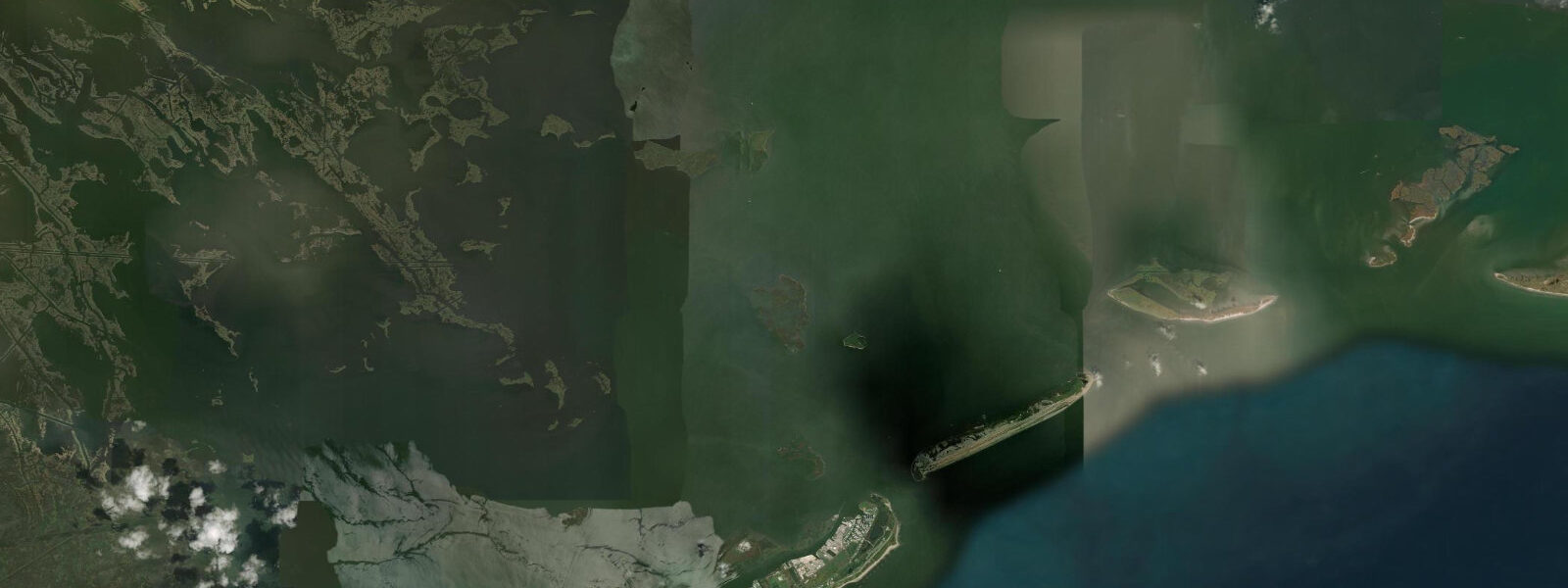
Grand Isle, LA tide times
Grand Isle, LA tide forecast — heights relative to MLLW.
Today's tide times for Grand Isle, LA
Tide times at Grand Isle, LA on Sunday, 26 July 2026: first high tide at 08:12am, first low tide at 07:36pm. Sunrise 06:16am, sunset 07:56pm.
Tide chart for Grand Isle, LA
24-hour cosine-interpolated curve around the present moment. Heights relative to MLLW. Predictions: NOAA CO-OPS station 8761724.
Sun, moon and conditions on Sun 26 Jul
Snapshot at build time — refreshes daily. Sea state from NOAA harmonic predictions.
Highs and lows next 7 days
Every predicted high and low for the next week, with the daily tidal coefficient (0–120; higher = bigger swing, > 95 means stronger currents).
Other spots nearby
The three closest curated TideTurtle locations to Grand Isle, LA, measured by great-circle distance.
Today's solunar windows
Solunar tradition: major periods are the ≈3h windows around moon transit and opposition; minor are ≈2h around moonrise and moonset. Pair with the local tide stage and wind for the best read.
Cycle dates near Grand Isle, LA
Next spring tide on Sun 26 Jul (range 0.5m / 1.7ft). Next neap on Sun 02 Aug.
Spring tides cluster around new and full moons (biggest swings). Neap tides land on quarter moons (smallest swings). See the spring tide and neap tide glossary entries for the why.
About tides at Grand Isle, LA
A short guide to the coastline at Grand Isle, LA — geography, sea state, and what the tide is actually doing under your feet.
Grand Isle is the only inhabited barrier island in Louisiana, accessible by a single highway across Barataria Bay on LA-1 — a road that regularly floods at high water. The island faces south into the Gulf of Mexico but the defining fact about Grand Isle is the land loss rate. Louisiana is losing coastal land faster than almost anywhere in the US; the island has shrunk by more than half in living memory, and the Gulf-facing beach has retreated to within metres of the road in some sections. Tidal pattern is diurnal (one high and one low per day), with mean range under 0.5 metres — but wind-driven water level changes dominate.
Fishing is the raison d'être of Grand Isle. The island is one of the premier inshore and offshore fishing destinations in the northern Gulf. Inshore, the Barataria Basin marsh system behind the island holds red drum (redfish), speckled trout, and flounder in the channels between the marsh islands. The marsh grass edges and oyster reefs are the key structure. Offshore, the oil platform structures (standing in 30 to 100 metres of water offshore) provide a unique ecosystem of baitfish, amberjack, cobia, red snapper, and grouper.
The oil platform fishing culture is genuinely unique to the northern Gulf. Hundreds of platforms — some active, most decommissioned — act as artificial reefs and concentrate fish that anglers can legally access. Platforms within state waters (9 nautical miles) are accessible to small boats; beyond that, charter boats from Grand Isle run overnight trips to the deeper federal water platforms for red snapper and grouper during the federally managed open season.
The Grand Isle State Park occupies the east end of the island with a beach access, camping, fishing pier, and boat launch. The park beach is one of the cleaner Gulf beaches in Louisiana — the natural sand and shell beach, though narrow, is maintained as public access. Hurricane Ida (2021) caused significant damage; the park and infrastructure have been progressively rebuilt.
Birding is exceptional during spring migration. The island is a first-landfall site for trans-Gulf migrants arriving from the Yucatan — songbirds exhausted by the overnight 900-kilometre crossing fall into the trees and shrubs on the island at dawn in late April. Fallout events (when a weather front traps migrants) produce extraordinary concentrations of warblers, tanagers, vireos, and buntings in the island vegetation.
Predictions on this page come from Open-Meteo Marine, a gridded global ocean model. Accuracy is typically within plus or minus 45 minutes on timing and 0.2 to 0.3 metres on height — model-derived, not from a local gauge. For authoritative US tide data, consult NOAA CO-OPS at tidesandcurrents.noaa.gov.
Tide questions about Grand Isle, LA
Quick answers to the most common questions about tide times, range, and water access at Grand Isle, LA.
What kind of fishing is Grand Isle known for?
Grand Isle is famous for two things: inshore marsh fishing (red drum, speckled trout, flounder in the Barataria Basin) and offshore platform fishing (red snapper, amberjack, cobia, grouper around oil platform structures). The platform fishing ecosystem is unique to the northern Gulf — decommissioned platforms act as artificial reefs and concentrate fish at depths of 30 to 100 metres. Charter boats from the Grand Isle marina run overnight and day trips. A Louisiana saltwater fishing license is required.
What is the tidal range at Grand Isle?
Grand Isle has diurnal tides — one high and one low per day — with a mean range of less than 0.5 metres. The astronomical tide is almost irrelevant to water level planning here; wind setup dominates. Sustained south winds pile water over the beach; strong north winds (associated with cold fronts) blow water south into the Gulf, leaving the bays and marsh channels abnormally low. The wind forecast is more important than the tide chart for planning activities.
When is the best time to see migrating birds at Grand Isle?
Late April to early May is the peak. Trans-Gulf migrants — warblers, tanagers, buntings, orioles, vireos — arrive overnight from the Yucatan Peninsula after crossing 900 kilometres of open water. Exhausted birds land in the first available vegetation on the island's south side. Fallout events occur when a weather front stalls migrants over the Gulf; on fallout mornings the trees can be dripping with birds. Arrive at sunrise. The island's campground vegetation and the live oak and Chinese tallow groves on the east end are the best spots.
Is Grand Isle accessible in the off-season?
Grand Isle is accessible year-round on LA-1, though the highway regularly overtops at high water during strong south winds or near storm surge events. The state park and most accommodations close after Labor Day; a small permanent population lives on the island year-round. Winter fishing — particularly for speckled trout in Barataria Bay — keeps some fishing camps and charter operators running. Hurricane Ida (2021) damaged significant infrastructure; confirm facility status before visiting.
Is the beach at Grand Isle good for swimming?
Grand Isle State Park beach has public swimming access, though the beach is narrow and the water has typical northern Gulf characteristics (green-brown, warm, occasional jellyfish). Rip currents occur after cold fronts. Water temperature is warm enough for comfortable swimming April through November without a wetsuit; December through March ranges 14 to 18°C. There are no lifeguards; swimming is at your own risk. The beach narrows significantly in summer when the long-shore drift moves less sand.
30-day tide table — Grand Isle, LA
Heights relative to MLLW. Predictions: NOAA CO-OPS station 8761724 — heights relative to MLLW.
| Day | Type | Time | Height |
|---|---|---|---|
| Sun 26 Jul | High | 08:12 | 0.4m / 1.4ft |
| Low | 19:36 | -0.1m / -0.2ft | |
| Mon 27 Jul | High | 08:58 | 0.4m / 1.4ft |
| Low | 20:11 | -0.1m / -0.2ft | |
| Tue 28 Jul | High | 09:39 | 0.4m / 1.4ft |
| Low | 20:44 | -0.0m / -0.2ft | |
| Wed 29 Jul | High | 10:17 | 0.4m / 1.4ft |
| Low | 21:15 | -0.0m / -0.1ft | |
| Thu 30 Jul | High | 10:52 | 0.4m / 1.3ft |
| Low | 21:42 | 0.0m / 0.0ft | |
| Fri 31 Jul | High | 11:25 | 0.4m / 1.2ft |
| Low | 22:01 | 0.0m / 0.2ft | |
| Sat 01 Aug | High | 11:57 | 0.3m / 1.0ft |
| Low | 21:43 | 0.1m / 0.3ft | |
| Sun 02 Aug | High | 10:59 | 0.2m / 0.8ft |
| Low | 20:32 | 0.1m / 0.5ft | |
| Mon 03 Aug | High | 03:59 | 0.2m / 0.7ft |
| Low | 13:18 | 0.2m / 0.6ft | |
| High | 15:24 | 0.2m / 0.6ft | |
| Low | 18:39 | 0.2m / 0.5ft | |
| Tue 04 Aug | High | 03:52 | 0.3m / 0.9ft |
| Low | 14:06 | 0.1m / 0.3ft | |
| Wed 05 Aug | High | 03:59 | 0.3m / 1.1ft |
| Low | 15:01 | 0.0m / 0.1ft | |
| Thu 06 Aug | High | 04:20 | 0.4m / 1.3ft |
| Low | 15:58 | -0.0m / -0.1ft | |
| Fri 07 Aug | High | 05:03 | 0.5m / 1.5ft |
| Low | 16:54 | -0.1m / -0.3ft | |
| Sat 08 Aug | High | 06:07 | 0.5m / 1.6ft |
| Low | 17:50 | -0.1m / -0.4ft | |
| Sun 09 Aug | High | 07:19 | 0.5m / 1.7ft |
| Low | 18:44 | -0.1m / -0.4ft | |
| Mon 10 Aug | High | 08:29 | 0.5m / 1.7ft |
| Low | 19:39 | -0.1m / -0.4ft | |
| Tue 11 Aug | High | 09:35 | 0.5m / 1.7ft |
| Low | 20:33 | -0.1m / -0.2ft | |
| Wed 12 Aug | High | 10:40 | 0.5m / 1.5ft |
| Low | 21:26 | -0.0m / -0.0ft | |
| Thu 13 Aug | High | 11:47 | 0.4m / 1.3ft |
| Low | 22:13 | 0.1m / 0.2ft | |
| Fri 14 Aug | High | 13:00 | 0.3m / 1.1ft |
| Low | 22:49 | 0.1m / 0.5ft | |
| Sat 15 Aug | High | 03:37 | 0.2m / 0.6ft |
| Low | 05:39 | 0.2m / 0.6ft | |
| High | 14:23 | 0.3m / 0.9ft | |
| Low | 19:49 | 0.2m / 0.7ft | |
| Sun 16 Aug | High | 02:34 | 0.2m / 0.8ft |
| Low | 11:11 | 0.2m / 0.6ft | |
| Mon 17 Aug | High | 02:26 | 0.3m / 1.0ft |
| Low | 12:49 | 0.1m / 0.4ft | |
| Tue 18 Aug | High | 02:44 | 0.4m / 1.2ft |
| Low | 14:04 | 0.1m / 0.3ft | |
| Wed 19 Aug | High | 03:16 | 0.4m / 1.3ft |
| Low | 15:14 | 0.1m / 0.2ft | |
| Thu 20 Aug | High | 03:57 | 0.4m / 1.4ft |
| Low | 16:16 | 0.0m / 0.1ft | |
| Fri 21 Aug | High | 04:47 | 0.4m / 1.4ft |
| Low | 17:07 | 0.0m / 0.0ft | |
| Sat 22 Aug | High | 05:47 | 0.4m / 1.5ft |
| Low | 17:51 | 0.0m / 0.0ft | |
| Sun 23 Aug | High | 06:51 | 0.4m / 1.5ft |
| Low | 18:30 | 0.0m / 0.0ft | |
| Mon 24 Aug | High | 07:51 | 0.5m / 1.5ft |
| Low | 19:05 | 0.0m / 0.1ft |