Ketchikan, AK tide times
Ketchikan, AK tide forecast — heights relative to MSL.
Today's tide times for Ketchikan, AK
Tide times at Ketchikan, AK on Monday, 3 August 2026: first high tide at 04:00pm, first low tide at 10:15pm. Sunrise 04:58am, sunset 08:48pm.
Tide chart for Ketchikan, AK
24-hour cosine-interpolated curve around the present moment. Heights relative to MSL. Predictions: Predictions: Open-Meteo Marine (MeteoFrance SMOC, 0.08° grid).
Sun, moon and conditions on Mon 03 Aug
Snapshot at build time — refreshes daily. Sea state from Open-Meteo Marine.
Highs and lows next 7 days
Every predicted high and low for the next week, with the daily tidal coefficient (0–120; higher = bigger swing, > 95 means stronger currents).
Other spots nearby
The three closest curated TideTurtle locations to Ketchikan, AK, measured by great-circle distance.
Today's solunar windows
Solunar tradition: major periods are the ≈3h windows around moon transit and opposition; minor are ≈2h around moonrise and moonset. Pair with the local tide stage and wind for the best read.
Cycle dates near Ketchikan, AK
Last spring tide on Mon 03 Aug (range 3.9m / 12.9ft). Next spring tide on Sun 09 Aug (range 4.9m / 16.1ft). Next neap on Thu 06 Aug.
Spring tides cluster around new and full moons (biggest swings). Neap tides land on quarter moons (smallest swings). See the spring tide and neap tide glossary entries for the why.
About tides at Ketchikan, AK
A short guide to the coastline at Ketchikan, AK — geography, sea state, and what the tide is actually doing under your feet.
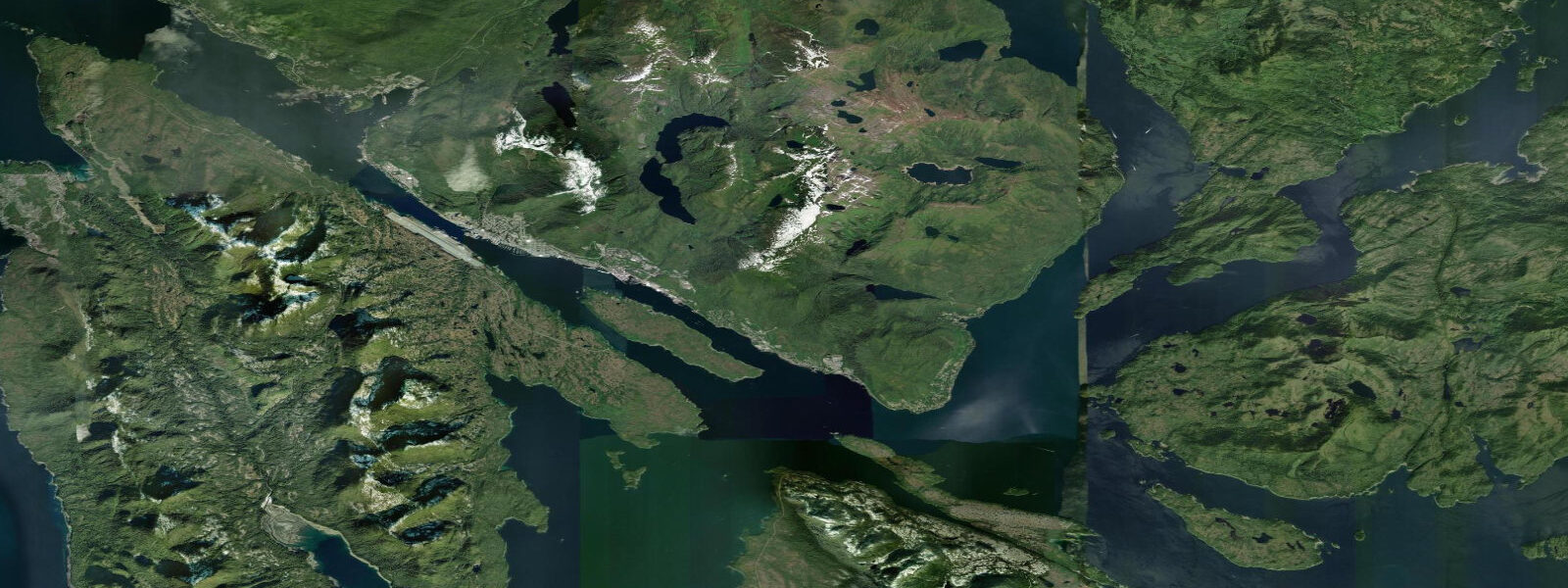
Ketchikan occupies a narrow shelf on the western shore of Revillagigedo Island, with the Tongass Narrows — the Inside Passage shipping lane — running directly in front of the downtown waterfront. The narrows separate Ketchikan from Gravina Island to the west; the Ketchikan International Airport sits on Gravina, reached by a 10-minute ferry across the narrows. Tides here are semidiurnal with diurnal inequality. The mean range at Ketchikan (NOAA Station 9450460) runs approximately 4.6 m MLLW, and a large spring tide can reach a range of 5.8 m. The predicted higher high water on a typical day is around 5.3 m MLLW; the lower low drops to 0.1–0.2 m MLLW. Tidal timing at Ketchikan leads Juneau by roughly 35 minutes.
Tongass Narrows is a working waterway: cruise ships, floatplanes on the downtown float, fishing trawlers, and the Gravina Island ferry all share the channel. The narrows run approximately 1.5 km wide opposite downtown but narrow to under 800 m near the north and south ends. Tidal current in the narrows peaks at roughly 1–2 knots on spring tides, running northward on the flood and southward on the ebb. This matters for the kayakers who launch from Bar Harbor boat launch (2 km north of downtown): paddling south to Creek Street on the flood is an easy 20-minute glide; returning against the ebb adds significant effort. Low tide exposes a rocky intertidal bench along the downtown waterfront — up to 50 m of barnacle-and-mussel flat — that disappears entirely at high water, a fact easy to miss when looking at the waterfront boardwalk restaurants built on pilings.
Ketchikan Creek enters the narrows at the foot of Creek Street, the historic red-light-district-turned-boardwalk built on pilings over the creek. The creek hosts the southernmost salmon runs in Southeast Alaska: king salmon begin holding in the tidal section of the creek in mid-June, followed by pink salmon in July–August and coho in September–October. Salmon stack up in the lower creek during the last two hours of an incoming tide, when the tidal head backs water upstream and concentrates fish in the holding pool below Creek Street Falls. The falls — a 2.5 m cascade visible from the boardwalk — acts as a natural barrier for non-jumping species, making the lower tidal section the primary viewing and sportfishing zone. Viewing platforms along the boardwalk put observers 3–4 m above the creek at high water; at low tide the viewing angle drops and the fish are holding in less than 1.5 m of water, often visible in the clear current.
Anglers targeting king and coho salmon in Tongass Narrows work the tide edges near the creek mouth and the Knudson Cove area (12 km north), where tidal eddies form behind submerged reefs on the ebb. Saltwater fly fishing for coho is productive from a drift boat or kayak on the last two hours of the ebb, drifting cut-plug herring or flies along the narrows shoreline at 1–2 m depth. Wildlife photographers working the creek for bears at salmon — black bears are regular visitors to the lower creek in August through October — find the best light on morning minus tides, when the flat is exposed and bears forage along the intertidal zone at dawn.
TideTurtle tide predictions for Ketchikan are generated from Open-Meteo Marine, a free gridded global ocean model. Accuracy is typically ±45 minutes on timing and ±0.2–0.3 m on height compared to observed tides. NOAA CO-OPS is the authoritative source for Ketchikan tide data; the primary gauge is Ketchikan, AK (Station 9450460) at tidesandcurrents.noaa.gov. For navigation in Tongass Narrows, ferry scheduling, or commercial fishing operations, use NOAA CO-OPS data.
Tide questions about Ketchikan, AK
Quick answers to the most common questions about tide times, range, and water access at Ketchikan, AK.
What is the tidal range in Ketchikan, Alaska?
Ketchikan has a mean tidal range of approximately 4.6 m (about 15 ft) MLLW, making it one of the larger tidal ranges in Southeast Alaska. Spring tides can push the range to 5.8 m. The tides are semidiurnal — two full cycles per day — with diurnal inequality: the two daily lows are often different heights, with the lower low typically near 0.0–0.2 m MLLW and the higher low reaching 1.2–1.8 m MLLW on a typical day.
When do salmon run in Ketchikan Creek and how does the tide affect viewing?
King salmon arrive in the tidal section of Ketchikan Creek from mid-June; pink salmon peak in late July through August; coho run September through October. The best viewing from the Creek Street boardwalk is during the last 2 hours of the incoming tide and around high water, when fish concentrate in the holding pool below Creek Street Falls. At low tide (below ~1.0 m MLLW) the pool shallows and fish scatter; at high water they stack in a tight holding area visible from the boardwalk platforms.
Is it safe to kayak in Tongass Narrows?
Tongass Narrows is manageable for experienced sea kayakers but demands traffic awareness: cruise ships, floatplanes, trawlers, and the Gravina ferry all use the channel. Tidal currents peak near 1–2 knots on spring tides. The safest window for crossing between downtown and Gravina Island is around high or low slack, when currents are minimal and large vessels are most predictable. Check the NOAA current tables for Tongass Narrows and monitor vessel traffic on VHF 16.
Can I see bears catching salmon in Ketchikan?
Black bears visit the lower Ketchikan Creek corridor regularly during the salmon runs, particularly in August through October. The best observation windows are early morning during minus tides, when the intertidal zone in front of the creek mouth is exposed and bears forage on spawned-out and stranded salmon. Bears access the creek from the wooded hillside above Creek Street; sightings from the boardwalk are more frequent at low-to-mid tide when the creek level is lower and bear movement along the bank is more visible.
Is this tide information safe to use for navigation?
No. TideTurtle predictions for Ketchikan are generated from Open-Meteo Marine, a free gridded global ocean model with typical accuracy of ±45 minutes on timing and ±0.2–0.3 m on height. That margin is too wide for navigating Tongass Narrows or Inside Passage passages. NOAA CO-OPS is the authoritative source: use Station 9450460 (Ketchikan, AK) at tidesandcurrents.noaa.gov.
8-day tide table — Ketchikan, AK
Heights relative to MSL. Predictions: Open-Meteo Marine (MeteoFrance SMOC, 0.08° grid) — heights relative to MSL (not chart datum / LAT). Model-derived.
| Day | Type | Time | Height |
|---|---|---|---|
| Mon 03 Aug | High | 16:00 | 2.1m / 7.0ft |
| Low | 22:15 | -1.8m / -6.0ft | |
| Tue 04 Aug | High | 04:18 | 1.4m / 4.8ft |
| Low | 10:15 | -1.8m / -5.8ft | |
| High | 16:42 | 2.1m / 7.0ft | |
| Low | 23:06 | -1.8m / -5.8ft | |
| Wed 05 Aug | High | 05:12 | 1.2m / 3.8ft |
| Low | 10:57 | -1.3m / -4.4ft | |
| High | 17:27 | 2.1m / 6.8ft | |
| Thu 06 Aug | Low | 00:11 | -1.7m / -5.5ft |
| High | 06:22 | 0.9m / 3.0ft | |
| Low | 11:51 | -0.9m / -2.9ft | |
| High | 18:23 | 2.0m / 6.6ft | |
| Fri 07 Aug | Low | 01:26 | -1.7m / -5.5ft |
| High | 07:50 | 0.8m / 2.5ft | |
| Low | 13:08 | -0.6m / -2.0ft | |
| High | 19:33 | 2.0m / 6.4ft | |
| Sat 08 Aug | Low | 02:48 | -1.9m / -6.3ft |
| High | 09:23 | 0.9m / 2.8ft | |
| Low | 14:36 | -0.6m / -1.9ft | |
| High | 20:51 | 2.0m / 6.7ft | |
| Sun 09 Aug | Low | 04:00 | -2.3m / -7.4ft |
| High | 10:39 | 1.1m / 3.8ft | |
| Low | 15:53 | -0.8m / -2.5ft | |
| High | 22:05 | 2.3m / 7.5ft | |
| Mon 10 Aug | Low | 05:00 | -2.6m / -8.7ft |
| High | 11:31 | 1.6m / 5.1ft | |
| Low | 15:00 | -0.3m / -1.0ft |