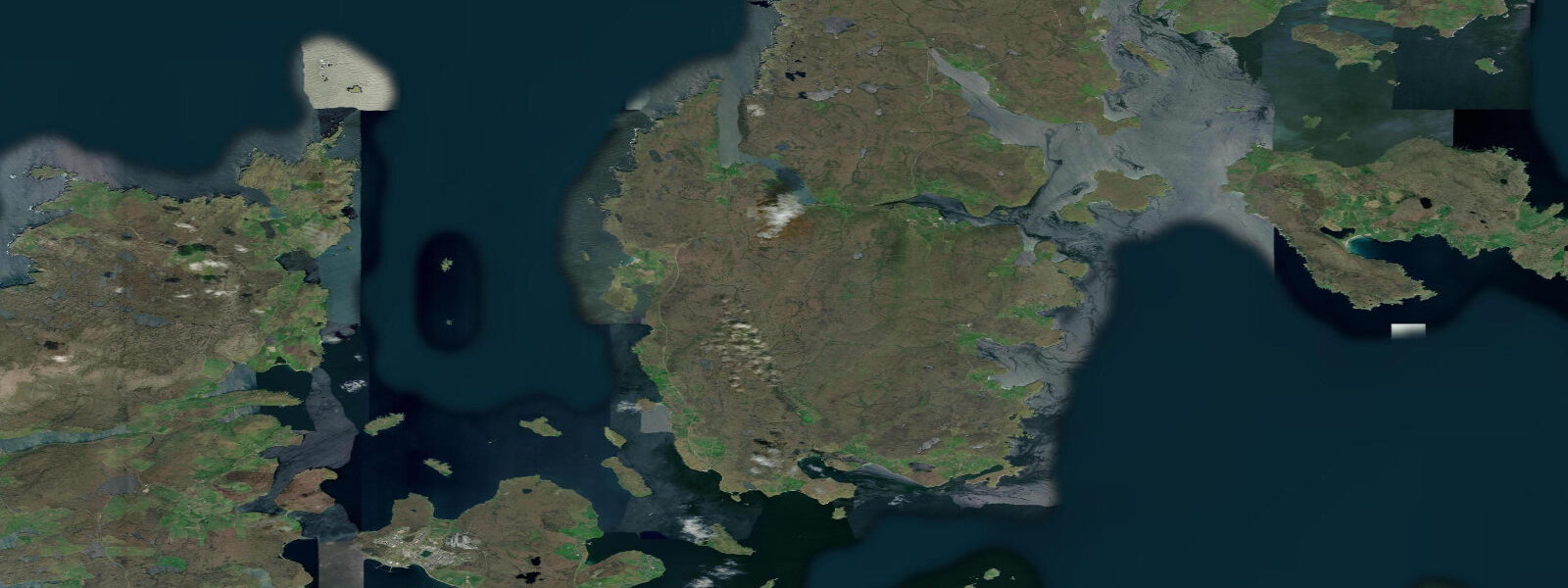
Yell tide times
Yell tide forecast — heights relative to MSL.
Today's tide times for Yell
Tide times at Yell on Tuesday, 4 August 2026: first high tide at 02:06, first low tide at 08:25, second high tide at 14:52, second low tide at 20:25. Sunrise 04:45, sunset 21:33.
Tide chart for Yell
24-hour cosine-interpolated curve around the present moment. Heights relative to MSL. Predictions: Predictions: Open-Meteo Marine (MeteoFrance SMOC, 0.08° grid).
Sun, moon and conditions on Tue 04 Aug
Snapshot at build time — refreshes daily. Sea state from Open-Meteo Marine.
Highs and lows next 7 days
Every predicted high and low for the next week, with the daily tidal coefficient (0–120; higher = bigger swing, > 95 means stronger currents).
Other spots nearby
The three closest curated TideTurtle locations to Yell, measured by great-circle distance.
Today's solunar windows
Solunar tradition: major periods are the ≈3h windows around moon transit and opposition; minor are ≈2h around moonrise and moonset. Pair with the local tide stage and wind for the best read.
Cycle dates near Yell
Last spring tide on Tue 04 Aug (range 1.7m / 5.5ft). Next spring tide on Mon 10 Aug (range 1.4m / 4.6ft). Next neap on Fri 07 Aug.
Spring tides cluster around new and full moons (biggest swings). Neap tides land on quarter moons (smallest swings). See the spring tide and neap tide glossary entries for the why.
About tides at Yell
A short guide to the coastline at Yell — geography, sea state, and what the tide is actually doing under your feet.
Yell is the second-largest island in Shetland and, by one measure, the least celebrated — a rolling moorland interior drained by peat bogs, with a coastline of voes (sheltered fjord-like inlets), beaches, and headlands facing some of the most exposed water in the British Isles. The island is reached by ferry from Toft on the Shetland Mainland — a 20-minute crossing across Yell Sound — and serves as the transit route to Unst, the most northerly inhabited island in the United Kingdom, reached by further ferry from Gutcher on Yell's north coast. The two ferry crossings are themselves part of the experience for anyone heading to Unst: they cross Yell Sound and Bluemull Sound, two of the more energetic tidal passages in Shetland.
Bluemull Sound, between Yell and Unst to the north, runs at 4 to 5 knots at peak spring tides — a consistent tidal race that has drawn the interest of marine renewable energy developers and that requires respect from small craft and kayakers. Yell Sound, between Yell and the Mainland, is broader but also carries a significant tidal stream, particularly through the narrows at the Toft-Ulsta ferry route. The inter-tidal zone of the voes is where Yell's most celebrated wildlife is encountered.
European otters (Lutra lutra) are not rare here — they are common. The Shetland otter population is one of the densest in Europe, and Yell's voes with their rich inter-tidal invertebrate communities — crabs, butterfish, blennies, eels — provide ideal hunting habitat. Otters on Yell can be watched from the roadside at dusk and dawn at several well-known voe locations; they hunt in the rocky inter-tidal zone and haul out on seaweed-covered rocks.
The best viewing is from mid-tide rising to high water, when the otters work the newly submerged rock gardens at the voe edges. Great skuas — bonxies in Shetland dialect — nest on the moorland of Yell and are conspicuous from April through July when they defend their territories aggressively. Walkers crossing the moorland during the nesting season should expect to be dive-bombed; a raised arm or stick deters attack.
Bonxies are the largest of the skua family and are impressive aerial predators — they harry other seabirds in flight to force regurgitation of food, and they have been recorded taking small gannets. The beach at Breckon on the northwest coast of Yell is one of the finest and least-visited beaches in Shetland: a bay of pale sand backed by machair with Atlantic views to the northwest. Conditions here are fully exposed to Atlantic swell from the northwest and are suitable for walking and photography rather than swimming except in the calmest summer weather.
The cliffs at the Herra Peninsula on the west coast drop to deep water and hold small seabird colonies. The Mid Yell voe is the island's main settlement area, with the ferry terminal at Ulsta on the south coast and Gutcher on the north coast. For photographers, Yell offers a combination of otter, bonxie, dramatic coastline, and the quality of northern light at high latitude that is difficult to find elsewhere in Britain.
The island receives little tourist traffic relative to Unst (which draws people to Muckle Flugga lighthouse and the northernmost point), and its quiet character is part of the appeal. Predictions on this page come from Open-Meteo Marine, a gridded global ocean model. 3 metres on height — model-derived, not from a local gauge.
The UK Hydrographic Office Admiralty charts 3292 and 3293 cover Yell Sound and Bluemull Sound respectively.
Tide questions about Yell
Quick answers to the most common questions about tide times, range, and water access at Yell.
How strong is the tidal race in Bluemull Sound?
Bluemull Sound between Yell and Unst reaches 4 to 5 knots at peak spring tides. The direction of flow reverses approximately every 6 hours. The ferry crossing at Gutcher-Belmont transits the sound in about 10 minutes and operates regardless of tidal state, as the ferry is designed for the conditions. For kayakers and small craft, timing the passage through Bluemull Sound to slack water is essential; slack lasts 20 to 30 minutes. The UKHO tidal stream atlas for the Shetland Islands gives the hourly vectors. Wind against tide in Bluemull Sound produces steep, short chop that can be challenging for smaller vessels.
Where can I watch otters on Yell?
The voes on Yell's east and south coasts are the most reliable locations. The coastal road from Ulsta to Mid Yell passes several voe access points where otters are regularly reported. The key is timing: otters are crepuscular — most active in the 2 hours before and after sunrise and sunset — and they hunt in the inter-tidal zone as the tide rises to cover the rocks they work. Binoculars are essential. Stay in or near the car to avoid disturbing the animals; car movement is less alarming to otters than human silhouettes. Dawn on a calm morning with a rising spring tide is the optimal condition.
What ferry do I take to get to Yell from Lerwick?
The route from Lerwick to Yell requires driving north on the A970 to the Toft ferry terminal on the Shetland Mainland — approximately 35 kilometres from Lerwick. The Toft-Ulsta ferry crosses Yell Sound in about 20 minutes. From Ulsta, drive north across Yell to Gutcher, where a second ferry crosses Bluemull Sound to Belmont on Unst in 10 minutes. Both ferries are operated by Shetland Islands Council. Timetables run frequently enough that waiting times are manageable; car bookings are advisable in summer to guarantee a place on the first available sailing.
What is the beach at Breckon like?
Breckon is a bay of pale shell sand on the northwestern corner of Yell, backed by coastal machair grassland and dunes. Access is by a track from the road; the walk to the beach takes about 10 minutes. The beach faces northwest into the open Atlantic and is exposed to any swell from that direction, which means it is rarely flat calm except in settled summer high pressure. In calm conditions the water is clear and cold (summer sea temperature around 12 to 13 degrees Celsius). The beach sees very few visitors — if you are there in peak summer and have it to yourself, that is not unusual for Yell.
Are great skuas (bonxies) dangerous to humans on Yell?
They are determined. Bonxies that are nesting on the moorland will defend a territory of roughly 200 metres diameter around the nest with low aerial passes and occasional physical contact — they will clip a person's head with a wingtip or foot. The standard defence is to hold an arm or walking pole raised above head height; the bonxie targets the highest point and diverts. They do not repeatedly strike the same person but will follow you through their territory. The behaviour occurs from late April when eggs are laid through late July when chicks are large. The rest of the year bonxies are at sea or on passage and present no issue.
8-day tide table — Yell
Heights relative to MSL. Predictions: Open-Meteo Marine (MeteoFrance SMOC, 0.08° grid) — heights relative to MSL (not chart datum / LAT). Model-derived.
| Day | Type | Time | Height |
|---|---|---|---|
| Tue 04 Aug | High | 02:06 | 0.4m / 1.2ft |
| Low | 08:25 | -1.3m / -4.3ft | |
| High | 14:52 | 0.2m / 0.7ft | |
| Low | 20:25 | -1.0m / -3.3ft | |
| Wed 05 Aug | High | 02:51 | 0.3m / 1.1ft |
| Low | 09:08 | -1.1m / -3.7ft | |
| High | 15:42 | 0.2m / 0.7ft | |
| Low | 21:22 | -0.9m / -2.9ft | |
| Thu 06 Aug | High | 03:42 | 0.2m / 0.8ft |
| Low | 10:00 | -1.1m / -3.5ft | |
| Fri 07 Aug | High | 05:00 | 0.1m / 0.3ft |
| Low | 11:21 | -0.9m / -3.1ft | |
| High | 17:47 | 0.1m / 0.3ft | |
| Low | 23:55 | -0.8m / -2.7ft | |
| Sat 08 Aug | High | 06:25 | 0.2m / 0.6ft |
| Low | 12:37 | -0.8m / -2.6ft | |
| High | 18:58 | 0.3m / 1.0ft | |
| Sun 09 Aug | Low | 01:18 | -0.8m / -2.6ft |
| High | 07:36 | 0.3m / 1.1ft | |
| Low | 13:50 | -0.8m / -2.5ft | |
| High | 20:01 | 0.4m / 1.4ft | |
| Mon 10 Aug | Low | 14:54 | -0.9m / -2.9ft |
| High | 20:57 | 0.5m / 1.6ft | |
| Tue 11 Aug | Low | 00:00 | -0.3m / -1.1ft |