Lerwick tide times
Lerwick tide forecast — heights relative to MSL.
Today's tide times for Lerwick
Tide times at Lerwick on Tuesday, 4 August 2026: first low tide at 01:00, first high tide at 02:39, second low tide at 09:02, second high tide at 15:25. Sunrise 04:48, sunset 21:30.
Tide chart for Lerwick
24-hour cosine-interpolated curve around the present moment. Heights relative to MSL. Predictions: Predictions: Open-Meteo Marine (MeteoFrance SMOC, 0.08° grid).
Sun, moon and conditions on Tue 04 Aug
Snapshot at build time — refreshes daily. Sea state from Open-Meteo Marine.
Highs and lows next 7 days
Every predicted high and low for the next week, with the daily tidal coefficient (0–120; higher = bigger swing, > 95 means stronger currents).
Other spots nearby
The three closest curated TideTurtle locations to Lerwick, measured by great-circle distance.
Today's solunar windows
Solunar tradition: major periods are the ≈3h windows around moon transit and opposition; minor are ≈2h around moonrise and moonset. Pair with the local tide stage and wind for the best read.
Cycle dates near Lerwick
Last spring tide on Tue 04 Aug (range 1.4m / 4.7ft). Next spring tide on Mon 10 Aug (range 1.3m / 4.3ft). Next neap on Fri 07 Aug.
Spring tides cluster around new and full moons (biggest swings). Neap tides land on quarter moons (smallest swings). See the spring tide and neap tide glossary entries for the why.
About tides at Lerwick
A short guide to the coastline at Lerwick — geography, sea state, and what the tide is actually doing under your feet.
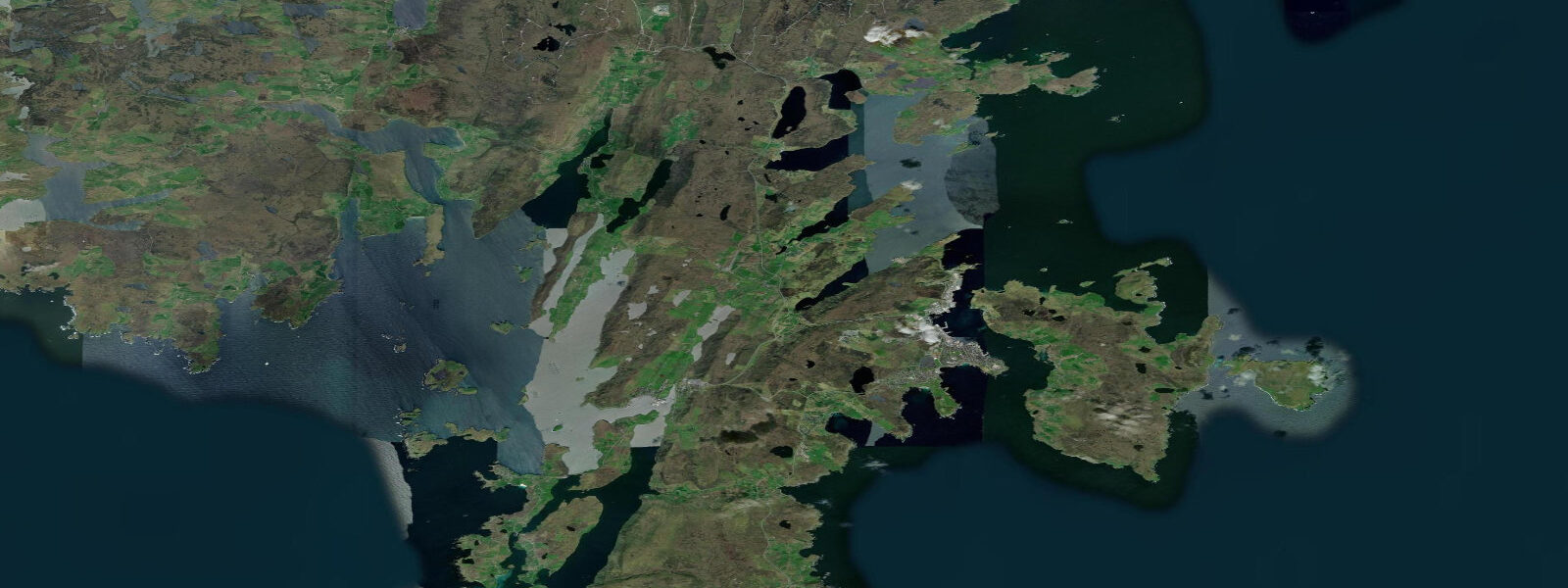
Lerwick is Shetland's capital and the UK's most northerly town at 60 degrees north, closer to Bergen in Norway than to Edinburgh. The harbour sits in the Sound of Bressay — a sheltered channel 1 kilometre wide between the Lerwick waterfront and the island of Bressay to the east. Spring tidal range in the Sound is only 1.5 metres above Chart Datum, making Lerwick one of the smallest-range ports in the UK. But the range and the current are different things: tidal streams through the Sound run at 1.5 to 2 knots at springs, and around the headlands of Bressay the flow accelerates. The modest range belies the fact that Shetland sits at the junction of the North Atlantic and the North Sea, and the tidal streams through the inter-island sounds across the archipelago regularly reach 4 to 5 knots.
Lerwick's harbour is one of the finest natural anchorages in the North Sea and has been used as a fleet base for centuries — Danish, Dutch, British, and Norwegian vessels all called here. The Commercial Street waterfront, built directly on the shoreline, has basement cellars that open directly to the sea at high water; fish dealers once loaded boats directly from the cellars onto waiting vessels alongside. The town has a compact, stone-built character that reads as entirely Nordic, and the Shetland Museum on Hay's Dock covers everything from Viking longships to the oil boom in considerable depth.
The Bressay ferry crosses from the Victoria Pier in Lerwick, a 1-kilometre passage taking 7 minutes. Bressay is mostly farmland with good cliff walks on its eastern coast. Noss, the uninhabited island beyond Bressay, is a National Nature Reserve with breeding gannets, great skuas, and puffins on its vertical 180-metre eastern Noup cliffs. The Noss crossing requires a small inflatable tender that operates only in settled weather in summer; access is managed by NatureScot.
Otters are one of Lerwick's most reliably-seen wildlife encounters. The Shetland otter population is among the densest in Britain, having adapted to a fully marine diet of butterfish, rockling, and eels in the intertidal kelp. Low water is the primary feeding time; the kelp beds exposed below the Lerwick south waterfront and around the Clickimin Loch shore are productive watching locations. The Clickimin Broch — a well-preserved Iron Age stone tower on an island in the loch — is a 15-minute walk from the town centre and the loch's margins give consistent otter sightings in the early morning. Approach quietly and stay low.
The Up Helly Aa fire festival on the last Tuesday of January is the largest fire festival in Europe. A procession of over 1,000 people in Viking costume and armed with torches marches to the galley burning site; the guizer jarl's squad leads in full Viking chieftain dress, and the replica longship is burned at the climax. The festival continues through the night across multiple community halls. The procession and galley burning are free to watch from the streets and are unrestricted for photography — the scale of torchlight and the longship burning against the Lerwick night sky are visually extraordinary.
Small-boat fishing from Lerwick is productive. Pollock and mackerel are taken on lures from the breakwater at the Small Boat Harbour; coalfish come inshore from August. The deeper water off Bressay produces ling, cod, and large pollock on lures and pirks. Wrasse are found on the rocky reefs immediately south of the ferry terminal. Jigging for mackerel and saithe from the pier is a reliable introduction for beginners and produces consistent results from June through September.
Tidal predictions here use the Open-Meteo Marine gridded model (±45 minutes on timing, ±0.3 m on height). Not for navigation.
Tide questions about Lerwick
Quick answers to the most common questions about tide times, range, and water access at Lerwick.
What is the tidal range at Lerwick?
Lerwick has a mean spring tidal range of only 1.5 metres above Chart Datum — among the smallest in the UK. Neap range drops to 0.8 metres. The Sound of Bressay sheltering the harbour sees tidal streams of 1.5 to 2 knots at springs, with faster flows around headlands. The modest range does not reflect the wider Shetland tidal situation: the inter-island sounds across the archipelago run at 3 to 5 knots at springs. Lerwick harbour itself is well sheltered and accessible at all states of tide without tidal restriction.
Where can I see otters in Lerwick?
Otters are regularly seen along the Lerwick south waterfront and around the Clickimin Loch shore (a 15-minute walk from the town centre). They are most active at low water, when the kelp beds are exposed and hunting is easiest. The best approach is to walk quietly along the shore below the tide line, stay low, and scan the kelp systematically. Otters in Shetland are habituated to the presence of people but will bolt if approached directly. Early morning before foot traffic builds is the best window. Local naturalists and the Shetland Wildlife tours can advise on current sightings.
What is Up Helly Aa and when does it happen?
Up Helly Aa is held on the last Tuesday of January in Lerwick. It is the largest fire festival in Europe, featuring a torchlit procession of over 1,000 participants in Viking costume through the town's streets, followed by the burning of a full-size replica Viking longship. The guizer jarl leads the main squad in full Viking chieftain armour. The procession and galley burning are free to watch from the streets; the all-night hall celebrations that follow are by ticket, allocated within the local community. Photography of the procession and burning is unrestricted — the light and scale make it one of the most dramatic photographic events in the UK calendar.
What can I see at Noss National Nature Reserve?
Noss is an uninhabited island east of Bressay, designated a National Nature Reserve for its seabird colonies on the Noup — the vertical 180-metre eastern cliff face. Gannet, great skua (bonxie), puffin, guillemot, razorbill, and fulmar all breed on the cliffs in large numbers. The Noss crossing is made by a small inflatable dinghy from Bressay and operates only in calm weather from late May to mid-August. Access is managed by NatureScot; check conditions before the Bressay ferry. The great skuas on the moorland top will dive on visitors — a walking stick held above the head deters them.
What fishing is available from Lerwick?
The Small Boat Harbour breakwater and the town piers are the primary shore marks. Pollock and coalfish take lures from the breakwater from June onward; mackerel are reliable from July through September on feathers. The rocky reefs south of the ferry terminal hold wrasse year-round. Deeper-water boat fishing west of Bressay produces ling, large cod, and pollock on pirks and rubber eels. The Sound of Bressay is relatively sheltered and fishable in most conditions. Charter boats operate from the harbour offering half-day and full-day sea fishing trips; booking ahead is needed in summer.
8-day tide table — Lerwick
Heights relative to MSL. Predictions: Open-Meteo Marine (MeteoFrance SMOC, 0.08° grid) — heights relative to MSL (not chart datum / LAT). Model-derived.
| Day | Type | Time | Height |
|---|---|---|---|
| Tue 04 Aug | Low | 01:00 | 0.1m / 0.3ft |
| High | 02:39 | 0.3m / 0.9ft | |
| Low | 09:02 | -1.2m / -3.8ft | |
| High | 15:25 | 0.1m / 0.4ft | |
| Wed 05 Aug | Low | 09:50 | -1.0m / -3.4ft |
| High | 16:10 | 0.1m / 0.4ft | |
| Low | 22:04 | -0.8m / -2.5ft | |
| Thu 06 Aug | High | 04:16 | 0.1m / 0.5ft |
| Low | 10:47 | -1.0m / -3.2ft | |
| High | 17:05 | 0.0m / 0.0ft | |
| Low | 23:21 | -0.8m / -2.7ft | |
| Fri 07 Aug | High | 05:37 | 0.0m / 0.1ft |
| Low | 11:54 | -0.9m / -2.9ft | |
| High | 18:17 | 0.0m / 0.1ft | |
| Sat 08 Aug | Low | 00:33 | -0.8m / -2.5ft |
| High | 06:51 | 0.1m / 0.4ft | |
| Low | 13:04 | -0.7m / -2.3ft | |
| High | 19:26 | 0.2m / 0.6ft | |
| Sun 09 Aug | Low | 01:46 | -0.7m / -2.4ft |
| High | 08:01 | 0.3m / 0.8ft | |
| Mon 10 Aug | Low | 02:57 | -0.9m / -3.0ft |
| High | 09:10 | 0.3m / 1.0ft | |
| Low | 15:15 | -0.8m / -2.6ft | |
| High | 21:22 | 0.4m / 1.3ft | |
| Tue 11 Aug | Low | 00:00 | -0.2m / -0.7ft |