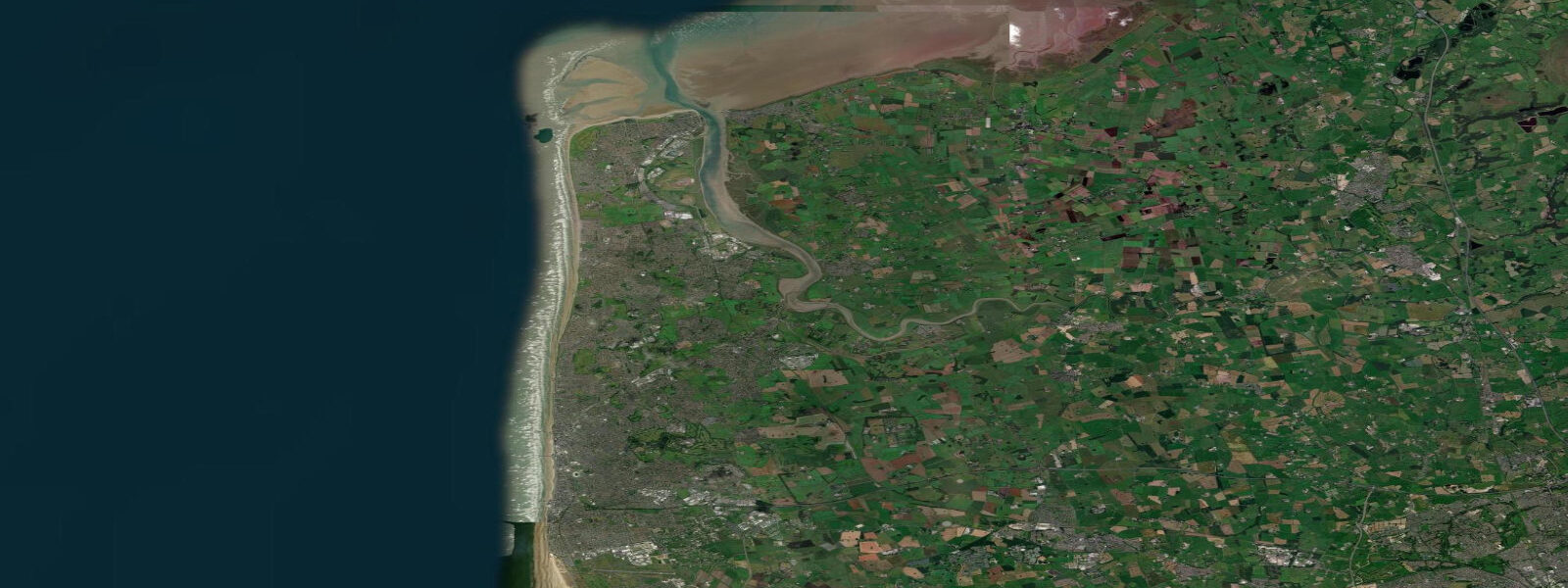
Blackpool tide times
Blackpool tide forecast — heights relative to MSL.
Today's tide times for Blackpool
Tide times at Blackpool on Tuesday, 4 August 2026: first high tide at 02:25, first low tide at 09:14. Sunrise 05:29, sunset 21:05.
Tide chart for Blackpool
24-hour cosine-interpolated curve around the present moment. Heights relative to MSL. Predictions: Predictions: Open-Meteo Marine (MeteoFrance SMOC, 0.08° grid).
Sun, moon and conditions on Tue 04 Aug
Snapshot at build time — refreshes daily. Sea state from Open-Meteo Marine.
Highs and lows next 7 days
Every predicted high and low for the next week, with the daily tidal coefficient (0–120; higher = bigger swing, > 95 means stronger currents).
Other spots nearby
The three closest curated TideTurtle locations to Blackpool, measured by great-circle distance.
Today's solunar windows
Solunar tradition: major periods are the ≈3h windows around moon transit and opposition; minor are ≈2h around moonrise and moonset. Pair with the local tide stage and wind for the best read.
Cycle dates near Blackpool
Last spring tide on Tue 04 Aug (range 6.9m / 22.7ft). Next spring tide on Mon 10 Aug (range 5.6m / 18.4ft). Next neap on Sat 08 Aug.
Spring tides cluster around new and full moons (biggest swings). Neap tides land on quarter moons (smallest swings). See the spring tide and neap tide glossary entries for the why.
About tides at Blackpool
A short guide to the coastline at Blackpool — geography, sea state, and what the tide is actually doing under your feet.
Blackpool is England's most-visited seaside resort, drawing 18 million visitors a year to a 6 km stretch of Irish Sea coast that delivers three piers, a 158 m tower, a tram system, and a tidal range that at spring tides reaches approximately 8.0 m. The beach is the foundation of everything: a broad, flat expanse of sand that at spring low water extends 300–400 m seaward of the normal waterline, creating a natural arena large enough to run beach cricket, football, and donkey racing well below the usual sea level. The tower, the piers, and the illuminated promenade are the backdrop; the tide is the engine that determines when the beach is usable and when the sea comes back.
The three piers — North Pier, Central Pier, and South Pier — are in different states of preservation and offer different experiences. North Pier (1863) is the quietest and most intact; the theatre at its end runs summer shows. Central Pier has the largest funfair ride complement; South Pier is the fishing pier, with angling from the deck year-round. Fishing from South Pier produces whiting and dab in autumn and winter, mackerel in summer, and the occasional bass or smooth hound. The piers extend far enough offshore that fishing from the pier deck at low water reaches depths unavailable from the beach.
For families, the optimum tide window is 2–4 hours after high water on a spring day, when the beach has drained and the sand is exposed but firm. At spring low water the distance to the sea from the promenade steps is 300–400 m; this is a long, productive expanse for sand castle building, cricket, football, and the standard donkey rides. The incoming flood covers this distance in approximately 2.5–3 hours; families should note the flood time and plan to be above the mid-beach mark by low water plus 2 hours.
The Blackpool Illuminations run from late August through early November each year — 10 km of illuminated displays along the promenade from Starr Gate to Bispham. The combination of the late autumn tides and the lights is a peculiarly Lancashire combination: the high-water line on a storm surge night in October can push to within metres of the sea wall base, with the lights reflecting off the flood. The tram system running the full length of the promenade (the Blackpool and Fleetwood Tramway) provides excellent viewing of the illuminations without needing a car.
Surfers at Blackpool use the beach breaks that form at low to mid-tide on southwest groundswell, typically in autumn and early winter. The beach breaks shift with the sandbanks; the banks south of the Central Pier and at Bispham to the north are the most consistent. Autumn storm swells from the Atlantic reach Blackpool with reduced power compared to the Atlantic-facing coasts but still produce rideable waves in the 1–2 m range when the swell period is over 10 seconds.
Birdwatchers at Blackpool target the Irish Sea coast for seabirds in autumn. Manx shearwater passage is notable from North Pier in August and September; gannet, skua, and occasional storm petrel are visible from the pier in strong onshore westerlies during autumn. The beach itself supports sanderling and ringed plover in winter.
For those interested in the history of English seaside architecture, Blackpool is a living archive. The Winter Gardens complex (1878, extensively extended), the Grand Theatre (1894, Frank Matcham design), and the Blackpool Tower (1894, modelled on the Eiffel Tower) represent Victorian and Edwardian investment in seaside entertainment at a scale that no longer occurs in Britain. The Tower Ballroom, with its Frank Matcham interior largely intact, is one of the finest decorative interiors of its period in England — the Come Dancing championships were filmed here for decades. All three are within 300 m of the Central Pier and open to visitors year-round. All tide predictions for Blackpool come from the Open-Meteo Marine gridded model. Timing accuracy is ±45 minutes; height accuracy is ±0.3 m above Chart Datum.
Tide questions about Blackpool
Quick answers to the most common questions about tide times, range, and water access at Blackpool.
What is the tidal range at Blackpool and how does it affect the beach?
Blackpool's spring tidal range is approximately 8.0 m, one of the largest on the English coast outside the Bristol Channel. At spring low water, the beach extends 300–400 m seaward of the promenade — enough to walk a substantial distance below the normal waterline. The flood advances approximately 100–150 m per hour across the flat beach, covering the full low-water width in 2.5–3 hours. Neap range is around 4.0 m, giving a smaller but still significant beach exposure. The best beach time for families is 2–4 hours after high water on spring tides.
When does the Blackpool Illuminations run and is it worth combining with a tide visit?
The Illuminations run from late August through early November, with the main display active nightly from dusk. The 10-km display runs along the entire promenade from Starr Gate to Bispham. Autumn tides are spring-dominant in October, and on high-water evenings the sea comes close to the promenade base — the lights reflecting off the advancing tide on a calm October night is a distinctive Blackpool experience. The tram system covers the full illuminations route without needing to walk or drive.
Which Blackpool pier is best for fishing?
South Pier is the dedicated fishing pier with the best access for sea anglers. Day and evening permits allow fishing from the deck year-round. Whiting and dab are the consistent autumn and winter catch; mackerel shoal in summer and take feathers or spinners; occasional bass and smoothhound are caught in summer. The pier deck elevation gives access to depths unavailable from the beach and improves bait presentation in the tidal current. North Pier and Central Pier have more limited fishing access and are primarily leisure rather than angling venues.
Are there surfing conditions at Blackpool?
Blackpool has beach breaks that work on southwest Atlantic groundswell, typically at low to mid-tide when the sandbars are exposed enough to create shape. Autumn and early winter (October–January) produce the best swell windows. Wave heights are generally smaller than the Atlantic-facing coasts — Blackpool is in the shadow of Ireland and the Welsh coast — but consistent 1–2 m sets occur in strong autumn storms. The banks south of Central Pier and at Bispham to the north are most consistent. Water temperature drops to 7–9 °C in February; a 5/4 mm wetsuit with boots and hood is standard winter kit.
How do I get the best view of the tides at Blackpool without walking on the beach?
North Pier extends far enough into the Irish Sea to give a clear view of the tidal cycle without beach access. Walk to the pier head at low water — the water is visibly far below on a spring tide — and return 2 hours later to see the difference. The Central Pier observation area also works. For the full beach-width view at spring low water, the elevated promenade on the lower deck of the Blackpool Tower gives a good perspective looking both north and south along the 6 km beach arc. The tram also provides a moving observation platform along the full 10 km promenade length.
8-day tide table — Blackpool
Heights relative to MSL. Predictions: Open-Meteo Marine (MeteoFrance SMOC, 0.08° grid) — heights relative to MSL (not chart datum / LAT). Model-derived.
| Day | Type | Time | Height |
|---|---|---|---|
| Tue 04 Aug | High | 02:25 | 3.3m / 10.8ft |
| Low | 09:14 | -3.6m / -11.9ft | |
| Wed 05 Aug | High | 03:07 | 3.1m / 10.1ft |
| Low | 09:54 | -3.4m / -11.0ft | |
| High | 15:38 | 2.7m / 8.9ft | |
| Low | 22:18 | -2.8m / -9.1ft | |
| Thu 06 Aug | High | 03:57 | 2.6m / 8.4ft |
| Low | 10:44 | -3.1m / -10.2ft | |
| High | 16:31 | 2.2m / 7.2ft | |
| Low | 23:13 | -2.7m / -9.0ft | |
| Fri 07 Aug | High | 05:03 | 2.2m / 7.1ft |
| Low | 11:50 | -2.6m / -8.6ft | |
| High | 17:42 | 1.9m / 6.3ft | |
| Sat 08 Aug | Low | 00:25 | -2.3m / -7.6ft |
| High | 06:21 | 2.1m / 6.8ft | |
| Low | 13:09 | -2.2m / -7.3ft | |
| High | 19:07 | 2.1m / 6.9ft | |
| Sun 09 Aug | Low | 01:58 | -2.3m / -7.5ft |
| High | 07:48 | 2.0m / 6.7ft | |
| Low | 14:41 | -2.5m / -8.1ft | |
| High | 20:27 | 2.2m / 7.3ft | |
| Mon 10 Aug | Low | 03:23 | -2.8m / -9.3ft |
| High | 09:05 | 2.3m / 7.4ft | |
| Low | 15:54 | -3.0m / -9.8ft | |
| High | 21:32 | 2.6m / 8.7ft | |
| Tue 11 Aug | Low | 00:00 | 0.8m / 2.5ft |