Morecambe tide times
Morecambe tide forecast — heights relative to MSL.
Today's tide times for Morecambe
Tide times at Morecambe on Tuesday, 4 August 2026: first low tide at 09:25, first high tide at 14:58, second low tide at 21:36. Sunrise 05:27, sunset 21:06.
Tide chart for Morecambe
24-hour cosine-interpolated curve around the present moment. Heights relative to MSL. Predictions: Predictions: Open-Meteo Marine (MeteoFrance SMOC, 0.08° grid).
Sun, moon and conditions on Tue 04 Aug
Snapshot at build time — refreshes daily. Sea state from Open-Meteo Marine.
Highs and lows next 7 days
Every predicted high and low for the next week, with the daily tidal coefficient (0–120; higher = bigger swing, > 95 means stronger currents).
Other spots nearby
The three closest curated TideTurtle locations to Morecambe, measured by great-circle distance.
Today's solunar windows
Solunar tradition: major periods are the ≈3h windows around moon transit and opposition; minor are ≈2h around moonrise and moonset. Pair with the local tide stage and wind for the best read.
Cycle dates near Morecambe
Last spring tide on Tue 04 Aug (range 6.5m / 21.3ft). Next spring tide on Mon 10 Aug (range 5.7m / 18.8ft). Next neap on Sat 08 Aug.
Spring tides cluster around new and full moons (biggest swings). Neap tides land on quarter moons (smallest swings). See the spring tide and neap tide glossary entries for the why.
About tides at Morecambe
A short guide to the coastline at Morecambe — geography, sea state, and what the tide is actually doing under your feet.
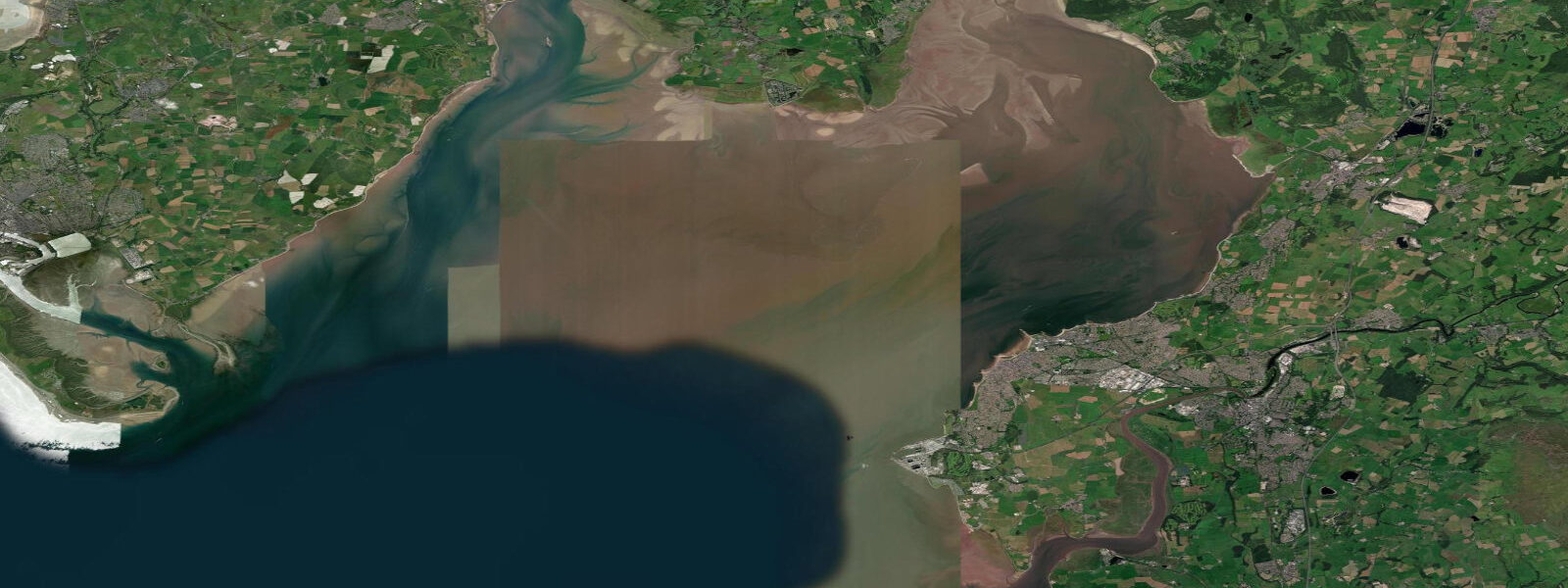
Morecambe sits on the eastern shore of Morecambe Bay, looking out across one of the most dramatic intertidal landscapes in the United Kingdom. The spring tidal range here touches 8.5 metres above Chart Datum — the third-largest in the country — and when the tide goes out, the sea disappears almost entirely, retreating more than 8 kilometres to leave an unbroken plain of sand and mud that extends to the horizon. When it returns, it comes fast: the incoming flood across the flat bay can outpace a galloping horse, moving in multiple channels simultaneously and surrounding features that looked dry minutes earlier. This is not folklore. Morecambe Bay has claimed lives, and the standing advice is never to walk the sands without knowing the current tide times and channels.
The bay dries to roughly 310 square kilometres of intertidal flat — one of the largest in Europe. At low water, the exposed bed is a mosaic of cockle grounds, mussel beds, and shifting channels. Cockle picking has been an industry here for centuries; the beds are licensed and managed by the local Sea Fisheries Committee. The tragic 2004 cockle-picking incident, when 23 Chinese migrant workers drowned in the bay, serves as a permanent reminder of how quickly conditions change.
The guided cross-bay walk is the most famous tidal activity here. Led by the Queen's Guide to the Sands — an appointed position held since 1536 — the walk covers roughly 11 kilometres from Arnside or Hest Bank to Kents Bank on the far shore, crossing live channels and quicksand zones that only the Guide knows. The low-water window is 5 hours; the walk takes 3.5 hours at a moderate pace. Booking is essential; the walks run from spring through autumn, timed to the lowest neap and spring tides. The quicksand zones in the bay shift with each major storm; the Guide walks the route before each group to check the current channel positions. Attempting the crossing without a guide has resulted in deaths in recent decades.
The promenade at Morecambe itself is a broad Victorian seafront with a working stone jetty. Eric Morecambe's statue stands at the southern end of the Stone Jetty — the comedian was born here and the town adopted him as its defining symbol. At high water, the bay fills to the promenade edge and the view is of open water to the Lakeland fells behind Grange-over-Sands. At low water, the sea is out of sight. The promenade is a practical cycling and walking route connecting the Stone Jetty to Happy Mount Park at the north end of town.
Anglers work the channels at the edge of the retreating tide, targeting bass, flounder, and dab in the gully systems. The main channels hold the fish; wading out is possible at low water but requires knowing where the firmer sand runs. Shore fishing from the Stone Jetty works at all states of tide. Flatfish take ragworm and lugworm presented on the bottom; bass hunt the channel edges from dusk into dark. Autumn brings codling into the bay as water temperatures drop. The Lune Estuary at Lancaster, 10 kilometres northeast, is a productive alternative mark when bay conditions are unsuitable.
Birdwatchers come in autumn and winter when wader numbers are at their peak. Dunlin, knot, oystercatcher, curlew, bar-tailed godwit, and grey plover feed on the flats in their tens of thousands; the bay supports up to 350,000 wading birds in winter. The RSPB's Leighton Moss reserve is 8 kilometres to the north and adds bittern, marsh harrier, bearded tit, and avocet to the species list. The Hest Bank shore is an accessible vantage point for bay waders at high tide when the birds are pushed close to the shoreline. Autumn migration brings additional species through. Photographers get memorable shots at sunrise when the light hits the wet sand and the fells stand clear to the east; the incoming tide with cumulus clouds building over the hills behind gives the most dramatic conditions.
Tidal predictions here use the Open-Meteo Marine gridded model (±45 minutes on timing, ±0.3 m on height). Not for navigation.
Tide questions about Morecambe
Quick answers to the most common questions about tide times, range, and water access at Morecambe.
How fast does the tide come in at Morecambe Bay?
The incoming tide at Morecambe Bay is frequently described as faster than a galloping horse — this refers to the flood crossing the flat, exposed bay at speeds exceeding 15 km/h in certain channels. The bay's shallow gradient and vast area mean the water returns across the flats simultaneously from multiple directions. The danger is not the wave front but the way channels fill and surround walkers who have ventured onto the sands. Never walk the bay without checking current tide times and using an authorised guide for cross-bay routes.
How do I book the guided cross-bay walk?
The Queen's Guide to the Sands organises and leads all official cross-bay walks. Walks are typically scheduled from spring through autumn, timed to suitable low tides. The traditional route runs from Arnside or Hest Bank to Kents Bank, covering 11 kilometres in 3.5 hours. Bookings can be made through the official Cedric Robinson (and successor guides) website or via local tourist information. Walks sell out months ahead in summer. The bay is closed to unofficial guided groups; the Guide's authorization matters — the channels and quicksand zones shift seasonally.
What fish can I catch at Morecambe?
Bass and flatfish dominate the catches. Flounder and dab are the most consistent flatfish year-round, taken on ragworm and lugworm presented on the bottom in the channels. Bass come into the bay channels from summer through autumn, feeding at the channel edges particularly around dusk and dawn. Codling appear in the bay in autumn and early winter. The Stone Jetty produces pouting and small bass at high water. Estuary channels north of Morecambe toward Heysham hold the best flatfish. Check Lancashire Sea Fisheries byelaws before gathering shellfish commercially.
Where is the best birdwatching near Morecambe Bay?
The bay itself holds up to 250,000 wading birds in peak winter periods — knot, dunlin, oystercatcher, curlew, bar-tailed godwit, and grey plover are all present in large numbers. The RSPB's Leighton Moss reserve 8 kilometres north is one of the best inland wetland reserves in England, adding bittern, marsh harrier, bearded tit, and avocet to the species list. The Hest Bank shore is an accessible vantage point for bay waders at high tide when the birds are pushed close to the shoreline. Autumn migration brings additional species through.
What is the spring tidal range at Morecambe, and what does it mean in practice?
The mean spring range at Morecambe is 8.5 metres above Chart Datum — one of the largest in the UK. In practical terms this means the bay drains almost completely on each spring tide, exposing kilometres of sand and mud that are hidden at high water. High water brings the sea to the promenade edge; low water puts it over 8 kilometres away. The exposed flats are rich in cockles, mussels, and invertebrates that support enormous bird populations. The same large range drives the dangerous incoming flood speed that makes unsupervised bay walks hazardous.
8-day tide table — Morecambe
Heights relative to MSL. Predictions: Open-Meteo Marine (MeteoFrance SMOC, 0.08° grid) — heights relative to MSL (not chart datum / LAT). Model-derived.
| Day | Type | Time | Height |
|---|---|---|---|
| Tue 04 Aug | Low | 09:25 | -3.6m / -11.8ft |
| High | 14:58 | 2.9m / 9.5ft | |
| Low | 21:36 | -3.1m / -10.2ft | |
| Wed 05 Aug | High | 03:12 | 3.1m / 10.2ft |
| Low | 09:58 | -3.3m / -10.8ft | |
| High | 15:47 | 2.8m / 9.2ft | |
| Thu 06 Aug | Low | 10:48 | -3.1m / -10.1ft |
| High | 16:41 | 2.2m / 7.3ft | |
| Low | 23:18 | -2.7m / -8.9ft | |
| Fri 07 Aug | High | 05:12 | 2.2m / 7.2ft |
| Low | 11:57 | -2.5m / -8.3ft | |
| High | 17:53 | 2.0m / 6.4ft | |
| Sat 08 Aug | Low | 00:35 | -2.2m / -7.3ft |
| High | 06:33 | 2.2m / 7.1ft | |
| Low | 13:24 | -2.0m / -6.7ft | |
| High | 19:18 | 2.3m / 7.5ft | |
| Sun 09 Aug | Low | 02:18 | -2.2m / -7.1ft |
| High | 07:58 | 2.1m / 7.0ft | |
| Low | 14:58 | -2.4m / -7.9ft | |
| High | 20:37 | 2.4m / 7.7ft | |
| Mon 10 Aug | Low | 03:41 | -2.8m / -9.3ft |
| High | 09:13 | 2.4m / 7.7ft | |
| Low | 16:11 | -3.0m / -9.8ft | |
| High | 21:42 | 2.7m / 9.0ft | |
| Tue 11 Aug | Low | 00:00 | 0.9m / 2.9ft |