Southampton tide times
Southampton tide forecast — heights relative to MSL.
Today's tide times for Southampton
Tide times at Southampton on Friday, 31 July 2026: first high tide at 01:00, first low tide at 05:07, second high tide at 13:32, second low tide at 17:21, third high tide at 23:15. Sunrise 05:28, sunset 20:54.
Tide chart for Southampton
24-hour cosine-interpolated curve around the present moment. Heights relative to MSL. Predictions: Predictions: Open-Meteo Marine (MeteoFrance SMOC, 0.08° grid).
Sun, moon and conditions on Fri 31 Jul
Snapshot at build time — refreshes daily. Sea state from Open-Meteo Marine.
Highs and lows next 7 days
Every predicted high and low for the next week, with the daily tidal coefficient (0–120; higher = bigger swing, > 95 means stronger currents).
Other spots nearby
The three closest curated TideTurtle locations to Southampton, measured by great-circle distance.
Today's solunar windows
Solunar tradition: major periods are the ≈3h windows around moon transit and opposition; minor are ≈2h around moonrise and moonset. Pair with the local tide stage and wind for the best read.
Cycle dates near Southampton
Next spring tide on Sun 02 Aug (range 1.9m / 6.1ft). Next neap on Thu 06 Aug.
Spring tides cluster around new and full moons (biggest swings). Neap tides land on quarter moons (smallest swings). See the spring tide and neap tide glossary entries for the why.
About tides at Southampton
A short guide to the coastline at Southampton — geography, sea state, and what the tide is actually doing under your feet.
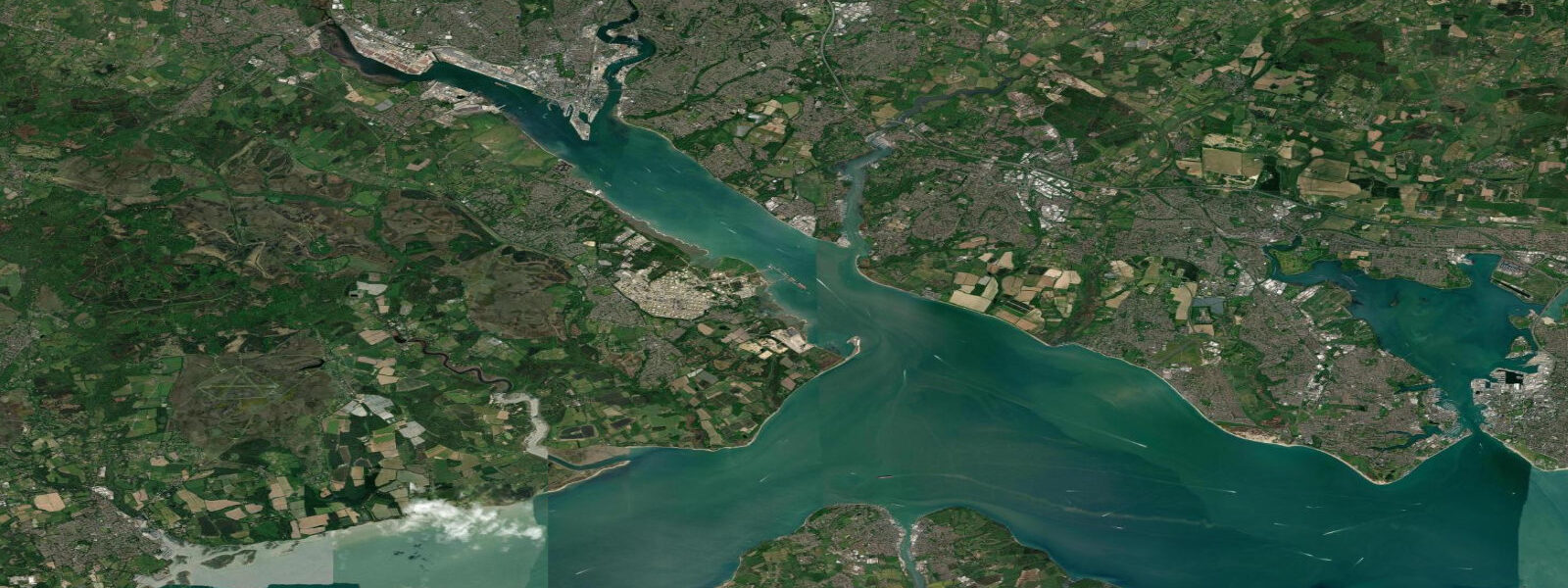
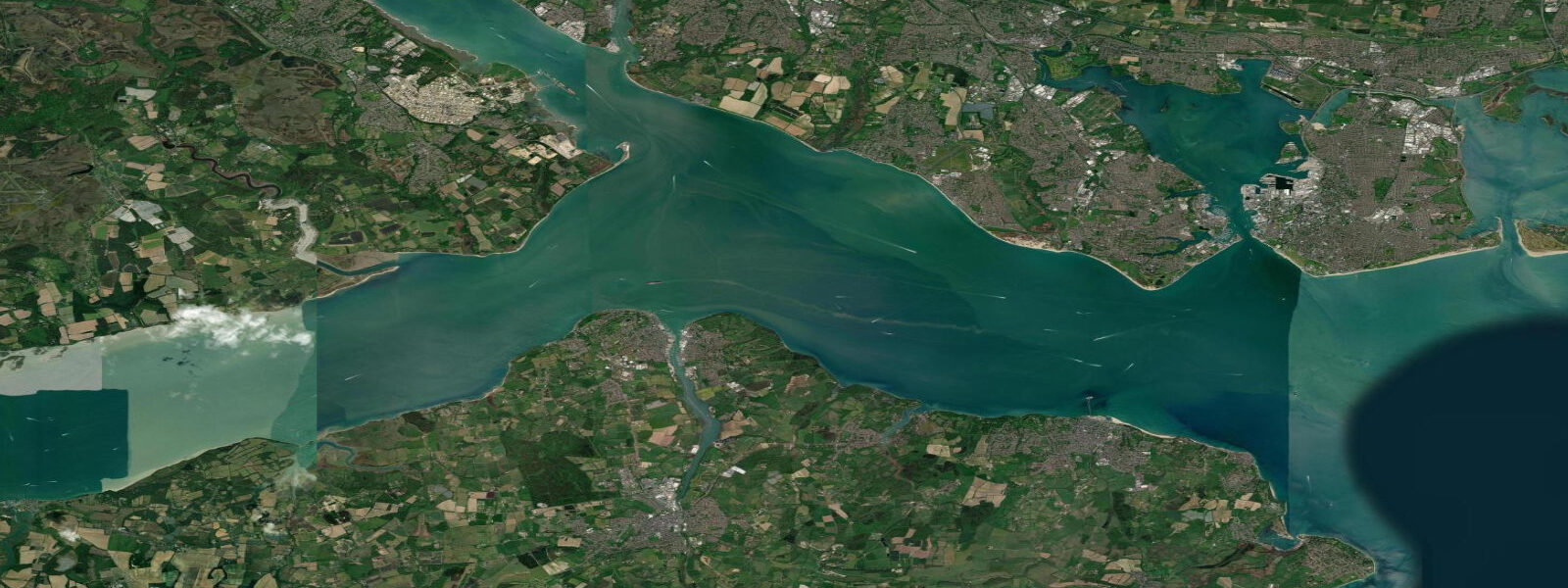
Southampton Water sits at the confluence of two Hampshire rivers — the Test coming down from the north and the Itchen joining from the northeast — in one of the most hydraulically peculiar estuaries on the English coast. The tide here does not behave the way a standard semidiurnal system would lead you to expect. Most British coasts see high water for a relatively brief period before the ebb pulls water away cleanly.
At Southampton, high water arrives and then lingers. The water level rises to near the top, retreats slightly, and then rises again — a secondary hump that can hold the water near its peak for three to four hours before the main ebb finally takes over. This double high water, caused by the interaction of two tidal wave paths arriving at the Solent from opposite ends of the English Channel at slightly different times, is the defining hydrographic characteristic of the port.
The eastern arm of the tidal wave curves around the Isle of Wight and arrives out of phase with the main flood from the west, and the superposition of those two signals produces the extended high-water plateau. 2 metres — genuinely macrotidal, with the gap between the top of the tide and the exposed mud and gravel of the lower estuary wide enough to create a meaningful working window for any activity that depends on water depth. But the double-high pattern means the usable period near the top of the range is substantially longer than the range figure alone suggests.
For the liner companies of the early twentieth century, this was the decisive advantage: White Star, Cunard, and Union-Castle could load passengers and provision ships against a prolonged high-water window that would have been a much tighter operation in Bristol or Cardiff. The Titanic sailed from Southampton's Ocean Dock on 10 April 1912 on a combination of a spring tide window and the double-high pattern that gave the departure adequate draught through the relatively shallow water at the dock mouth. Southampton is still the UK's largest and busiest cruise port.
The Western Docks handle the major cruise berths; the Eastern Docks contain the ABP container terminal and the vehicle import facility — one of the UK's main car import operations, processing large volumes from European and Asian manufacturers. The view across Southampton Water from the Town Quay or from Hythe on the western shore is almost entirely defined by shipping: car carriers, container ships, cruise liners, and the regular Red Funnel ferries to East Cowes on the Isle of Wight cutting across the working water. For small-boat users, Southampton Water has designated fairways and considerable commercial traffic — the VHF port radio traffic on Channel 12 (Southampton VTS) is a good indication of what is moving and when.
5 knots on springs through the main channel, and the double-high pattern means slack water periods are brief and can be harder to judge than in a standard sinusoidal system. Kayakers and paddleboarders use the Itchen and upper Test above the main port area, where commercial traffic thins out, and the tidal range still applies through the river channels. The foreshore at Hamble, on the eastern shore of Southampton Water, is one of the most concentrated sailing and yacht berthing areas in Britain — marinas, boatyards, and the Royal Air Force Yacht Club compressed into a small river mouth with tidal access governed by the same double-high pattern.
Anglers fish the groynes and hard standings along the western shore from Marchwood south to Hythe for mullet, bass, flounder, and occasional smoothhound on the flood tide. The mud exposed at low water on the Test shore holds invertebrate food chains that attract significant wader and wildfowl populations — dunlin, redshank, black-tailed godwit, and avocet on the RSPB Eling reserve at the head of the estuary near Totton. 3 metres on height, model-derived not from a local gauge.
For Southampton specifically, the double-high-water profile adds complexity: the secondary peak timing varies and the model may not resolve the full shape of the curve with precision. For navigation, harbour operations, or any time-critical use, the UK Hydrographic Office Admiralty Tide Tables for Southampton are the authoritative reference. The National Tidal and Sea Level Facility (NTSLF) operates gauges in the Solent and makes real-time data available online.
Tide questions about Southampton
Quick answers to the most common questions about tide times, range, and water access at Southampton.
What is the double high water at Southampton?
Southampton experiences a double high water — a phenomenon where the tide rises to near its peak, drops slightly, then rises again before the main ebb begins. The result is a prolonged high-water stand lasting three to four hours, rather than the brief peak typical of most semidiurnal tidal systems. The cause is the geometry of the Solent: the tidal wave enters from both ends of the English Channel simultaneously, and the eastern arm curves around the Isle of Wight and arrives slightly out of phase with the main flood from the west. The superposition of those two signals extends the high-water period. Mean spring range is approximately 4.2 metres despite — or alongside — the double-high pattern. For navigation and operations timing, the UK Hydrographic Office Admiralty Tide Tables for Southampton resolve the double-peak shape in detail.
What is the tidal range at Southampton?
Mean spring tidal range at Southampton is approximately 4.2 metres, putting it firmly in the macrotidal category. Neap tides reduce the range to around 2.0 to 2.5 metres. Two high tides and two low tides occur each day, but the double-high-water phenomenon means the high-water period is extended significantly — the water stays near its peak for several hours before the main ebb begins. This combination of a large range and a prolonged high-water stand made Southampton the dominant UK passenger liner port through the twentieth century. Open-Meteo Marine predictions for Southampton are model-derived and typically accurate within plus or minus 45 minutes on timing and 0.2 to 0.3 metres on height.
Where does the Southampton tide data come from?
The predictions on this page come from Open-Meteo Marine, a free global gridded ocean model — model-derived, not from a local gauge. The double-high-water shape at Southampton is a locally complex signal that a global model may not fully resolve in its secondary peak timing. For authoritative data: the UK Hydrographic Office (UKHO) publishes the Admiralty Tide Tables for Southampton, which is one of the standard gauge ports in the UK tide table system. The National Tidal and Sea Level Facility (NTSLF) at the National Oceanography Centre in Southampton operates real-time sea-level monitoring and makes gauge data publicly available.
What activities are affected by the tides in Southampton Water?
Commercial shipping and cruise operations are the primary tide-dependent activities in Southampton Water itself — large vessels need adequate draught through the port approach channel, and the double-high-water pattern historically made Southampton the preferred UK liner port. For smaller-boat users: the main channel carries fast tidal streams (1.5 to 2.5 knots on springs), and kayakers and paddleboarders generally prefer the Itchen and upper Test above the commercial berths where traffic thins. Dinghy sailing concentrates around Hamble on the eastern shore, one of the most active sailing clubs areas in southern England. Anglers fish the western shoreline for bass, mullet, and flounder on the flood tide, timing sessions around the rising water. Birdwatchers time low-water visits to the RSPB Eling marshes at the estuary head, where exposed mud draws dunlin, redshank, and avocet.
Is it safe to kayak or paddleboard in Southampton Water?
Southampton Water carries heavy commercial traffic including car carriers, container ships, and cruise liners, and the main navigation channel is not a suitable paddling route. The Vessel Traffic Service (VTS) on VHF Channel 12 gives a real-time picture of what is moving. Kayaking and paddleboarding are more appropriate in the rivers — the Itchen above the Northam bridges and the Test above the dock area — where commercial traffic is absent and tidal streams are manageable. Tidal streams in the main channel run 1.5 to 2.5 knots on springs. The double-high-water pattern means slack water is less distinct and shorter than it would be in a standard tidal system — plan on stream running throughout most of the cycle. Check the Admiralty Tide Tables or NTSLF real-time data rather than relying solely on gridded model output for timing.
8-day tide table — Southampton
Heights relative to MSL. Predictions: Open-Meteo Marine (MeteoFrance SMOC, 0.08° grid) — heights relative to MSL (not chart datum / LAT). Model-derived.
| Day | Type | Time | Height |
|---|---|---|---|
| Fri 31 Jul | High | 01:00 | 0.1m / 0.2ft |
| Low | 05:07 | -1.4m / -4.7ft | |
| High | 13:32 | 0.1m / 0.4ft | |
| Low | 17:21 | -1.1m / -3.7ft | |
| High | 23:15 | 0.2m / 0.8ft | |
| Sat 01 Aug | Low | 05:45 | -1.5m / -5.1ft |
| High | 13:35 | 0.2m / 0.6ft | |
| Low | 18:00 | -1.1m / -3.7ft | |
| Sun 02 Aug | High | 00:02 | 0.2m / 0.6ft |
| Low | 06:19 | -1.6m / -5.2ft | |
| High | 13:40 | 0.3m / 1.0ft | |
| Low | 18:41 | -1.0m / -3.4ft | |
| Mon 03 Aug | High | 01:15 | 0.2m / 0.8ft |
| Low | 07:00 | -1.3m / -4.4ft | |
| High | 14:14 | 0.3m / 1.1ft | |
| Low | 19:21 | -1.0m / -3.3ft | |
| High | 23:22 | 0.1m / 0.3ft | |
| Low | 23:40 | 0.0m / 0.1ft | |
| Tue 04 Aug | High | 02:07 | 0.2m / 0.8ft |
| Low | 07:46 | -1.3m / -4.2ft | |
| High | 15:00 | 0.2m / 0.8ft | |
| Low | 20:10 | -1.0m / -3.4ft | |
| Wed 05 Aug | High | 00:04 | -0.1m / -0.4ft |
| Low | 00:42 | -0.2m / -0.5ft | |
| High | 03:03 | 0.1m / 0.2ft | |
| Low | 08:31 | -1.2m / -4.0ft | |
| High | 15:46 | 0.2m / 0.6ft | |
| Low | 21:04 | -1.0m / -3.2ft | |
| Thu 06 Aug | High | 00:24 | -0.2m / -0.7ft |
| Low | 01:00 | -0.2m / -0.8ft | |
| High | 03:51 | -0.0m / -0.0ft | |
| Low | 09:26 | -1.1m / -3.5ft | |
| High | 16:26 | 0.2m / 0.5ft | |
| Low | 22:07 | -0.9m / -2.9ft | |
| Fri 07 Aug | High | 00:00 | -0.5m / -1.6ft |