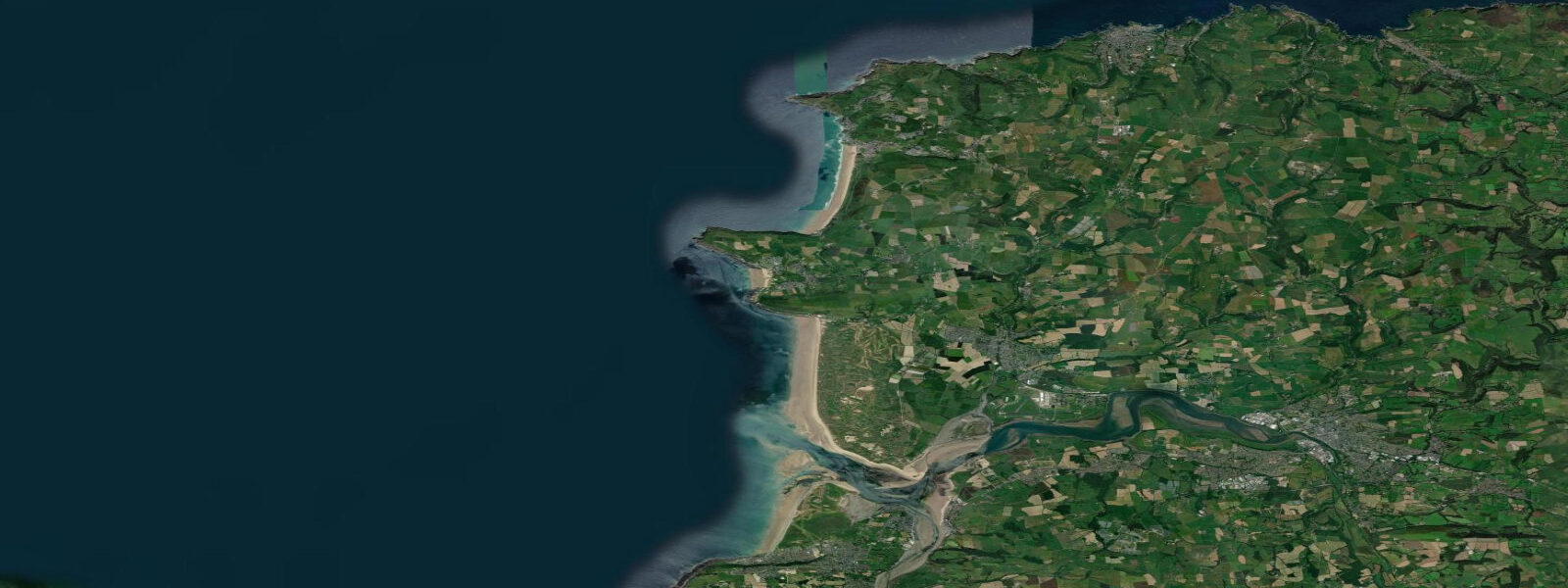
Croyde tide times
Croyde tide forecast — heights relative to MSL.
Today's tide times for Croyde
Tide times at Croyde on Monday, 3 August 2026: first high tide at 01:00, first low tide at 02:52, second high tide at 08:53, second low tide at 15:03, third high tide at 21:09. Sunrise 05:43, sunset 21:01.
Tide chart for Croyde
24-hour cosine-interpolated curve around the present moment. Heights relative to MSL. Predictions: Predictions: Open-Meteo Marine (MeteoFrance SMOC, 0.08° grid).
Sun, moon and conditions on Mon 03 Aug
Snapshot at build time — refreshes daily. Sea state from Open-Meteo Marine.
Highs and lows next 7 days
Every predicted high and low for the next week, with the daily tidal coefficient (0–120; higher = bigger swing, > 95 means stronger currents).
Other spots nearby
The three closest curated TideTurtle locations to Croyde, measured by great-circle distance.
Today's solunar windows
Solunar tradition: major periods are the ≈3h windows around moon transit and opposition; minor are ≈2h around moonrise and moonset. Pair with the local tide stage and wind for the best read.
Cycle dates near Croyde
Last spring tide on Mon 03 Aug (range 6.6m / 21.8ft). Next neap on Sat 08 Aug.
Spring tides cluster around new and full moons (biggest swings). Neap tides land on quarter moons (smallest swings). See the spring tide and neap tide glossary entries for the why.
About tides at Croyde
A short guide to the coastline at Croyde — geography, sea state, and what the tide is actually doing under your feet.
Croyde is a North Devon surf village — Atlantic-facing, exposed to long-period groundswell from deep North Atlantic storms, and the closest thing to a proper surf town in southwest England. The beach is a broad sandy arc between Baggy Point to the north and the Saunton Sands dune system to the south. Tidal range is large: mean spring range around 6.5 metres, one of the higher ranges on the Devon coast, which means the beach transforms dramatically through the tidal cycle.
Surf quality at Croyde is critically tide-dependent. The beach breaks best at low to mid tide incoming — typically 2 to 3 hours after low water — when the sand bars produce well-defined peaks with clean faces. High tide pushes the swell directly against the steep upper beach and closes out fast, making it difficult to read and dangerous in heavier swell. At the lowest spring tides, the beach exposes significant shallow area to the north of the point that can produce hollow, powerful shore-break conditions not suitable for beginners.
The surfing season runs year-round, with the best swells arriving from October through April. August is the most crowded month — summer crowds reduce the quality of the experience significantly — but August also brings the best learner conditions (smaller, less powerful swell, warmer water). The RNLI patrol Croyde Beach during summer with experienced lifeguards; red/yellow flags mark the designated swimming zone. Surf lessons are available from multiple operators in the village.
Rip currents are an ongoing issue, particularly on the north side of the beach near Baggy Point. The large tidal range means rip channels shift position between low and high water — a rip that's visible at low tide may move 50 metres south by high. Lifeguards brief swimmers at the beginning of each day on current conditions. Never swim outside flagged areas in strong swell conditions.
Baggy Point itself, managed by the National Trust, is a short walk from the village. The clifftop path gives views north to Lundy Island and south toward Saunton. Peregrine falcons nest on the cliff face — visible from the path in spring. Rock climbers use the north face of the point; the routes require tidal access during low water.
Saunton Sands to the south is a 5-kilometre beach with easier surf conditions than Croyde (fewer localism issues, consistent peaks at mid-tide). It's accessed from the Saunton Sands Hotel car park. The dunes behind Saunton (Braunton Burrows) are a UNESCO Biosphere Reserve — the largest sand dune system in England, accessible by footpath.
Tide predictions on this page come from Open-Meteo Marine, a gridded global ocean model, cross-referenced with UK Environment Agency gauge data. For the most accurate local predictions, consult the UK National Tide Gauge Network via CEFAS or the UKHO's EasyTide service.
Tide questions about Croyde
Quick answers to the most common questions about tide times, range, and water access at Croyde.
What is the best tide for surfing at Croyde?
Low to mid incoming tide is the standard answer from Croyde regulars — typically 2 to 3 hours after low water. This is when the sandbars produce their cleanest peaks with defined shape and rideable faces. High tide produces heavy, fast-closing surf that's difficult for intermediates. On very low spring tides, the north section near Baggy Point gets hollow and powerful — advanced surfers only. The session window at the right tide level lasts roughly 2 to 3 hours.
How large is the tidal range at Croyde?
Croyde has a large macrotidal range — mean springs around 6.5 metres. At low spring tide the beach extends far seaward, revealing the sandbar structure and increasing the paddling distance to the break significantly. At high spring tide the sea washes close to the dunes and the surf zone is compressed. This range means you can arrive at the same beach two hours apart and experience what feels like a completely different surf spot.
Is Croyde safe for beginner surfers?
In summer (June through August), yes — with a lesson. Smaller swell, lifeguard patrol, and warm-ish water (16 to 18°C) make Croyde accessible to beginners under instruction. Several surf schools operate from the beach; avoid trying to self-teach in Croyde's heavier autumn/winter surf. Rip currents require awareness — always stay within lifeguarded flags. In autumn and winter, Croyde surf is powerful and not suitable for beginners.
What wildlife can I see at Baggy Point?
Baggy Point (National Trust) is excellent for coastal wildlife. Peregrine falcons nest on the north face from February through July — watch from the cliff path above. Grey seals are occasionally seen in the water off the point. The cliff-top grassland supports stonechat, wheatear, and linnet. In late summer, porpoise are sometimes spotted from the headland on calm days. The rock pools at the base of the point expose on spring low tides with a good variety of intertidal species.
What is the difference between Croyde and Saunton Sands?
Croyde is a shorter, more powerful beach break with a compact village and stronger surfing culture. Saunton Sands is a 5 km straight beach with gentler, more consistent waves suitable for learners and longboarders — less localism, more space. Both work on the same swell window. Croyde is better at mid-tide; Saunton is more forgiving across the tidal range. Saunton also has a large surf school operation. Drive between them takes 10 minutes.
8-day tide table — Croyde
Heights relative to MSL. Predictions: Open-Meteo Marine (MeteoFrance SMOC, 0.08° grid) — heights relative to MSL (not chart datum / LAT). Model-derived.
| Day | Type | Time | Height |
|---|---|---|---|
| Mon 03 Aug | High | 01:00 | -2.3m / -7.4ft |
| Low | 02:52 | -3.5m / -11.5ft | |
| High | 08:53 | 2.9m / 9.7ft | |
| Low | 15:03 | -3.4m / -11.0ft | |
| High | 21:09 | 3.1m / 10.3ft | |
| Tue 04 Aug | Low | 03:25 | -3.3m / -10.9ft |
| High | 09:28 | 2.8m / 9.2ft | |
| Low | 15:41 | -3.2m / -10.4ft | |
| High | 21:46 | 2.9m / 9.4ft | |
| Wed 05 Aug | Low | 04:05 | -3.2m / -10.4ft |
| High | 10:08 | 2.5m / 8.1ft | |
| Low | 16:23 | -3.0m / -9.8ft | |
| High | 22:29 | 2.3m / 7.7ft | |
| Thu 06 Aug | Low | 04:50 | -3.0m / -9.7ft |
| High | 10:57 | 2.0m / 6.6ft | |
| Low | 17:13 | -2.7m / -9.0ft | |
| High | 23:25 | 1.9m / 6.1ft | |
| Fri 07 Aug | Low | 05:46 | -2.6m / -8.4ft |
| High | 12:00 | 1.7m / 5.6ft | |
| Low | 18:22 | -2.4m / -7.9ft | |
| Sat 08 Aug | High | 00:42 | 1.6m / 5.1ft |
| Low | 07:01 | -2.3m / -7.4ft | |
| High | 13:27 | 1.5m / 5.0ft | |
| Low | 19:47 | -2.3m / -7.5ft | |
| Sun 09 Aug | High | 02:19 | 1.6m / 5.2ft |
| Low | 08:33 | -2.2m / -7.3ft | |
| High | 15:03 | 1.8m / 6.0ft | |
| Low | 21:23 | -2.4m / -7.9ft | |
| Mon 10 Aug | High | 00:00 | -1.0m / -3.2ft |