Sousse tide times
Sousse tide forecast — heights relative to MSL.
Today's tide times for Sousse
Tide times at Sousse on Friday, 31 July 2026: first high tide at 01:50am, first low tide at 08:10am. Sunrise 05:23am, sunset 07:23pm.
Tide chart for Sousse
24-hour cosine-interpolated curve around the present moment. Heights relative to MSL. Predictions: Predictions: Open-Meteo Marine (MeteoFrance SMOC, 0.08° grid).
Sun, moon and conditions on Fri 31 Jul
Snapshot at build time — refreshes daily. Sea state from Open-Meteo Marine.
Highs and lows next 7 days
Every predicted high and low for the next week, with the daily tidal coefficient (0–120; higher = bigger swing, > 95 means stronger currents).
Other spots nearby
The three closest curated TideTurtle locations to Sousse, measured by great-circle distance.
Today's solunar windows
Solunar tradition: major periods are the ≈3h windows around moon transit and opposition; minor are ≈2h around moonrise and moonset. Pair with the local tide stage and wind for the best read.
About tides at Sousse
A short guide to the coastline at Sousse — geography, sea state, and what the tide is actually doing under your feet.
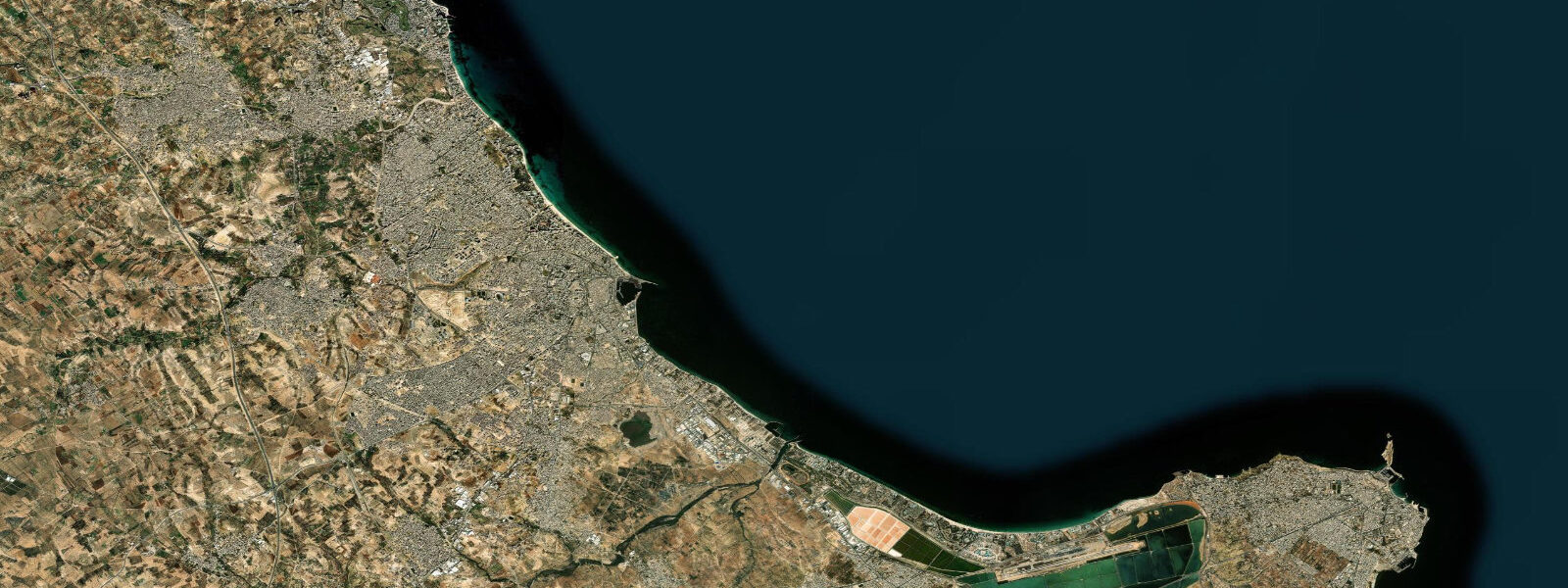
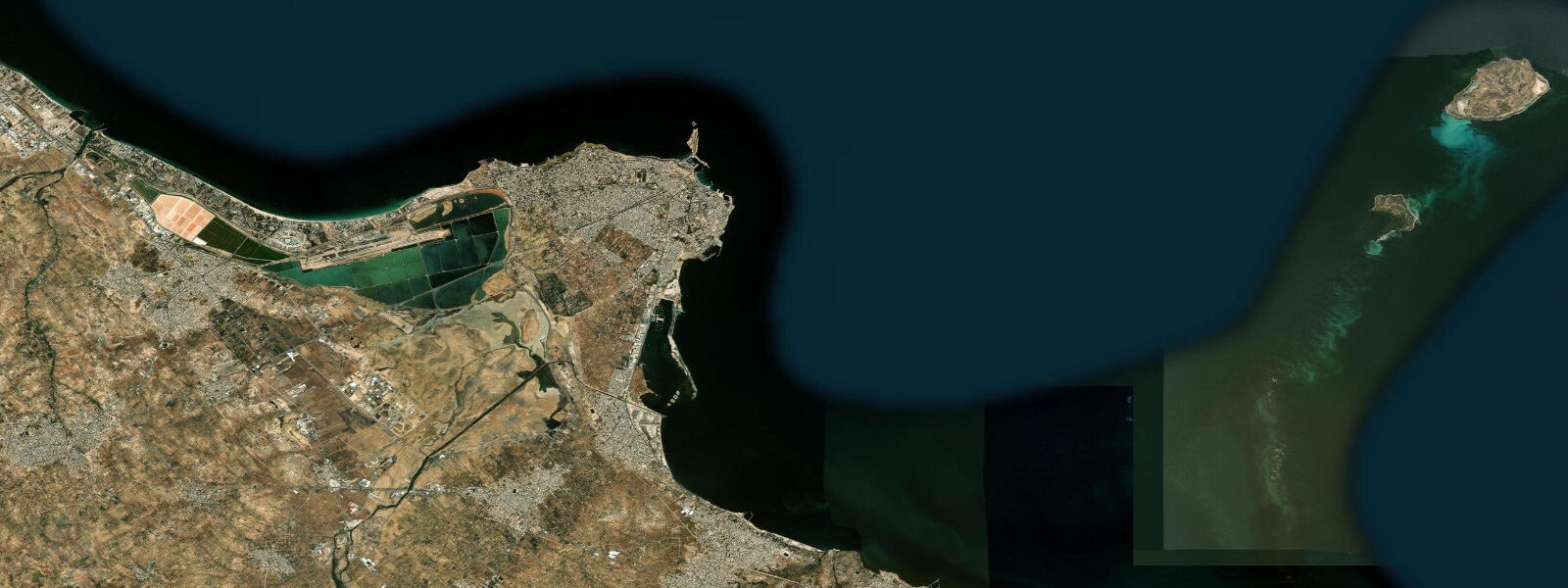
Sousse faces northeast into the Gulf of Hammamet from a limestone headland that carries the 9th-century ribat fortress and the medieval medina — a UNESCO World Heritage site — down to the harbour and the long sandy beach that stretches north toward Port el Kantaoui. The city has been a working Mediterranean port since Phoenician times, called Hadrumetum, and the harbour at the foot of the medina still runs a commercial and fishing operation alongside the tourist traffic. The beach north of the harbour, the main resort strip, stretches in a broad arc for several kilometres, facing northeast and sheltered from the prevailing westerly and northwesterly winds by the bulk of the city and the coastal orientation.
The tidal regime in the Gulf of Hammamet is roughly semidiurnal — two highs and two lows per day, though the inequality between successive highs or lows is often noticeable. Mean astronomical range at Sousse is roughly 0.2 to 0.5 metres. Spring tides near new and full moons push toward the upper end of that range; neap tides at the quarter moons can bring the total swing to around 0.2 metres. This is microtidal Mediterranean coast. The practical consequence: the tide table matters less for beach planning at Sousse than the wind does.
Wind is the real driver of water-level variation and beach conditions here. The Gregale — the northeast wind that dominates autumn and winter weather patterns across the central Mediterranean — pushes directly into the Gulf of Hammamet from its northeastern quadrant. A sustained Gregale can add 20 to 40 centimetres of wind setup to the predicted water level along the Sousse shore, stacking water against the beach and generating irregular wave action that has nothing to do with the small astronomical tide. The summer months bring the northerly Tramontane and the prolonged flat-water calms that made the Gulf of Hammamet's reputation as a Mediterranean beach destination — long mornings of glassy water, gentle thermal breezes by early afternoon, and the kind of settled sea that makes open-water swimming and kayaking genuinely enjoyable.
The fishing harbour at Sousse operates a mixed fleet: small inshore boats targeting sea bream, mullet, and squid close to shore, and a larger offshore contingent working the deeper gulf for bluefin tuna and swordfish seasonally. The fishermen timing their bar crossing care about wave height and wind state far more than the tidal height — on a 0.2 to 0.5 metre range coast, the tide does not create meaningful current in the harbour entrance. Shore anglers working the breakwater arms and the rocky sections south of the port typically find best action on the incoming tide as bait fish push against the structure, but the differential is modest compared to high-range coasts.
Kayaking is feasible along the Sousse coast in summer from the main beach north toward Port el Kantaoui. The protected shallow shelf extends out 200 to 400 metres before the bottom drops; in calm conditions the paddle up to the Port el Kantaoui marina and back makes a straightforward half-day trip. The marina at Port el Kantaoui is an enclosed, purpose-built leisure harbour with the calm water that the main Sousse beach does not always provide. Beach swimmers and families with children will find the northern stretch of the Sousse resort beach the most consistent flat-water option: the orientation and the shelf depth keep the wave height manageable in most summer conditions.
Photographers working Sousse have two distinct subjects: the medina and ribat from the water side — the ribat's tower above the old harbour wall catches the morning light from the northeast well into spring — and the working fishing harbour at dawn, when the fleet returns and the fish are laid out for the morning market. Both subjects are tide-independent but benefit from the early calm of summer mornings before the thermal sea breeze builds.
Tide predictions on this page come from Open-Meteo Marine, a global ocean model. The data is model-derived rather than from a calibrated local gauge — accuracy is typically within plus or minus 45 minutes on timing and 0.2 to 0.3 metres on height. On a coast with a mean range of 0.2 to 0.5 metres, that height uncertainty is a large fraction of the total predicted swing. The Office National de la Météorologie and the Agence Nationale des Ports are the authoritative sources for coastal and tide data along the Tunisian coast.
Tide questions about Sousse
Quick answers to the most common questions about tide times, range, and water access at Sousse.
When is the next high tide at Sousse?
The next predicted high tide at Sousse, shown in local Tunisia time (CET, UTC+1, with DST applying in summer), is displayed in the hero section at the top of this page. Sousse follows a roughly semidiurnal Mediterranean pattern — typically two highs and two lows per day, though the heights of successive highs often differ. Mean astronomical range is 0.2 to 0.5 metres. The Agence Nationale des Ports is the official source for tide and water-level data along the Tunisian Mediterranean coast and is the authoritative reference for commercial and navigational use.
Why is the tidal range at Sousse so small?
Sousse is on the Mediterranean, a nearly enclosed sea with a limited exchange with the Atlantic through the Strait of Gibraltar. This geometry severely restricts the tidal signal — the Mediterranean simply does not have the open-ocean basin resonance that amplifies tides on Atlantic or Pacific coasts. Mean astronomical range at Sousse in the Gulf of Hammamet is roughly 0.2 to 0.5 metres. For context, the Gulf of Gabès further south along the Tunisian coast is an exception — basin resonance there generates spring tides exceeding 2 metres — but the Gulf of Hammamet does not share that geometry. Wind setup from the Gregale in autumn and winter can produce water-level changes larger than the entire predicted tidal range.
Where does the tide data for Sousse come from?
Tide predictions on this page are generated by Open-Meteo Marine, a free global ocean model that estimates tidal heights from hydrodynamic equations over a geographic grid. It is not derived from harmonic analysis of a dedicated Sousse gauge record. Accuracy is typically within plus or minus 45 minutes on timing and 0.2 to 0.3 metres on height — a significant fraction of the total predicted tidal range on this small-range coast. The Office National de la Météorologie and the Agence Nationale des Ports publish the authoritative tide and coastal data for Tunisia and are the sources to use for any commercial harbour or navigation decision.
Is it safe to swim and kayak at Sousse, and does the tide matter?
Swimming and kayaking at Sousse are generally safe during the summer months (June through September) when the Gulf of Hammamet is characteristically calm. The tide itself makes almost no difference to safety on this small-range coast — wind and wave height are the relevant factors. The Gregale northeasterly in autumn and winter can generate uncomfortable sea state on the main resort beach with little warning. For kayaking, the stretch north toward Port el Kantaoui is the safest route: the shallow shelf keeps wave height manageable and the Port el Kantaoui marina is a reliable stop. Always check the morning wind forecast before paddling; sea breeze builds by midday in summer.
Can these tide predictions be used for navigating Sousse harbour?
No. Predictions on this page are for general planning and activity timing only. Sousse harbour is an active commercial and fishing port; harbour bar and channel navigation requires current operational data from the Agence Nationale des Ports, not a gridded ocean model. Open-Meteo Marine carries typical uncertainty of plus or minus 45 minutes on timing and 0.2 to 0.3 metres on height — and on a coast where the entire tidal range is 0.2 to 0.5 metres, that uncertainty encompasses the full predicted swing. Wind setup from the Gregale makes observed water levels routinely diverge from the predicted tide. For harbour entry decisions, use official port authority data and local knowledge.
6-day tide table — Sousse
Heights relative to MSL. Predictions: Open-Meteo Marine (MeteoFrance SMOC, 0.08° grid) — heights relative to MSL (not chart datum / LAT). Model-derived.
| Day | Type | Time | Height |
|---|---|---|---|
| Fri 31 Jul | High | 01:50 | -0.2m |
| Low | 08:10 | -0.4m | |
| Sat 01 Aug | High | 02:10 | -0.2m |
| Low | 08:50 | -0.4m | |
| Sun 02 Aug | — | ||
| Mon 03 Aug | High | 03:00 | -0.2m |
| Tue 04 Aug | Low | 10:00 | -0.4m |
| Wed 05 Aug | High | 04:00 | -0.2m |