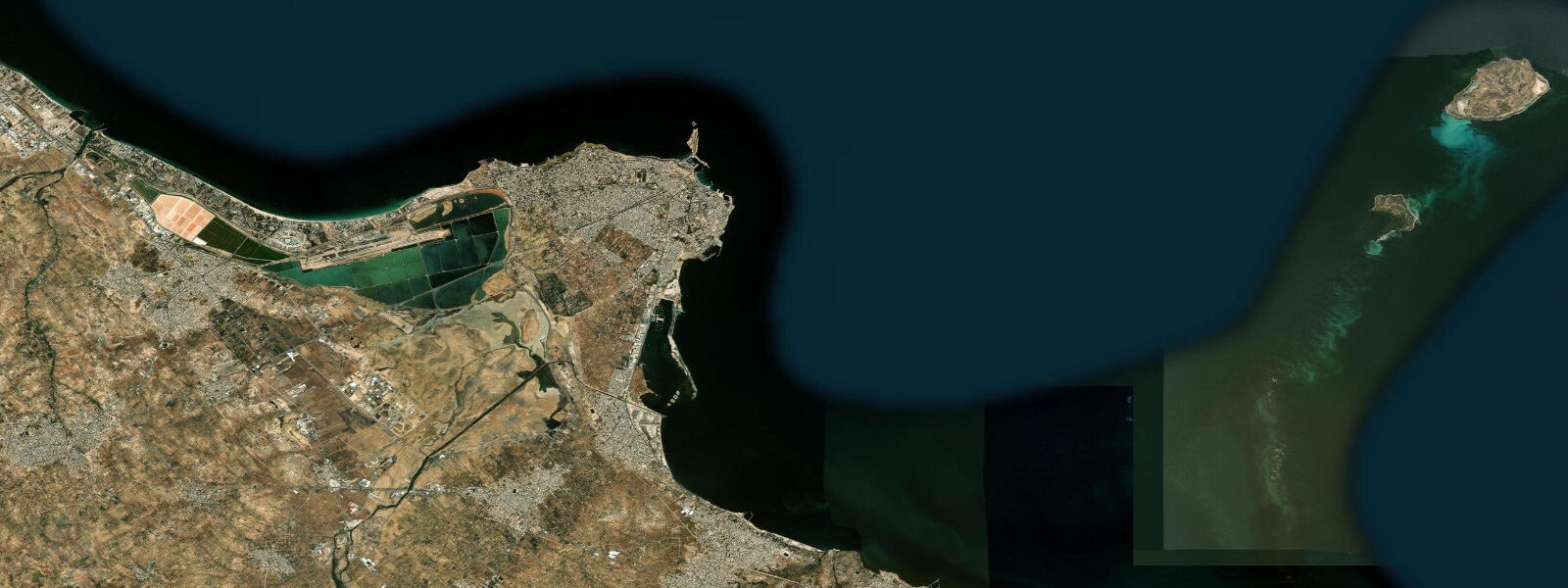
Monastir, Sousse Governorate tide times
Monastir, Sousse Governorate tide forecast — heights relative to MSL.
Today's tide times for Monastir, Sousse Governorate
Tide times at Monastir, Sousse Governorate on Monday, 3 August 2026: first low tide at 01:00am, first high tide at 03:00am, second low tide at 09:45am. Sunrise 05:25am, sunset 07:20pm.
Tide chart for Monastir, Sousse Governorate
24-hour cosine-interpolated curve around the present moment. Heights relative to MSL. Predictions: Predictions: Open-Meteo Marine (MeteoFrance SMOC, 0.08° grid).
Sun, moon and conditions on Mon 03 Aug
Snapshot at build time — refreshes daily. Sea state from Open-Meteo Marine.
Highs and lows next 7 days
Every predicted high and low for the next week, with the daily tidal coefficient (0–120; higher = bigger swing, > 95 means stronger currents).
Other spots nearby
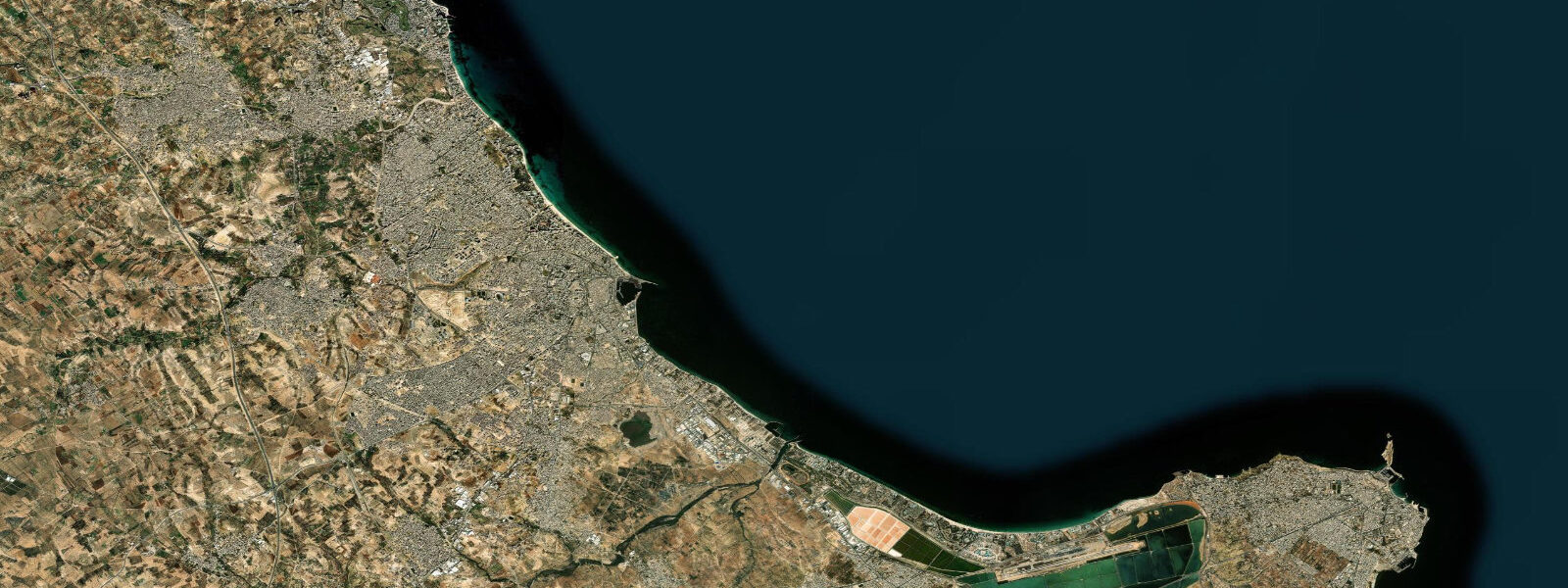
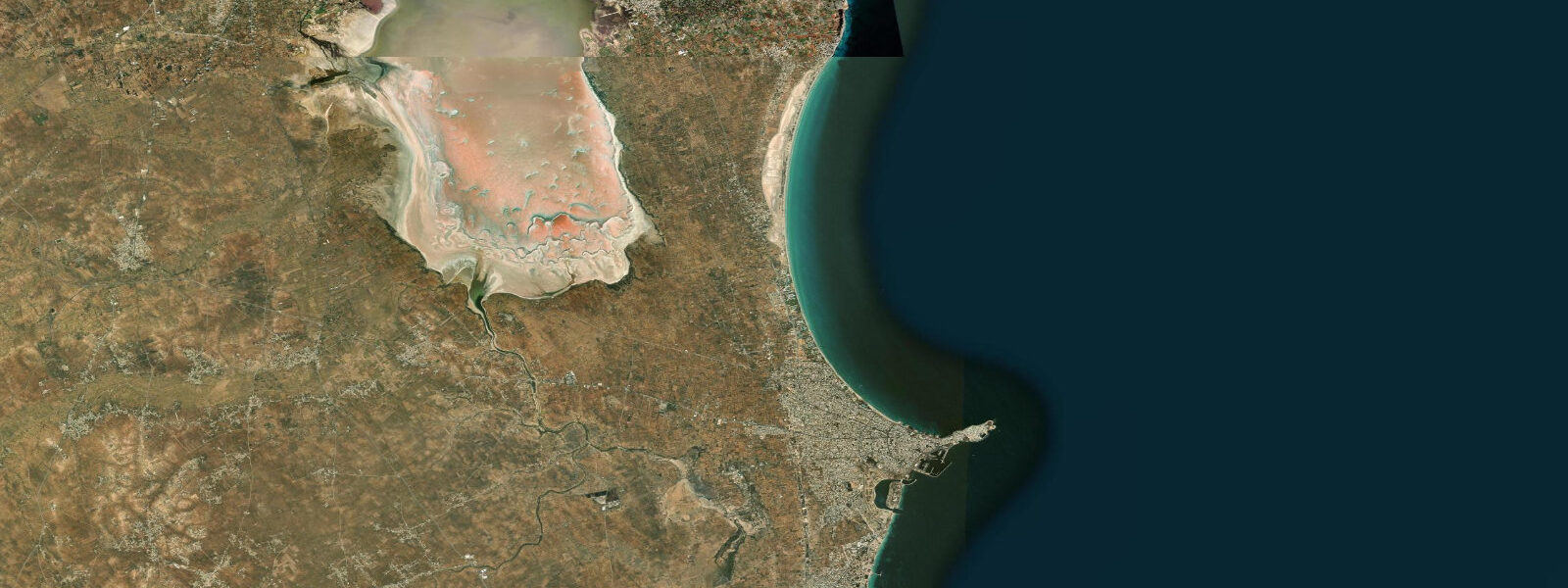
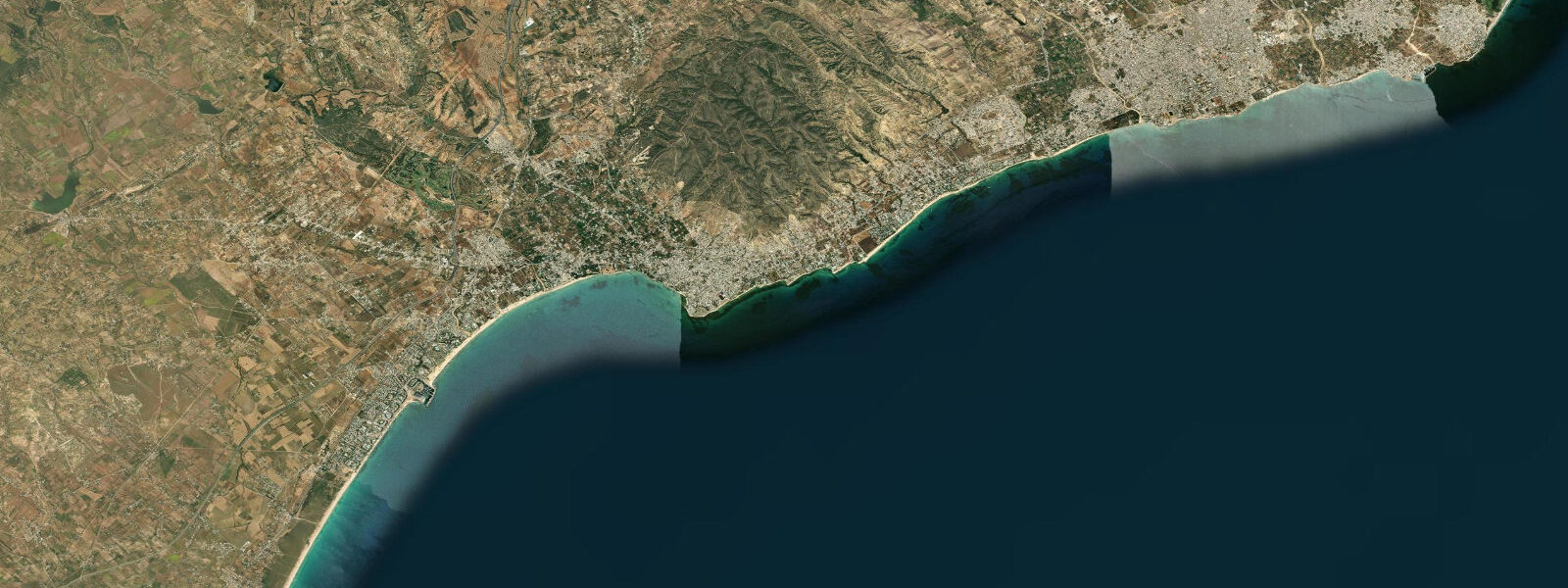
The three closest curated TideTurtle locations to Monastir, Sousse Governorate, measured by great-circle distance.
Today's solunar windows
Solunar tradition: major periods are the ≈3h windows around moon transit and opposition; minor are ≈2h around moonrise and moonset. Pair with the local tide stage and wind for the best read.
About tides at Monastir, Sousse Governorate
A short guide to the coastline at Monastir, Sousse Governorate — geography, sea state, and what the tide is actually doing under your feet.
Monastir sits on a headland jutting into the Gulf of Hammamet, the 9th-century Ribat of Monastir anchoring the seafront the way a lighthouse would — except this fortress predates the concept of organised maritime signalling by several centuries. The city is compact, readable in a day, and the tide regime is as uncomplicated as Mediterranean coastlines get: mean tidal range 0.1 to 0.3 m, with the lunar cycle producing oscillations so small that wind setup and barometric pressure often move the water level more than the tide itself.
The ribat is the place to start. Its seaward walls sit directly at the waterline; at low water — typically 0.1 to 0.2 m below mean sea level — a narrow wave-cut rock platform is exposed below the foundations. This platform is accessible for roughly one to two hours around low tide, long enough for a close inspection of the stone courses at their base and for photographers to compose shots with the surf-smoothed rock in the foreground and the ribat's watchtower rising behind. Light is best in the two hours after sunrise before the walls go flat. The rock is wet and algae-covered; sandals with grip are not optional.
Southeast of the medina, the Port de Plaisance Habous forms a sheltered marina with direct access to open water. This is the departure point for boat excursions to the Kuriat Islands, a pair of uninhabited limestone islets 18 km offshore that serve as one of the last nesting sites for loggerhead sea turtles (Caretta caretta) in the central Mediterranean. Trips typically run in the morning on calm-sea days; sea state matters more than tide state here, since the crossing involves open-water conditions and the tidal current contribution to wave height is negligible at this range.
For anglers, the shallow rocky margins around the ribat headland hold comber (Serranus cabrilla), saddled bream (Oblada melanura), and occasional octopus in the crevices. Water clarity is excellent outside of northerly blow events, which stir sand into suspension for 12 to 24 hours. The microtidal regime means there is no meaningful tidal window for shore fishing — fish the rocky margins at any tide height and adjust for light and swell rather than for the clock.
The beach extends northeast from the medina, a continuous arc of sand several kilometres long backed by the tourist hotel zone. The hotels manage their own beach sections but the foreshore itself is public. For families, the combination of warm water (21°C in June, 26°C in August), minimal surf, and reliable summer calm makes this one of the safer bathing beaches on Tunisia's coast. The tidal range is small enough that beach geometry barely changes between high and low water — the few centimetres of tidal variation are irrelevant to where you set a towel.
Monastir is inseparable from Habib Bourguiba, who was born here in 1903 and whose tomb sits inside the Bourguiba Mosque complex approximately 200 m from the seafront. The mosque's twin-columned minaret is visible from the beach and from the marina. The surrounding mausoleum compound is maintained as a national monument. Whatever your interest in 20th-century North African history, walking the 200 m from the ribat to the Bourguiba complex gives you the arc of the city in five minutes: medieval Islamic military architecture at one end, postcolonial statecraft at the other, the Mediterranean in between.
For paddlers, the calm conditions in the marina and the sheltered bay east of the ribat make for manageable flatwater kayaking and stand-up paddleboarding. There is no meaningful tidal current to account for; wind is the variable that matters. Morning departures before the thermal sea breeze builds (typically after 11:00) give the cleanest flatwater. The rock platform under the ribat wall is interesting to paddle along at low water; passage is tight and requires care, but the medieval masonry seen from water level is worth the manoeuvre.
Tide data for Monastir comes from the Open-Meteo Marine API, a gridded model product. Timing accuracy is ±45 minutes, height accuracy ±0.3 m — usable for trip planning, not for navigation.
Tide questions about Monastir, Sousse Governorate
Quick answers to the most common questions about tide times, range, and water access at Monastir, Sousse Governorate.
When is the rock platform below the Ribat of Monastir accessible?
The wave-cut platform below the ribat's seaward walls is exposed for approximately one to two hours centred on low water. In Monastir, low tide typically puts the sea surface 0.1 to 0.2 m below mean level. The platform is narrow and algae-covered — wear sandals with grip. Because the tidal range is only 0.1 to 0.3 m, wind setup can shift the timing by 30 to 60 minutes on any given day. Check the tide chart for a broad window rather than a precise minute; the water clears the rock gradually. Morning low tides also give the best light on the ribat's seaward face for photography. The Open-Meteo model gives timing to ±45 minutes — treat it as a planning guide.
How do I get to the Kuriat Islands from Monastir?
Boat excursions to the Kuriat Islands depart from the Port de Plaisance Habous, the marina southeast of the medina. The crossing is roughly 18 km and takes 45 to 60 minutes depending on the vessel. Trips are weather-dependent — the booking point or your hotel can confirm whether the sea state is viable for departure day. The islands are uninhabited and protected as a sea turtle nesting reserve; landing and swimming conditions depend on what the operator permits under current park rules. There is no regular public ferry; all access is via organised excursion or private charter from the marina. Tide state has little effect on the crossing — sea conditions are the deciding factor.
Is Monastir beach safe for children to swim?
Yes, by most standards. The Gulf of Hammamet provides good shelter from northwest swell, the tidal range is 0.1 to 0.3 m (negligible drop-off change through the day), and summer sea conditions are typically flat calm. Water temperature runs 21°C in June and peaks around 26°C in August. The beach northeast of the medina is long and sandy with a gentle gradient. The hotel-zone beach sections have their own lifeguards in season; the public beach sections vary. Avoid swimming for 12 to 24 hours after a strong northerly wind, which stirs sand into suspension and reduces visibility. Jellyfish (Rhizostoma pulmo, moon jellyfish) occasionally concentrate near shore in late summer — check with hotel staff or locals before entering.
What fish are caught from the rocks around the Ribat headland?
The rocky margins around the ribat headland and along the seawall hold comber (Serranus cabrilla), saddled bream (Oblada melanura), and bogue (Boops boops) in the shallower sections. Octopus occupy the crevices in the wave-cut platform. The microtidal regime means there is no meaningful tidal current to fish — no slack water window, no flood-tide run. Fish the rocky margins based on light conditions (dawn and dusk are most productive) and swell state rather than the tide clock. Water clarity is excellent in calm conditions; fish are more active and more wary in the clear shallow water. Light tackle with small lures or fresh bait works well. The seawall south of the medina also holds similar species in its submerged stone courses.
What is the best time of year to visit Monastir for water activities?
May through September gives the most reliable conditions. Sea temperature climbs from around 19°C in May to 26°C in August and stays warm into October. Summer winds are predominantly northerly (the etesian regime), which keeps the Gulf of Hammamet relatively calm — Monastir's headland and the enclosed bay geometry provide additional shelter. Paddleboarding and kayaking are best in May, June, and September when sea surface temperatures are comfortable and the full summer tourist crowds have not yet peaked or have passed. Photographers targeting the ribat platform at low water will find late May and early September optimal for both light quality and manageable heat. Anglers fishing the rocky margins can work year-round; winter brings cooler water and different species composition but conditions remain accessible.
7-day tide table — Monastir, Sousse Governorate
Heights relative to MSL. Predictions: Open-Meteo Marine (MeteoFrance SMOC, 0.08° grid) — heights relative to MSL (not chart datum / LAT). Model-derived.
| Day | Type | Time | Height |
|---|---|---|---|
| Mon 03 Aug | Low | 01:00 | -0.2m |
| High | 03:00 | -0.2m | |
| Low | 09:45 | -0.4m | |
| Tue 04 Aug | — | ||
| Wed 05 Aug | High | 04:10 | -0.2m |
| Low | 10:00 | -0.4m | |
| Thu 06 Aug | — | ||
| Fri 07 Aug | — | ||
| Sat 08 Aug | High | 11:00 | -0.3m |
| Sun 09 Aug | Low | 06:00 | -0.3m |