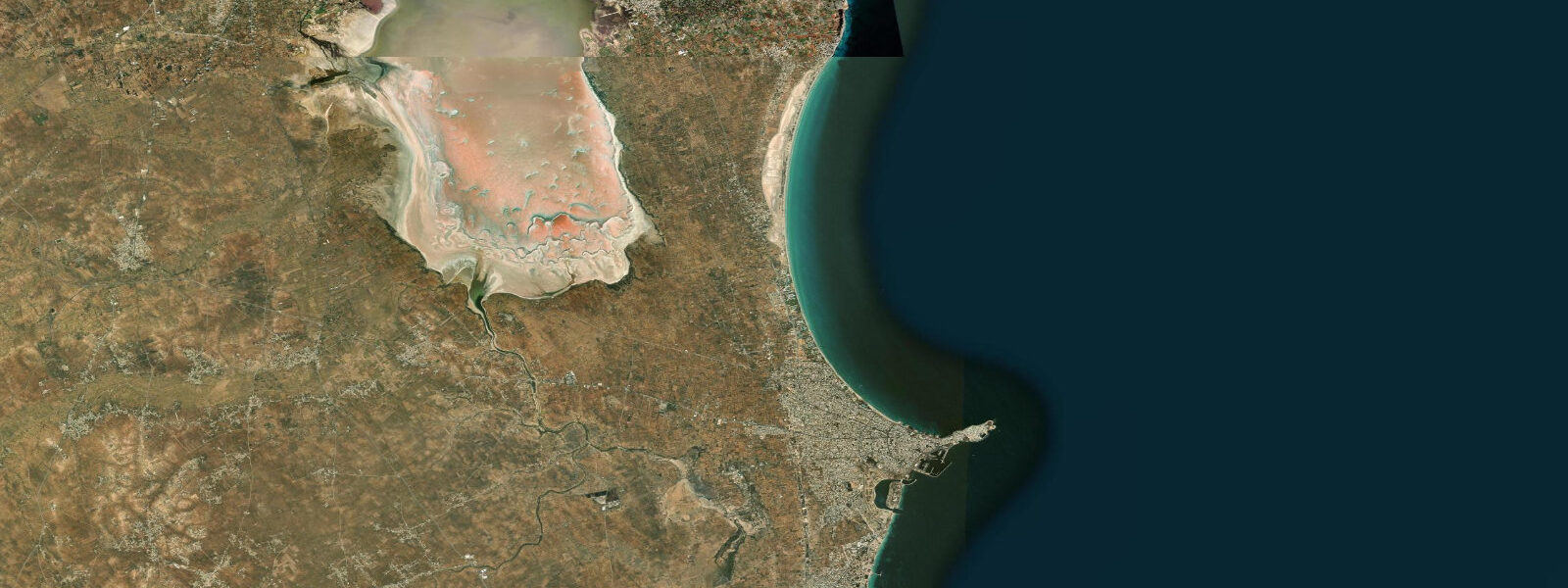
Mahdia, Sousse Governorate tide times
Mahdia, Sousse Governorate tide forecast — heights relative to MSL.
Today's tide times for Mahdia, Sousse Governorate
Tide times at Mahdia, Sousse Governorate on Monday, 3 August 2026: first low tide at 01:00am, first high tide at 03:15am, second low tide at 09:45am. Sunrise 05:24am, sunset 07:18pm.
Tide chart for Mahdia, Sousse Governorate
24-hour cosine-interpolated curve around the present moment. Heights relative to MSL. Predictions: Predictions: Open-Meteo Marine (MeteoFrance SMOC, 0.08° grid).
Sun, moon and conditions on Mon 03 Aug
Snapshot at build time — refreshes daily. Sea state from Open-Meteo Marine.
Highs and lows next 7 days
Every predicted high and low for the next week, with the daily tidal coefficient (0–120; higher = bigger swing, > 95 means stronger currents).
Other spots nearby
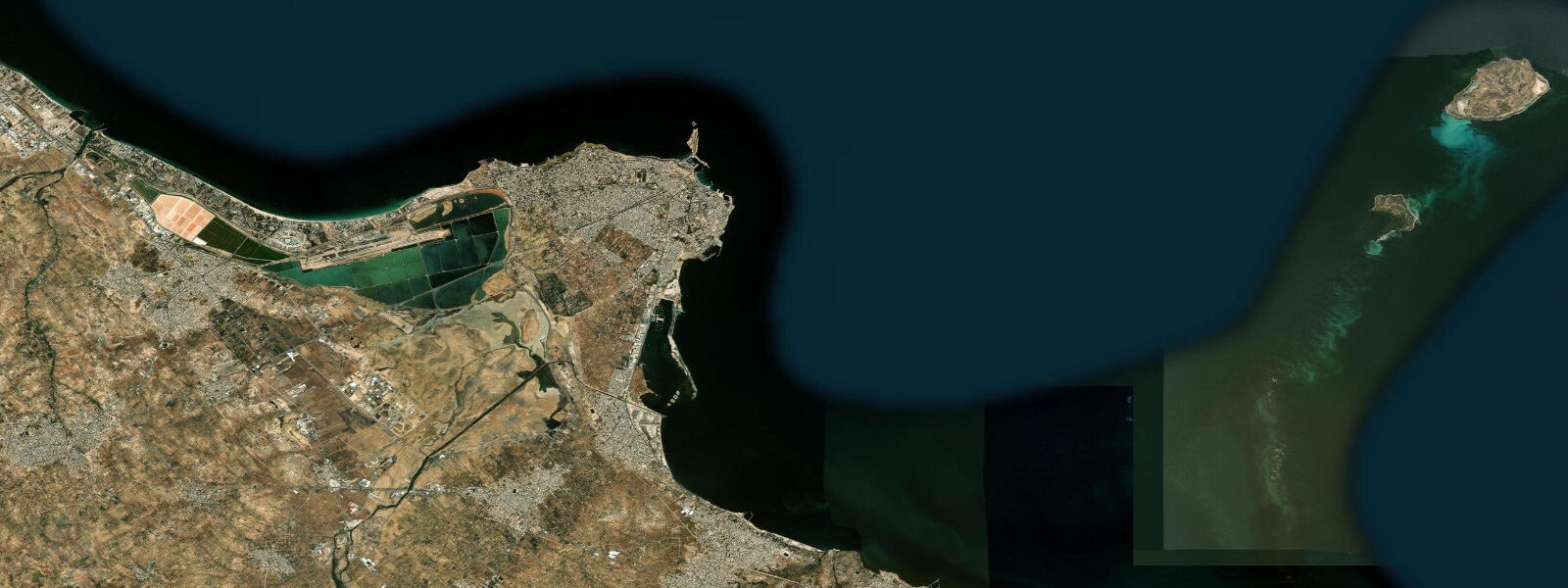
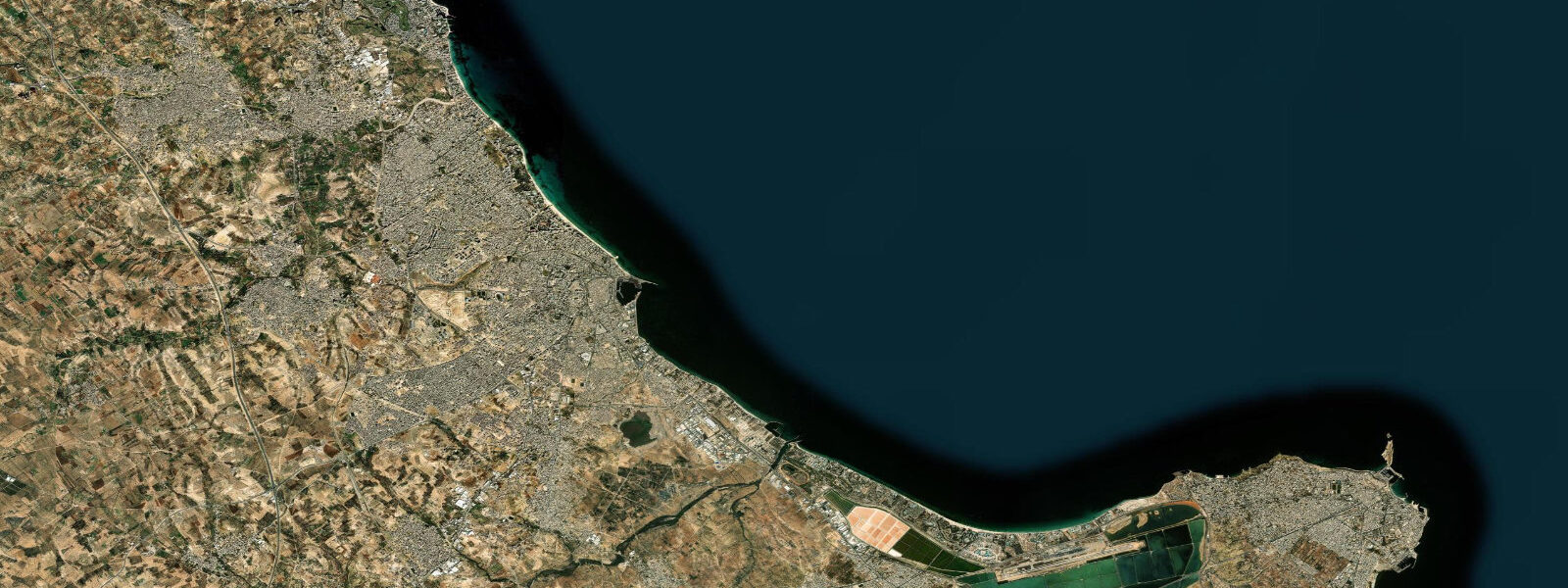
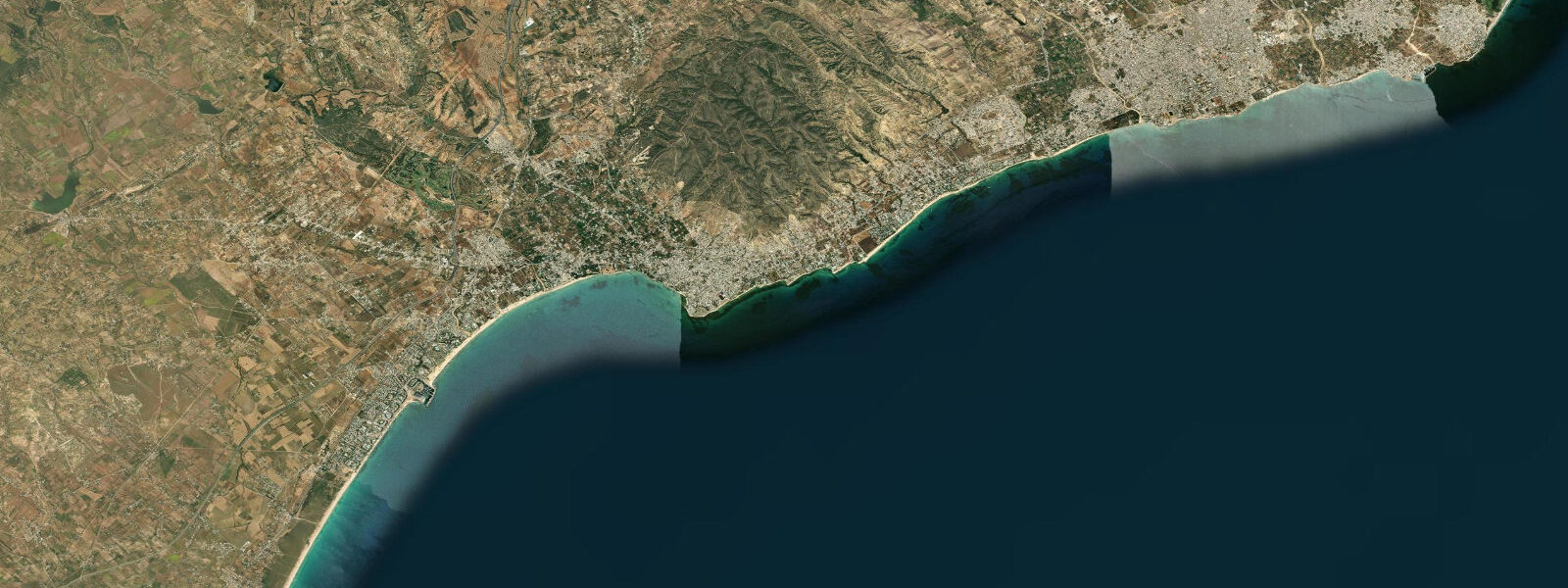
The three closest curated TideTurtle locations to Mahdia, Sousse Governorate, measured by great-circle distance.
Today's solunar windows
Solunar tradition: major periods are the ≈3h windows around moon transit and opposition; minor are ≈2h around moonrise and moonset. Pair with the local tide stage and wind for the best read.
About tides at Mahdia, Sousse Governorate
A short guide to the coastline at Mahdia, Sousse Governorate — geography, sea state, and what the tide is actually doing under your feet.
Mahdia occupies Tunisia's easternmost cape on a limestone promontory that juts several kilometres into the Mediterranean. The Fatimid caliphate founded the city in 916 CE as a naval capital, choosing this site because the peninsula's geometry — narrow neck, high seaward cliffs — made the city essentially a fortified island accessible by a single gate. That gate, the Skifa el-Kahla, still stands. It is the only surviving Fatimid gate in Tunisia, and its 25-metre vaulted tunnel cuts through the city wall at near-sea level, opening onto the peninsula's main street on the other side. Stand at the seaward entrance at low water and the sea surface is roughly three to four metres below the threshold.
The tide regime here is Mediterranean microtidal: mean range 0.1 to 0.3 m. The astronomical tide contributes almost nothing to water-level variation compared with the effect of synoptic weather systems. The cape's exposure to the open central Mediterranean — southeast and east faces are fully open — makes Mahdia one of the more wave-exposed towns on Tunisia's coast. Northeasterly and easterly storms funnel directly against the Fatimid walls. In recorded history, storm surge events have twice overtopped the seaward bastions, sending water across the lower peninsula during severe autumn and winter gales. These events are exceptional — days to weeks apart in a bad season, years apart normally — but they explain why the Fatimid engineers built the Skifa el-Kahla's threshold high enough to resist moderate surge without flooding the medina interior.
The Cap Africa lighthouse marks the eastern tip of the peninsula. The lighthouse structure itself is 19th-century French colonial, built when maritime traffic through the central Mediterranean was growing and the cape represented a genuine navigation hazard. From the lighthouse platform on a clear day, the horizon is open water all the way to the Italian island of Pantelleria, roughly 220 km northeast. Photographers come here at dawn for the combination of lighthouse, cliff edge, and open sea — the eastern exposure means the sun rises directly over the water, and the light quality in the first 30 minutes is useful in any season.
North of the peninsula, the fishing harbour handles one of Tunisia's more significant working fleets. The port is best known for the seasonal bluefin tuna fishery. Tunny — the local term for large bluefin (Thunnus thynnus) — are taken using a traditional encircling net system called the mattanza, a word shared with the identical practice that survived into the 20th century in Sicily and Sardinia. The nets are set in a fixed array offshore and progressively constricted over several days, concentrating fish into a final chamber (the camera della morte in the Italian nomenclature). The mattanza at Mahdia is one of the few places in the Mediterranean where this technique still operates at fishing-industry scale. If you are in Mahdia in June or early July and the mattanza is active, the harbour activity in the early morning — boats returning with catch, buyers at the dock, the smell of the fish market on the north quay — is specific to this place in a way that the broader beach and medina experience is not.
For anglers working the shore, the seaward walls of the peninsula and the rocky margins below the Fatimid bastions hold the same Mediterranean species as elsewhere on the coast: comber, saddled bream, bogue, and wrasse in the crevices. The cliff-face exposure means swell arrives unimpeded; fishing from the rock shelves below the walls requires calm conditions and attention to sets. The microtidal range means there is no productive tidal window — fish the margins based on sea state and light rather than the tide clock.
The beach south of the cape — below the old town's southern wall — is sheltered from northeast swell by the peninsula itself and offers calmer conditions for swimming and paddling. Sand quality is good and the beach is less developed than Monastir's hotel zone. Family use peaks in July and August; outside summer the beach is often uncrowded even on weekday afternoons.
Tide data for Mahdia comes from the Open-Meteo Marine API, a gridded model product. Timing accuracy is ±45 minutes, height accuracy ±0.3 m — usable for trip planning, not for navigation.
Tide questions about Mahdia, Sousse Governorate
Quick answers to the most common questions about tide times, range, and water access at Mahdia, Sousse Governorate.
What is the Skifa el-Kahla and how does it relate to the sea level?
The Skifa el-Kahla (Dark Gate) is the only surviving Fatimid-era gate in Tunisia, built in the early 10th century as the single fortified entrance to Mahdia's peninsula. The 25-metre vaulted tunnel cuts through the city wall at near-sea level — the seaward threshold sits roughly three to four metres above the water's edge at the base of the cliffs below. The gate's relatively high threshold was a deliberate defensive design choice: it allows the gate to function during storm surge events without floodwater entering the medina interior. At mean sea level (tidal range 0.1 to 0.3 m), the water is well below the gate; during recorded storm surge events the sea has reached the outer bastions but not overtopped the gate threshold. The tunnel is open to visitors and takes two minutes to walk through.
When does the mattanza tuna fishing take place at Mahdia?
The mattanza — the traditional encircling net system for bluefin tuna — typically operates from late May through early July at Mahdia, timed to the bluefin migration through the central Mediterranean. The nets are set in a fixed array offshore and constricted progressively over several days; the final haul concentrates fish into a terminal chamber for capture. If you are in Mahdia during this window and the mattanza is active, the fishing harbour on the north side of the peninsula will show the activity: early morning boat departures, buyers at the dock, and the fish market operating at scale. The mattanza does not operate every year with the same intensity — some seasons produce better runs than others. Confirm current-season status on arrival; harbour staff or the fish market can tell you whether the nets are in the water.
Has Mahdia experienced storm surge flooding from the Mediterranean?
Yes. The peninsula's southeast and east faces are fully exposed to the open central Mediterranean; northeasterly and easterly storms arrive without the fetch-reduction that the Gulf of Hammamet provides to towns further north. In recorded history, storm surge events have twice overtopped the seaward Fatimid bastions, putting water across the lower peninsula during severe autumn and winter gales. These events are exceptional — most storms produce increased swell and wave action rather than true surge — but they are the reason the peninsula's seawall architecture was built to the height it was. For visitors, the practical implication is that the rocky margins and cliff-base areas below the walls should be avoided during any active northeasterly gale, regardless of what the tide chart shows. Surge arrives faster than tidal prediction can anticipate.
Is the Cap Africa lighthouse accessible to visitors?
The Cap Africa lighthouse at the eastern tip of the Mahdia peninsula is a 19th-century French colonial structure and remains an operational navigational light. Access to the lighthouse building itself depends on current local authority policy — this changes periodically. The approach road along the peninsula to the cape is generally accessible, and the cliff-edge viewpoint near the lighthouse is open. From this point, the horizon to the northeast is open water toward Pantelleria (roughly 220 km) and Sicily beyond. For photographers, dawn is the most productive time: the eastern exposure gives direct sunrise light over open sea, and the lighthouse and cliff are in foreground. Confirm access on the ground in Mahdia — the harbour or the tourist information office can give current status for the lighthouse grounds.
Where is the safest place to swim near Mahdia's old town?
The beach south of the cape — below the old town's southern wall — is the best option for families and casual swimmers. The peninsula blocks northeasterly swell from reaching this beach, making it consistently calmer than the cape's exposed seaward faces. The sand is good quality and the beach is less crowded than Tunisia's main hotel-zone beaches north of Sousse. Tidal range is 0.1 to 0.3 m — beach geometry is effectively constant through the day. Avoid swimming from the rocky margins below the Fatimid walls on the peninsula's seaward side during any swell; the cliff-base rocks are wet and the wave action is unpredictable. The south beach is the intended swimming location and is where local families go. Water temperature peaks around 26°C in August and remains swimmable into October.
8-day tide table — Mahdia, Sousse Governorate
Heights relative to MSL. Predictions: Open-Meteo Marine (MeteoFrance SMOC, 0.08° grid) — heights relative to MSL (not chart datum / LAT). Model-derived.
| Day | Type | Time | Height |
|---|---|---|---|
| Mon 03 Aug | Low | 01:00 | -0.2m |
| High | 03:15 | -0.1m | |
| Low | 09:45 | -0.5m | |
| Tue 04 Aug | High | 16:00 | -0.2m |
| Low | 22:00 | -0.4m | |
| Wed 05 Aug | — | ||
| Thu 06 Aug | High | 04:50 | -0.2m |
| Fri 07 Aug | Low | 13:00 | -0.3m |
| Sat 08 Aug | — | ||
| Sun 09 Aug | — | ||
| Mon 10 Aug | High | 00:00 | -0.2m |