Koh Samui tide times
Koh Samui tide forecast — heights relative to MSL.
Today's tide times for Koh Samui
Tide times at Koh Samui on Tuesday, 4 August 2026: first low tide at 08:21, first high tide at 14:55, second low tide at 20:10. Sunrise 06:10, sunset 18:41.
Tide chart for Koh Samui
24-hour cosine-interpolated curve around the present moment. Heights relative to MSL. Predictions: Predictions: Open-Meteo Marine (MeteoFrance SMOC, 0.08° grid).
Sun, moon and conditions on Tue 04 Aug
Snapshot at build time — refreshes daily. Sea state from Open-Meteo Marine.
Highs and lows next 7 days
Every predicted high and low for the next week, with the daily tidal coefficient (0–120; higher = bigger swing, > 95 means stronger currents).
Other spots nearby
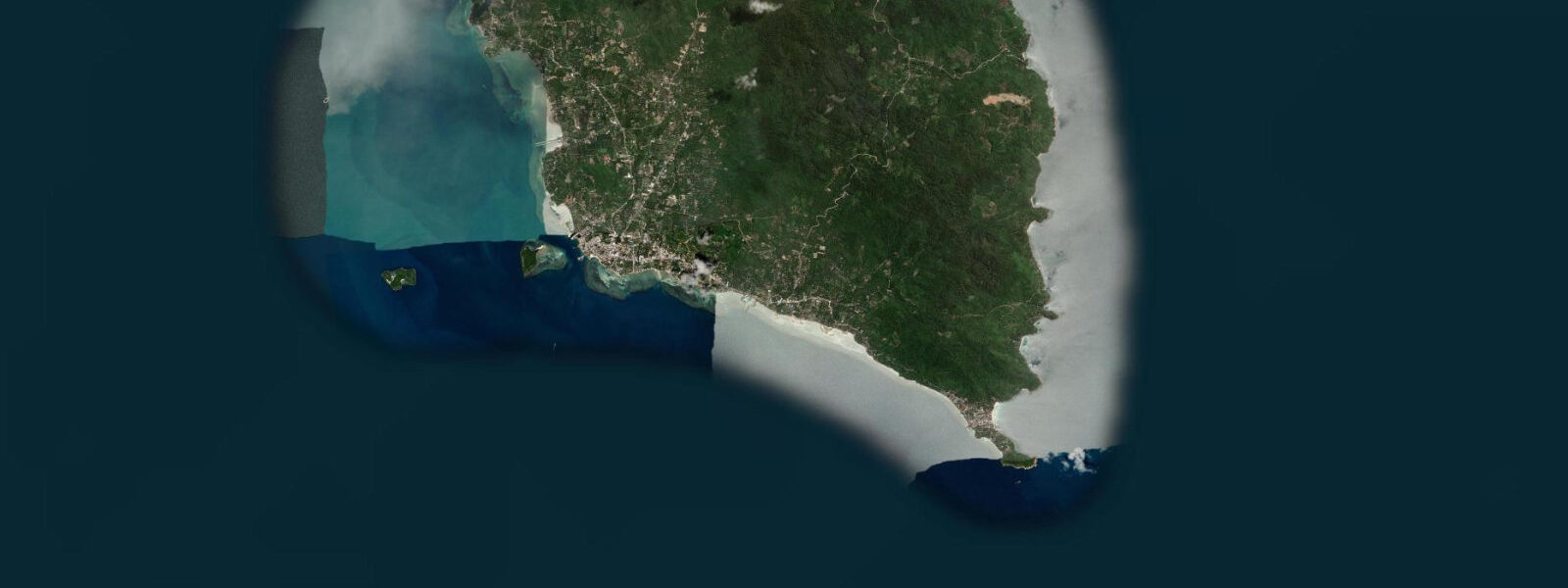
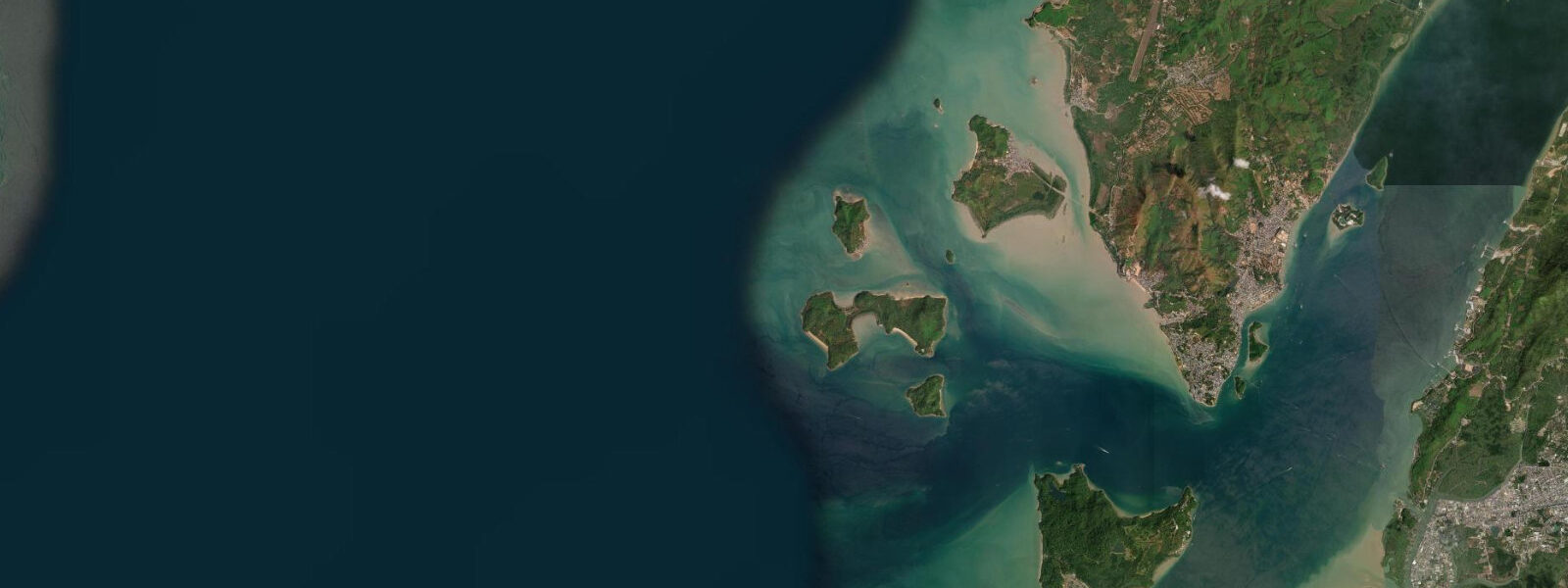
The three closest curated TideTurtle locations to Koh Samui, measured by great-circle distance.

Today's solunar windows
Solunar tradition: major periods are the ≈3h windows around moon transit and opposition; minor are ≈2h around moonrise and moonset. Pair with the local tide stage and wind for the best read.
Cycle dates near Koh Samui
Next spring tide on Mon 10 Aug (range 1.6m). Last neap on Tue 04 Aug.
Spring tides cluster around new and full moons (biggest swings). Neap tides land on quarter moons (smallest swings). See the spring tide and neap tide glossary entries for the why.
About tides at Koh Samui
A short guide to the coastline at Koh Samui — geography, sea state, and what the tide is actually doing under your feet.
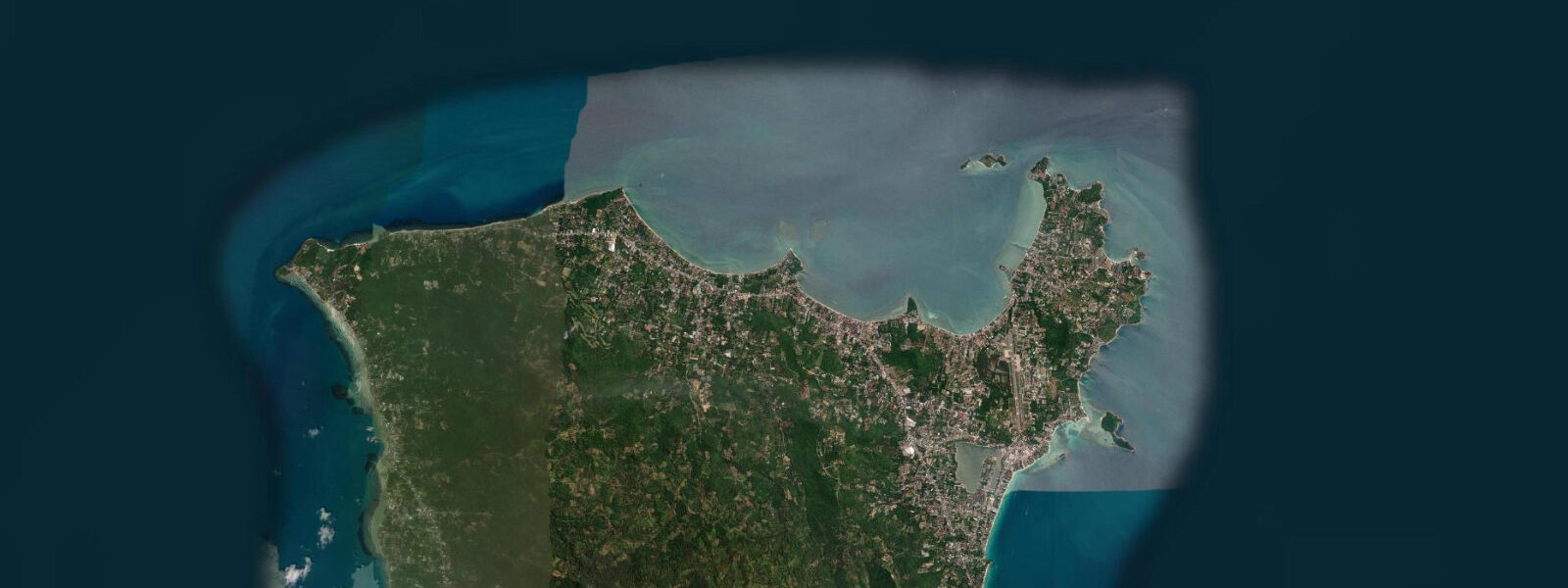
Koh Samui is Thailand's second-largest island, sitting in the upper Gulf of Thailand approximately 35 km east of Surat Thani town on the mainland. The island is roughly circular, 25 km across, with a central highland of tropical forest reaching 635 m at Khao Pom, ringed by a coast that alternates between sandy beach, rocky headland, and working fishing village. The main visitor beaches — Chaweng and Lamai — run down the east coast facing the Gulf.
Na Thon on the west coast is the working town and main ferry terminal for services to Surat Thani. The tidal regime at Koh Samui is mixed diurnal. On most days through the second half of the year, the Gulf of Thailand produces one dominant tide cycle per 24 hours: one clear high and one clear low, with a secondary wobble that may or may not register as a distinct event.
Near the equinoxes the pattern shifts toward two reasonably equal tidal cycles per day. 8 m. 5 m — the difference between the highest and lowest point of the day is less than two hand-widths of water.
At those neap extremes, the tide is a secondary consideration for nearly any coastal activity. The beach character on the east coast shifts perceptibly through the spring-neap cycle. 5 m above CD), Chaweng Beach narrows to 15–25 m of dry sand in the mid-sections.
At low spring, the beach widens to 50–70 m, exposing a firm sand flat and scattered coral rubble at the northern and southern ends where the shoreline curves around headlands. 5 m at low spring, making the snorkelling uncomfortable but exposing reef structure for observation. 5 m of clear water overhead.
3 m; fins drag on coral. The Big Buddha temple (Wat Phra Yai) stands on a small island connected by a causeway at Bangrak on the NE coast. The causeway is accessible at all tidal stages, but the mudflat and mangrove fringe around the causeway base expose significantly at low spring.
5 m on persistent northeast winds. Photographs of Chaweng with clear blue water typically require calm periods outside peak NE season or early-morning light before the sea breeze builds. Shore fishing from the northern headland at Hat Bophut and from the rocky outcrops at Lamai's two granite boulders (Hin Ta and Hin Yai) is most productive on the run-in tide — the incoming water activates feeding behaviour and the increasing depth holds fish closer to the headland structure.
The ferry terminal at Na Thon pier handles standard tidal variation without adjustment; the pier is built to accommodate the full spring range. Samui's interior is accessible via the ring road; the 50 km circuit takes 90 minutes by motorbike and passes coconut plantations, viewpoints over the Gulf, and the fishing village of Bang Po on the north coast where outrigger boats work the mixed diurnal tidal current for mackerel and snapper on the flood. 3 m on height.
For activity-critical timing in Thai waters, cross-reference with Thai Meteorological Department (TMD) official tide tables.
Tide questions about Koh Samui
Quick answers to the most common questions about tide times, range, and water access at Koh Samui.
What is the tidal range at Koh Samui, and how does it affect the beaches?
Spring tidal range at Koh Samui runs 2.0 to 2.5 m above Chart Datum; neap range drops to 0.5 to 0.8 m. The regime is mixed diurnal — on most days outside the equinox periods, there is one dominant tide cycle per 24 hours rather than two equal cycles. At Chaweng Beach the practical effect is visible: at high spring water the beach narrows to 15–25 m of dry sand in the mid-sections; at low spring the same area widens to 50–70 m as the tidal flat exposes. During neap tides in the Gulf summer (May–August), the daily swing can drop to under 0.5 m, making the tidal state nearly irrelevant to beach users. For any activity sensitive to precise water depth — snorkelling reef flats, launching kayaks over shallow sand bars — check the predicted low-water height before heading out.
When is the best time to snorkel at Koh Tan from Koh Samui?
Koh Tan lies 5 km south of Koh Samui's Taling Ngam beach on the west coast. The reef flat on Koh Tan's north side is the main snorkel area; at low spring tide (which at Samui can reach as low as 0.1–0.2 m above Chart Datum) the flat sits under 0.3 m of water — uncomfortable snorkelling, with fins brushing coral. The best window is the two hours either side of high water, when the flat holds 1.0–1.5 m and water clarity is highest before the ebbing current resuspends sediment. Check the predicted high-water time on this page; the mixed diurnal regime means there may be only one high per day. Boat transfers from Taling Ngam or Ban Hua Thanon take 15–20 minutes.
How does the NE monsoon affect Koh Samui's east coast beaches?
The NE monsoon runs November through January and drives the dominant swell toward the east-facing coast — Chaweng, Lamai, and Ban Mae Nam in the north. During peak NE season, wind-generated swell at Chaweng can reach 0.5–1.5 m on sustained northeast winds, producing choppy or broken water at the beach. The combination of monsoon swell with a spring high tide produces the narrowest, roughest beach conditions of the year. Conversely, the west coast (Na Thon, Taling Ngam) is sheltered from the NE monsoon and usually calm during November–January. Koh Pha-ngan and Koh Tao to the north provide partial shelter for Samui's northernmost beaches. The southwest monsoon (May–October) reverses the exposure: the west coast takes the weather and the east coast is calmer.
Is the ferry from Na Thon pier to Surat Thani affected by the tide?
Na Thon pier on Koh Samui's west coast is built to operate across the full tidal range. The vehicle and passenger ferry services to Donsak pier on the mainland (80 km, approximately 1.5 hours) are not tide-restricted under normal conditions. The ferry schedule is published by Seatran and Raja Ferry; suspensions occur during SW monsoon weather (May–October) when winds and swell exceed operational limits — this is a weather restriction, not a tidal one. The highest tidal sensitivity in the Na Thon area is the approach channel for smaller vessels and longtail boats; at low spring, shallow-draft vessels must time their entry. Tide predictions on this page are from Open-Meteo Marine, ±45 min / ±0.2–0.3 m; cross-reference with TMD tide tables for vessel scheduling.
Where do the tide predictions for Koh Samui come from?
The predictions on this page come from Open-Meteo Marine, a free gridded global ocean model that estimates tidal height across a geographic grid rather than from harmonic analysis of a local gauge. Accuracy is typically within ±45 minutes on timing and ±0.2–0.3 m on height — adequate for beach planning and activity windows, but not for navigation or vessel berthing. The authoritative reference for Thai coastal waters is the Thai Meteorological Department (TMD), which publishes official tide tables and monsoon forecasts. For any safety-critical decision on the water, use TMD data. For general beach planning, the predictions here are sufficient as a starting point.
8-day tide table — Koh Samui
Heights relative to MSL. Predictions: Open-Meteo Marine (MeteoFrance SMOC, 0.08° grid) — heights relative to MSL (not chart datum / LAT). Model-derived.
| Day | Type | Time | Height |
|---|---|---|---|
| Tue 04 Aug | Low | 08:21 | 0.4m |
| High | 14:55 | 0.9m | |
| Low | 20:10 | 0.6m | |
| Wed 05 Aug | High | 01:47 | 0.9m |
| Low | 08:10 | 0.2m | |
| High | 15:21 | 1.0m | |
| Low | 21:10 | 0.6m | |
| Thu 06 Aug | High | 01:45 | 0.7m |
| Low | 07:50 | 0.2m | |
| High | 15:48 | 1.2m | |
| Fri 07 Aug | Low | 08:04 | 0.1m |
| High | 16:38 | 1.3m | |
| Sat 08 Aug | Low | 07:50 | 0.0m |
| Sun 09 Aug | High | 18:55 | 1.4m |
| Mon 10 Aug | Low | 07:50 | -0.1m |
| High | 20:10 | 1.4m | |
| Tue 11 Aug | Low | 06:00 | -0.1m |