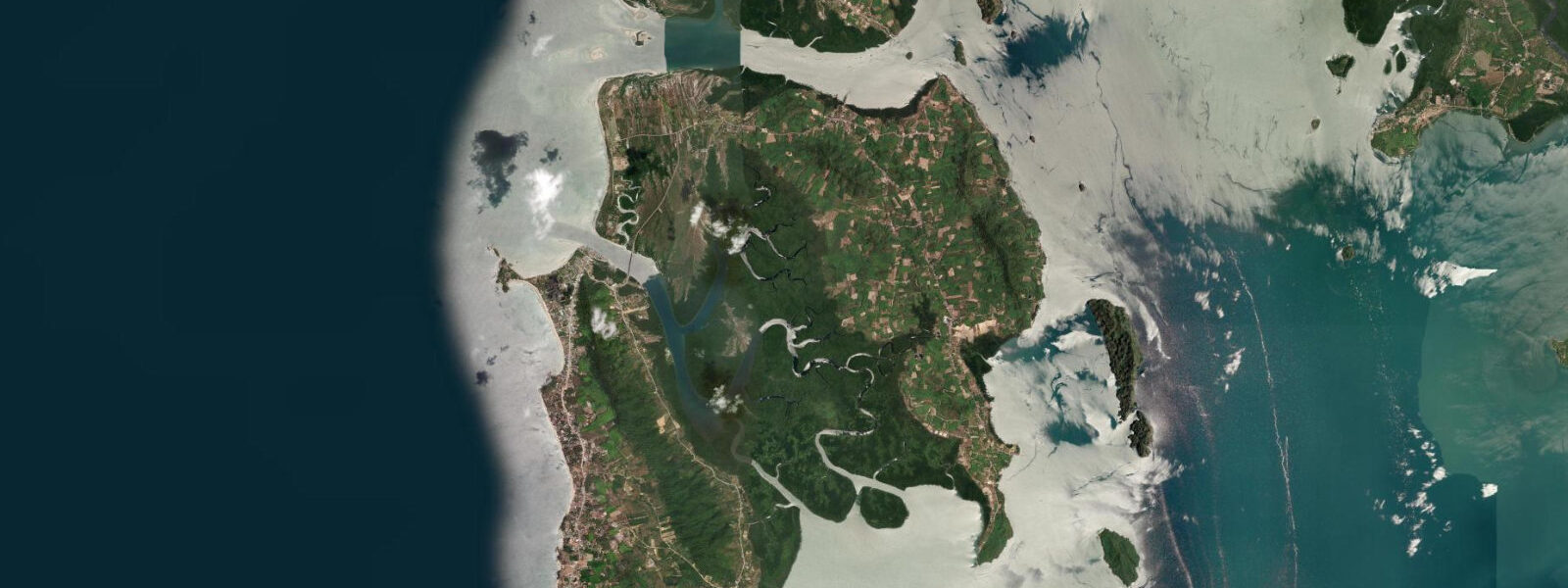
Koh Lanta tide times
Koh Lanta tide forecast — heights relative to MSL.
Today's tide times for Koh Lanta
Tide times at Koh Lanta on Tuesday, 4 August 2026: first low tide at 07:00, first high tide at 13:05, second low tide at 19:32. Sunrise 06:16, sunset 18:43.
Tide chart for Koh Lanta
24-hour cosine-interpolated curve around the present moment. Heights relative to MSL. Predictions: Predictions: Open-Meteo Marine (MeteoFrance SMOC, 0.08° grid).
Sun, moon and conditions on Tue 04 Aug
Snapshot at build time — refreshes daily. Sea state from Open-Meteo Marine.
Highs and lows next 7 days
Every predicted high and low for the next week, with the daily tidal coefficient (0–120; higher = bigger swing, > 95 means stronger currents).
Other spots nearby
The three closest curated TideTurtle locations to Koh Lanta, measured by great-circle distance.
Today's solunar windows
Solunar tradition: major periods are the ≈3h windows around moon transit and opposition; minor are ≈2h around moonrise and moonset. Pair with the local tide stage and wind for the best read.
Cycle dates near Koh Lanta
Last spring tide on Tue 04 Aug (range 2.0m). Next spring tide on Mon 10 Aug (range 1.7m). Next neap on Sun 09 Aug.
Spring tides cluster around new and full moons (biggest swings). Neap tides land on quarter moons (smallest swings). See the spring tide and neap tide glossary entries for the why.
About tides at Koh Lanta
A short guide to the coastline at Koh Lanta — geography, sea state, and what the tide is actually doing under your feet.
Koh Lanta — properly Ko Lanta Yai, to distinguish it from the smaller Ko Lanta Noi to the north — is a long, thin island 27 km from end to end on Krabi Province's Andaman coast. The main tourist strip runs down the western coast from Klong Dao beach in the north to Klong Nin and Kantiang Bay in the south, a sequence of crescent beaches separated by low headlands and backed by the jungled interior hills. The east coast is mangrove and tidal flat, facing the narrow channel that separates the island from the mainland and the town of Baan Hua Hin; the main vehicle ferry crossing to the island and the National Park pier at the island's southern tip are on the east side.
Ko Lanta Old Town — a Sino-Portuguese fishing village on the NE coast, 6 km from the main pier — has some of the most intact wooden shophouse architecture in southern Thailand, built on stilts over the tidal flat. 5 m. The Andaman Sea's tidal character applies here as it does further north at Railay — two highs and two lows per day, pronounced spring-neap cycle, and a spring range large enough to change the visual character of every beach on the island.
At Klong Dao, the main beach in the north, the low-tide sand flat exposes 60–80 m of firm sand at spring low water; the beach at high spring narrows to 20–30 m. The gradient at Klong Dao is gentle — beach walkers and joggers use the tidal flat at low water as a running surface. Long Beach (Hat Phra Ae), 4 km south of Klong Dao, has a steeper gradient and a more pronounced headland at the south end; at low spring, a rocky shelf below the headland exposes, and small tidal pools form in the limestone indentations.
5–2 hours either side of the predicted low. Klong Nin beach, further south, is narrower and more shaded by casuarina trees; the tidal exposure is similar to Klong Dao but the beach is shorter. Kantiang Bay, at the island's south end before the National Park boundary, is a sheltered horseshoe bay with the most consistent flat-calm conditions on the west coast — the headlands on both sides deflect the SW monsoon swell, making it swimmable even in October when the northern beaches are rough.
The NE monsoon season (November through April) brings the dominant swell to the west coast. The swell track is northwest to west — arriving from the Andaman Sea across the full Indian Ocean fetch — and the west-facing beach at Klong Dao catches the cleanest lines of wind swell from late November through February. 0 m on persistent NE wind days; the beaches are swimmable but active, and paddleboarding and kayaking in open water should be limited to the sheltered northern end of each bay where the headland provides a lee.
For snorkelling, the reef sites at Hin Daeng and Hin Muang (40 km offshore) are considered among the best in Thailand for pelagic encounters — both are seamounts rising from 70 m depth, accessible by day-trip liveaboard from Ko Lanta pier. The shallower reef at Koh Rok (20 km south) has consistent visibility in the dry season, best in the two hours either side of slack water. Ko Lanta National Park covers the southern third of the island.
The park headquarters beach is accessible by road; the mangrove boardwalk on the east side of the park runs through a mature mangrove system where king cranes, purple herons, and mud skippers are visible at low tide. The tidal flat beside the boardwalk exposes fully at low spring, and the mangrove root systems and pneumatophores are exposed for 2–3 hours at low water — the best window for bird observation and photography. Ferry schedules from Ko Lanta pier to Ko Pha-ngan, Koh Samui, and Phuket run during the NE monsoon season (Nov–Apr); services thin or stop in the SW monsoon months.
3 m. Thai Meteorological Department (TMD) is the authoritative reference.
Tide questions about Koh Lanta
Quick answers to the most common questions about tide times, range, and water access at Koh Lanta.
What is the tidal range at Koh Lanta and how does it change the beaches?
Spring tidal range at Koh Lanta is approximately 2.5 m. The semidiurnal regime — two highs and two lows per day — means the beach changes character twice daily. At Klong Dao in the north, the difference between high spring (beach width 20–30 m) and low spring (60–80 m of exposed firm sand) is dramatic enough to change how the beach feels. The gentle gradient at Klong Dao makes the exposed tidal flat suitable for walking and jogging at low water. At Long Beach, the low-tide exposure uncovers a rocky shelf below the southern headland with accessible tidal pools. At Kantiang Bay in the south, the horseshoe shape buffers the spring range somewhat, but the tidal sequence is similar. Neap range drops to roughly 0.5–0.8 m and the tidal change is much less noticeable.
When is the best time to go snorkelling at Koh Rok?
Koh Rok (Ko Rok Nai and Ko Rok Nok) is a Marine National Park site 20 km south of Ko Lanta Yai. The coral reef system around both islands is among the healthiest accessible from Ko Lanta. Day trips run November through April; the park closes May through October due to the SW monsoon. The best snorkelling window at the reef is two hours either side of slack water — when the tidal current drops below 0.5 knots, visibility in the reef channels improves significantly as particulate matter settles. Predicted slack times at Ko Rok are approximately 1.0–1.5 hours after the predicted high or low water at Ko Lanta (the propagation delay through the archipelago). Day trips depart Ko Lanta pier at 08:00–08:30; the first snorkel in the water is typically around 10:00, which in the NE monsoon season often aligns with the mid-morning flood-tide slack.
Is Ko Lanta Old Town worth the detour?
Ko Lanta Old Town (Ban Ko Lanta) is a 19th-century Sino-Portuguese trading village on the NE coast, 6 km north of the main pier. The wooden shophouses are built on stilts over the tidal flat; at low spring the piles are fully exposed and the structure of the historic buildings is visible from the waterfront boardwalk. At high spring the water reaches the boardwalk level and the stilts are submerged. The best photography of the stilted structures is at low tide in morning light. Several of the shophouses operate as guesthouses, cafes, and small museums; the town has a Muslim fishing-village character distinct from the beach resort strip on the west coast. The drive from Klong Dao to Old Town takes 20 minutes on the east-coast road.
What is the best season to visit Koh Lanta?
November through April is the NE monsoon season and high season on Ko Lanta. The west coast beaches are at their calmest in February and March — trade wind swell has dropped from the December–January peak and the air is dry. November and December are excellent months with reliably clear skies and the first of the season's boat services to Ko Rok and Hin Daeng. May marks the start of the SW monsoon; services to the outer reef sites stop. June through October is the low season — some resorts close, ferry connections to Ko Samui and Phuket are suspended, and the west coast can see 1.0–2.0 m swell on storm days. Kantiang Bay remains the calmest beach on the island through the SW monsoon.
How do I get to Koh Lanta from Krabi or Ao Nang?
From Krabi Town: minivan and vehicle ferry combination, approximately 2 hours door to the main Ko Lanta pier at Ban Sala Dan. The vehicle ferry crossing at Baan Hua Hin (mainland to Ko Lanta Noi) operates on demand and takes 5 minutes; the second crossing from Ko Lanta Noi to Ko Lanta Yai takes 10 minutes. Both ferry crossings are tide-independent — the channel is deep enough at all stages. From Ao Nang: minivan via Krabi Town, or direct speedboat service (November–April, approximately 1 hour). The speedboat service does not run in the SW monsoon. From Ko Phi Phi: speedboat, 30–45 minutes (November–April only). The vehicle ferry service running from the mainland operates year-round regardless of season, making Ko Lanta accessible even in October.
8-day tide table — Koh Lanta
Heights relative to MSL. Predictions: Open-Meteo Marine (MeteoFrance SMOC, 0.08° grid) — heights relative to MSL (not chart datum / LAT). Model-derived.
| Day | Type | Time | Height |
|---|---|---|---|
| Tue 04 Aug | Low | 07:00 | -0.4m |
| High | 13:05 | 1.5m | |
| Low | 19:32 | -0.5m | |
| Wed 05 Aug | High | 01:38 | 1.4m |
| Low | 07:52 | -0.3m | |
| High | 13:47 | 1.4m | |
| Low | 20:10 | -0.3m | |
| Thu 06 Aug | High | 02:22 | 1.3m |
| Low | 08:42 | -0.0m | |
| High | 14:34 | 1.2m | |
| Low | 20:55 | -0.1m | |
| Fri 07 Aug | High | 03:25 | 1.3m |
| Low | 09:48 | 0.2m | |
| High | 15:46 | 1.1m | |
| Low | 22:02 | 0.1m | |
| Sat 08 Aug | High | 05:00 | 1.3m |
| Low | 23:50 | 0.2m | |
| Sun 09 Aug | High | 06:57 | 1.3m |
| Low | 13:40 | 0.1m | |
| High | 19:47 | 1.1m | |
| Mon 10 Aug | Low | 01:42 | 0.0m |
| High | 08:13 | 1.6m | |
| Low | 14:52 | -0.2m | |
| High | 20:52 | 1.3m | |
| Tue 11 Aug | Low | 02:51 | -0.2m |
| High | 06:00 | 0.8m |