Trincomalee tide times
Trincomalee tide forecast — heights relative to MSL.
Today's tide times for Trincomalee
Tide times at Trincomalee on Tuesday, 4 August 2026: first low tide at 05:30am, first high tide at 10:40am, second low tide at 05:30pm. Sunrise 05:56am, sunset 06:25pm.
Tide chart for Trincomalee
24-hour cosine-interpolated curve around the present moment. Heights relative to MSL. Predictions: Predictions: Open-Meteo Marine (MeteoFrance SMOC, 0.08° grid).
Sun, moon and conditions on Tue 04 Aug
Snapshot at build time — refreshes daily. Sea state from Open-Meteo Marine.
Highs and lows next 7 days
Every predicted high and low for the next week, with the daily tidal coefficient (0–120; higher = bigger swing, > 95 means stronger currents).
Other spots nearby
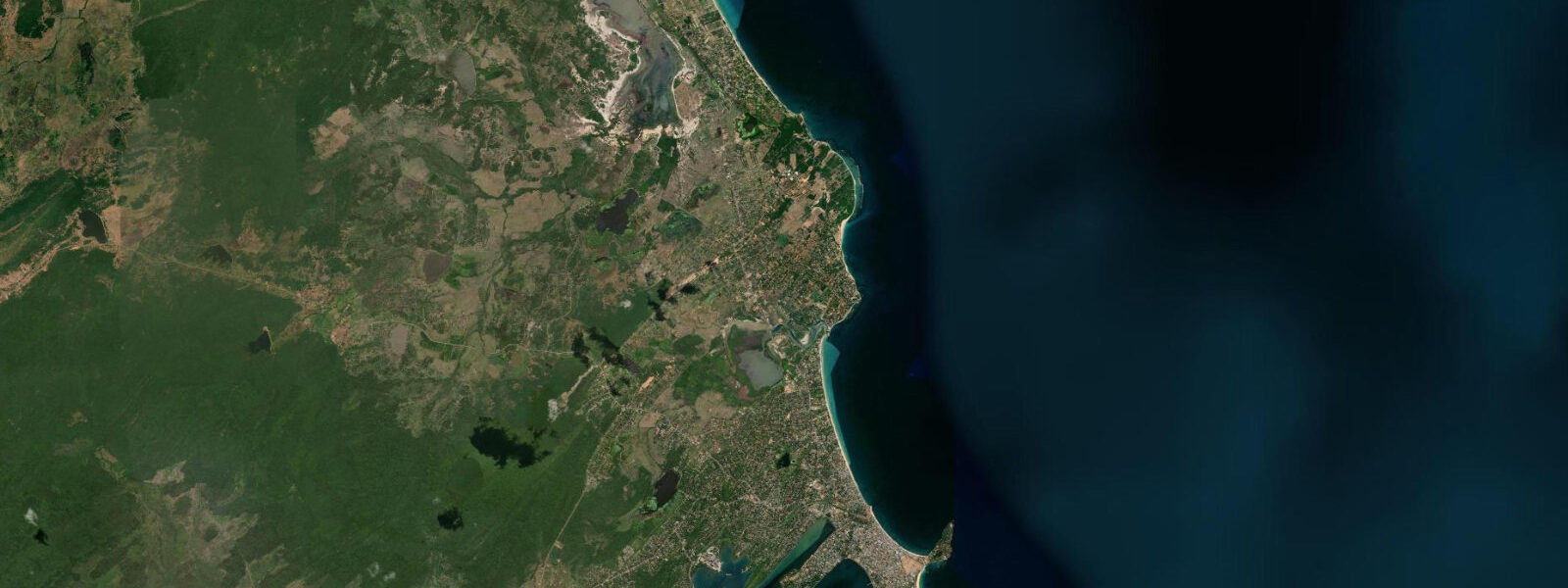
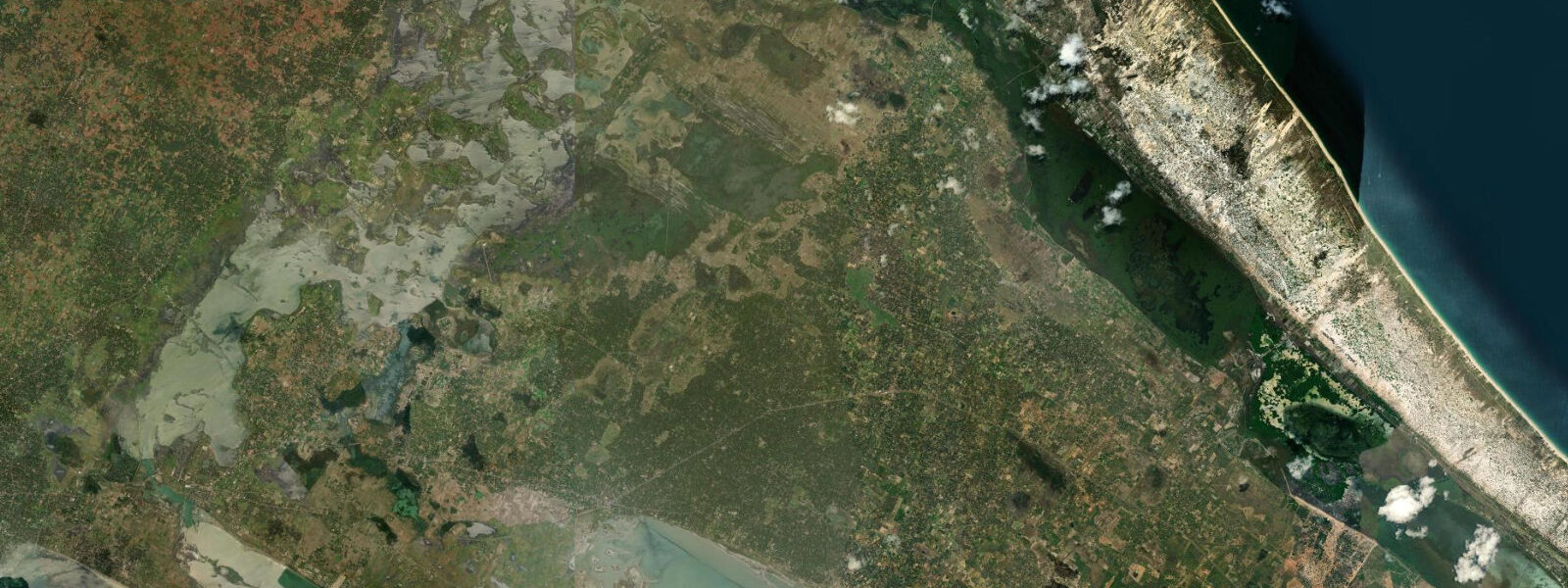
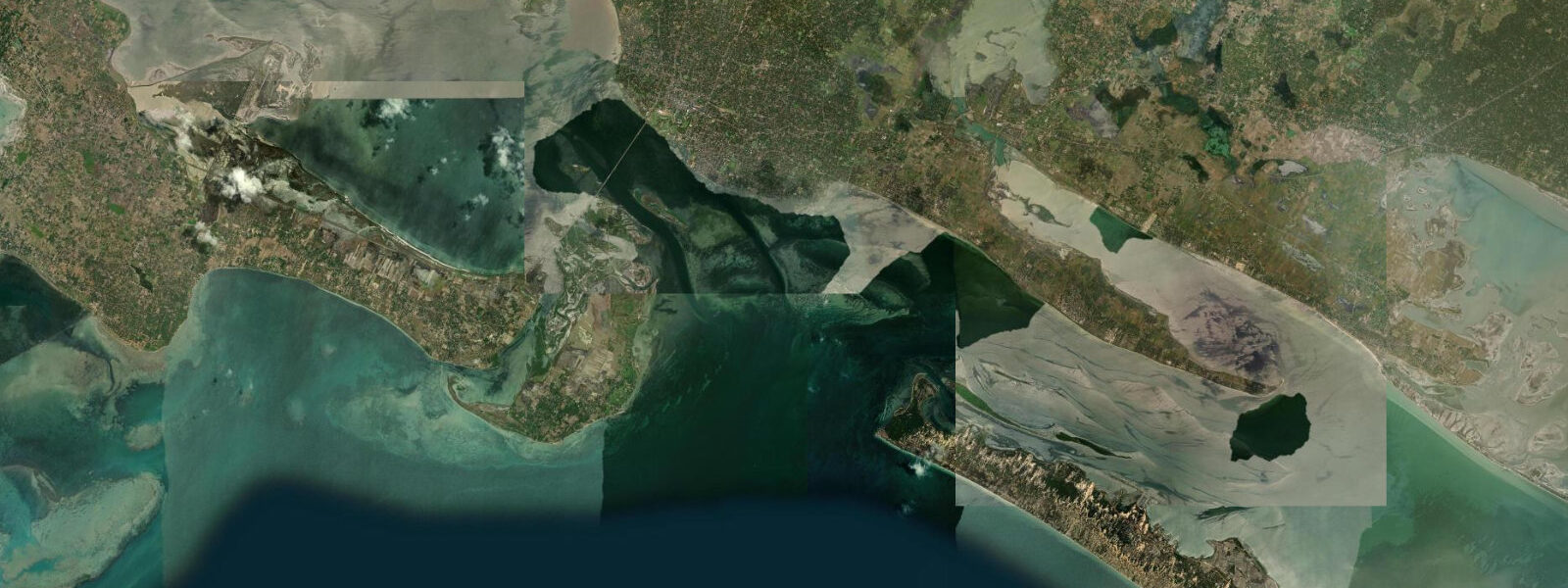
The three closest curated TideTurtle locations to Trincomalee, measured by great-circle distance.
Today's solunar windows
Solunar tradition: major periods are the ≈3h windows around moon transit and opposition; minor are ≈2h around moonrise and moonset. Pair with the local tide stage and wind for the best read.
Cycle dates near Trincomalee
Last spring tide on Tue 04 Aug (range 0.5m). Next spring tide on Mon 10 Aug (range 0.6m). Next neap on Thu 06 Aug.
Spring tides cluster around new and full moons (biggest swings). Neap tides land on quarter moons (smallest swings). See the spring tide and neap tide glossary entries for the why.
About tides at Trincomalee
A short guide to the coastline at Trincomalee — geography, sea state, and what the tide is actually doing under your feet.
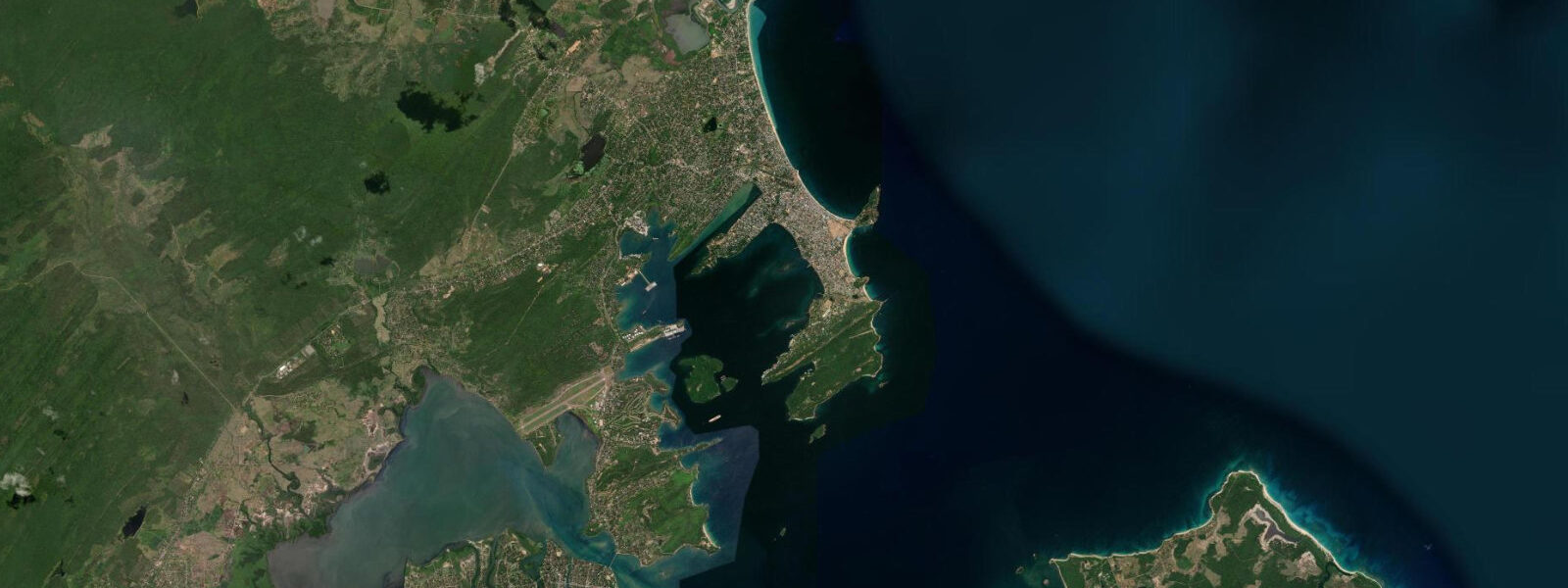
Trincomalee Harbour occupies the northeastern tip of Sri Lanka, where the Koddiyar Bay and the Inner Harbour basin are enclosed by a series of headlands forming one of the world's great natural deep-water anchorages — approximately 5 kilometres wide, 10 kilometres deep, with minimum channel depths of 15 to 20 metres throughout the main basin. Fort Frederick stands on the headland that forms the eastern arm of the harbour entrance; the original Portuguese fort of 1624 was rebuilt by the Dutch in 1665 and substantially modified by the British. The Koneswaram Temple (Koneswaram Kovil), one of the five Isvarams of Shiva in Sri Lankan Tamil Hindu tradition, occupies the summit of Swami Rock at the fort's eastern edge — the cliff at Swami Rock drops 130 metres to the sea.
1 metres above chart datum. Two highs and two lows of unequal size each day, with the diurnal inequality producing one larger and one smaller cycle within each 24-hour period. The tidal current inside the harbour is modest by open-coast standards; the large enclosed basin moderates the current that the tidal exchange drives.
The harbour's strategic value comes from its combination of depth, shelter, and size: it can accommodate large-draft vessels year-round when Colombo Harbour closes to cargo operations during the SW monsoon. The Royal Navy established the Trincomalee base in the 18th century and expanded it through the 19th; during WWII it served as the Eastern Fleet's primary base in the Indian Ocean theatre. On 9 April 1942, Japanese carrier aircraft attacked Trincomalee in a coordinated strike (Operation C); the aircraft carrier HMS Hermes, escorted by HMCS Vampire, was sunk by dive-bombers approximately 65 km south of the harbour — the first aircraft carrier sunk by carrier aircraft in history.
The wreck of HMS Hermes lies in 55 metres; it is a dive site accessible from Batticaloa on the coast to the south. Blue whale (Balaenoptera musculus) and sperm whale (Physeter macrocephalus) are reliably sighted in the waters off Trincomalee between March and April and again in November; the seasonal upwelling cycle in the northern Bay of Bengal concentrates prey organisms that attract both species into the offshore approaches. Whale-watching boats operate from the Trincomalee harbour jetties; the operators use forecast weather and known cetacean aggregation zones 20 to 40 km offshore.
The town of Trincomalee has a mixed Tamil-Sinhalese population; the Dutch Fort area, Marble Beach (4 km northwest of town), and Uppuveli Beach (5 km northwest) are the primary tourist-accessible sections of the coast. Uppuveli and Nilaveli beaches are calm from April through October (the SW monsoon calm on the east coast) and rougher from November through February. Shore angling along the Trincomalee headlands and the rocky promontories around Fort Frederick targets the trevally, barracuda, and reef species that concentrate around the structures at the harbour approaches; the incoming tide is the standard window.
The Kanniya Hot Springs, 8 km inland from Trincomalee, are seven natural freshwater spring pools of different temperatures attributed in local tradition to Ravana's footprint; the springs emerge from the limestone substrate at a constant warm temperature year-round, independent of the tidal cycle. Families and day-trip visitors from Trincomalee combine the springs with Marble Beach (4 km north of town on the harbour's eastern shore), one of the more sheltered and calm beaches near Trincomalee, accessible by road past the naval base gate with a tourist access permit. 3 metres on height.
NARA (National Aquatic Resources Research and Development Agency, Sri Lanka) is the authoritative Sri Lanka tide source and operates the principal gauge station at Trincomalee.
Tide questions about Trincomalee
Quick answers to the most common questions about tide times, range, and water access at Trincomalee.
When is the best time to see blue whales off Trincomalee?
Blue whales and sperm whales are reliably sighted in the waters 20 to 40 km offshore of Trincomalee during March and April, and again in November, when the seasonal upwelling cycle in the northern Bay of Bengal concentrates krill and squid. Whale-watching boats depart from the Trincomalee harbour jetties early morning; the trips run 3 to 5 hours depending on conditions and the distance to the aggregations. Weather permitting conditions (calm enough for an offshore run) is the primary constraint — the operators check the 72-hour forecast. The tidal state inside the harbour affects departure ease but not the offshore whale encounter probability.
What is the historical significance of Trincomalee Harbour?
Trincomalee is one of the world's great natural deep-water harbours — approximately 5 km wide and 10 km deep, navigable year-round. Fort Frederick on the eastern headland has been held by the Portuguese (1624), Dutch (1665), French, and British in succession. During WWII it served as the Royal Navy Eastern Fleet's primary Indian Ocean base. On 9 April 1942, a Japanese carrier air strike sank HMS Hermes (the first aircraft carrier sunk by carrier aircraft) and HMCS Vampire approximately 65 km south of the harbour. The wreck of HMS Hermes at 55 metres depth is a dive site accessible from Batticaloa.
What is the typical tide range at Trincomalee, and does it affect harbour operations?
Spring range at Trincomalee is approximately 0.8 to 1.1 metres above chart datum — moderate for the Bay of Bengal, with mixed semidiurnal pattern (two unequal highs and two unequal lows per day). The large enclosed basin moderates the tidal current inside the harbour to gentle flows in the main anchorage area. The harbour entrance channel has sufficient depth throughout the tidal cycle for deep-draft vessels; this is what makes Trincomalee operationally significant when Colombo's harbour becomes uncomfortable during SW monsoon swell. NARA operates the authoritative gauge station at Trincomalee.
Where do these tide predictions come from?
Open-Meteo Marine, a gridded global ocean model; accuracy is typically ±45 minutes on timing and ±0.2 to 0.3 metres on height. The model estimates tidal height from oceanographic equations applied across a geographic grid rather than from harmonic analysis of decades of gauge data. NARA (National Aquatic Resources Research and Development Agency, Sri Lanka) is the authoritative Sri Lanka tide source and operates the Trincomalee gauge — the primary reference station for the east coast. For any activity that depends on precise water level at the harbour jetties, whale-watch boat departure times, or beach swimming conditions, cross-check with the NARA predicted tide for Trincomalee.
Is this safe to use for navigation?
No. Trincomalee Harbour is an active commercial and Sri Lanka Navy port. The harbour entrance channel between Fort Frederick headland and the eastern shore requires coordination with Trincomalee Port Control for all commercial vessels. For vessel operations in the harbour, the approach channel, or the Bay of Bengal approaches south toward Nilaveli and Pigeon Island, use Sri Lanka Ports Authority charts, NARA tide data, and the Sri Lanka Navy/Ports Authority pilotage guidance. The outer anchorage south of the harbour entrance has regular naval patrol activity. TideTurtle is a coastal planning and activity reference, not a navigational tool.
8-day tide table — Trincomalee
Heights relative to MSL. Predictions: Open-Meteo Marine (MeteoFrance SMOC, 0.08° grid) — heights relative to MSL (not chart datum / LAT). Model-derived.
| Day | Type | Time | Height |
|---|---|---|---|
| Tue 04 Aug | Low | 05:30 | 0.3m |
| High | 10:40 | 0.7m | |
| Low | 17:30 | 0.2m | |
| Wed 05 Aug | High | 11:30 | 0.7m |
| Low | 18:24 | 0.3m | |
| Thu 06 Aug | High | 12:20 | 0.7m |
| Low | 19:15 | 0.3m | |
| Fri 07 Aug | High | 02:15 | 0.7m |
| Low | 20:24 | 0.3m | |
| Sat 08 Aug | High | 03:20 | 0.7m |
| Low | 21:40 | 0.3m | |
| Sun 09 Aug | High | 04:45 | 0.7m |
| Low | 11:12 | 0.3m | |
| Mon 10 Aug | High | 05:36 | 0.7m |
| Low | 23:42 | 0.2m | |
| Tue 11 Aug | High | 04:30 | 0.7m |