Gijón tide times
Gijón tide forecast — heights relative to MSL.
Today's tide times for Gijón
Tide times at Gijón on Tuesday, 4 August 2026: first low tide at 02:00, first high tide at 08:15, second low tide at 14:17, second high tide at 20:31. Sunrise 07:14, sunset 21:42.
Tide chart for Gijón
24-hour cosine-interpolated curve around the present moment. Heights relative to MSL. Predictions: Predictions: Open-Meteo Marine (MeteoFrance SMOC, 0.08° grid).
Sun, moon and conditions on Tue 04 Aug
Snapshot at build time — refreshes daily. Sea state from Open-Meteo Marine.
Highs and lows next 7 days
Every predicted high and low for the next week, with the daily tidal coefficient (0–120; higher = bigger swing, > 95 means stronger currents).
Other spots nearby
The three closest curated TideTurtle locations to Gijón, measured by great-circle distance.
Today's solunar windows
Solunar tradition: major periods are the ≈3h windows around moon transit and opposition; minor are ≈2h around moonrise and moonset. Pair with the local tide stage and wind for the best read.
Cycle dates near Gijón
Last spring tide on Tue 04 Aug (range 2.9m). Next spring tide on Mon 10 Aug (range 2.9m). Next neap on Fri 07 Aug.
Spring tides cluster around new and full moons (biggest swings). Neap tides land on quarter moons (smallest swings). See the spring tide and neap tide glossary entries for the why.
About tides at Gijón
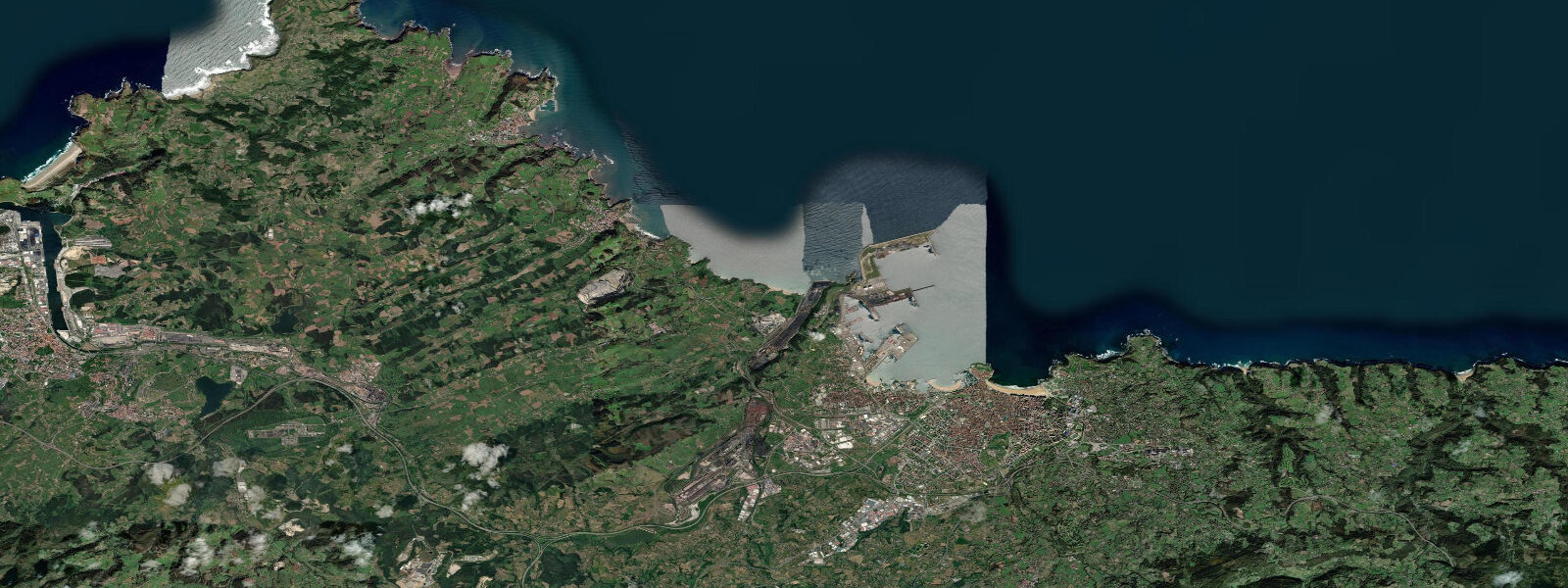
A short guide to the coastline at Gijón — geography, sea state, and what the tide is actually doing under your feet.
Gijón is the largest city in Asturias and the most densely layered of the Cantabrian coast cities — a working port, a steel-industry heritage town, a university city, and a beach resort compressed into the same waterfront. Playa de San Lorenzo runs 1.5 kilometres along the eastern arc of the bay, directly below the Cimadevilla promontory where the old fishing quarter occupies the headland between the beach bay and the commercial port. Mean tidal range at Gijón is approximately 3.5 metres on springs; the beach changes substantially with the tide, and the tidal cycle defines the daily rhythm of the waterfront.
At low water on a spring tide, San Lorenzo is wide — 50 to 70 metres of dark sand, the Atlantic washing in with the regular swell that runs across the Cantabrian shelf. The swell is consistent because the Bay of Biscay funnels Atlantic energy onto the south coast; Gijón sits on the southern shore and faces northwest, catching swell without the protection of headlands to the west. Wave size at San Lorenzo ranges from 0.5 to 1.5 metres in summer to 2 to 4 metres in winter storms; the beach break shifts peaks with sandbar migration.
Cimadevilla, the original Roman settlement and medieval fishing quarter, sits on a compact peninsula of rock above both the beach bay to the east and the port to the west. The headland is capped by the Cerro de Santa Catalina, where Eduardo Chillida's sculpture Elogio del Horizonte (1990) — a concrete arc framing the ocean — stands on the edge of the cliff. The sculpture is positioned due north over the sea; the view through the arc is open horizon to the Bay of Biscay.
The commercial and fishing ports occupy the western arm of Gijón's bay. The bonito (Atlantic bonito) catch landed here from July through September is the defining seasonal event of the Asturian fishing calendar — bonito is the fish that Asturias built its summer food culture around, stewed in Asturian cider (bonito en sidra) or simply grilled. The fish auction (lonja) at the commercial port runs weekday afternoons.
Asturian cider (sidra) is poured in the traditional Asturian style — the bottle held high above the head, the glass held at hip height, a thin stream poured from above to aerate and produce a head. The pour (escanciado) dissipates the flat cider's carbon dioxide and releases its aromas; the traditional measure is drunk immediately before the foam settles. Cider bars (sidrería) in Gijón follow this ritual with mechanical regularity; the Cimadevilla quarter has the highest concentration.
The thermal baths at Gijón (Baños de Reina Amalia, historic spa on the Cimadevilla headland) and the botanic gardens at El Jardín Botánico Atlántico represent the other side of Gijón's amenity offer. The Laboral Ciudad de la Cultura — a massive rationalist complex from the 1950s Franco era, repurposed as a cultural centre — is on the eastern edge of the city and worth a visit for the architecture alone.
Tide predictions on this page come from Open-Meteo Marine, a gridded global ocean model. Accuracy is typically within plus or minus 45 minutes on timing and 0.2 to 0.3 metres on height — model-derived, not from a local gauge. For authoritative official predictions, Puertos del Estado (puertos.es) publishes gauge-based tide tables for Gijón.
Tide questions about Gijón
Quick answers to the most common questions about tide times, range, and water access at Gijón.
What is the tidal range at Gijón and how does it affect Playa de San Lorenzo?
Gijón's mean spring tidal range is approximately 3.5 metres — the full Atlantic macrotidal regime of the Cantabrian coast. Playa de San Lorenzo changes measurably through the tidal cycle: at low water on springs, the beach is 50 to 70 metres wide with the full dark sand exposed; at high water, the sea reaches to within a few metres of the seafront promenade. The 1.5-kilometre beach length means the difference in exposed sand between low and high water is significant — several thousand square metres appearing and disappearing twice a day. Wave height at the beach is also higher at mid to high water as the swell hits the steeper beach face.
What is bonito and why is it important in Asturias?
Bonito del Norte (Atlantic bonito, Thunnus alalunga — actually albacore tuna) is the most important seasonal fish of the Cantabrian fishing calendar. The fleet targets bonito from July through September when the fish follow warm Atlantic currents into the Bay of Biscay. Gijón's fishing port lands substantial catches; the fish goes to the lonja (auction) and then to the canning factories and restaurants. In Asturian cuisine, bonito en sidra (bonito stewed in Asturian cider) and bonito a la plancha (grilled, with tomato) are the canonical preparations. The opening of the bonito season in July is a local event.
What is Asturian cider and how is it served?
Sidra natural (Asturian natural cider) is a still, flat, lightly tart fermented apple cider produced in the apple orchards of Asturias. It is served by escanciado — a high pour from bottle to glass to aerate the flat cider and produce a head. The traditional measure (culín) is drunk immediately before the foam settles. Cider bars (sidrerías) in Cimadevilla in Gijón are the standard venue; the ritual is part of the experience. Asturian cider has a DOP (denominación de origen protegida). The main cider-producing areas are in the interior Asturian valleys, but the sidrerías are concentrated in the coastal towns.
Where is Elogio del Horizonte and what is it?
Elogio del Horizonte (Praise of the Horizon) is a concrete sculpture by the Basque sculptor Eduardo Chillida, completed in 1990 and installed on the Cerro de Santa Catalina at the tip of the Cimadevilla promontory in Gijón. It is a large open concrete arc — roughly 10 metres high, 10 metres wide — positioned facing due north over the Bay of Biscay. The sculpture frames the open ocean horizon; the view through the arc is nothing but sea and sky. It is one of the most site-specific public artworks in Spain: the form and placement only make sense in this exact location, on this headland, above this sea.
Are the tide predictions on this page official forecasts I can use for navigation or safety planning?
No. Predictions here come from Open-Meteo Marine, a global gridded ocean model with typical accuracy of plus or minus 45 minutes on timing and 0.2 to 0.3 metres on height. They are useful for general coastal planning — timing a beach visit, reading the tidal cycle, understanding when the beach will be widest — but not for vessel navigation, port approach, or any water safety decision where precise tide heights matter. For official gauge-based tide predictions for Gijón, use Puertos del Estado at puertos.es. Gijón has its own tide gauge and official tide tables.
8-day tide table — Gijón
Heights relative to MSL. Predictions: Open-Meteo Marine (MeteoFrance SMOC, 0.08° grid) — heights relative to MSL (not chart datum / LAT). Model-derived.
| Day | Type | Time | Height |
|---|---|---|---|
| Tue 04 Aug | Low | 02:00 | -1.9m |
| High | 08:15 | 0.9m | |
| Low | 14:17 | -1.7m | |
| High | 20:31 | 1.0m | |
| Wed 05 Aug | Low | 02:46 | -1.7m |
| High | 09:00 | 0.8m | |
| Low | 15:06 | -1.6m | |
| High | 21:21 | 0.8m | |
| Thu 06 Aug | Low | 03:36 | -1.6m |
| High | 09:54 | 0.6m | |
| Low | 16:06 | -1.5m | |
| High | 22:22 | 0.5m | |
| Fri 07 Aug | Low | 04:40 | -1.4m |
| High | 11:05 | 0.5m | |
| Low | 17:21 | -1.4m | |
| High | 23:47 | 0.4m | |
| Sat 08 Aug | Low | 06:01 | -1.3m |
| High | 12:32 | 0.5m | |
| Low | 18:50 | -1.4m | |
| Sun 09 Aug | High | 01:16 | 0.5m |
| Low | 07:25 | -1.4m | |
| High | 13:51 | 0.7m | |
| Low | 20:11 | -1.6m | |
| Mon 10 Aug | High | 02:36 | 0.7m |
| Low | 08:37 | -1.6m | |
| High | 14:58 | 1.0m | |
| Low | 21:14 | -1.9m | |
| Tue 11 Aug | High | 01:00 | -0.1m |