Jeju City tide times
Jeju City tide forecast — heights relative to MSL.
Today's tide times for Jeju City
Tide times at Jeju City on Monday, 3 August 2026: first low tide at 09:00. Sunrise 05:47, sunset 19:33.
Tide chart for Jeju City
24-hour cosine-interpolated curve around the present moment. Heights relative to MSL. Predictions: Predictions: Open-Meteo Marine (MeteoFrance SMOC, 0.08° grid).
Sun, moon and conditions on Mon 03 Aug
Snapshot at build time — refreshes daily. Sea state from Open-Meteo Marine.
Highs and lows next 7 days
Every predicted high and low for the next week, with the daily tidal coefficient (0–120; higher = bigger swing, > 95 means stronger currents).
Other spots nearby
The three closest curated TideTurtle locations to Jeju City, measured by great-circle distance.
Today's solunar windows
Solunar tradition: major periods are the ≈3h windows around moon transit and opposition; minor are ≈2h around moonrise and moonset. Pair with the local tide stage and wind for the best read.
Cycle dates near Jeju City
Last spring tide on Mon 03 Aug (range 1.7m). Next spring tide on Sun 09 Aug (range 2.0m). Next neap on Wed 05 Aug.
Spring tides cluster around new and full moons (biggest swings). Neap tides land on quarter moons (smallest swings). See the spring tide and neap tide glossary entries for the why.
About tides at Jeju City
A short guide to the coastline at Jeju City — geography, sea state, and what the tide is actually doing under your feet.
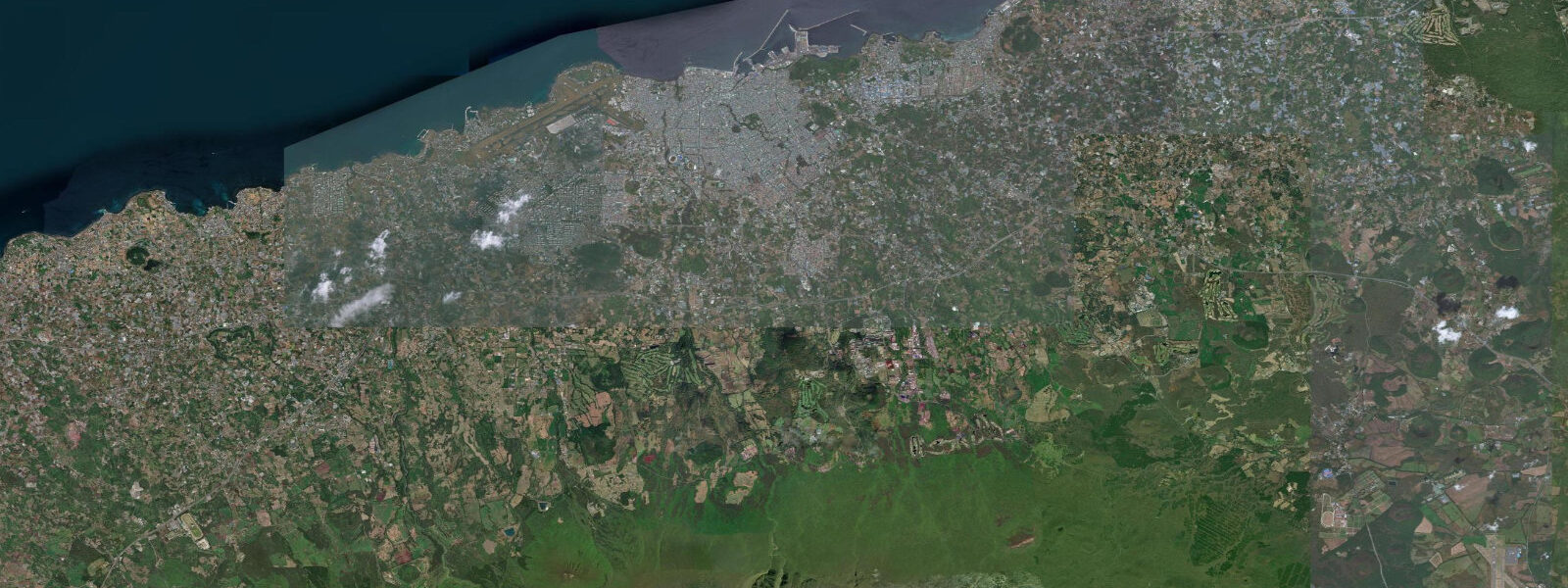
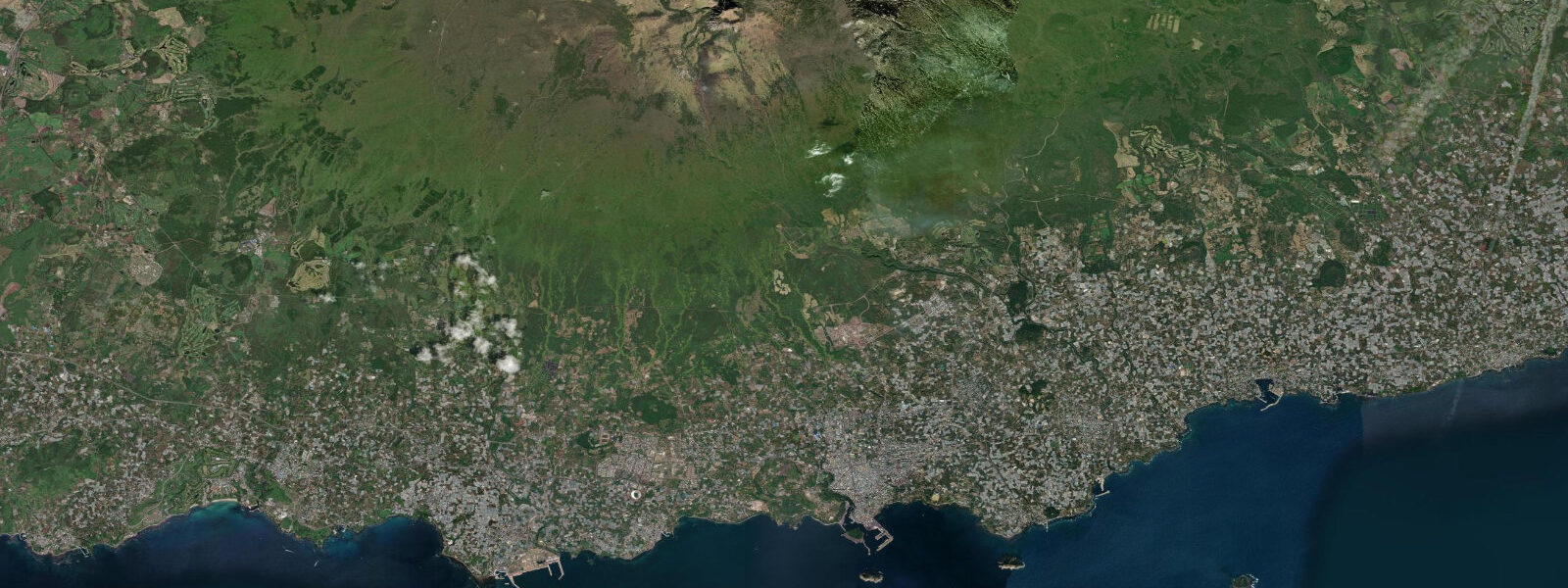
Jeju Island is South Korea's largest island and a UNESCO Triple Crown designation (Biosphere Reserve, World Natural Heritage, and Geopark) off the southern tip of the Korean Peninsula. Jeju City on the north coast is the main population and transport hub; the volcanic landscape of Hallasan (1950 m, the highest peak in South Korea) dominates the island's interior. Tidal pattern is semidiurnal with a mean spring range of about 1.5 metres — slightly less than the mainland southern coast.
The coastal character of Jeju is entirely volcanic basalt — black lava rock, sea cliffs, and lava tube caves that extend to the coast. Manjangul Cave (a 13.4-km lava tube system, partly accessible to visitors) ends near the north coast. The Hyeopjae Beach on the west coast has unusually clear water (subtropical, warm — 22 to 26°C in summer) over white coral sand that contrasts dramatically with the surrounding black basalt.
Haenyeo diving is practised extensively around Jeju — the island is the primary haenyeo culture centre. The women's free-diving community has a dedicated museum (Haenyeo Museum, east coast near Seongsan) and regular public demonstration dives. The traditional haenyeo dive is to 10 to 20 metres without SCUBA, targeting abalone, conch, and sea urchin.
Scuba diving around Jeju is in warm, subtropical water (20 to 26°C in summer, 15 to 17°C in winter) with excellent visibility and diverse marine life: hawksbill turtles, subtropical reef fish, and kelp forest diving on the eastern coast (colder, more temperate marine environment from the East Korea Current). The dive sites around Seogwipo on the south coast are considered the best in Korea.
Seongsan Ilchulbong (Sunrise Peak) is a 182-metre tuff crater on the eastern tip of Jeju — the volcanic cone rises from the sea and is accessible by a 20-minute trail from the base. The crater rim gives views of the Olle trails (Jeju's famous coastal walking paths) and the sunrise at dawn. The site is busy year-round; early morning is the only quiet time.
Predictions on this page come from Open-Meteo Marine, a gridded global ocean model. Accuracy is typically within plus or minus 45 minutes on timing and 0.2 to 0.3 metres on height — model-derived, not from a local gauge. For Korean tide data, consult the Korea Hydrographic and Oceanographic Agency at khoa.go.kr.
Tide questions about Jeju City
Quick answers to the most common questions about tide times, range, and water access at Jeju City.
What is the tidal range at Jeju?
Mean spring range at Jeju City is approximately 1.5 metres. The south coast (Seogwipo) has a slightly smaller range due to the ocean exposure; the east coast (Seongsan area) has similar range to the north. Haenyeo diving is timed around tidal state — the divers prefer the slack water period around low water when current is minimal and visibility is best in the inshore zone.
What is Seongsan Ilchulbong?
Seongsan Ilchulbong (UNESCO World Heritage) is a 182-metre tuff cone formed by a submarine volcanic eruption 100,000 years ago — the crater is intact and the seaward face drops vertically into the sea. The trail to the crater rim takes 20 minutes and has 25 stairs and 4 gradients. From the rim, the crater interior and the surrounding sea are visible simultaneously. 'Ilchulbong' means 'sunrise peak'; the dawn views from the rim are the classic Jeju sunrise experience. Arrive before 5:30 a.m. in summer to see sunrise and beat the crowd.
Where is the best scuba diving on Jeju?
Seogwipo on the south coast is the main dive base — the warm subtropical current on the south side produces the most diverse marine life and best visibility (10 to 20 m). Popular sites include Munseom (a small islet with walls and boulders, hawksbill turtles), Seopseom, and Beomseom. The east coast (Seongsan area) has colder water with kelp forest diving and different species. Most dive operators are based in Seogwipo; the Jeju dive trip typically runs 2 boat dives per morning.
What are the Jeju Olle Trails?
The Jeju Olle Trails are 26 official coastal walking routes totalling 437 km, encircling the island and connecting coastal villages, basalt cliffs, beaches, and wetlands. The trails were developed from 2007 and are marked with ribbon markers (the Jeju ponytail silhouette). Individual routes are 5 to 25 km; the entire island can be walked in 3 to 4 weeks. Route 1 (Siheung → Gwangchigi Beach, 15 km) and Route 10 (Hwasun → Moseulpo, 15.6 km) are consistently rated the most scenic coastal sections.
What is Jeju's UNESCO designation?
Jeju holds UNESCO's 'Triple Crown' — the only place in the world with all three UNESCO environmental designations simultaneously: Biosphere Reserve (2002), World Natural Heritage (2007, for Hallasan volcano, Seongsan Ilchulbong, and Geomunoreum lava tube system), and Global Geopark (2010). The designations recognise the outstanding volcanic geology, unique ecosystem, and cultural landscape of the island. The Jeju volcanic field is one of the most thoroughly studied shield volcano systems in East Asia.
8-day tide table — Jeju City
Heights relative to MSL. Predictions: Open-Meteo Marine (MeteoFrance SMOC, 0.08° grid) — heights relative to MSL (not chart datum / LAT). Model-derived.
| Day | Type | Time | Height |
|---|---|---|---|
| Mon 03 Aug | Low | 09:00 | -0.2m |
| Tue 04 Aug | High | 01:16 | 1.2m |
| Low | 08:04 | -0.5m | |
| High | 13:48 | 1.0m | |
| Low | 20:20 | -0.2m | |
| Wed 05 Aug | High | 01:51 | 1.1m |
| Low | 08:50 | -0.4m | |
| High | 14:54 | 1.0m | |
| Low | 21:15 | 0.0m | |
| Thu 06 Aug | High | 02:26 | 1.0m |
| Low | 09:43 | -0.3m | |
| High | 16:23 | 1.1m | |
| Low | 22:34 | 0.3m | |
| Fri 07 Aug | High | 03:10 | 1.0m |
| Low | 10:48 | -0.3m | |
| High | 17:57 | 1.2m | |
| Sat 08 Aug | Low | 00:04 | 0.4m |
| High | 04:21 | 0.9m | |
| Low | 12:04 | -0.3m | |
| High | 19:11 | 1.3m | |
| Sun 09 Aug | Low | 01:26 | 0.3m |
| High | 06:20 | 0.8m | |
| Low | 13:09 | -0.5m | |
| High | 20:15 | 1.5m | |
| Mon 10 Aug | Low | 02:37 | 0.1m |
| High | 08:00 | 0.9m |